
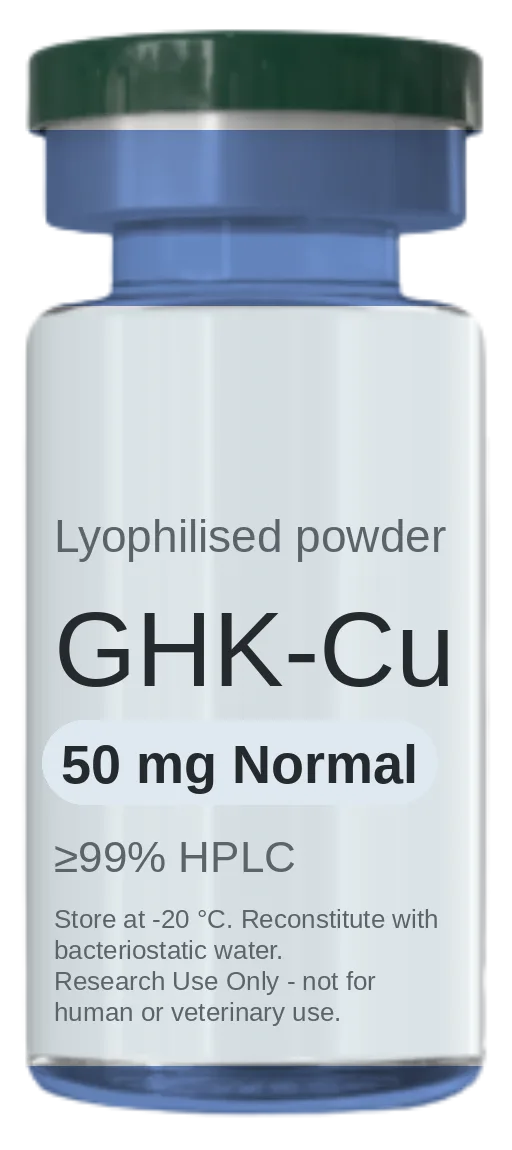
Tissue & repair
GHK-Cu (Copper Peptide)
Copper-binding tripeptide studied in extracellular matrix and dermal research models.
- Purity:
- ≥99% HPLC
- Sizes available:
- 50 mg Normal – 50 mg Plus
Also known as: Lys-Pro-Val, alpha-MSH (11-13) fragment
| Property | Specification |
|---|---|
| Classification | Lys-Pro-Val tripeptide, α-MSH (11-13) |
| Also known as | Lys-Pro-Val, alpha-MSH (11-13) fragment |
| Purity | ≥99% HPLC |
| CAS number | 67727-97-3 |
| Molecular formula | C16H30N4O4 |
| Molecular weight | 342.43 g/mol |
| Vial sizes available | 5 mg, 10 mg, 20 mg |
| Intended use | Supplied after physician review — not an approved medicine |
| Physical form | Lyophilised powder |
| Storage | -20 °C, protected from light |
| Reconstitution | Bacteriostatic water · 3 ml, included at no charge (one per vial) |
| Testing | HPLC + mass spectrometry, per batch |
| Dispatch | Insulated cold-chain, tracked, from Argentina or the United States |
The CoA for the specific batch you would receive is reviewed during your consultation and ships with the material.
Request this batch CoAFrom that lot's certificate of analysis, not from what the supplier asserts. The certificate names the laboratory that took the measurement, the date, the task number, the method and the purity found. PeptoClinic publishes the full reports uncropped, exactly as the laboratory printed them.
It is the report an analytical laboratory issues on a specific sample. Four things are worth checking: which compound it claims to have measured, by what method (HPLC for purity, mass spectrometry for identity), what figure it found, and whether the task number can be verified against the laboratory. A certificate with no verifiable task number is a picture.
Copper-binding tripeptide studied in extracellular matrix and dermal research models.
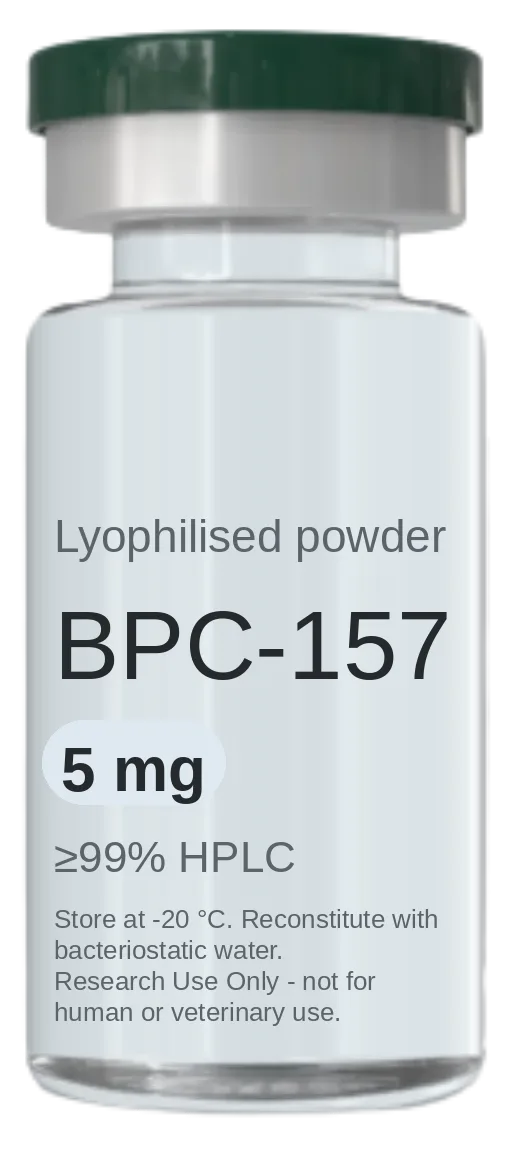
BPC-157 and TB-500 in a single vial — the pairing most studied together in tissue-repair research.
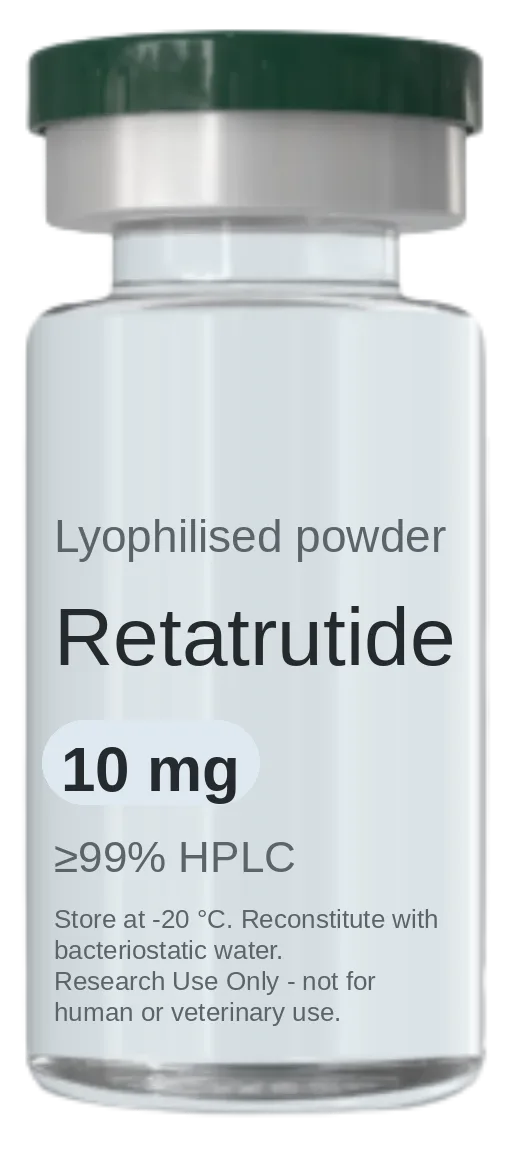
Triple-agonist metabolic research peptide targeting GLP-1, GIP and glucagon receptors.
Supplied after physician review — not an approved medicine