
Note
Import Tesamorelin to Argentina as Research
Yes, tesamorelin can be imported to Argentina as laboratory research material, with customs paperwork built for that purpose.
Yes: tesamorelin can be imported to Argentina as laboratory research material. PeptoClinic Research Supply has quoted tesamorelin to Argentine destinations since August 5, 2026, and every shipment is prepared with the customs file that corresponds to laboratory reference material, not a consumer product. That distinction is what separates a shipment that clears from one that sits in bonded storage.
What "research material" means in practice
The tesamorelin quoted here is not a medicine and not a supplement. It is a lyophilized peptide in a vial, intended for in vitro and laboratory research, with no indication of human or veterinary use on the label or in the accompanying documentation. That distinction is not cosmetic — it is what determines which tariff classification the shipment enters under and what paperwork Argentine customs does, or does not, ask for.
A shipment declared as an unregistered medicine follows a completely different import path — and a far more restrictive one — than a shipment declared as a reagent or laboratory reference material. PeptoClinic builds the file for each order under that second classification, because it matches the material's actual, declared use.
What documentation travels with the order
Each batch is quoted with the documentation a researcher needs to justify the import: compound identification, format (vial, lyophilized powder), and the declared purity specification. The purity standard PeptoClinic holds across the research peptides in its catalogue is ≥99% by HPLC, and several catalogue compounds have a published external laboratory report — analyzed by Janoshik Analytical, an independent laboratory with no commercial relationship to PeptoClinic.
You can review how one of those reports reads, what each column means, and why a certificate without a verification link is worthless, on the quality and documentation page. That is worth reading before ordering any compound, not just tesamorelin.
Why Argentina is a served destination
Argentina is one of the destinations PeptoClinic supplies research peptides to as of August 2026, alongside the United States, Uruguay, Chile, Paraguay, Bolivia, Peru, Brazil, Mexico and Colombia. You can see the route detail and what international shipping involves on the shipping page. Tesamorelin has its own product page for the Argentine market at tesamorelin Argentina, with format and specification detail specific to this destination.
How it's requested
There is no cart and no published price. The process is a technical consultation: you describe what the research program needs — compound, quantity, required purity specification — and PeptoClinic's technical team responds with a written quote, normally within one business day. That quote includes the shipping route to Argentina and the customs documentation approach for that specific batch.
You can see the rest of the available compounds in the full catalogue, and who is behind the operation on the about PeptoClinic page.
What can't be promised
No quote and no shipment guarantees that customs won't inspect, hold, or request additional information about a specific package. Each national customs authority applies its own criteria at the point of entry, and that is not something PeptoClinic or any supplier controls. What the supplier does control is that the documentation accompanying the shipment is consistent, specific, and matches the declared use — and that is the part PeptoClinic controls.
The material is for laboratory research, not human or veterinary use
All tesamorelin and every other peptide in PeptoClinic's catalogue is supplied strictly for research (Research Use Only). None of it is approved or evaluated for consumption, diagnosis or treatment in people or in animals. No dosing, administration or human-use protocol guidance is provided or quoted with any order: the information that accompanies a request is limited to compound specification, purity, and batch documentation. No claims about these compounds have been evaluated by the FDA, ANMAT, or any equivalent authority.
Frequently asked questions
Do you need any registration or authorization to import tesamorelin as research material?
The documentation PeptoClinic prepares classifies the shipment as laboratory reference material, not as a medicine. The receiving researcher or institution is the one who evaluates, under their own institutional framework, whether they need any additional registration to work with research material in their jurisdiction.
Does PeptoClinic's tesamorelin have a published laboratory report?
PeptoClinic publishes Janoshik Analytical reports for several catalogue compounds, with the purity detail found in each analyzed batch. Before ordering a specific compound, it's worth checking the [quality](/en/quality/) page to see which reports are available and which batch they correspond to.
How long does an order take to reach Argentina?
PeptoClinic does not publish a fixed delivery timeline because it depends on the route, the order volume, and the customs process for each shipment. That detail is discussed in the quote, along with the rest of the order's conditions.
Can tesamorelin be requested in any quantity?
Quantity is set in the quote based on what the research program declares. There is no published minimum or maximum in advance — it's resolved case by case with the technical team.
What's the difference between importing tesamorelin as research material versus as a medicine?
An unregistered medicine in the destination country follows a far more restrictive import circuit, with authorization requirements that laboratory reference material does not have. PeptoClinic builds each file under the research-material classification, which matches the product's actual, declared use.
Does PeptoClinic provide usage or dosing instructions for tesamorelin?
No. PeptoClinic does not provide dosing guides, administration instructions, or human or veterinary use protocols for any compound in the catalogue, including tesamorelin. The material is supplied exclusively for laboratory research.
What other growth-axis peptides does the catalogue include?
The catalogue includes other growth hormone secretagogues such as [CJC-1295 no DAC](/en/product/cjc-1295-no-dac/) and [sermorelin](/en/product/sermorelin/), in addition to tesamorelin. Each has its own specification and documentation available on its product page.
Is Argentina the only Latin American country PeptoClinic ships to?
No. Besides Argentina, PeptoClinic serves Uruguay, Chile, Paraguay, Bolivia, Peru, Brazil, Mexico and Colombia, along with the United States. Route detail for each destination is on the [shipping](/en/shipping/) page.
Compounds mentioned
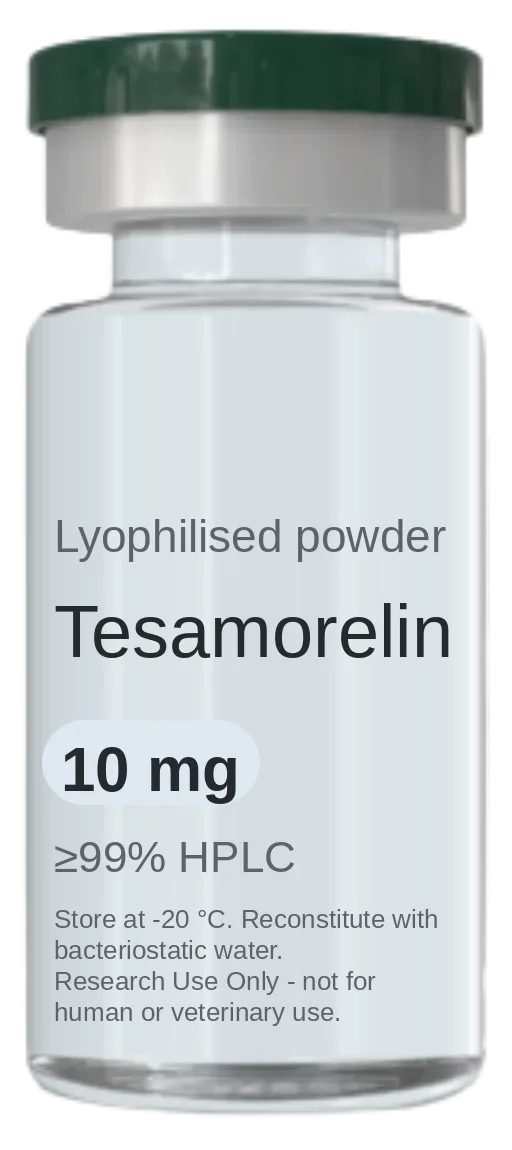
Tesamorelin
Stabilised GHRH(1-44) analogue studied in adipose tissue distribution research.
- Purity:
- ≥99% HPLC
- Sizes available:
- 10 mg – 20 mg
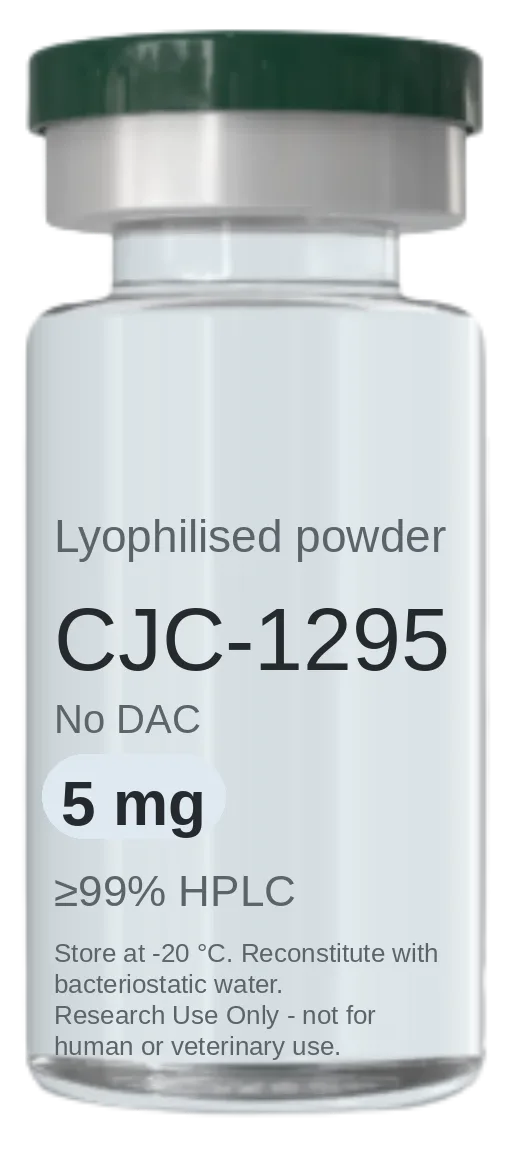
CJC-1295 (sin DAC)
Modified GRF(1-29) tetrasubstituted analogue without drug affinity complex.
- Purity:
- ≥99% HPLC
- Sizes available:
- 5 mg – 20 mg
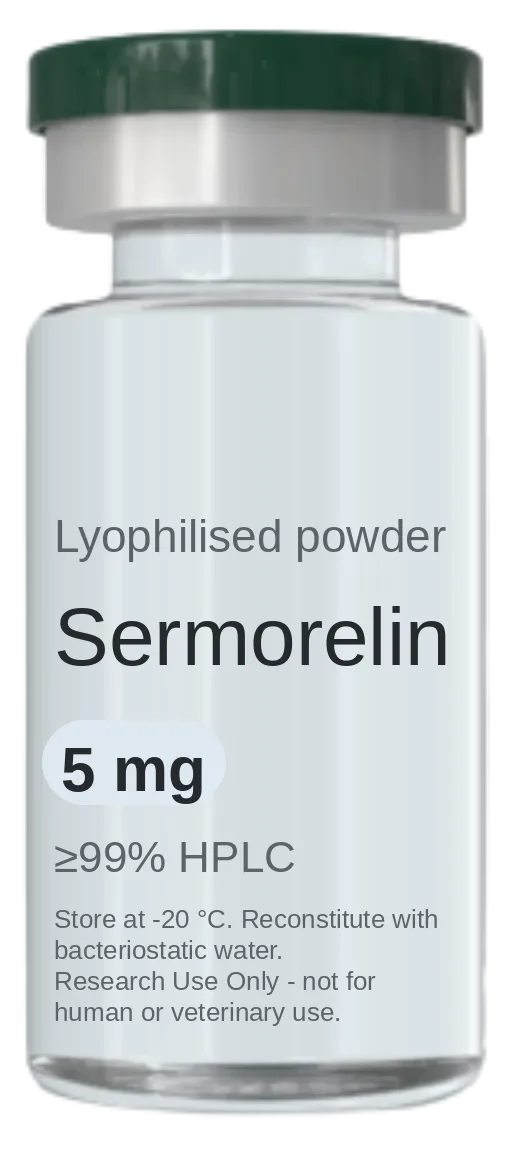
Sermorelin
Growth hormone-releasing hormone analogue used in endocrine signalling research.
- Purity:
- ≥99% HPLC
- Sizes available:
- 5 mg – 20 mg
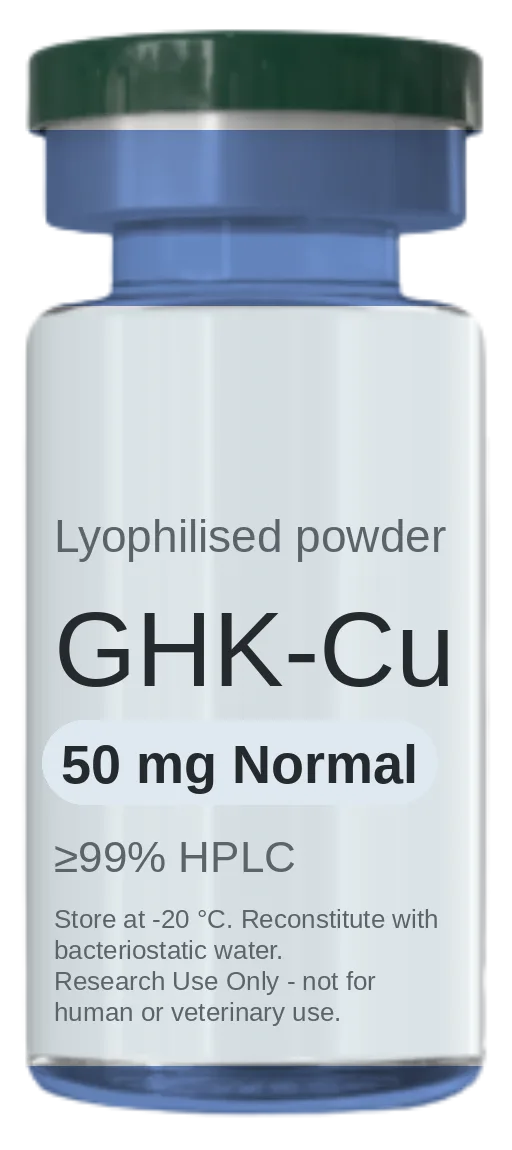
GHK-Cu (Copper Peptide)
Copper-binding tripeptide studied in extracellular matrix and dermal research models.
- Purity:
- ≥99% HPLC
- Sizes available:
- 50 mg Normal – 50 mg Plus
The consultation
One intake that settles goals, history and contraindications alongside compound, quantity, documentation and route — reviewed by a physician before anything ships.
More notes
-
Humanin vs MOTS-c: What's the Difference?
Humanin and MOTS-c are distinct mitochondrial peptides—different genes, different receptors, different research focus. Here's how they compare.
-
If Argentine Customs Rejects Your Shipment
What happens after Argentine customs permanently rejects a research peptide shipment, and what documentation lowers the risk on the next one.
-
CJC-1295 or Tesamorelin: what each shows
What published research shows on CJC-1295 and tesamorelin: mechanism, differences, and which compound has more clinical data.