
Note
If Argentine Customs Rejects Your Shipment
What happens after Argentine customs permanently rejects a research peptide shipment, and what documentation lowers the risk on the next one.
When Argentine customs issues a final rejection on a shipment, that package does not get a second attempt. It is held, and depending on the reason for the rejection it ends up destroyed, re-exported to the sender, or abandoned to the Dirección General de Aduanas (part of ARCA, formerly AFIP) until someone claims it within the deadline stated in the notice. There is no automatic do-over on that specific shipment. What can be controlled is what happens with the next one.
What "final rejection" actually means
A package entering through the courier system or Correo Argentino goes through a documentary review and, in a portion of cases, a physical inspection. If customs determines the goods cannot be cleared — because of the declared tariff classification, missing documentation, or contents that don't match the declaration — it issues a rejection. That rejection falls into one of two categories:
- Observed, correctable: a data point, an invoice, or a description is missing or too vague. The consignee receives a notice with a window to fix it.
- Final: customs has determined the goods do not meet entry requirements and no correction is accepted. At that point, nothing done afterward releases that same package.
The notice — through the customs management system or the courier that handled the shipment — states which of the two applies. Confusing them is the most common mistake: people abandon a merely observed shipment thinking it is final, when a single additional document could have resolved it.
What physically happens to the package
Once a rejection is final, there are three possible outcomes:
- Re-export: the package goes back to the original sender. This depends on the sender or courier agreeing to take it back, and it is not automatic.
- Destruction: when re-export isn't viable, or the contents fall under a specific restriction, customs orders the goods destroyed.
- Abandonment to the treasury: if nobody claims the shipment within the stated deadline, it is left at the disposal of customs, which can auction or destroy it depending on the type of good.
None of the three refunds the money paid to the supplier. That cost falls on the buyer, unless the sender has its own replacement policy — something worth asking about before placing an order, not after receiving the rejection notice.
Why research peptide shipments get rejected
The most common reasons have nothing to do with the compound being prohibited. They have to do with how the shipment is documented:
- A vague or incomplete invoice description: paperwork that says "sample" or "laboratory product" without naming the compound, quantity and purpose gives the customs officer grounds to ask for more information or reject the shipment outright for lack of traceability.
- No certificate of analysis: without a document identifying what the substance is and its purity, customs has no basis for classifying it.
- A misdeclared tariff position: if the sender classifies the shipment as though it were a supplement, a cosmetic, or a product for human use, it falls under a different — and more restrictive — regime than laboratory reagent or research material.
- A quantity or presentation that implies a different end use than declared: vials pre-fractioned into individual doses, for example, communicate something different from a reference batch for research.
None of these depend on the buyer once the package has shipped — they depend on how the supplier built the shipment and the documentation that travels with it. That is the part worth reviewing before ordering, not after a rejection.
The distinction customs actually checks: research use vs. human use
The whole operation at PeptoClinic starts from this distinction: PeptoClinic supplies research peptides to Argentina as reference material for laboratory research (RUO, Research Use Only), not as a product for human or veterinary consumption. That is not a marketing nuance. It is what determines the customs regime the shipment enters under, and it is why every shipment ships with documentation identifying the compound as laboratory material rather than a product ready to be administered to a person.
That standard is visible on the Argentina compound pages, where every entry describes what the analyzing laboratory documented, not what would happen to someone using it. Retatrutide for Argentina and BPC-157 for Argentina follow the same format: what the compound is, what the laboratory analysis found, and what documentation ships with the batch. The same applies to MOTS-c and GHK-Cu.
What lowers the risk before a rejection happens
- A certificate of analysis (CoA) for the batch, issued by an independent laboratory. The reports PeptoClinic publishes come from Janoshik Analytical: the lowest published purity to date is 99.669%, from the MOTS-c report (task 136923). The reasoning behind what gets published, and why, is on the quality page.
- An invoice with a specific description: compound name, quantity, and the statement that it is for laboratory research use only.
- Consistency between catalogue, invoice and physical presentation: a lyophilized batch in a vial, labeled to match what was declared, is what's expected for reference material. The format is visible in the catalog.
- Checking the shipping details for Argentina before confirming an order, on the shipping page, rather than assuming every courier handles this kind of cargo the same way.
None of this guarantees a shipment clears customs without questions — that also depends on criteria that change without notice — but it is the difference between a shipment that can be corrected and one that gets rejected for lack of documentary basis.
What to do if you already received a rejection notice
Start by reading the full notice. Identify whether it says "observed" or "final," and if it's observed, exactly which document is missing. A licensed customs broker can confirm within minutes which of the two applies and whether there's still room to act — worth checking before writing off a shipment that could still have been corrected.
If the rejection is final, the realistic next step is contacting the supplier: ask whether they have a replacement policy, and review, for the next shipment, that the documentation covers the points above. Reordering without changing anything in the paperwork reproduces the same outcome.
Laboratory research use only
Everything described here concerns material supplied strictly for research use (RUO): laboratory, in vitro and reference use. No compound on this site is a medicine, a supplement or a food, none is approved for human or veterinary consumption, and PeptoClinic does not provide dosing, administration or protocol guidance. More context on what this operation is and isn't is on the about page.
Frequently asked questions
Can a final rejection from Argentine customs be appealed?
It depends on the specific reason. A licensed customs broker can review the notice and determine whether there's a path for reconsideration within the stated deadline, but most final rejections due to insufficient documentation do not get reconsidered on the same shipment — the correction applies to the next order.
Does customs give notice before destroying a shipment?
Yes, the rejection notice usually states a deadline for submitting additional documentation or arranging re-export before the goods are placed at the treasury's disposal. That deadline appears in the notice itself and is not a fixed number that applies to every case.
Does PeptoClinic replace a shipment if customs rejects it?
The replacement policy for a customs rejection is something to confirm directly during the pre-order consultation, along with the rest of the shipping details for Argentina.
Does a certificate of analysis guarantee customs won't reject the package?
No, but it removes the most common reason for rejection, which is the lack of documentation identifying what the substance is. Customs can still apply other control criteria independent of the certificate.
Why would a shipment be "observed" instead of finally rejected?
Because customs considers the problem correctable: a missing invoice field, a missing certificate, or a description that is vague but fixable. In that case there is a window to submit the missing documentation before the rejection becomes final.
Are research peptides banned from import into Argentina?
It isn't a ban on the substance itself; the rejection usually originates in how the shipment is declared and documented, not in the compound being prohibited. That's why classification as laboratory research material, with its corresponding documentation, is what determines the regime the shipment enters under.
What happens to the money already paid if the shipment is rejected?
Customs does not refund the payment made to the supplier. Whether a replacement order exists depends on each supplier's own policy, which is worth confirming before ordering.
Is it better to declare the shipment as a no-commercial-value sample to avoid rejection?
No. A declaration that doesn't match the actual contents is itself grounds for rejection and can make the situation worse. The approach that reduces risk is an accurate declaration — compound, quantity, research purpose — accompanied by the corresponding certificate of analysis.
Compounds mentioned
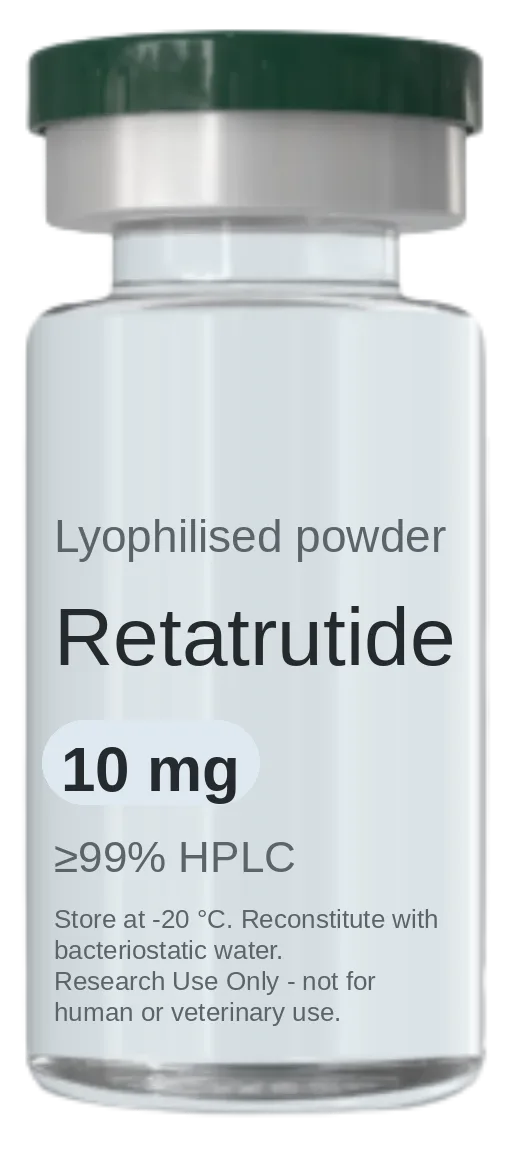
Retatrutide
Triple-agonist metabolic research peptide targeting GLP-1, GIP and glucagon receptors.
- Purity:
- ≥99% HPLC
- Sizes available:
- 10 mg
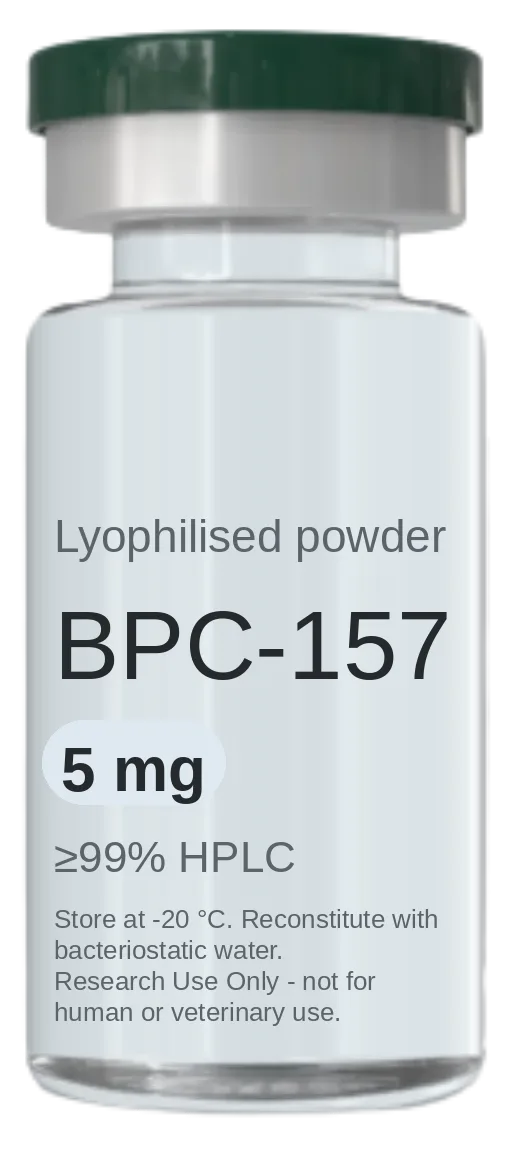
BPC-157 + TB-500
BPC-157 and TB-500 in a single vial — the pairing most studied together in tissue-repair research.
- Purity:
- ≥99% HPLC
- Sizes available:
- 5 mg + 5 mg
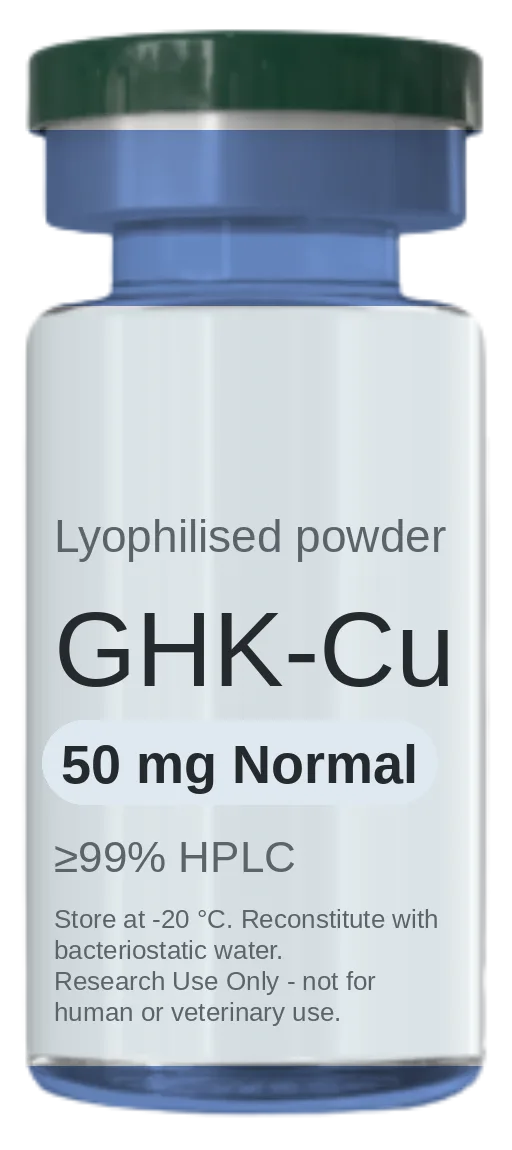
GHK-Cu (Copper Peptide)
Copper-binding tripeptide studied in extracellular matrix and dermal research models.
- Purity:
- ≥99% HPLC
- Sizes available:
- 50 mg Normal – 50 mg Plus
The consultation
One intake that settles goals, history and contraindications alongside compound, quantity, documentation and route — reviewed by a physician before anything ships.
More notes
-
Hexarelin vs GHRP-6: Key Differences
Hexarelin and GHRP-6 are both GHRP hexapeptides, but differ in receptor affinity, appetite effect, and cardiovascular research findings.
-
Do You Need a Customs Broker for Peptides?
Customs broker to import research peptides into Argentina: when one is required and when the courier already handles it.
-
Argentina Customs Penalty for Bad Declarations
What happens when a research peptide shipment is misdeclared to Argentine customs: fines, smuggling charges, and seizure.