
Note
CJC-1295 or Tesamorelin: what each shows
What published research shows on CJC-1295 and tesamorelin: mechanism, differences, and which compound has more clinical data.
CJC-1295 and tesamorelin are the two most-cited GHRH (growth hormone-releasing hormone) analogs in the research literature on GH secretion, but the volume and type of published evidence differs between them. Tesamorelin has a broader, more established base of controlled human trials; CJC-1295 has more mechanism and pharmacokinetic studies, and much of what gets cited as "CJC-1295 research" actually describes the DAC variant, not the one sold without DAC.
What the two compounds share
Both are synthetic GHRH analogs that act on the GHRH receptor expressed on somatotroph cells in the pituitary. Activating that receptor triggers pulsatile release of growth hormone (GH), which in turn drives hepatic IGF-1 production. That is the axis both compounds are studied against: GHRH → pituitary receptor → GH pulse → circulating IGF-1.
The difference between them is not the receptor — it is the same one — but the structure of the molecule, how long it stays active in circulation, and how closely it reproduces the natural pulsatile pattern of endogenous GHRH. Those three variables are what the literature actually measures when comparing one analog against the other.
CJC-1295: what the literature shows, and which version
The name CJC-1295 actually refers to two distinct molecules that get conflated in search results: the DAC version (Drug Affinity Complex, a group that binds serum albumin and extends half-life to several days) and the no-DAC version, which is what the CJC-1295 catalogue page lists, and which structurally corresponds to the first 29 amino acids of GHRH modified to resist enzymatic degradation (also referred to in the literature as Mod GRF 1-29).
Most of the formal studies on "CJC-1295" — the ones reporting sustained elevations in GH and IGF-1 for days after a single administration in research models — describe the DAC version, whose extended half-life is exactly what produces that prolonged effect. The no-DAC version has a half-life measured in minutes, and in experimental protocols it behaves closer to native GHRH: it produces a GH pulse that follows the physiological pattern rather than a flat, sustained elevation.
That distinction is the one most often lost when someone searches for "CJC-1295 research" and finds results that actually describe the DAC molecule. Before comparing data across studies, it is worth confirming which of the two variants a given protocol used, because the pharmacokinetic profile each reports is not interchangeable.
Tesamorelin: what the literature shows
Tesamorelin is a 44-amino-acid GHRH analog, stabilized with a trans-3-hexenoic group at the N-terminus, which gives it a longer half-life than native GHRH without relying on an albumin-binding system like DAC. It is the molecule in this family with the largest volume of published human clinical trials: there is a substantial base of controlled studies that evaluated its effect on the GH/IGF-1 axis and, in particular, on body composition, with a focus on visceral fat reduction.
That volume of clinical-phase trials — larger than what is available for CJC-1295 without DAC — is what usually tips the comparison when someone is looking for the compound with the deepest published record: not because the mechanism differs, but because there are more peer-reviewed studies documenting its behavior in human populations and its pharmacokinetic profile over time.
The differences that matter when reading the studies
Three variables account for most of the difference between what the literature reports on one compound versus the other:
- Half-life: CJC-1295 without DAC has a half-life of minutes; tesamorelin, hours; CJC-1295 with DAC, days. Comparing results without accounting for this leads to wrong conclusions about how long an effect lasts.
- Volume of human studies: tesamorelin accounts for most of the controlled clinical trials in this group of analogs. CJC-1295 without DAC has fewer publications specific to that particular variant.
- What each protocol measures: some studies report serum GH and IGF-1 levels as the primary endpoint; others report changes in body composition over weeks. These are not the same type of data and are not always comparable to each other.
Neither molecule replaces the other in an experimental design. They answer different questions depending on whether the goal is to study an acute GH pulse or a sustained effect on IGF-1 and body composition.
Documentation for each batch
Every compound that leaves our supplier goes through analysis by an external laboratory, Janoshik Analytical. The lowest purity result we have published so far read 99.669% by HPLC; that is the floor we show, not the best result we have had. You can request the certificate of analysis for a specific batch before quoting, to confirm what material it is and under what method it was measured. Details on how to read a certificate of analysis are on the quality page.
How research material gets quoted
PeptoClinic does not sell at a published price or through a shopping cart: it is a technical supply consultancy for research peptides. A researcher describes what they need — compound, quantity, purity specification — and the technical team responds with a written quote, normally within one business day, that includes batch documentation and the shipping route. The full catalogue lists the 19 available compounds, and logistics into Argentina are described on the shipping page.
For laboratory research use only
All material described in this post is supplied strictly for in vitro and laboratory research (Research Use Only). It is not a drug, not a supplement, and is not approved for human or veterinary consumption, diagnosis, or treatment. Nothing in this post constitutes a recommendation for use, dosing, or administration: it describes what published scientific literature reports on each compound, not a protocol to apply.
Frequently asked questions
Do CJC-1295 and tesamorelin activate the same receptor?
Yes. Both are GHRH analogs and act on the same receptor on pituitary somatotroph cells, activating the pathway that releases growth hormone in a pulsatile pattern.
Why is there more human research on tesamorelin?
Because tesamorelin was the subject of a more extensive program of controlled clinical trials, focused on its effect on body composition and the GH/IGF-1 axis over time, while the evidence specifically on CJC-1295 without DAC is comparatively more limited.
Are CJC-1295 with DAC and without DAC the same molecule?
Not exactly. They share the same modified GHRH base sequence, but the DAC version incorporates a group that binds serum albumin and extends its half-life to several days; the no-DAC version does not have that group and has a half-life of minutes, behaving more like native GHRH.
What does a body composition study measure versus a serum GH study?
They are different types of data. A serum-levels study measures GH or IGF-1 concentration in blood at defined points after administration; a body composition study measures changes in tissue, typically visceral fat, over weeks. They are not directly comparable to one another.
Does the material quoted here correspond to the DAC or no-DAC version of CJC-1295?
The catalogue includes CJC-1295 without DAC. If a published study describes the DAC variant, that pharmacokinetic profile — a half-life of several days — does not apply to the no-DAC molecule.
How do I know the purity of the batch I am about to quote?
You request the certificate of analysis (COA) for that batch before confirming the quote. Each certificate states the analytical method and the HPLC purity result from the external laboratory that issued it.
Can this material be used in animal or human research?
It is supplied exclusively for in vitro and laboratory research. It is not approved or intended for consumption or administration in humans or animals, and this post does not describe protocols for use.
Do you ship CJC-1295 and tesamorelin to Argentina?
Yes, both compounds are among the destinations quoted to Argentina, with customs documentation prepared as laboratory reference material. Details for each compound are on their specific [Argentina pages](/en/argentina/).
Compounds mentioned
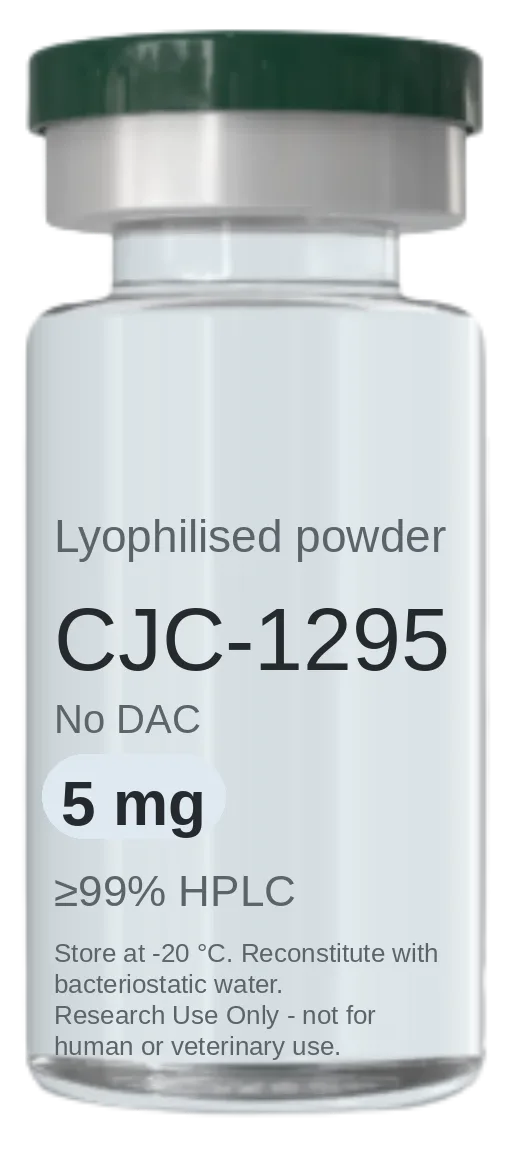
CJC-1295 (sin DAC)
Modified GRF(1-29) tetrasubstituted analogue without drug affinity complex.
- Purity:
- ≥99% HPLC
- Sizes available:
- 5 mg – 20 mg
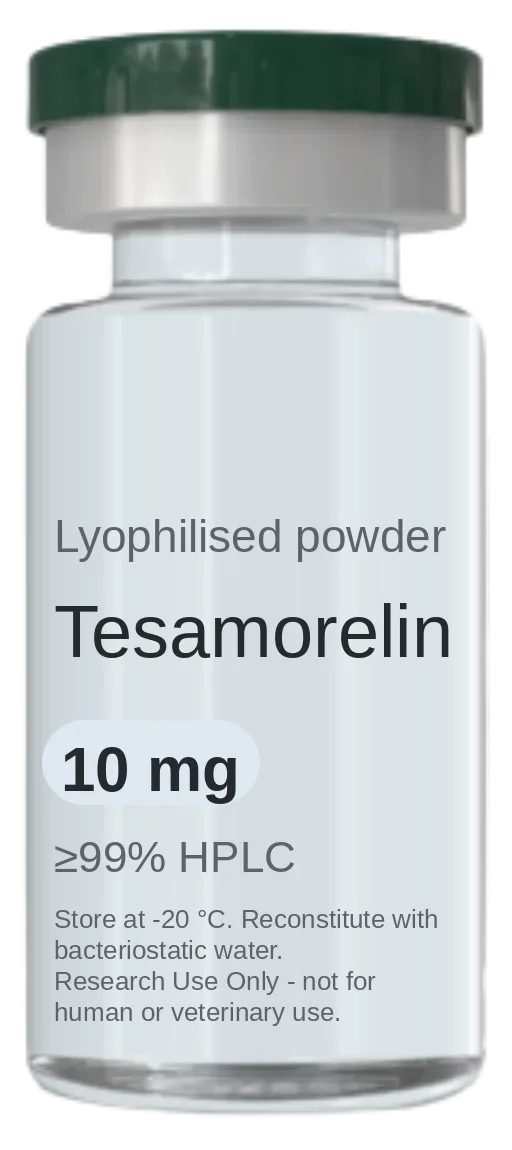
Tesamorelin
Stabilised GHRH(1-44) analogue studied in adipose tissue distribution research.
- Purity:
- ≥99% HPLC
- Sizes available:
- 10 mg – 20 mg
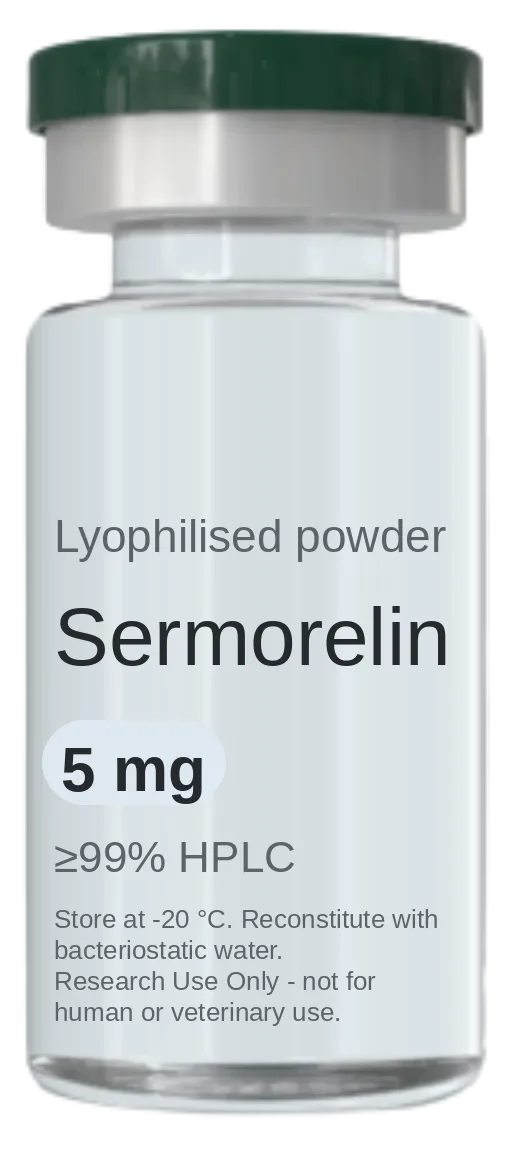
Sermorelin
Growth hormone-releasing hormone analogue used in endocrine signalling research.
- Purity:
- ≥99% HPLC
- Sizes available:
- 5 mg – 20 mg
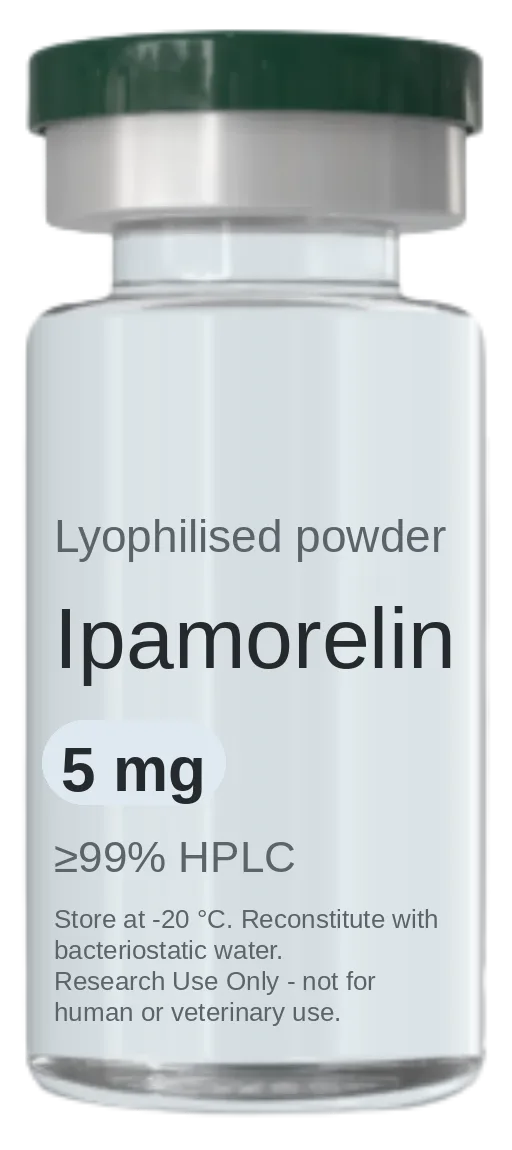
Ipamorelin
Selective ghrelin receptor (GHS-R1a) agonist pentapeptide.
- Purity:
- ≥99% HPLC
- Sizes available:
- 5 mg – 20 mg
The consultation
One intake that settles goals, history and contraindications alongside compound, quantity, documentation and route — reviewed by a physician before anything ships.
More notes
-
If Argentine Customs Rejects Your Shipment
What happens after Argentine customs permanently rejects a research peptide shipment, and what documentation lowers the risk on the next one.
-
Hexarelin vs GHRP-6: Key Differences
Hexarelin and GHRP-6 are both GHRP hexapeptides, but differ in receptor affinity, appetite effect, and cardiovascular research findings.
-
Do You Need a Customs Broker for Peptides?
Customs broker to import research peptides into Argentina: when one is required and when the courier already handles it.