
Note
Epithalon or Selank: What's the Difference
Epithalon is studied for telomerase and circadian rhythm; Selank for anxiety and cognition. Mechanism, structure, and documentation of each.
Epithalon and Selank are distinct synthetic peptides with different structures and separate research lines: Epithalon is a tetrapeptide studied for its relationship to telomerase and circadian rhythm, while Selank is a heptapeptide derived from tuftsin that the literature investigates in models of anxiety and cognition. They are not interchangeable, and they do not answer the same research question.
The two show up in the same search often because both are sold as low molecular weight research peptides and because both carry a reputation as "Russian peptides" — they came out of research programs in Saint Petersburg and Moscow, Epithalon from Vladimir Khavinson's laboratory and Selank from the Institute of Molecular Pharmacology in Moscow. That is where the resemblance ends.
What Epithalon is
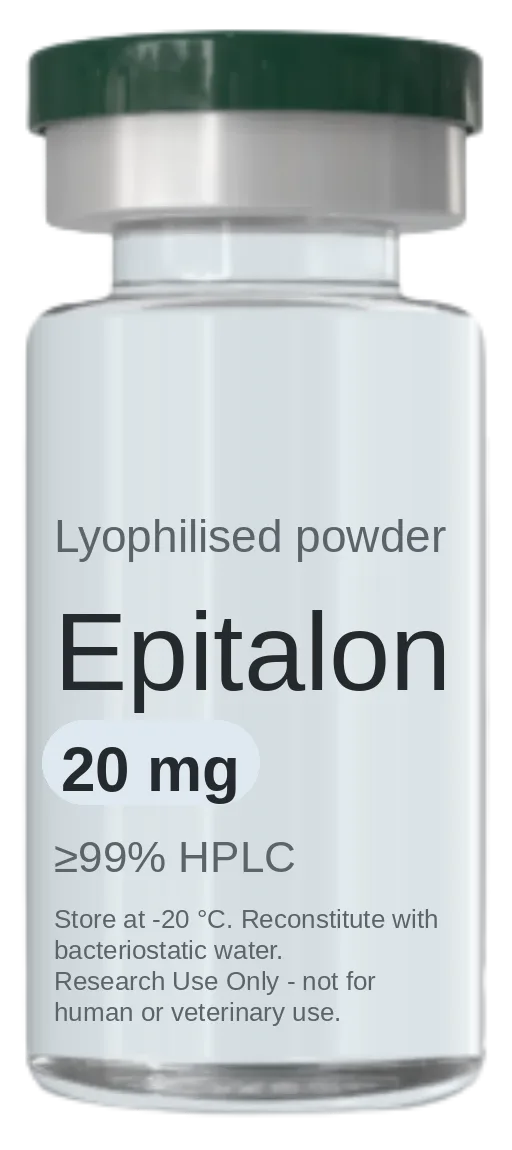
Epithalon (also written Epitalon or Epithalone) is a synthetic tetrapeptide with the sequence Ala-Glu-Asp-Gly, a synthetic version of epithalamin, an extract from the pineal gland. The published literature associates it mainly with two lines of inquiry:
- Telomerase activation and its effect on telomere length in cell cultures.
- Regulation of melatonin production and the pineal axis, with observed impact on circadian rhythms in animal models.
The most-cited Epithalon studies come from Khavinson's own team, published starting in the late 1990s, along with later work in cellular aging models. The full technical specification is on the Epitalon product page, including purity specification and the format it ships in.
What Selank is
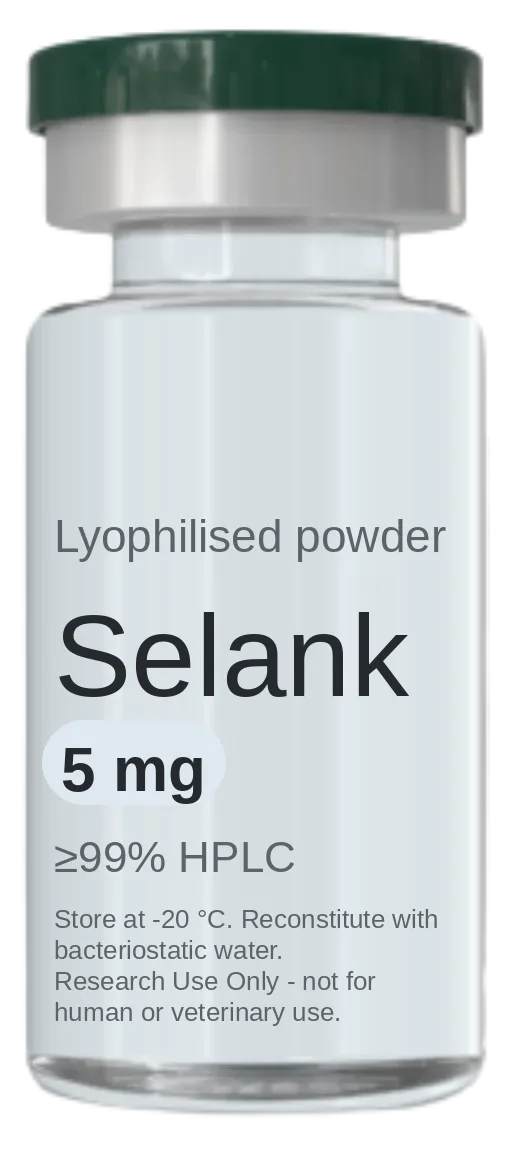
Selank is a synthetic heptapeptide, an analog of tuftsin (a natural immunoregulatory peptide), developed at the Institute of Molecular Pharmacology in Moscow. Its sequence adds a proline-glycine-proline tail to the original tuftsin, which changes its stability and half-life relative to the parent molecule.
Published research on Selank concentrates on:
- Anxiety models, with Selank compared against reference anxiolytics in preclinical trials.
- Effects on the BDNF (brain-derived neurotrophic factor) axis and synaptic plasticity.
- Modulation of innate immune response, inherited from its origin as a tuftsin analog.
The full specification is on the Selank product page, with purity specification and supply format.
The structural difference, in one mental table
You don't need to memorize the amino acid sequence to see why these two aren't comparable:
- Size: Epithalon has four amino acids; Selank has seven. These are different peptide families, not a "short" and "long" version of the same thing.
- Biological origin: Epithalon derives from a pineal gland extract; Selank derives from tuftsin, an immune system peptide.
- Research target: Epithalon is studied in relation to cellular senescence and telomeres; Selank is studied in relation to the central nervous system and the stress response.
- Source literature: Epithalon papers are mostly authored by Khavinson's group (Saint Petersburg Institute of Bioregulation and Gerontology); Selank papers come from the Institute of Molecular Pharmacology of the Russian Academy of Sciences.
That separation is why asking "which one is better" has no useful answer: they answer different research questions. It's like asking whether a spectrophotometer is better than a microscope.
What each line of literature studies
For Epithalon, the most-cited preclinical reports evaluated markers of cellular aging and telomerase activity in cultures and in animal lifespan models. The academic interest is whether a short peptide can modulate telomerase expression without direct genetic intervention, which has theoretical relevance for the broader study of cellular senescence.
For Selank, the literature available on PubMed includes early-phase clinical trials in Russia on generalized anxiety disorder, plus preclinical studies on its effect on BDNF expression. One reference paper is indexed on PubMed, where the methodology and doses used in each trial's experimental design can be reviewed — information useful for designing a laboratory protocol, not for personal use.
Neither research line is closed. Both compounds keep appearing in new papers, which in practice means the available evidence is preclinical and early-phase, not a consolidated body of evidence comparable to that of an approved drug.
Documentation and quality control
At PeptoClinic, every peptide in the catalog — including Epithalon and Selank — is specified at a declared purity of ≥99% by HPLC. That specification is not a generic promise: it's part of the same documentation policy already applied to other compounds in the catalog, where third-party certificates of analysis are published. For example, the independent laboratory Janoshik Analytical certified a MOTS-c batch at 99.669% and a Retatrutide batch at 99.893%, both analyzed on April 13, 2026. Those reports are on the quality page, along with an explanation of how to read a certificate of analysis and what to check before accepting one from any supplier.
The logic is the same across the whole catalog: every batch ships with its own traceability documentation, and the technical team can confirm which report corresponds to which compound before an order ships.
Strictly for laboratory research use
Both Epithalon and Selank are supplied strictly for research use (Research Use Only): in vitro studies and laboratory models. Neither compound is approved, evaluated, or intended for human or veterinary consumption, diagnosis, or treatment of any condition. No claims about these molecules in this supply context have been evaluated by the FDA, ANMAT, or any equivalent authority. PeptoClinic does not provide dosing, administration, or protocol guidance because the material is not intended for that application.
How shipping to Argentina works
Argentina is one of the destinations PeptoClinic quotes research material to, with customs documentation prepared for entry as laboratory reference material. The process starts with a technical inquiry: the team reviews the compound, purity specification, quantity, and logistics route, and returns a written quote. Selank does not have a dedicated Argentina page yet, but the general process is on the Argentina page and the shipping page.
Frequently asked questions
Can Epithalon and Selank be ordered together in the same batch?
Yes, they are independent compounds and each is quoted separately based on the quantity and specification a given research program needs. There is no technical restriction on including both in the same inquiry.
Which of the two has more published studies?
It depends on what you're looking for. Epithalon has more literature on telomeres and cellular aging, while Selank has more literature on anxiety and neuroplasticity. Neither body of evidence is larger in absolute terms — they're simply focused on different questions.
Are Selank and Semax the same thing?
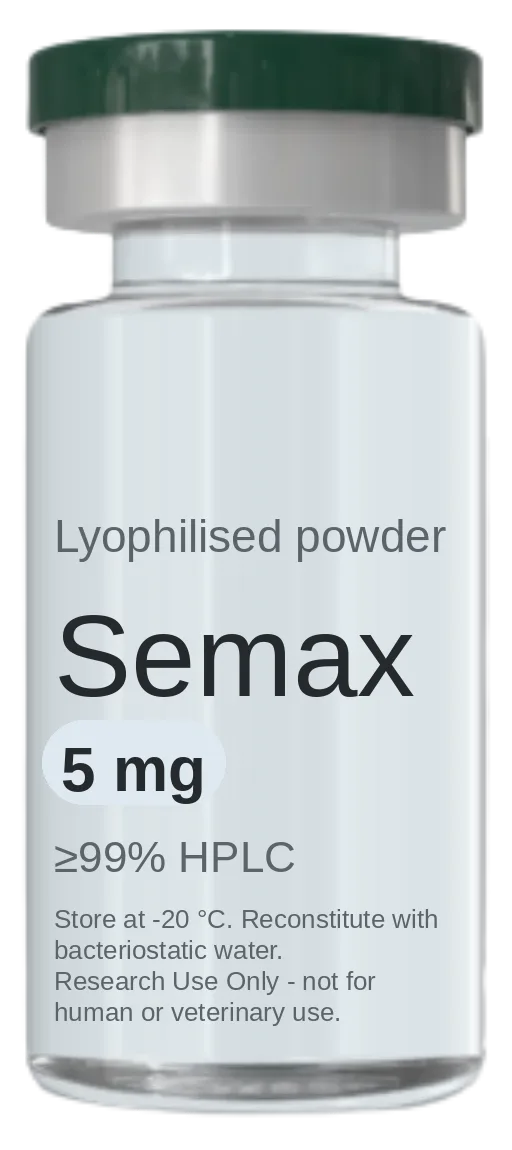
No. Selank and [Semax](/en/product/semax/) are distinct peptides developed by the same Russian institute and share some similarity in research profile — both are studied in the central nervous system — but they have different sequences and molecular origins. Semax derives from adrenocorticotropic hormone; Selank derives from tuftsin.
What format do Epithalon and Selank come in?
Both are supplied as lyophilized vials (powder), the standard research format across the catalog. Presentation and specification details are on each product page.
Is there published laboratory purity data for Epithalon and Selank specifically?
The whole catalog is specified at ≥99% purity by HPLC as a standard. The certificates of analysis currently published on the quality page correspond to other compounds in the catalog; batch-specific documentation is shared with each order at the time of shipment.
Is there any risk of confusing Epithalon with natural epithalamin?
They are different things. Epithalamin is a biological extract from the pineal gland; Epithalon is a synthetic four-amino-acid version designed to replicate part of its activity in research models. Synthesis allows a level of purity control and traceability that a biological extract does not have.
Can I ask about other peptides related to the pineal axis or cognitive research?
Yes. The full catalog, with the technical specification of each compound, is available on the [catalog page](/en/catalog/), where you can filter by research line before putting together an inquiry.
Compounds mentioned
Sermorelin
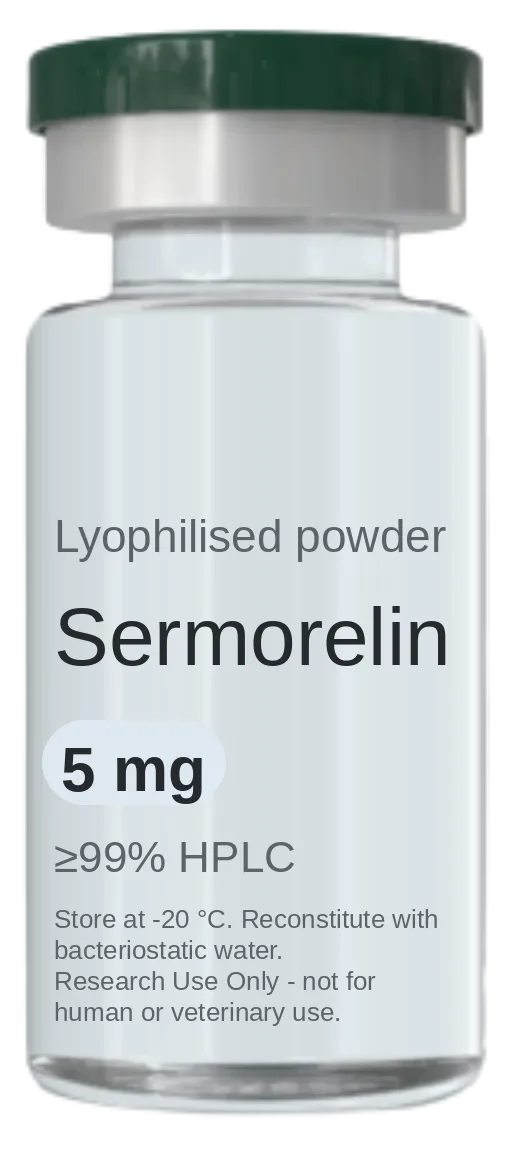
Growth hormone-releasing hormone analogue used in endocrine signalling research.
- Purity:
- ≥99% HPLC
- Sizes available:
- 5 mg – 20 mg
The consultation
One intake that settles goals, history and contraindications alongside compound, quantity, documentation and route — reviewed by a physician before anything ships.
More notes
-
NAD+ vs Epithalon: How They Differ
NAD+ is a coenzyme, Epithalon a synthetic peptide. What the literature studies for each, and how they differ as research material.
-
Peptide Suppliers: COA vs No COA
What separates a peptide supplier that publishes lab certificates of analysis from one that only claims purity without proof.
-
What Certificate Does ANMAT Require?
ANMAT doesn't issue a certificate to release research peptides from Argentine customs — here's what documentation actually does.