Note
NAD+ vs Epithalon: How They Differ
NAD+ is a coenzyme, Epithalon a synthetic peptide. What the literature studies for each, and how they differ as research material.
NAD+ and Epithalon are two completely different molecules that tend to show up in the same research catalogue because both are studied in the field of cellular aging. NAD+ is a coenzyme, a small molecule that participates in redox reactions inside the cell. Epithalon is a synthetic tetrapeptide. They share no structure, no mechanism and no origin — the only reason they get compared is that the cellular-longevity literature discusses them in the same kind of studies.
What is NAD+
[NAD+](/en/product/nad-plus/) (nicotinamide adenine dinucleotide) is a coenzyme present in every living cell. Biochemistry describes it as an electron carrier in the oxidation-reduction reactions that sustain cellular energy production, and as a substrate for enzymes such as sirtuins and PARPs, which participate in DNA repair and metabolic regulation.
Chemically, NAD+ is a dinucleotide: two nucleotides joined by a phosphate bridge, one carrying an adenine base and the other nicotinamide. Its molecular weight is approximately 663 Da. It is not a peptide, even though it sits alongside research peptides on the shelf because it shares the same subject matter.
The literature describes a decline in intracellular NAD+ levels associated with aging, which is why the molecule has become a central object of study in research on longevity, mitochondrial metabolism and cellular stress.
What is Epithalon
[Epithalon](/en/product/epitalon/) is a synthetic tetrapeptide: four amino acids in the sequence Ala-Glu-Asp-Gly (alanine-glutamate-aspartate-glycine). It is the synthetic version of epithalamin, a peptide extract from the pineal gland originally isolated in Russian research from the 1980s and 1990s.
Its molecular weight is approximately 390 Da, considerably lower than that of NAD+. The research line around it centers on telomerase activity and telomere length, along with studies on circadian rhythms and the pineal gland. It is a structurally simple molecule compared with longer peptides in the same catalogue, such as growth hormone-releasing hormone analogs.
The main differences
Placed side by side, the differences are not subtle:
- Chemical class: NAD+ is a dinucleotide coenzyme; Epithalon is a four-amino-acid peptide.
- Size: NAD+ weighs almost double Epithalon — approximately 663 Da versus 390 Da.
- Origin of the molecule: NAD+ is endogenous, naturally present in every cell; Epithalon is the synthesis of a sequence derived from a glandular extract, not a molecule the body produces identically on its own.
- Metabolic pathway the literature studies: NAD+ is researched in the context of redox reactions and NAD-dependent enzymes (sirtuins, PARPs); Epithalon is researched in the context of telomerase and pineal regulation.
- Stability: as a coenzyme, NAD+ is more sensitive to degradation in solution than a short, stable peptide like Epithalon, which affects how storage conditions are documented for each batch.
Neither molecule is "better" than the other — they are research subjects for different questions, and comparing their purity or potency does not make sense because they are not measured against the same yardstick.
Research use only
Both NAD+ and Epithalon are supplied strictly as research material (RUO, Research Use Only), for laboratory and in vitro research. Neither is a medicine, a supplement or a food. Neither is approved for human or veterinary consumption, diagnosis or treatment, and no regulatory authority — not the FDA, not ANMAT, nor any equivalent body — has evaluated these statements. This article does not describe usage protocols or administration guidelines: it describes what the molecules are and what the scientific literature investigates about them.
Batch documentation and purity
The purity standard [PeptoClinic](/en/quality/) applies to the research peptides in its catalogue is 99% or higher by HPLC. Each compound is quoted as laboratory material, with batch documentation available to the researcher who requests it. Before comparing two suppliers on declared purity, it is worth asking for an external laboratory's report with a batch number and analysis date — not a screenshot or a generic seal — and confirming that the report matches the specific batch being quoted.
Shipping to Argentina
PeptoClinic quotes research material for shipment to [Argentina](/en/argentina/), including NAD+ and Epithalon, with customs documentation prepared for entry as laboratory reference material. The full catalogue, with a technical sheet for each compound, is available on the [catalogue page](/en/catalog/).
Frequently asked questions
What is NAD+?
It is a coenzyme — nicotinamide adenine dinucleotide — present in every living cell, which participates in the oxidation-reduction reactions linked to cellular energy production and acts as a substrate for enzymes such as sirtuins and PARPs.
What is Epithalon?
It is a synthetic four-amino-acid peptide (Ala-Glu-Asp-Gly), the synthetic version of epithalamin, a pineal gland extract isolated in research from the 1980s and 1990s. It is studied mainly in relation to telomerase activity.
Are they part of the same molecular family?
No. NAD+ is a dinucleotide and Epithalon is a peptide. They share no chemical structure or mechanism of action, even though both appear in the cellular-aging literature.
Which of the two molecules is larger?
NAD+, with a molecular weight of approximately 663 Da, is almost double the size of Epithalon, which weighs around 390 Da.
What research line does each one belong to?
NAD+ is studied in the context of cellular energy metabolism and the enzymes that consume it as a substrate. Epithalon is studied in the context of telomere length, telomerase activity and pineal function.
Can they be requested together in the same research order?
Yes, both are part of the same catalogue and are quoted independently according to the specifications each research project needs.
What purity do NAD+ and Epithalon batches carry?
The standard applied to the research peptides in the catalogue is 99% or higher by HPLC, with batch documentation available on request.
Does PeptoClinic ship these compounds to Argentina?
Yes, Argentina is one of the destinations PeptoClinic quotes research material for, with customs documentation prepared for entry as laboratory reference material.
Compounds mentioned
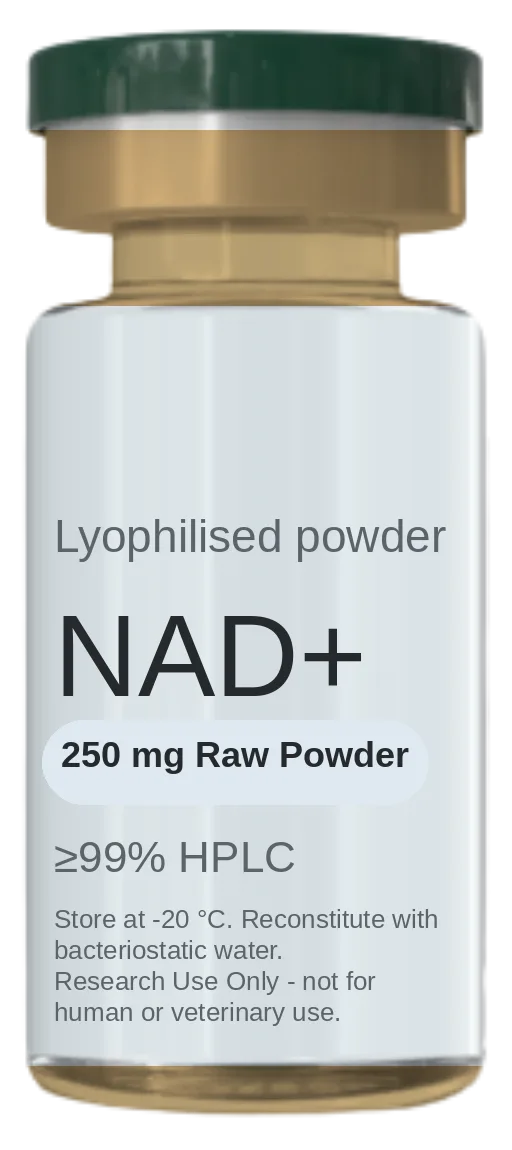
NAD+ (Nicotinamide Adenine Dinucleotide)
Essential redox cofactor central to cellular metabolism and sirtuin research.
- Purity:
- ≥99% HPLC
- Sizes available:
- 250 mg Raw Powder – 300 mg
The consultation
One intake that settles goals, history and contraindications alongside compound, quantity, documentation and route — reviewed by a physician before anything ships.
More notes
-
What Certificate Does ANMAT Require?
ANMAT doesn't issue a certificate to release research peptides from Argentine customs — here's what documentation actually does.
-
No Commercial Invoice: Argentina Customs
What Argentine customs does when a research peptide shipment arrives without the supplier's commercial invoice, and how to keep it from getting held.
-
LL-37 vs BPC-157: How They Differ
LL-37 and BPC-157 belong to different peptide families entirely — what each one investigates and what a batch report should show.