
Note
Peptide Suppliers: COA vs No COA
What separates a peptide supplier that publishes lab certificates of analysis from one that only claims purity without proof.
The difference is concrete: a supplier that publishes certificates of analysis lets you check what's actually in the vial against an identifiable lab report, with a stated method and a stated result. A supplier that doesn't publish anything is asking you to take purity on faith, with nothing you can review yourself. This isn't a marketing distinction. It's the difference between a claim that resolves to a document and a claim that doesn't.
What a certificate of analysis actually is
A certificate of analysis (COA) is the report a laboratory issues after testing a specific batch. It states which compound the lab found, what method was used to measure it — typically HPLC, high-performance liquid chromatography — and what purity percentage the batch returned. A good report also states the actual content of the vial against what the label claims.
What makes a certificate valid isn't the existence of a PDF with a logo on it. It's that the document:
- Names the laboratory that ran the test, not just "independent lab."
- Corresponds to a specific batch, not to "the product" in general.
- Carries a date, because an analysis from two years ago says nothing about the batch you're about to buy.
- Can be checked against the laboratory, when the laboratory offers a way to do that.
A certificate that misses these four points is a file, not evidence.
The gap between publishing and not publishing
When a supplier publishes its certificates, it's exposing its product to comparison — by you, by another lab, by a technical buyer — against what the report says. That carries a real cost: if a batch doesn't hold up, the certificate says so in public. Publishing certificates is, in practice, accepting that a purity claim can fail where anyone can see it.
When a supplier publishes nothing, the purity claim lives only in the text of its own page. "99% pure, guaranteed" written on a landing page isn't data — it's a sentence. There's no way to tell a supplier that actually tested the batch from one that never sent it to a lab at all, because both can write the exact same sentence.
That's what actually separates the two categories of supplier:
- A supplier that publishes gives you the laboratory's name, the date of the analysis, and the exact result — not a rounded "over 99%."
- A supplier that doesn't publish gives you a number with no origin. Ask "who tested this?" and the only answer that holds up is a report with a name, a date, and a method. Anything else is a promise.
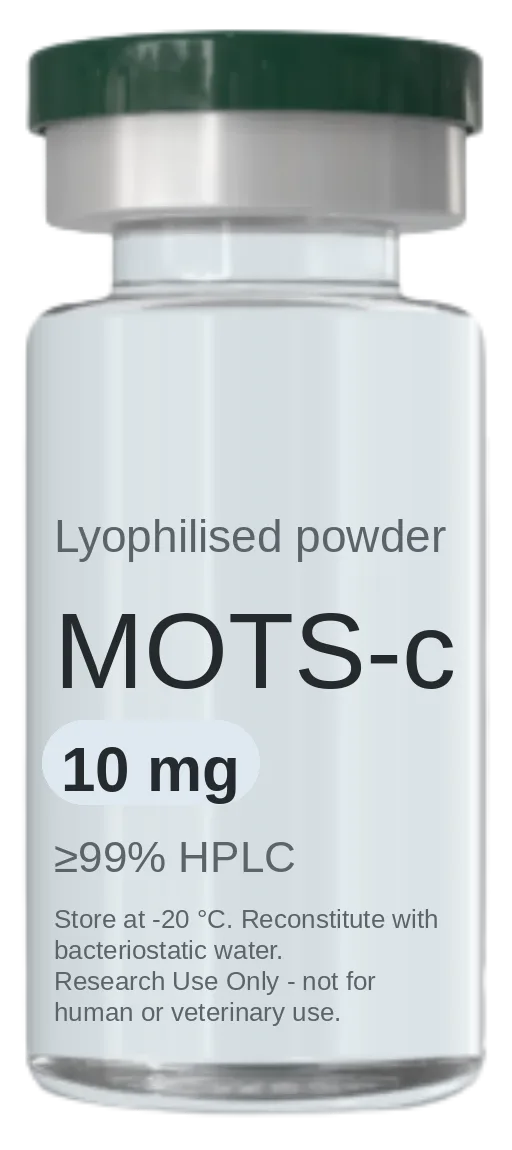
PeptoClinic publishes the certificates for the batches it supplies. The reports behind this were issued by Janoshik Analytical, an independent laboratory that tests research peptides, on April 13, 2026. The analysis of the retatrutide batch returned 99.893% purity on 11.96 mg of content in a vial labeled 10 mg. The MOTS-c batch came back at 99.669%, on 11.31 mg of content. That 99.669% is, as of today, the lowest number across all four published reports — and it's the one worth looking at if you want the actual floor, not the best case.
What to check in a certificate that's actually worth something
Not every PDF with the word "certificate" in the filename is equivalent. Before you assign any weight to one, check:
The analysis method
HPLC is the standard for measuring peptide purity. If the report doesn't state the method used, or says something generic like "quality analysis," there's no way to know what was actually measured.
The laboratory that signs it
A laboratory with a real name and a verifiable presence — like Janoshik Analytical — is not the same as an unnamed seal. If the certificate doesn't say who performed the test, it's an anonymous document.
The batch, not the generic product
A real certificate is tied to a batch with its own lot number or its own test date. If the same PDF gets used for every batch of a compound over months or years, that certificate has stopped describing what you're actually buying and become decoration.
Verification against the laboratory
When the laboratory offers a way to verify a result — a code, a link into the lab's own system — that adds a layer the PDF alone doesn't have: the ability to confirm the result directly at the source, instead of relying on the supplier not having altered the document.
Not every certificate includes this, and that's not always a sign that a supplier is hiding something — sometimes a lab's own verification system doesn't work at the moment someone tries to use it. What matters for you as a buyer is prioritizing the certificates where verification is actually possible.
Why this matters more when buying into Argentina
When a shipment crosses a border, there are fewer chances to fix a mistake after the fact. A mislabeled batch, or one with a purity different from what's stated, arrives at its destination, clears customs as laboratory reference material, and by the time anyone opens it and tests it — if they test it at all — the supplier has already been paid and the claim is much harder to pursue from a distance.
That's why, for a buyer working from Argentina, a certificate of analysis isn't a minor technical detail. It's the only evidence that exists before the material arrives. There's no way to "open the package and see" whether a peptide is 99.7% or 95% pure by looking at it. The certificate is the only point of contact between what was paid for and what actually shows up, and it's exactly what a supplier that publishes nothing is asking you to skip.
What a certificate doesn't replace
Publishing certificates doesn't automatically make a supplier serious about everything else — packaging, traceability, import documentation — but it's the minimum condition. A supplier can have good packaging and a good website and not have a single real certificate behind it. The reverse is nearly nonexistent: a supplier that actually invests in testing every batch with an independent lab rarely neglects the rest of the chain, because the certificate is the most expensive and hardest part to fake.
To see how this looks in practice — which compounds have a published report and from which batch — the quality page collects the current certificates, and compounds like BPC-157 and GHK-Cu also carry reports from Janoshik Analytical for their respective batches.
Research use only
Everything above applies to peptides supplied strictly for research use (RUO, Research Use Only): in vitro and laboratory research. None of the material described here is a drug, a supplement, or a food, and none of it is approved or intended for human or veterinary consumption, diagnosis, or treatment of any condition. A certificate of analysis proves the chemical purity of a batch, not efficacy or safety for any use outside that scope.
Frequently asked questions
What's the real difference between a supplier that publishes certificates and one that doesn't?
A supplier that publishes lets you check its purity claim against a lab report with a name, a date, and a method attached. A supplier that doesn't publish only has the claim, with nothing behind it that would hold up against a buyer trying to verify it.
Does a certificate of analysis prove a peptide is safe to use?
No. A certificate of analysis measures the chemical purity of a specific batch using a method like HPLC. It doesn't evaluate safety, efficacy, or any outcome in an organism, and it doesn't substitute for any regulatory review.
Which laboratory tests the batches PeptoClinic publishes?
Janoshik Analytical, an independent laboratory. The available reports correspond to tests run on April 13, 2026, on batches of retatrutide, MOTS-c, GHK-Cu, and a BPC-157/TB-500 combination.
Why do some certificates have a verification link and others don't?
It depends on whether the laboratory's own verification system is working for that particular report at the time. When it is, it lets you confirm the result directly at the source rather than relying on the PDF alone.
Is an old certificate still valid for a new batch?
Not necessarily. A certificate corresponds to the batch tested on that date. If a supplier keeps using the same certificate for different batches over a long period, that document has stopped describing what you're buying.
What purity is reasonable to expect from a research peptide with a certificate?
The reports published by PeptoClinic show results between 99.669% and 99.893% purity depending on the compound and batch. Each certificate states the exact number for that specific batch, which is what to look at instead of a generic figure.
How does this connect specifically to buying into Argentina?
When a shipment crosses a border, the certificate is the only evidence available before the material reaches its destination, since there's no visual way to confirm purity on arrival. For buyers in Argentina, prioritizing suppliers that publish certificates lowers the risk of receiving a batch that doesn't match what was claimed.
Is HPLC the only valid method for a certificate of analysis?
It's the most widely used and accepted standard for measuring peptide purity, but what matters most is that the certificate clearly states which method was used. A report that doesn't mention the method gives you no way to judge how reliable the result actually is.
Compounds mentioned
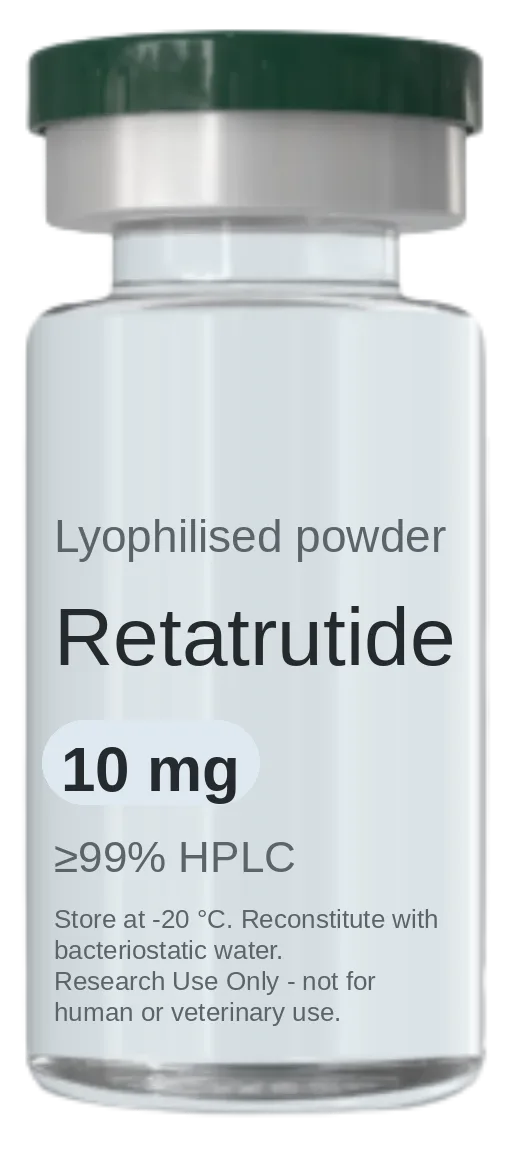
Retatrutide
Triple-agonist metabolic research peptide targeting GLP-1, GIP and glucagon receptors.
- Purity:
- ≥99% HPLC
- Sizes available:
- 10 mg
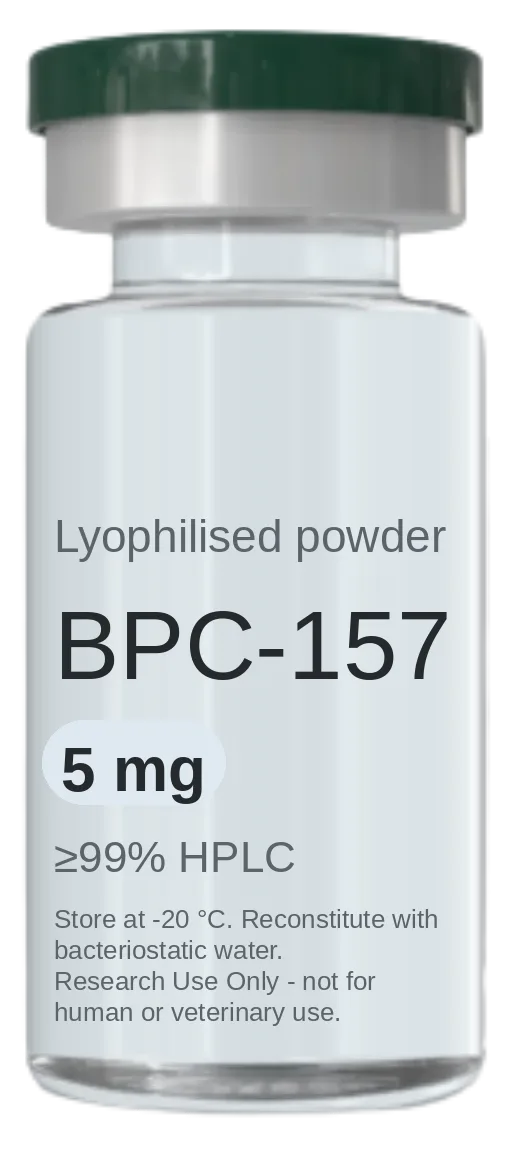
BPC-157 + TB-500
BPC-157 and TB-500 in a single vial — the pairing most studied together in tissue-repair research.
- Purity:
- ≥99% HPLC
- Sizes available:
- 5 mg + 5 mg
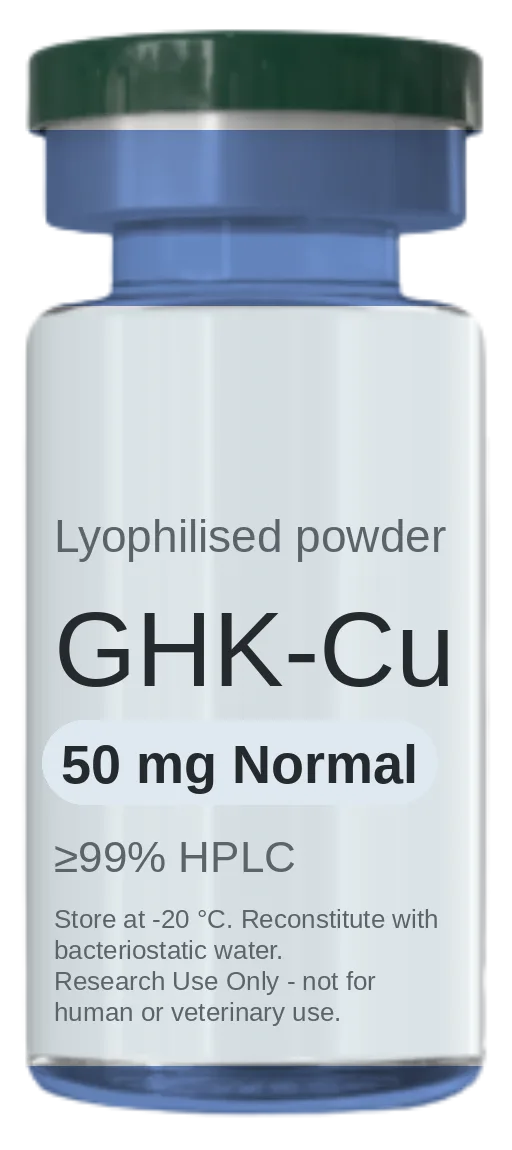
GHK-Cu (Copper Peptide)
Copper-binding tripeptide studied in extracellular matrix and dermal research models.
- Purity:
- ≥99% HPLC
- Sizes available:
- 50 mg Normal – 50 mg Plus
The consultation
One intake that settles goals, history and contraindications alongside compound, quantity, documentation and route — reviewed by a physician before anything ships.
More notes
-
NAD+ vs Epithalon: How They Differ
NAD+ is a coenzyme, Epithalon a synthetic peptide. What the literature studies for each, and how they differ as research material.
-
What Certificate Does ANMAT Require?
ANMAT doesn't issue a certificate to release research peptides from Argentine customs — here's what documentation actually does.
-
No Commercial Invoice: Argentina Customs
What Argentine customs does when a research peptide shipment arrives without the supplier's commercial invoice, and how to keep it from getting held.