Note
Epithalon vs Thymosin Alpha-1: Differences
Epithalon is a pineal-derived tetrapeptide tied to telomerase research; Thymosin Alpha-1 is a 28-amino-acid thymic peptide studied in immunology.
Epithalon and Thymosin Alpha-1 differ on three concrete points: the biological tissue each one originates from, the chemical structure of the molecule, and the research area the published literature actually covers. Epithalon is a synthetic tetrapeptide that reproduces a sequence isolated from the pineal gland, and the literature on it concentrates on the pineal axis and telomerase activity. Thymosin Alpha-1 is a 28-amino-acid peptide derived from a thymic fraction, and the published research on it sits almost entirely inside immunology. They are not variants of the same family and they are not interchangeable in a study design: different source tissue, different research field.
What Epithalon is
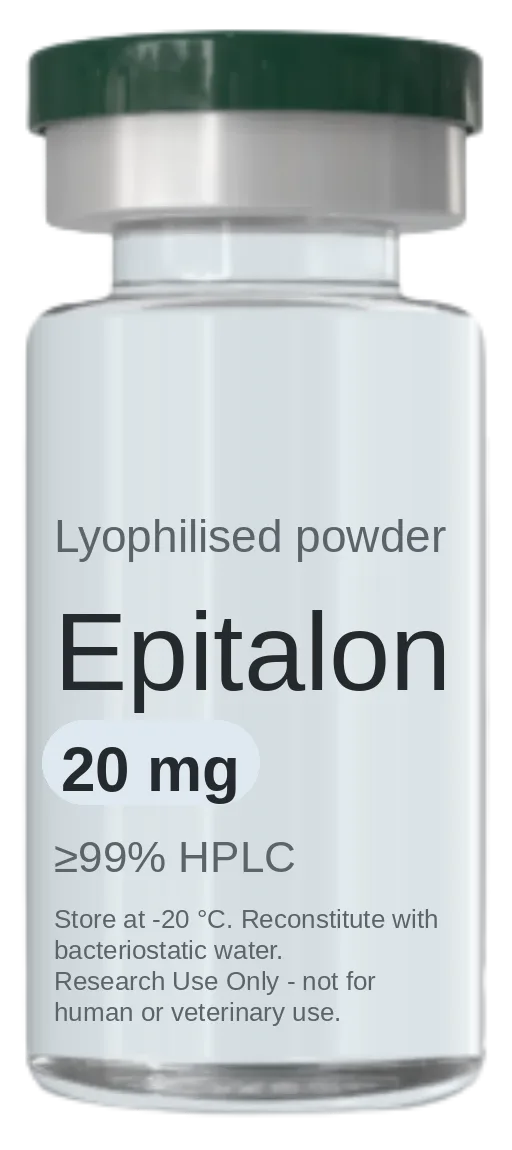
Epithalon is a short peptide — four amino acids — corresponding to the synthetic sequence of epithalamin, an extract originally isolated from the pineal gland by Vladimir Khavinson's research group in St. Petersburg. The literature on Epithalon runs along two lines: its relationship to melatonin production through the pineal axis, and its effect on telomerase activity in cell-culture models, where it is studied as a possible modulator of telomere shortening. By size, it is one of the smallest peptides in a research catalogue, and that short chain length is precisely what sets it apart from a much longer compound like Thymosin Alpha-1.
What Thymosin Alpha-1 is
Thymosin Alpha-1 is a considerably longer peptide — 28 amino acids — originally isolated from fraction 5 of bovine thymus. Unlike Epithalon, which has a pineal origin, Thymosin Alpha-1 is a thymus-derived peptide, and the thymus is the organ where T-lymphocytes mature. That is why the published research on Thymosin Alpha-1 sits almost entirely within immunology: in vitro studies on T-cell maturation, cytokine modulation, and innate immune response. There is no real functional overlap with Epithalon: one is studied in the context of cellular aging and the pineal axis, the other in the context of immunity.
Differences in origin and structure
Placed side by side, the structural differences are what best explain why the two peptides show up in separate research lines:
- Chain length: Epithalon has four amino acids; Thymosin Alpha-1 has 28. That size difference is not a minor detail — it shapes the molecule's stability, its behavior in solution, and the kind of assay each one is used in.
- Source tissue: Epithalon reproduces a pineal compound; Thymosin Alpha-1 comes from a thymic fraction.
- Nature of the synthesis: both are produced today by laboratory chemical synthesis rather than tissue extraction, but the sequence each one reproduces has a distinct biological origin.
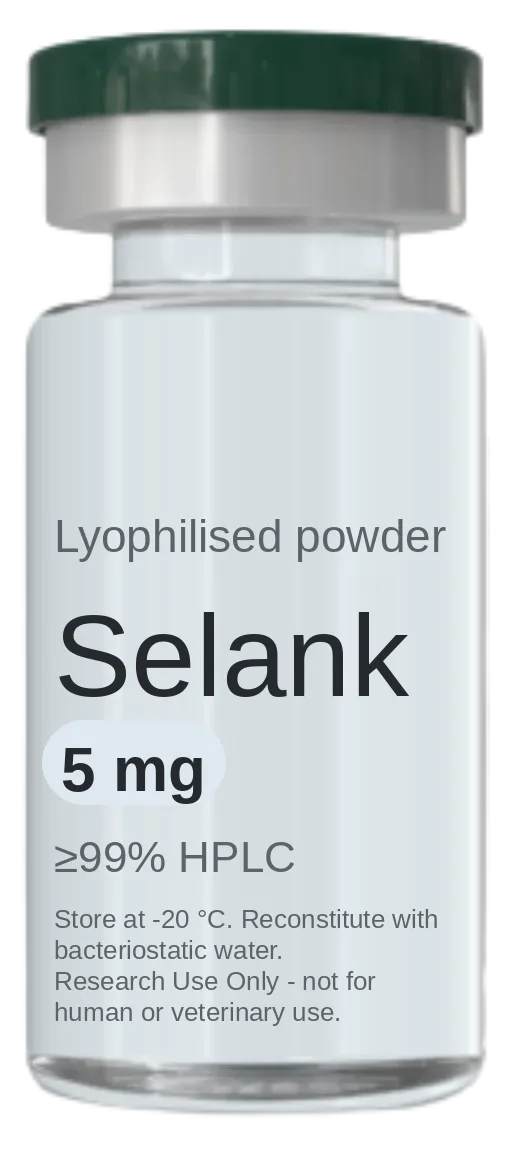
- Catalogue format: both are supplied as lyophilized powder in a vial, the standard format for reconstitution in laboratory research.
Differences in research area
The other way to compare them is by what is actually studied with each one, and there the separation is even clearer:
- Epithalon appears in studies on the pineal-melatonin axis, circadian rhythm regulation in animal models, and telomerase activity in cell lines.
- Thymosin Alpha-1 appears in studies on immunomodulation, T-lymphocyte maturation, and antiviral response in in vitro models.
- Neither compound, within the PeptoClinic catalogue, currently has a published lab report the way Retatrutide or MOTS-c do: that says nothing about the quality of a given batch, but it does mean that a researcher who needs that specific document for a protocol should ask for it before finalizing a purchase.
- Both are classified, broadly, as "bioregulator" peptides in the literature, but they act on distinct biological systems — there is no shared mechanism that would make them substitutable for one another in an experimental design.
Documentation and purity
PeptoClinic holds a purity standard of 99% HPLC or higher across the research peptides in its catalogue. That standard applies to the whole catalogue, Epithalon and Thymosin Alpha-1 included, but the level of public documentation varies by compound: some batches carry a published independent third-party report — like the ones issued by Janoshik Analytical for Retatrutide and MOTS-c — and others do not yet have a report of that kind available online. The correct way to verify this, for any compound in the catalog, is to request the specific batch's documentation before finalizing a quote, not to assume a stated standard is equivalent to a published certificate.
Shipping to Argentina
PeptoClinic supplies research peptides to Argentina, with the customs file prepared for import as laboratory reference material. Neither Epithalon nor Thymosin Alpha-1 currently has a dedicated Argentina destination page on this site, but both are quoted through the same process as the rest of the catalogue: the technical team reviews the compound, quantity, batch documentation, and shipping route, and returns a written quote. Anyone who wants the detail on destinations and shipping logic can check the Argentina page or the shipping section.
Research use only
Epithalon and Thymosin Alpha-1 are supplied strictly for research use (RUO, Research Use Only): in vitro and laboratory work. Neither is a medicine, a supplement, or a food; neither is approved for human or veterinary consumption; and none of the statements in this text have been evaluated by ANMAT, the FDA, or an equivalent authority. PeptoClinic is not a pharmacy, a clinic, or a telehealth provider, and does not offer dosing, administration, or protocol guidance for people — that kind of request is declined outright.
Frequently asked questions
Do Epithalon and Thymosin Alpha-1 belong to the same peptide family?
No. Epithalon reproduces a pineal peptide and Thymosin Alpha-1 comes from a thymic fraction; they are molecules with distinct biological origins studied in separate research fields.
Which of the two is larger?
Thymosin Alpha-1, at 28 amino acids, is considerably larger than Epithalon, which has only four.
Do both carry the same stated purity?
The PeptoClinic catalogue holds a ≥99% HPLC standard for its research peptides, but the published lab report varies by compound and batch — it's worth requesting the specific documentation before finalizing a quote.
Can they be combined in the same research protocol?
That depends on each researcher's experimental design and study objective; PeptoClinic does not offer protocol recommendations, since it supplies this material under a research-use-only condition.
Is either one approved for human use in Argentina?
No. Neither is approved for human or veterinary use in any market where PeptoClinic operates; both are supplied exclusively as research material (RUO).
Does PeptoClinic ship Epithalon and Thymosin Alpha-1 to Argentina?
Yes, Argentina is a served destination within PeptoClinic's operation, with the customs file prepared for import of the material as laboratory reference material.
Is there an independent lab report for Epithalon or Thymosin Alpha-1?
As of this publication, there is no independent third-party report available online for these two compounds, unlike other catalogue items such as Retatrutide or MOTS-c; checking the batch documentation before requesting a quote is recommended.
What format do the two peptides come in?
Both are supplied as lyophilized powder in a vial, the standard PeptoClinic catalogue format for reconstitution in a laboratory setting.
Compounds mentioned
The consultation
One intake that settles goals, history and contraindications alongside compound, quantity, documentation and route — reviewed by a physician before anything ships.
More notes
-
Tracking a Shipment Through Argentine Customs
How to track a research peptide shipment through Argentine customs: courier status vs. customs channel, and required paperwork.
-
What Is Argentina's Single Import Window?
What the VUCE is, how it works, and what role it plays when a batch of research peptides clears customs into Argentina.
-
NAD+ vs Epithalon: How They Differ
NAD+ is a coenzyme, Epithalon a synthetic peptide. What the literature studies for each, and how they differ as research material.