
Note
What Is Argentina's Single Import Window?
What the VUCE is, how it works, and what role it plays when a batch of research peptides clears customs into Argentina.
The Ventanilla Única de Comercio Exterior (VUCE) is the Argentine government's single online system for import paperwork: licenses, the certificates required from any regulatory body with jurisdiction over a given product, and the record that customs checks before releasing a shipment. Every import that crosses into Argentina passes through it, and a batch of research peptides is no exception — clearance depends on the documentation attached to that shipment being loaded and approved inside the system before customs moves forward.
What the VUCE actually does
Before the VUCE existed, an importer had to approach each relevant agency separately — customs, and depending on the product category, one or more regulatory bodies — and re-enter the same data at each physical window. The single system replaced that: the paperwork is loaded once, online, and routed automatically to whichever agencies need to weigh in, based on the tariff classification and the declared nature of the goods.
In practice, the VUCE does three things:
- It centralizes the documentation for an import into a single digital filing.
- It routes that filing to the agencies that have jurisdiction, depending on what's being imported.
- It keeps a traceable record of every step, which is what customs consults at the point of clearance.
It is not a regulator that approves or rejects a shipment on its own authority. It is the infrastructure through which the approvals of the agencies that do have that authority pass. Anyone who wants to see the system directly can check the VUCE portal run by Argentina's Ministry of Economy.
How the process looks in practice
An importer — or the customs broker acting on their behalf — loads the shipment details into the VUCE: what is being imported, in what quantity, who is sending it, which tariff classification applies, and what technical documentation supports that classification. The system automatically flags whether that classification requires review from a specific agency before customs can release the goods.
For most general cargo, that filing moves in a fairly straight line. For product categories that have an assigned control agency — food, agrochemicals, veterinary products, medicines — the VUCE adds a review step before clearance. The tariff classification and how the goods are declared decide which path the filing takes inside the system, and that path is different depending on whether the shipment is declared as a finished medicine, a laboratory reagent, or reference material for research.
The Dirección General de Aduanas, part of AFIP, is the body that ultimately executes clearance once the filing in the VUCE is complete.
The VUCE's role in importing research peptides
The role the VUCE plays for a batch of research peptides is the same role it plays for any import: it centralizes the documentation attached to the shipment and determines, based on how that product is classified, what additional review applies before clearance. A compound like retatrutide, declared and imported as laboratory reference material for research, follows the documentary path that classification calls for — not the path a finished medicine intended for human consumption would follow — and that path is exactly what the VUCE organizes and records.
This is why the paperwork accompanying a shipment matters as much as the shipment itself. A batch that arrives without a technical data sheet for the compound, without a certificate of analysis for that specific lot, and without a clear statement that the material is RUO (Research Use Only) is a batch a customs broker cannot classify with confidence inside the system — and that's what produces delays, requests for clarification, or a hold in bonded storage. The VUCE doesn't invent that requirement. It makes it visible, because it's the point where the whole documentary chain converges before customs decides.
What documentation has to travel with the batch
When PeptoClinic prepares a shipment bound for Argentina, the paperwork is built around that process from the start, not assembled after the shipment has already left. At minimum, that includes:
- The certificate of analysis (COA) for the specific lot, issued by the lab that ran the test — in PeptoClinic's case, Janoshik Analytical — with purity measured by HPLC.
- A technical data sheet for the compound, with its chemical identification and its form (vial, lyophilized powder).
- An explicit statement of use: material for laboratory research, not for human or veterinary consumption.
That documentation is the same set published on the quality page, and it's what a customs broker needs to file the operation correctly inside the VUCE. Without those three elements, there's nothing for the filing to move forward on.
The material is for research, not human use
Everything PeptoClinic supplies is classified as research material (RUO): for laboratory use, in vitro or in research studies. Nothing in the catalog is a medicine, a supplement, or a food. Nothing is approved or intended for human or veterinary consumption, diagnosis, or treatment, and no claim on this site has been evaluated by ANMAT, the FDA, or any equivalent authority. PeptoClinic is not a pharmacy, a clinic, or a telehealth service, and it does not write or fill prescriptions.
Why this matters for researchers in Argentina
A lab, an independent researcher, or a center working with cell cultures or in vitro models that receives research peptides in Argentina doesn't usually deal with the VUCE directly — that's handled by the customs broker or logistics operator managing the shipment. But understanding what the system is explains why the documentation attached to an order isn't a secondary formality. It's the piece that decides whether a shipment moves through without friction or sits in a control channel.
That's why PeptoClinic assembles the paperwork for every shipment before it goes out, and why quotes account for the full import route to each destination it serves, Argentina included. The details of that logistics — transit times, cold chain, destination-specific documentation — are on the shipping page, and anyone who wants to understand how the consultancy works can read about PeptoClinic.
Frequently asked questions
Is the VUCE a customs agency?
No. The VUCE is the online system where an import's documentation is centralized; the body that executes final clearance is the Dirección General de Aduanas, part of AFIP. The VUCE organizes the filing and routes it to the relevant agencies depending on the product, but it doesn't replace customs.
Does every imported product go through the VUCE?
Yes, the system centralizes the documentary filing for imports in general. What varies by product is whether, beyond that initial filing, an additional control agency needs to review it before customs authorizes clearance.
Does a research peptide need the same documentation as a medicine?
No. The documentation required depends on how the product is classified at the point of import. A peptide declared and imported as laboratory research material follows a different documentary path than a finished medicine intended for human consumption.
What certificate has to travel with a batch of peptides?
The certificate of analysis (COA) for that specific lot, issued by the lab that ran the test, with measured purity and compound identification. PeptoClinic publishes that information on its quality page for every lot it reports on.
Who files the paperwork in the VUCE, the buyer or the supplier?
It's usually the customs broker or logistics operator handling the import, using the documentation the supplier provides with the shipment. The buyer generally doesn't interact with the system directly.
Does a delay in the VUCE mean the shipment is stuck indefinitely?
No. A delay in the review process is usually resolved by submitting the missing documentation or clarifying the declared classification. That's why the complete file — COA, technical data sheet, and statement of use — is prepared before a shipment goes out, not after it's already been flagged.
Does PeptoClinic handle the VUCE filing on the buyer's behalf?
PeptoClinic prepares and provides the documentation that filing requires with every shipment. The specific customs process at the destination is handled by the customs broker or logistics operator involved in that import.
Does this apply to every compound in the catalog, or just retatrutide?
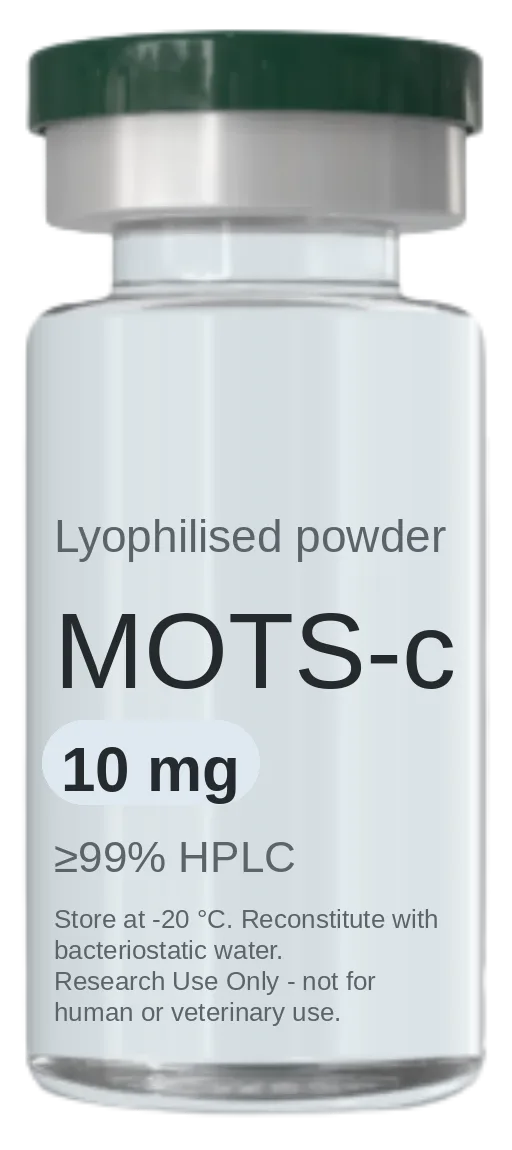
Yes. The same documentary standard — a lot-specific COA, a technical data sheet, and a statement of research use — applies to every compound in the catalog, including compounds with their own Argentina-specific pages, such as MOTS-C or BPC-157.
Compounds mentioned
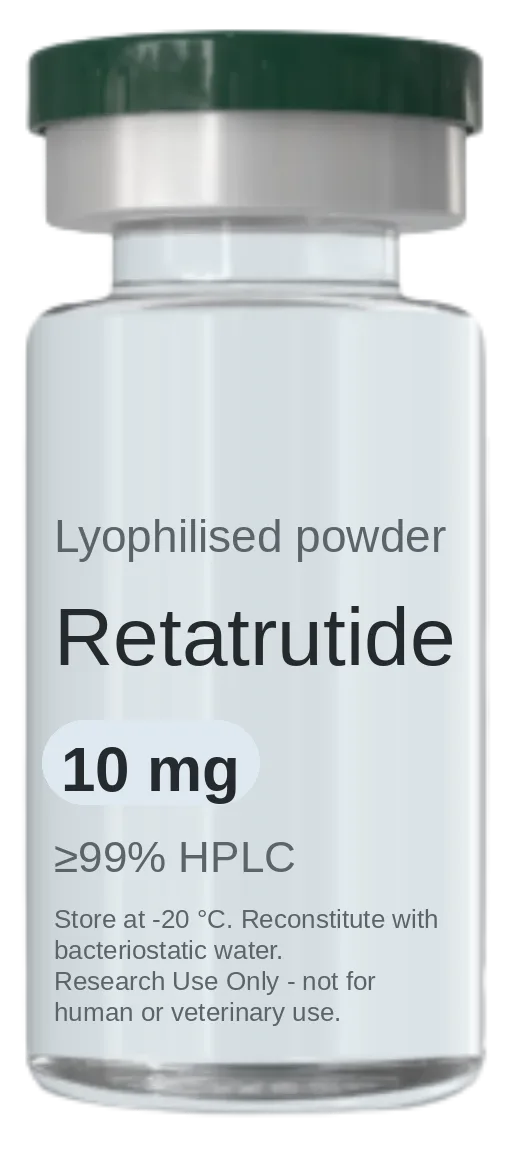
Retatrutide
Triple-agonist metabolic research peptide targeting GLP-1, GIP and glucagon receptors.
- Purity:
- ≥99% HPLC
- Sizes available:
- 10 mg
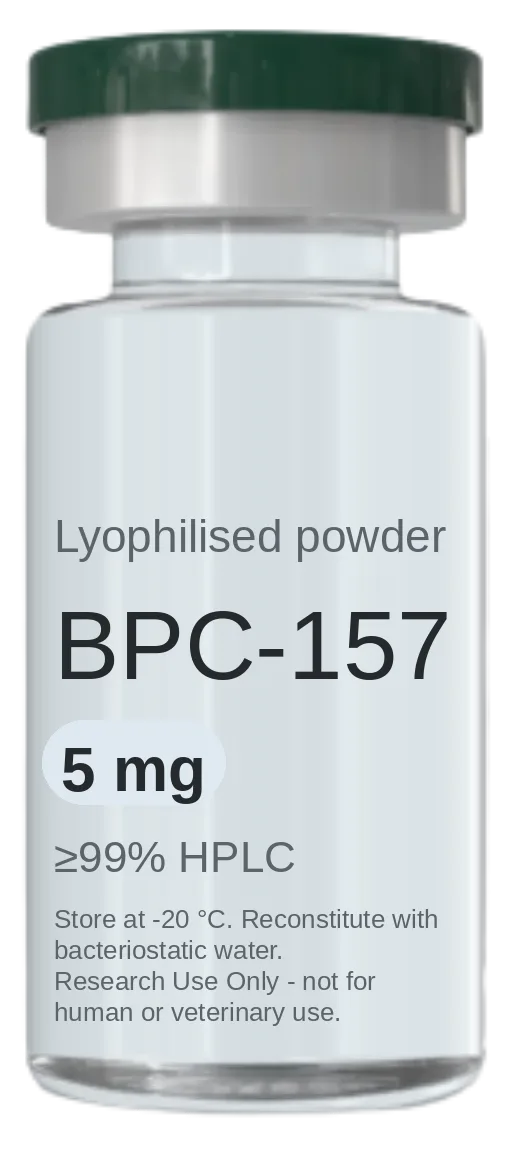
BPC-157 + TB-500
BPC-157 and TB-500 in a single vial — the pairing most studied together in tissue-repair research.
- Purity:
- ≥99% HPLC
- Sizes available:
- 5 mg + 5 mg
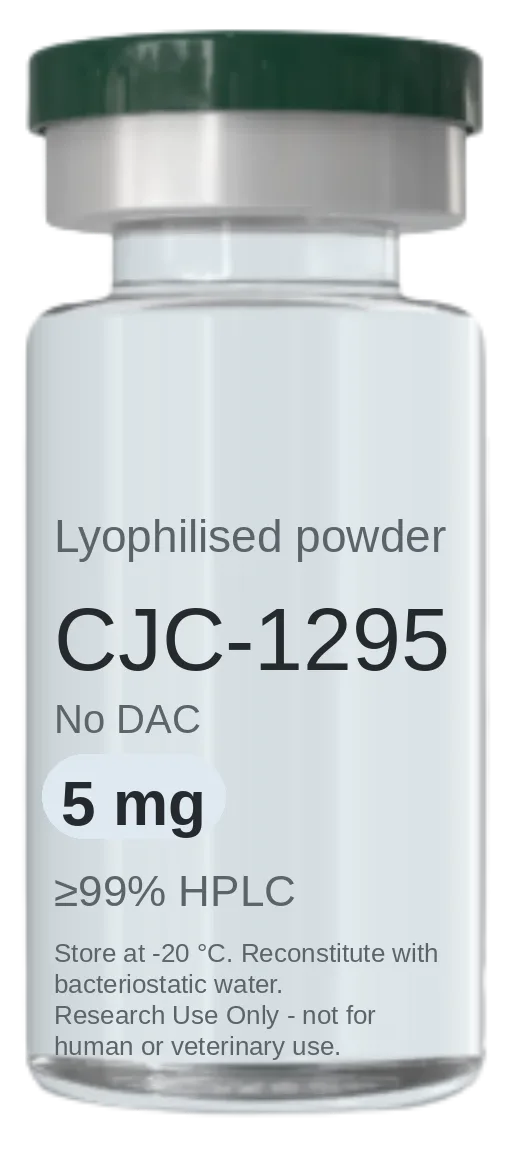
CJC-1295 (sin DAC)
Modified GRF(1-29) tetrasubstituted analogue without drug affinity complex.
- Purity:
- ≥99% HPLC
- Sizes available:
- 5 mg – 20 mg
The consultation
One intake that settles goals, history and contraindications alongside compound, quantity, documentation and route — reviewed by a physician before anything ships.
More notes
-
NAD+ vs Epithalon: How They Differ
NAD+ is a coenzyme, Epithalon a synthetic peptide. What the literature studies for each, and how they differ as research material.
-
Epithalon or Selank: What's the Difference
Epithalon is studied for telomerase and circadian rhythm; Selank for anxiety and cognition. Mechanism, structure, and documentation of each.
-
Peptide Suppliers: COA vs No COA
What separates a peptide supplier that publishes lab certificates of analysis from one that only claims purity without proof.