
Note
CJC-1295 With DAC or Without: The Difference
CJC-1295 with DAC and without DAC differ in half-life and how each shapes GH pulse patterns according to published research.
CJC-1295 with DAC and CJC-1295 without DAC are structurally distinct compounds that model different pharmacokinetic behaviors. The without-DAC variant acts within a short window that mirrors physiological GH pulsatility; the with-DAC variant incorporates a chemical modification that extends active half-life from minutes to days. These are not interchangeable reagents: each enables a different class of experimental design, and substituting one for the other without redesigning the protocol changes the study in ways that make results incomparable with prior literature.
What CJC-1295 is
CJC-1295 is a synthetic analogue of growth hormone-releasing hormone (GHRH). The native 44-amino-acid GHRH sequence degrades rapidly in plasma, primarily through dipeptidyl peptidase IV (DPP-IV) and other peptidases. The first 29 amino acids — the fragment known as Mod GRF 1-29 — retain the binding capacity for the GHRHR receptor but remain vulnerable to proteolysis. CJC-1295 introduces substitutions at critical positions to improve resistance to that degradation.
The compound exists in two forms: one without any additional functional group, sold as CJC-1295 without DAC or Mod GRF 1-29, and one with a Drug Affinity Complex (DAC) attached. The presence or absence of that group is the only structural difference between the two variants, but its pharmacokinetic consequences are substantial.
What the DAC does
The Drug Affinity Complex is a maleimide group linked via a thioether bond to a lysine residue built into the peptide sequence. That bond allows non-covalent association with cysteine-34 of human serum albumin. Once bound to albumin, the peptide is protected from renal filtration and proteolysis, and released gradually into the free compartment.
The result is a plasma depot profile: albumin acts as a circulating reservoir that maintains active concentrations for days. The modification does not alter the N-terminus of the peptide, which is the region that interacts with the GHRHR receptor. Published receptor affinity studies indicate that the DAC does not compromise binding potency; its effect is exclusively pharmacokinetic.
The central difference: half-life and secretion pattern
Without DAC, the peptide behaves like Mod GRF 1-29, with an active plasma half-life that the literature places at around 30 minutes. That short profile is compatible with the study of discrete GH pulses: researchers can design experiments with precise exposure windows and repeatable conditions between administrations. Publications in the *Journal of Clinical Endocrinology & Metabolism* and *Endocrinology* used short-half-life formulations specifically for this reason — each modelled pulse is independent and controllable.
With DAC, studies published by Walker and colleagues in 2006 and 2009 in the *Journal of Clinical Endocrinology & Metabolism* measured elevated GH and IGF-1 levels sustained for seven to eight days following a single administration in clinical research subjects. That persistence is useful for designs requiring prolonged exposure without frequent administrations, but it introduces an accumulation variable that short-pulse models do not carry: the compound remains active in the system long after the initial stimulus.
Choosing between variants depends on what the experiment is measuring. A model that needs to replicate episodic GH secretion requires the without-DAC variant. A model studying downstream effects of sustained GHRHR stimulation may require the with-DAC variant to avoid repeated administrations during the observation period.
CJC-1295 without DAC in experimental designs
CJC-1295 without DAC appears most frequently in designs that require fine-grained temporal control over GH pulses. Its short elimination profile makes it suitable for studies evaluating interaction with other secretagogues of similar half-life, such as ipamorelin, which acts on the ghrelin receptor (GHSR) rather than GHRHR.
Combining compounds that act on independent pathways — GHRHR and GHSR — has been reported in the research literature as a model for observing additive effects on GH secretion in animal systems. Those designs require precise timing of each exposure, which favors short-half-life compounds over depot formulations.
PeptoClinic Research Supply quotes CJC-1295 without DAC for research programmes in Argentina and other Latin American destinations. Shipping and documentation conditions for import as laboratory reference material are described on the Argentina page.
CJC-1295 with DAC: design considerations
CJC-1295 with DAC introduces what researchers call the plasma depot effect: the compound accumulates and releases gradually, making fine-resolution temporal control of exposure difficult. That characteristic is a drawback in pulse studies and an advantage in prolonged-exposure studies where the objective is not GH secretion dynamics but the effects of sustained GHRHR stimulation.
One factor that laboratory protocols must account for is that the extended half-life implies accumulation between exposures if the interval between sessions is shorter than the full elimination time. In murine models, observed half-life is shorter than what the published human studies document, which requires species-specific adjustment in experimental design.
Batch documentation for laboratory use
Both variants are research peptides that must be accompanied by per-lot analytical documentation before entering any experiment. A Certificate of Analysis (CoA) issued by an independent laboratory must include HPLC results to confirm purity and identity, and mass spectrometry to verify molecular weight. Without that document, the actual concentration of the compound in a given lot is unknown, and any result that depends on it has no verifiable basis.
PeptoClinic Research Supply includes a per-lot CoA with every delivery. Published lots and their analytical documentation are available for review on the quality page. Lots published to date were analysed by Janoshik Analytical, with HPLC purity results above 99% in all cases.
Research use only
All material supplied by PeptoClinic Research Supply is for research use only (RUO): in vitro and controlled laboratory settings. CJC-1295 with DAC and CJC-1295 without DAC are not approved or intended for human or veterinary consumption, for diagnosis, or for treatment of any medical condition. No claim in this article has been evaluated by ANMAT, the FDA, or any equivalent regulatory authority.
Quotation requests are handled through [email protected]. The technical team at PeptoClinic reviews purity specification, quantity, lot documentation, and cold-chain and customs conditions for each destination. The full peptide catalogue lists all compounds PeptoClinic quotes for research programmes.
Frequently asked questions
Is half-life the only difference between the two variants?
Half-life is the most direct consequence of the structural difference, but the more relevant distinction for experimental design is the exposure pattern each variant enables. The without-DAC variant allows discrete, repeatable pulses; the with-DAC variant creates a plasma depot that makes fine temporal control difficult. For many designs, that difference in control is more consequential than duration alone.
Are the two variants interchangeable in an experiment?
No. Substituting one variant for the other without redesigning the protocol changes the pharmacokinetics of the study in ways that make results incomparable with literature that used the other compound. An experimental protocol must specify which variant it uses and justify the choice based on the phenomenon under study.
What half-life does CJC-1295 without DAC have?
The literature places it at around 30 minutes of active plasma half-life under standard conditions. This value varies by experimental model — in vitro, rodent, non-human primate — and assay conditions. Reference values appear in the Walker and colleagues studies published in the *Journal of Clinical Endocrinology & Metabolism*.
What about CJC-1295 with DAC?
The Walker et al. clinical studies (2006 and 2009) documented elevated GH and IGF-1 levels sustained for seven to eight days after a single administration in research subjects. In murine models, half-life is considerably shorter; cross-species extrapolation requires experimental adjustment based on published data for each model.
Is a CoA required before using either variant?
Yes. A per-lot CoA with HPLC and mass spectrometry results is the minimum documentation required before incorporating any peptide into an experiment. Without that document it is not possible to verify identity or purity, which invalidates any result that depends on the actual concentration of the compound.
Does PeptoClinic supply both variants?
PeptoClinic Research Supply quotes [CJC-1295 without DAC](/en/product/cjc-1295-no-dac/) for research in Argentina and other Latin American destinations. To enquire about availability of the with-DAC variant or other specific requirements, the contact is [email protected].
Is there a storage stability difference between the two variants?
Storage recommendations are equivalent for both: lyophilised powder form, kept at refrigeration temperature or below, protected from light. The DAC group does not introduce additional instability under standard laboratory conditions. Half-life in reconstituted solution is more temperature-sensitive than the powder form, regardless of variant.
What other compounds does the literature study alongside CJC-1295?
The literature most frequently combines CJC-1295 with peptides acting on the ghrelin receptor (GHSR), such as ipamorelin, because the two pathways — GHRHR and GHSR — have documented additive effects on GH secretion in animal models. CJC-1295 also appears in comparative designs with other GHRH analogues of different half-lives, such as sermorelin and tesamorelin. PeptoClinic quotes several of these compounds; details are on the catalogue page.
Compounds mentioned
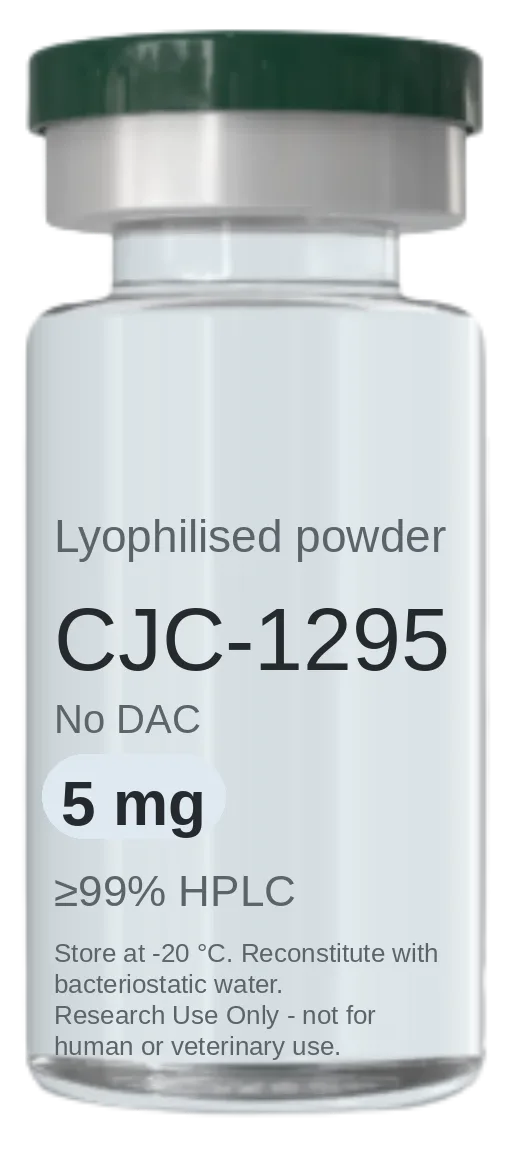
CJC-1295 (sin DAC)
Modified GRF(1-29) tetrasubstituted analogue without drug affinity complex.
- Purity:
- ≥99% HPLC
- Sizes available:
- 5 mg – 20 mg
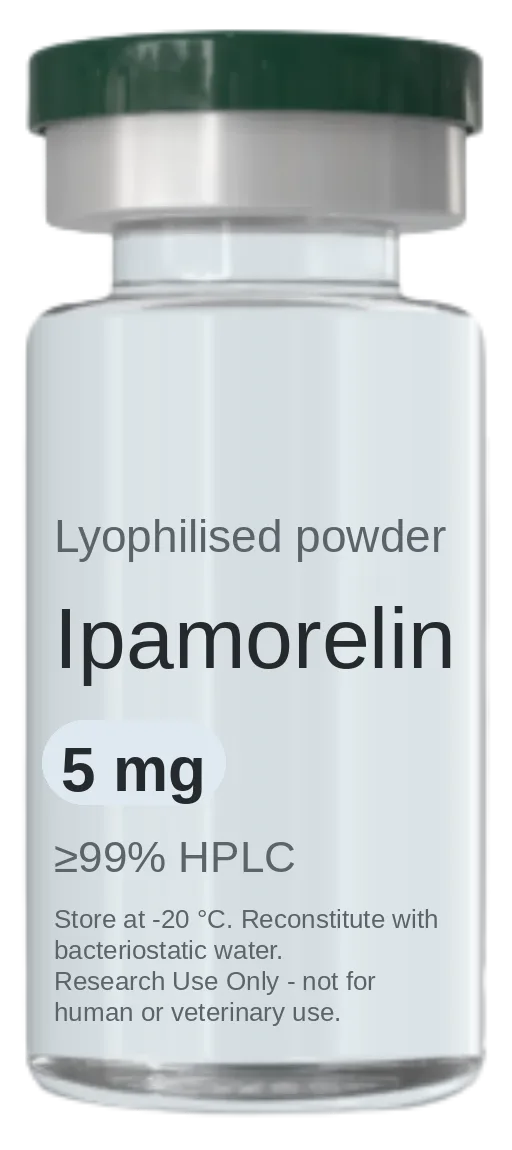
Ipamorelin
Selective ghrelin receptor (GHS-R1a) agonist pentapeptide.
- Purity:
- ≥99% HPLC
- Sizes available:
- 5 mg – 20 mg
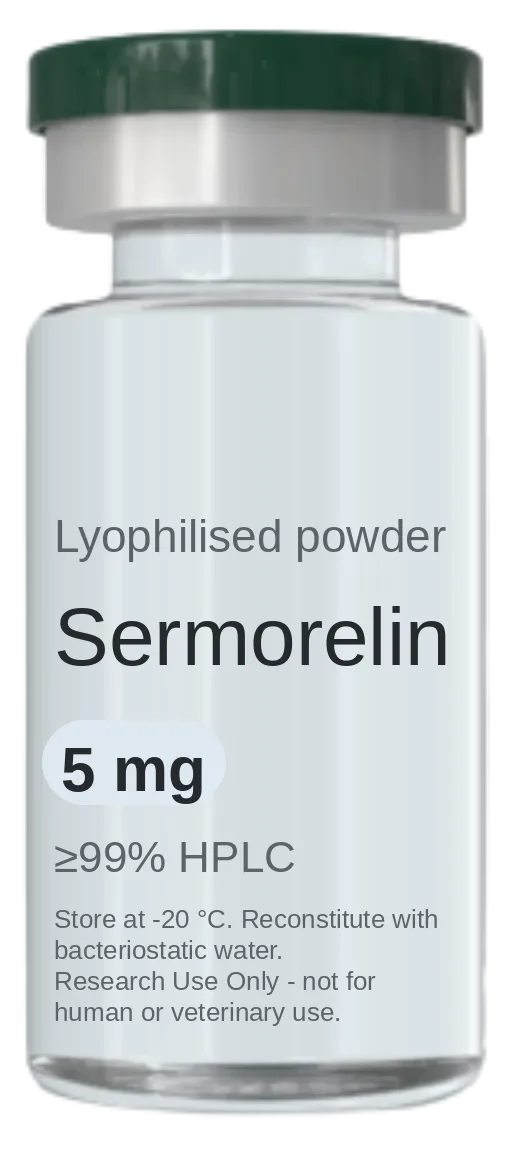
Sermorelin
Growth hormone-releasing hormone analogue used in endocrine signalling research.
- Purity:
- ≥99% HPLC
- Sizes available:
- 5 mg – 20 mg
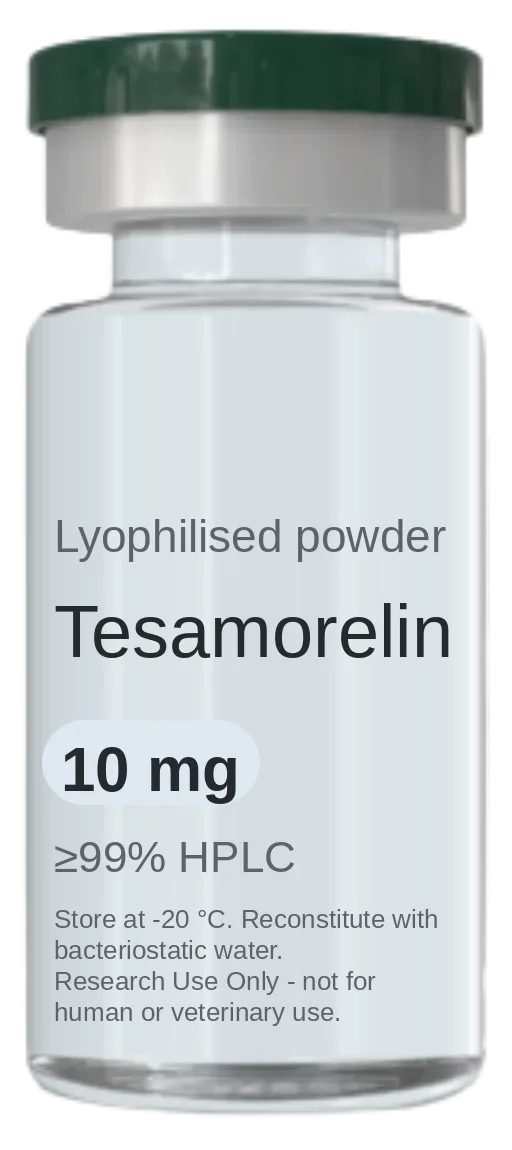
Tesamorelin
Stabilised GHRH(1-44) analogue studied in adipose tissue distribution research.
- Purity:
- ≥99% HPLC
- Sizes available:
- 10 mg – 20 mg
The consultation
One intake that settles goals, history and contraindications alongside compound, quantity, documentation and route — reviewed by a physician before anything ships.
More notes
-
Tesamorelin vs Sermorelin: The Difference
Tesamorelin and sermorelin are both GHRH analogs, but not the same molecule. Here's the structural difference and what the studies on each measure.
-
Peptide Supplier vs. Reseller: What Differs
The real difference is whether someone can name the lab that tested a batch and show the report — or only promise it's pure.
-
MOTS-c or NAD+: What's the Difference
MOTS-c and NAD+ are studied through different mitochondrial pathways; here's what each line of research actually measures.