
Note
Peptide Supplier vs. Reseller: What Differs
The real difference is whether someone can name the lab that tested a batch and show the report — or only promise it's pure.
The difference isn't in the price or how fast someone answers a message: it's in whether they can name the laboratory that analyzed a specific batch and show that report, or whether all they offer is a claim that "it's pure." A supplier works with verifiable, batch-specific documentation that traces back to a named independent laboratory. A reseller buys material that's already packaged from a third party they don't identify, puts their own label on it, and sells with whatever paperwork happens to be on hand — when there is any.
That distinction looks small until you go looking for it. Ask for the certificate of analysis for one particular batch — not a generic PDF that's been circulating for a year — and that's exactly where you find out who can answer and who changes the subject.
What does a supplier do that a reseller doesn't?
A research supplier quotes according to what's actually needed: the compound, the purity specification requested, the quantity, and the shipping route and customs documentation that applies to the destination. There's no fixed catalogue with a buy button — a written quote gets built for that specific order, and the quote states which lab report will accompany the batch.
A reseller doesn't have that control over origin. They buy in bulk from a supplier they don't name — often because they genuinely don't know with certainty, or because naming it doesn't suit them — repackage or relabel, and sell with whatever they've got: sometimes an old certificate they show for everything, sometimes nothing at all. The question that separates one from the other is simple: does the lab report correspond to this specific batch, or is it an image that gets recycled to justify any order?
The full catalog at PeptoClinic lists every compound with the purity specification it's supplied against and, where one exists, the batch report that backs it.
Why does it matter who signed the lab report?
Because a report with no laboratory named on it isn't a report — it's an image. The reports published on the quality page at PeptoClinic were analyzed by Janoshik Analytical, an independent laboratory, and each one carries its own analysis date and its own purity result. They aren't the same document reused for different products.
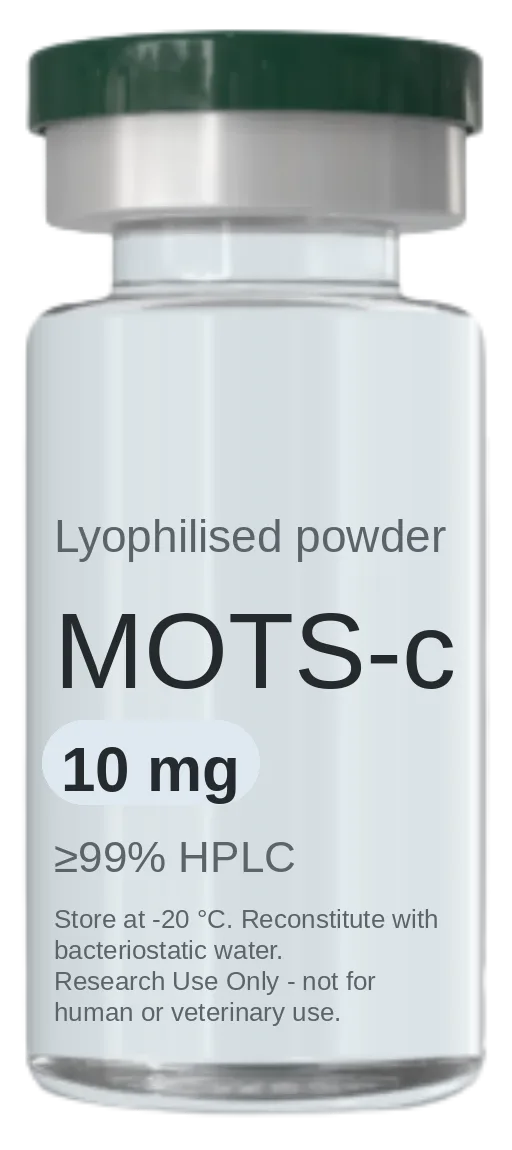
That's where it's worth looking at the lowest number, not the highest. The report on a batch of MOTS-c came back at 99.669% purity. The report on a batch of Retatrutide came back at 99.893%. The figure that tells you something about how serious an operation actually is isn't the best result it can show off — it's the worst one. If the batch with the lowest result is still a real, signed, dated report, that says more about the consistency of the process than any single high number.
A reseller can rarely show this because they don't control the source batch. They buy whatever's available on the wholesale market, and that material can come from different manufacturers at different times, with no way for the reseller to demand a report for every lot they resell.
How do you spot a reseller in practice?
There are concrete signals, and none of them depend on taking anyone's word for it:
- The certificate never changes. If the same PDF, with the same date, keeps showing up as backup for orders placed months apart, that certificate doesn't correspond to what's about to ship.
- No laboratory is named, or the name can't be checked. A real report carries the laboratory's name, the analysis date, and a task or sample identifier. If any of the three is missing, there's no way to confirm anything.
- The seller can't say where the material came from. A supplier who sourced a batch and had it analyzed can explain that chain. A reseller who bought from another reseller often can't.
- The customs paperwork is generic. Shipping material into Argentina as laboratory reference material requires documentation that correctly describes what's actually being imported. A reseller who's simply forwarding third-party packages doesn't always control that detail — and it's exactly the detail that determines whether a shipment gets held up at customs.
None of this gets resolved by asking "is it pure?" It gets resolved by asking for the document and checking whether it matches the actual batch.
What documentation should accompany a batch?
At minimum, a certificate of analysis (COA) from the laboratory that evaluated that specific batch, stating the compound, the analysis date, and the purity result obtained by HPLC. When the laboratory offers public verification, that verification needs to point to something that actually works when you open it — a certificate that links to a broken page is worth exactly as much as a reseller with no certificate at all.
Beyond that report, a serious supplier's quote includes the shipping route that applies to the destination and import documentation prepared so the material enters identified as what it is: laboratory reference material for research. PeptoClinic details this on the shipping page for every destination it works with, Argentina included.
Research material, not for human or veterinary use
Everything on this site is supplied strictly for research use only (RUO): in vitro and laboratory studies. No product is a drug, a supplement, or a food. Nothing is approved for or intended for human or veterinary consumption, diagnosis, or treatment, and no claim about these compounds has been evaluated by the FDA, ANMAT, or any equivalent regulatory body. No prescription is issued or required, and requests for dosing, administration, or use guidelines for people are declined.
When the difference stops being theoretical
The gap between supplier and reseller stops being a vocabulary argument at the exact moment something needs to be proven: when a shipment gets held at customs and coherent documentation has to be produced, or when someone needs to cite a batch's purity in a lab protocol and can't do it with an image that has no traceable origin. The way that quoting process is organized — the point where that traceability either starts or doesn't — is explained on the company page.
Frequently asked questions
Can a reseller still have good purity?
They can, but they can't prove it batch by batch if they don't control where the material came from or require their own report for every lot. Declared purity with no verifiable report matching that specific shipment is a claim, not a checkable fact.
Which laboratory analyzes PeptoClinic's batches?
Janoshik Analytical, an independent laboratory. The published reports correspond to analyses run on April 13, 2026, on specific batches, with the date and purity result stated on each document.
Why highlight the lowest number instead of the highest?
Because the lowest published number shows whether the process is consistent. Anyone can show off their best result; showing the worst one and still having it be a real, signed report says more about the seriousness of the quality control.
How do I know a certificate matches the batch I'm about to receive?
Check that the analysis date, the compound, and the sample identifier match the specific order — not a generic document you've already seen in another context. If the laboratory offers public verification, confirm the link actually works when you open it.
Does PeptoClinic sell directly, or only quote?
Only quote. There's no cart and no published price: the compound, the purity specification, and the quantity needed get described, and a written quote comes back, typically within one business day.
Can research material be shipped to Argentina?
Yes, Argentina is one of the served destinations, with documentation prepared so the material enters identified as laboratory reference material.
Does every compound in the catalog have a published lab report?
Not every compound has a report published on the quality page today. The list of available reports gets updated as new batches are analyzed, so it's worth checking directly rather than assuming a specific compound has one.
What's the difference between declared purity and verified purity?
Declared purity is the specification a compound is offered against. Verified purity is what a laboratory analysis found on an actual batch, with a date and identifier attached. Only the second can be confirmed by opening a document.
Compounds mentioned
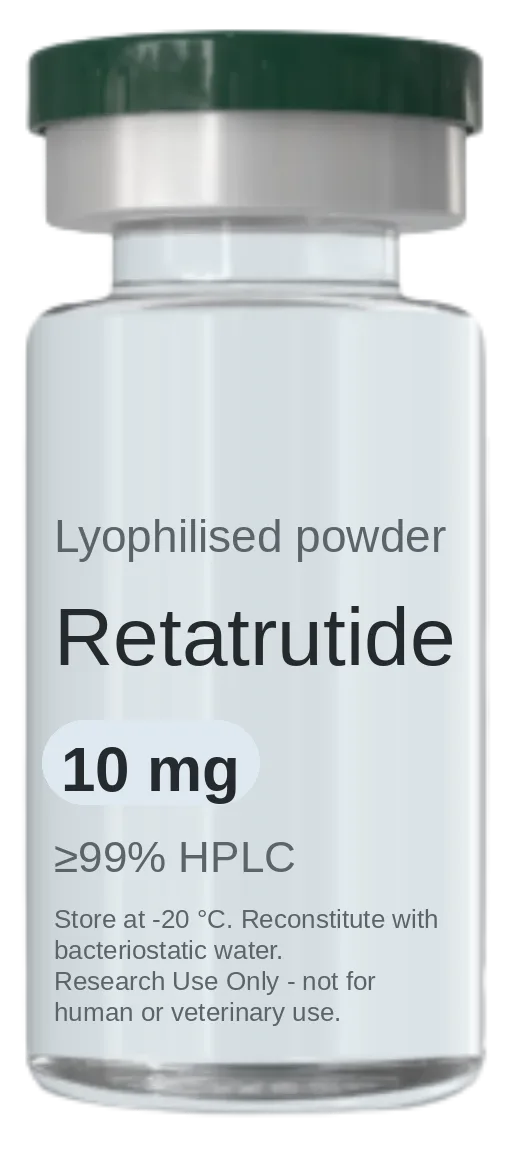
Retatrutide
Triple-agonist metabolic research peptide targeting GLP-1, GIP and glucagon receptors.
- Purity:
- ≥99% HPLC
- Sizes available:
- 10 mg
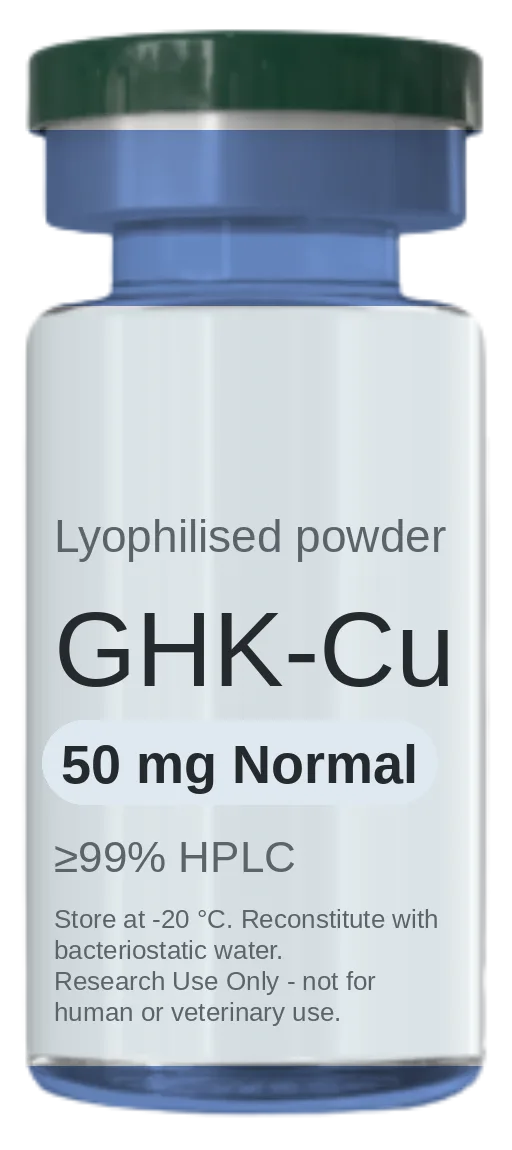
GHK-Cu (Copper Peptide)
Copper-binding tripeptide studied in extracellular matrix and dermal research models.
- Purity:
- ≥99% HPLC
- Sizes available:
- 50 mg Normal – 50 mg Plus
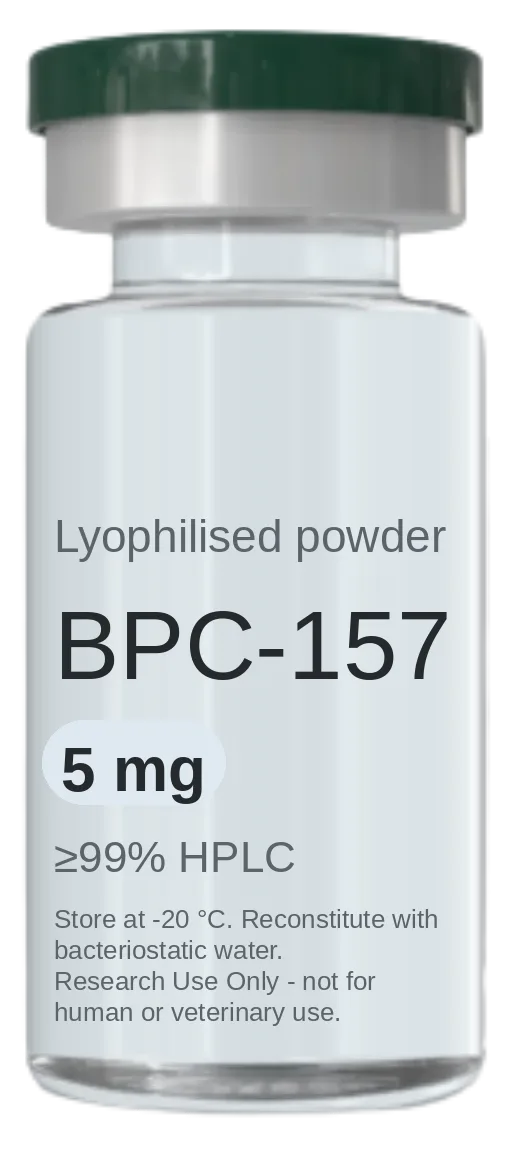
BPC-157 + TB-500
BPC-157 and TB-500 in a single vial — the pairing most studied together in tissue-repair research.
- Purity:
- ≥99% HPLC
- Sizes available:
- 5 mg + 5 mg
The consultation
One intake that settles goals, history and contraindications alongside compound, quantity, documentation and route — reviewed by a physician before anything ships.
More notes
-
Tesamorelin vs Sermorelin: The Difference
Tesamorelin and sermorelin are both GHRH analogs, but not the same molecule. Here's the structural difference and what the studies on each measure.
-
MOTS-c or NAD+: What's the Difference
MOTS-c and NAD+ are studied through different mitochondrial pathways; here's what each line of research actually measures.
-
Ipamorelin vs Sermorelin: Key Differences
Ipamorelin and sermorelin are research peptides with different structures and mechanisms: what the published literature reports on each.