
Note
Tesamorelin vs Sermorelin: The Difference
Tesamorelin and sermorelin are both GHRH analogs, but not the same molecule. Here's the structural difference and what the studies on each measure.
The core difference is this: sermorelin is the GHRH(1-29) fragment, the minimal portion of growth hormone-releasing hormone (GHRH) that retains biological activity, while tesamorelin is an analog of the full GHRH(1-44) molecule modified with a trans-3-hexenoic acid group at the N-terminus to resist enzymatic degradation. Both activate the same receptor, but they are not the same amino acid sequence and they do not have the same stability in solution, and those two differences account for almost everything a comparison between them turns up.
If you're trying to work out why a research catalogue lists them as two separate peptides rather than interchangeable variants, the answer sits in the structure, not in the trade name.
The structural difference between tesamorelin and sermorelin
Native human GHRH is a 44-amino-acid peptide. It was established decades ago that the fragment corresponding to the first 29 residues — GHRH(1-29) — retains the full functional activity of the complete molecule. That fragment, synthesized and stabilized as an acetate salt, is sermorelin.
Tesamorelin starts from the same sequence logic but keeps the full 44-amino-acid chain, and adds a trans-3-hexenoic acid group at the N-terminus. That group acts as protection: it makes it harder for the enzyme dipeptidyl peptidase-4 (DPP-4) to cleave the peptide as soon as it contacts plasma, which is the main mechanism by which native GHRH and sermorelin degrade quickly in aqueous solution.
That is the difference that explains everything else: two molecules related by function, with different chain lengths and different chemical stability.
What sermorelin is: the minimal active fragment
Sermorelin is studied as the shortest GHRH fragment capable of stimulating the GHRH-receptor pathway in the pituitary. In the literature it is usually described as a tool for investigating the GHRH-GH-IGF-1 axis without working with the full 44-amino-acid molecule, which is more expensive to synthesize and less stable in solution.
Because of its smaller size, in vitro studies on sermorelin tend to focus on receptor-binding kinetics and on models of pituitary growth hormone secretion, rather than on plasma pharmacokinetics — which is where tesamorelin has most of its published literature.
You can see the full technical sheet — molecular weight, formula, and batch documentation — on the sermorelin product page.
What tesamorelin is: the stabilized analog of full-length GHRH
Tesamorelin sourced for Argentina is studied primarily for that added stability. The trans-3-hexenoic acid group doesn't change the part of the molecule that interacts with the receptor: it changes how long the molecule survives intact before being degraded. That makes it a different model for pharmacokinetic studies, because it allows researchers to observe a longer window of plasma activity than the unmodified GHRH(1-29) fragment provides.
That's also why, in a number of countries, tesamorelin came to be authorized for clinical use under prescription in specific indications — a regulatory chapter separate from its use as a research reference material, and one that doesn't change anything about its classification in an RUO catalogue.
Why plasma half-life is not a minor detail
When the literature compares GHRH(1-29) against stabilized analogs such as tesamorelin, the comparison point is almost always plasma half-life: how long the intact peptide stays detectable before it degrades. Sermorelin, lacking N-terminal protection, has a shorter half-life in the published models. Tesamorelin, with the trans-3-hexenoic acid group, shows slower degradation.
That difference is what a researcher needs to account for when designing an experimental protocol, because it determines how long the system under study is exposed to the active peptide. It is not a difference in potency, and not a question of "which one works better" — it is a difference in chemical stability, measurable as the time it takes the molecule to break down in solution.
What the studies on each peptide measure
The literature on GHRH(1-29) and its analogs concentrates on three recurring lines of inquiry:
- Binding to the GHRH receptor and activation of the signaling pathway that regulates pituitary growth hormone release.
- Enzymatic stability against DPP-4 and other plasma proteases, which is where tesamorelin diverges from both sermorelin and native GHRH.
- Body composition models and visceral adipose tissue distribution, an area where tesamorelin holds a substantial share of its published literature.
None of those three lines constitutes a use indication for a person. They are lines of research in experimental models, and that is how they are cited in the papers that describe them.
Documentation and traceability when sourcing to Argentina
A research peptide isn't distinguished by the name printed on the label — it's distinguished by the laboratory report that backs that specific batch. Before comparing tesamorelin and sermorelin on their technical specs, it's worth checking what documentation accompanies the material: an HPLC purity report, identity confirmed by mass spectrometry, and batch traceability back to the laboratory that ran the analysis.
That's the basis on which any quote to a destination such as Argentina is built: the import file is prepared identifying the material as laboratory reference material, with the batch's technical documentation attached. You can see how that documentation is organized on the quality page, and review the rest of the compounds available for quoting in the full catalogue.
For laboratory research use only
Tesamorelin and sermorelin, like every other peptide listed on this site, are supplied strictly as reference material for in vitro and laboratory research (Research Use Only). Neither product is approved, or intended, for human or veterinary consumption, for diagnosis, or for treatment, and none of the statements on this page have been evaluated by ANMAT, the FDA, or any equivalent authority. No guidance on administration, protocols, or human use is provided, and inquiries about that kind of use are declined.
Frequently asked questions
Are tesamorelin and sermorelin the same molecule under different names?
No. They share a mechanism of action — both activate the GHRH-receptor pathway — but they have different amino acid sequences: sermorelin is the GHRH(1-29) fragment, and tesamorelin is an analog of the full 44-amino-acid GHRH molecule modified with a trans-3-hexenoic acid group that sermorelin does not carry.
Why does tesamorelin have a longer plasma half-life?
Because the trans-3-hexenoic acid group added at the N-terminus makes it harder for the enzyme DPP-4 to degrade it as soon as it contacts plasma. Sermorelin, lacking that protection, degrades faster in the published models.
Which of the two has more published research?
It depends on the line of study. Sermorelin appears more often in work on receptor binding and pituitary secretion; tesamorelin holds more publications on plasma pharmacokinetics and body composition models, partly because its chemical stability makes it easier to work with in longer experimental designs.
Can they be used in the same research protocol?
That's a decision each research team makes based on its own experimental design and study objective. PeptoClinic does not provide guidance on combinations or use protocols; it supplies the material with the corresponding batch documentation so each laboratory can make that call.
What purity does the catalogue report for these research peptides?
The published standard for the research peptides in the catalogue is a purity of 99% or higher measured by HPLC. Each specific batch ships with its corresponding laboratory report, which is the document to check before treating any figure as final.
How is shipping of tesamorelin or sermorelin to Argentina quoted?
You describe the compound, the required purity specification, and the quantity, and the technical team returns a written quote, normally within one business day, with the import file prepared identifying the material as laboratory reference material.
Is tesamorelin approved by ANMAT in Argentina?
PeptoClinic makes no claim of approval by ANMAT, the FDA, or any equivalent authority for the products in this catalogue. The material is supplied strictly as a laboratory research reference, not as a pharmaceutical product.
Where can I see the rest of the GHRH and GHRP analogs in the catalogue?
The full catalogue, including related secretagogues such as CJC-1295 no DAC and ipamorelin, is available in the [catalogue section](/en/catalog/), where each technical sheet lists its specification and available documentation.
Compounds mentioned
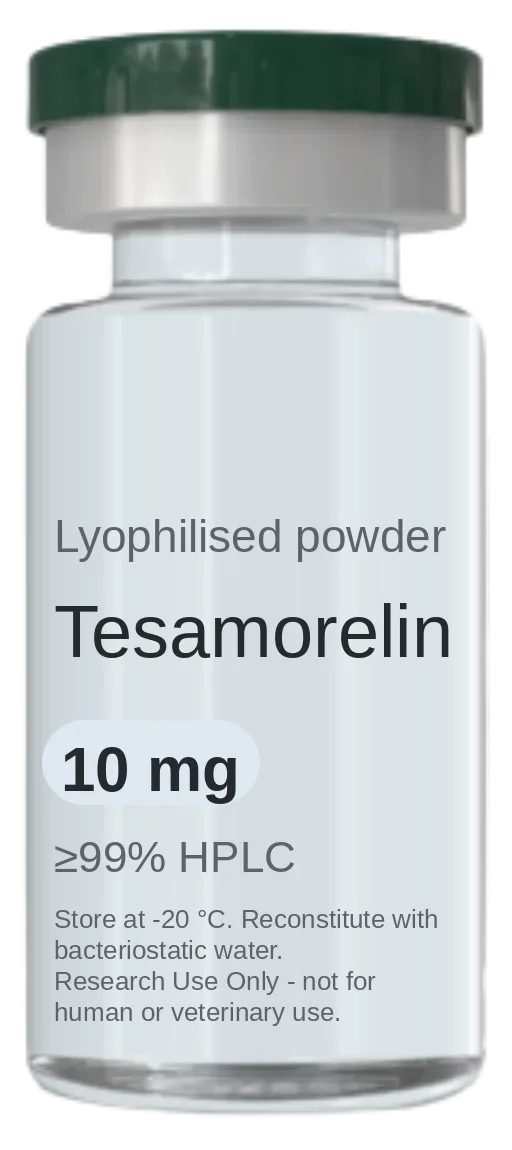
Tesamorelin
Stabilised GHRH(1-44) analogue studied in adipose tissue distribution research.
- Purity:
- ≥99% HPLC
- Sizes available:
- 10 mg – 20 mg
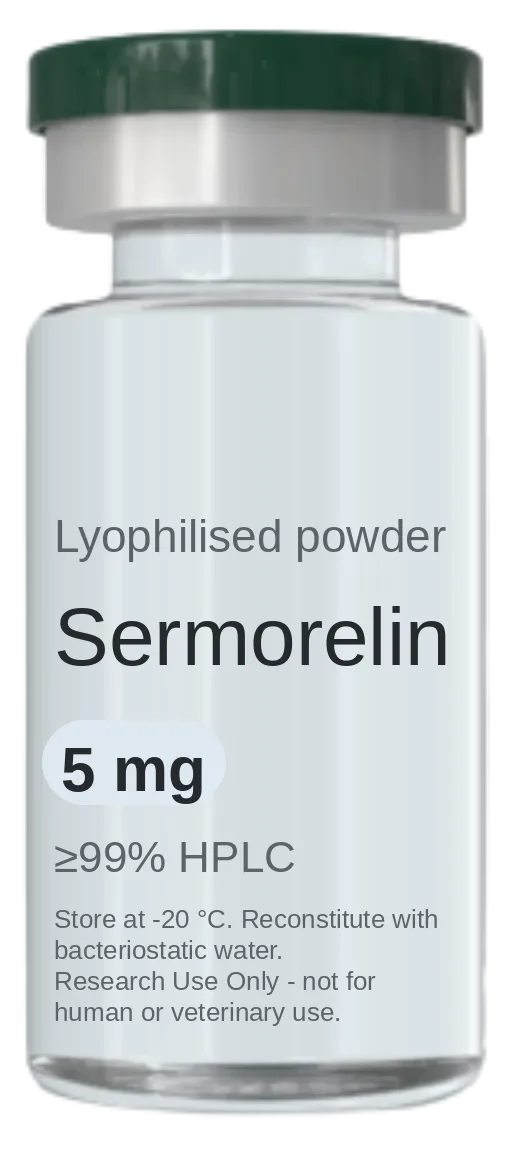
Sermorelin
Growth hormone-releasing hormone analogue used in endocrine signalling research.
- Purity:
- ≥99% HPLC
- Sizes available:
- 5 mg – 20 mg
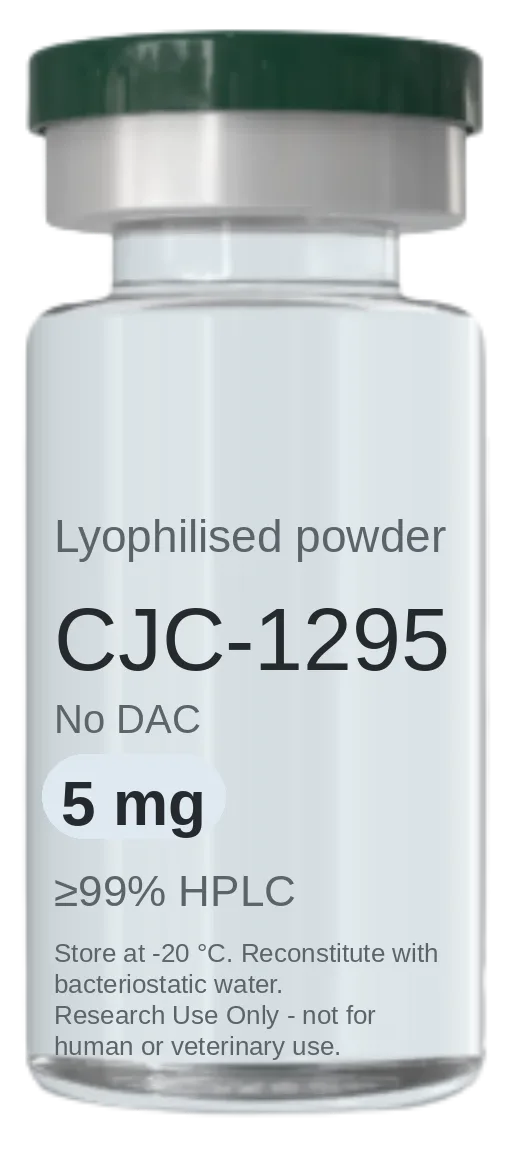
CJC-1295 (sin DAC)
Modified GRF(1-29) tetrasubstituted analogue without drug affinity complex.
- Purity:
- ≥99% HPLC
- Sizes available:
- 5 mg – 20 mg
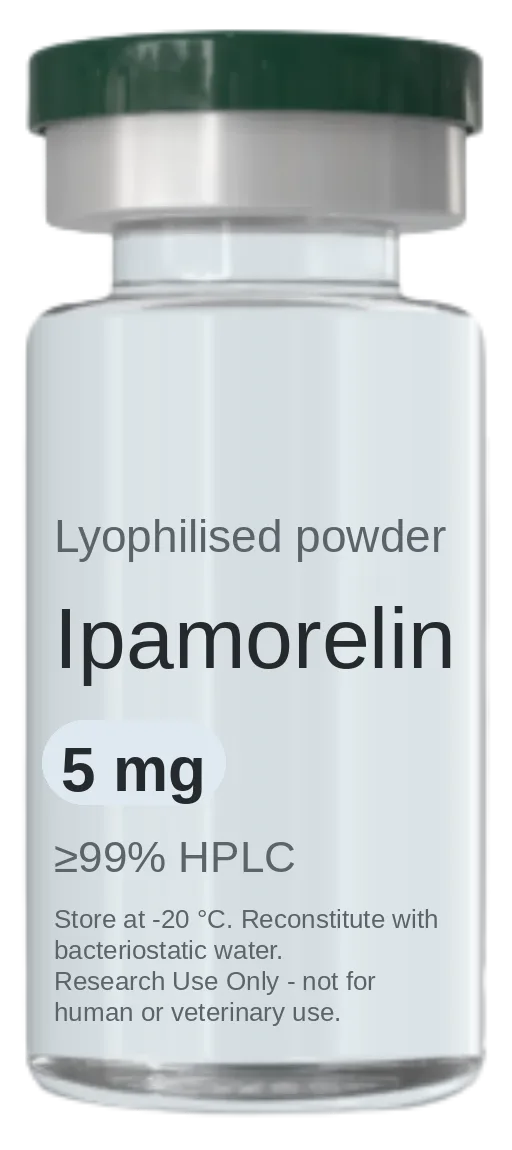
Ipamorelin
Selective ghrelin receptor (GHS-R1a) agonist pentapeptide.
- Purity:
- ≥99% HPLC
- Sizes available:
- 5 mg – 20 mg
The consultation
One intake that settles goals, history and contraindications alongside compound, quantity, documentation and route — reviewed by a physician before anything ships.
More notes
-
Peptide Supplier vs. Reseller: What Differs
The real difference is whether someone can name the lab that tested a batch and show the report — or only promise it's pure.
-
MOTS-c or NAD+: What's the Difference
MOTS-c and NAD+ are studied through different mitochondrial pathways; here's what each line of research actually measures.
-
Ipamorelin vs Sermorelin: Key Differences
Ipamorelin and sermorelin are research peptides with different structures and mechanisms: what the published literature reports on each.