
Note
Hexarelin vs GHRP-6: Key Differences
Hexarelin and GHRP-6 are both GHRP hexapeptides, but differ in receptor affinity, appetite effect, and cardiovascular research findings.
Hexarelin and GHRP-6 are the two most studied hexapeptides in the GHRP (growth hormone releasing peptide) family, and the core difference between them is not what they do — both activate the ghrelin receptor, GHS-R1a, to stimulate growth hormone release — but how strongly each one activates it and what side effects come with that activation. GHRP-6 shows the strongest appetite-stimulating effect of the two in the models studied. Hexarelin is more potent at releasing GH and is the only one of the two with its own line of cardiac tissue research.
What they have in common
Both are synthetic hexapeptides in the same pharmacological class: growth hormone secretagogues acting on the same receptor as endogenous ghrelin. Neither is a GHRH analog — that's a separate family that includes CJC-1295 no DAC and Sermorelin, which act on a different receptor, GHRH-R. GHRP-6 and Hexarelin also share the same pulsatile release mechanism: the stimulus produces a transient spike, not a sustained elevation, and that kinetic profile is one of the points most commonly compared between the two in experimental pharmacology literature.
Where they differ structurally
Both are hexapeptides, but they don't share the same amino acid sequence. GHRP-6 was the prototype developed in the 1980s from Bowers's original work on GH-releasing peptides. Hexarelin is a later molecule, specifically designed to increase potency and receptor affinity relative to first-generation GHRPs, GHRP-6 among them. That sequence difference is what explains, in published in vitro and in vivo models, why Hexarelin requires a lower concentration to produce the same degree of receptor activation.
Receptor affinity and potency
The literature describes Hexarelin as the GHRP with the highest binding affinity for GHS-R1a of the entire group, higher than GHRP-6 and GHRP-2. In comparative GH-release assays, Hexarelin produces equivalent responses at lower experimental doses than GHRP-6. This doesn't make it "better" — it makes each one the right tool for a different research question, depending on whether the experimental design needs to maximize signal at lower molar exposure or replicate the profile of a reference GHRP with decades of published studies behind it.
Appetite: the difference most cited in the literature
Of the two, GHRP-6 is the one most consistently associated with increased appetite in the animal models studied, an effect it shares with endogenous ghrelin and that is explained by its action on hypothalamic receptors linked to hunger regulation. Hexarelin, although it acts on the same receptor, shows a more moderate orexigenic (appetite-stimulating) effect in comparative studies. This is the difference cited most often when one GHRP is compared against another, and it's also the reason an experimental design aiming to isolate the GH axis without the appetite variable tends to prefer Hexarelin as the reference molecule.
Cortisol and prolactin
Both peptides, by activating the ghrelin receptor, also stimulate cortisol and prolactin release to varying degrees — a side effect of the mechanism, not the target of research in most designs. GHRP-6 tends to show a more pronounced effect on these two hormones in published studies. That's relevant for any experimental protocol using either one as a stimulus: if cortisol or prolactin are variables of interest in the same assay, it's worth documenting before designing the experiment, because the cross-hormonal noise can confound the reading of the GH axis.
Hexarelin and the heart: a separate research line
What most sharply distinguishes Hexarelin from GHRP-6, and from nearly the rest of the GHRP family, is that it has its own line of cardiac tissue research that doesn't depend on GH release. Several in vitro and in vivo studies describe effects of Hexarelin on cardiomyocytes and ischemia models that persist even when the growth hormone axis is blocked, suggesting a secondary mechanism of action, likely mediated by a distinct ghrelin receptor subtype present in cardiac tissue. GHRP-6 does not have an equivalent published research line at that volume. This is why, in the literature, Hexarelin appears more often in cardiovascular research contexts, while GHRP-6 is more associated with metabolic and feeding-behavior research.
What studies report on stability
Both are relatively short, stable hexapeptides as lyophilized powder, with the usual sensitivity of any peptide to humidity and temperature cycling once reconstituted in solution. Relative stability between the two is not the axis of comparison that dominates the literature — unlike potency, appetite, or the cardiovascular line — so any experimental design that depends on shelf life in solution should rely on the certificate of analysis for the specific batch, not on a generalization across peptides.
Research use only, not for human consumption
Hexarelin and GHRP-6, like every other peptide PeptoClinic quotes, are supplied exclusively for laboratory research (Research Use Only). They are not approved for human or veterinary use, they are not medicines or supplements, and no claim about them has been evaluated by the FDA, ANMAT, or an equivalent authority. PeptoClinic is not a pharmacy, a clinic, or a telehealth provider, does not issue or require a prescription, and does not offer dosing, administration, or protocol guidance — any inquiry oriented toward human use is declined.
Documentation and traceability when quoting
When the research question requires directly comparing Hexarelin and GHRP-6 — same design, same reference batch, same cold chain — the documentation that ships with each order is what makes the experiment reproducible. PeptoClinic works to a purity standard of ≥99% HPLC on the research peptides in its catalog and documents each batch before it ships. You can see how to read a certificate of analysis and what to ask before accepting a batch on the quality page. For shipments to Argentina, the logistics and the import file prepared as laboratory reference material are described on the Argentina page.
Frequently asked questions
Do Hexarelin and GHRP-6 work through the same mechanism?
Yes, both are agonists of the ghrelin receptor GHS-R1a and stimulate pulsatile growth hormone release through that pathway, unlike GHRH analogs such as Sermorelin or CJC-1295, which act on a different receptor.
Which one is more potent at releasing GH?
According to published comparative studies, Hexarelin has higher affinity for the GHS-R1a receptor and produces equivalent responses at lower experimental concentrations than GHRP-6.
Why is GHRP-6 so strongly associated with appetite?
Because its action on hypothalamic receptors linked to hunger regulation is more pronounced in the models studied than Hexarelin's, which activates the same receptor more moderately in that specific circuit.
Is it true that Hexarelin has effects on the heart?
Yes, there is a line of in vitro and in vivo research on Hexarelin and cardiac tissue that persists even when the GH axis is blocked, suggesting an additional mechanism mediated by a distinct ghrelin receptor subtype. GHRP-6 does not have an equivalent published research line.
Do GHRP-6 and Hexarelin raise cortisol and prolactin equally?
No, both raise them because they share the ghrelin receptor activation mechanism, but GHRP-6 tends to show a more pronounced effect on these two hormones in published comparative studies.
Does PeptoClinic carry Hexarelin and GHRP-6 in its catalog?
PeptoClinic's catalog changes based on availability; to confirm whether a specific compound is available and with what batch documentation, the way to check is to request a quote directly against the current catalog.
Are these peptides approved for human use?
No. They are supplied exclusively for laboratory research (Research Use Only), they are not medicines or supplements, and no claim about them has been evaluated by the FDA, ANMAT, or an equivalent authority.
What other peptides in the same family are worth reviewing for a comparative design?
Ipamorelin and Sermorelin are useful references because they act on the GH axis through related pathways — Ipamorelin as a more selective-profile GHRP, Sermorelin as a GHRH analog — and tend to appear in the same type of comparative experimental design as Hexarelin and GHRP-6.
Compounds mentioned
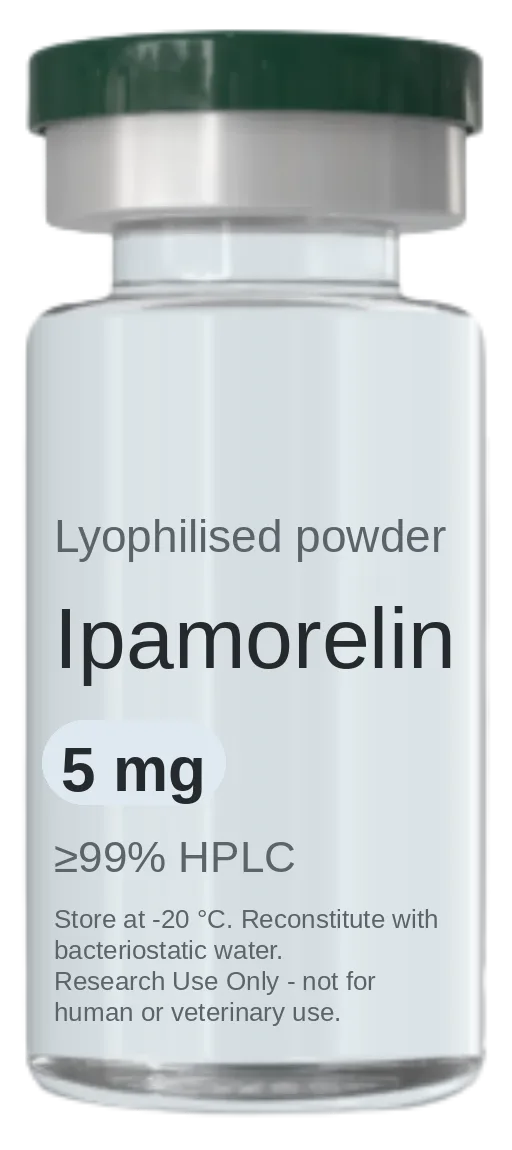
Ipamorelin
Selective ghrelin receptor (GHS-R1a) agonist pentapeptide.
- Purity:
- ≥99% HPLC
- Sizes available:
- 5 mg – 20 mg
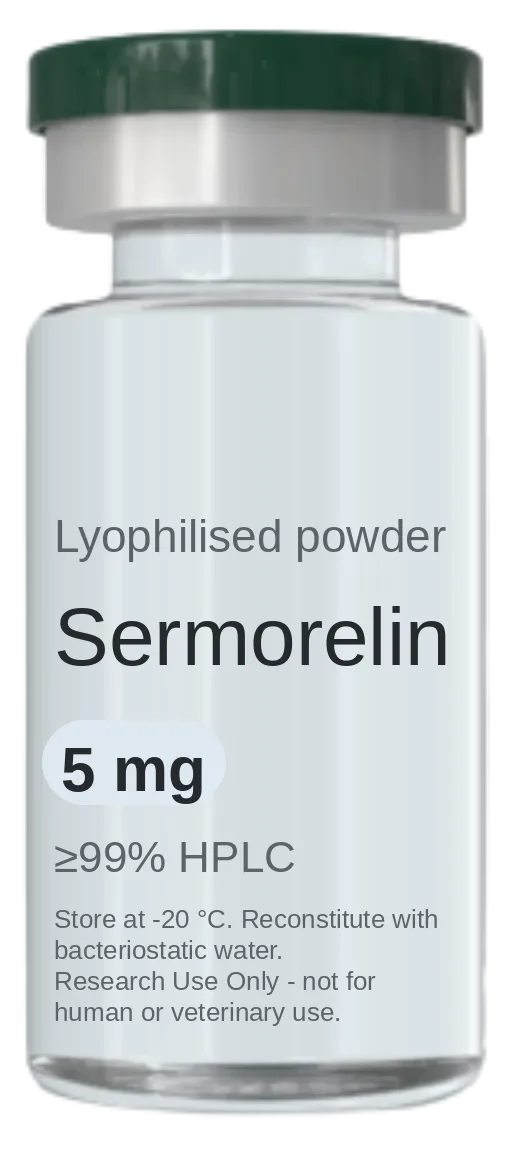
Sermorelin
Growth hormone-releasing hormone analogue used in endocrine signalling research.
- Purity:
- ≥99% HPLC
- Sizes available:
- 5 mg – 20 mg
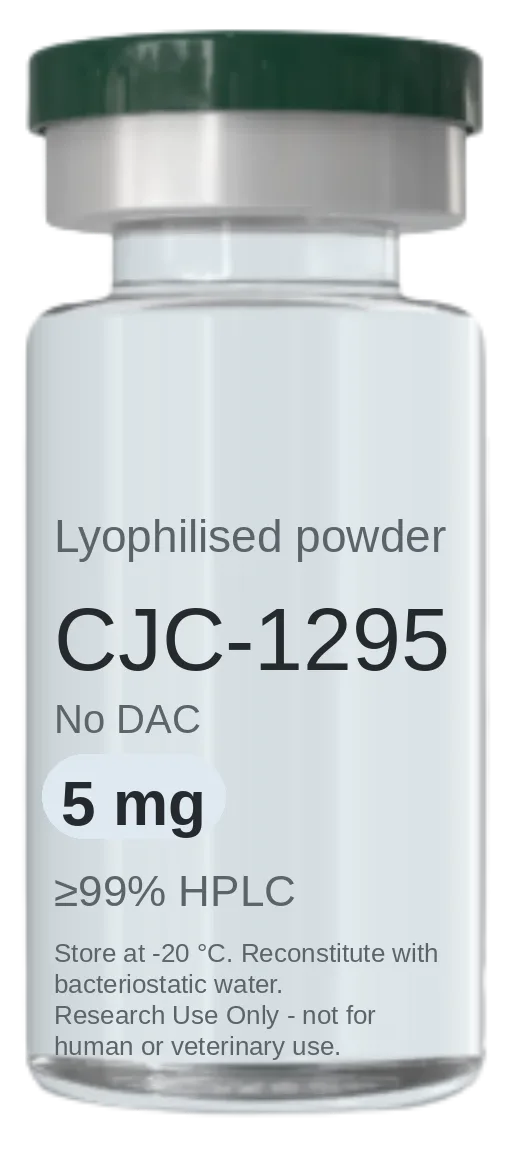
CJC-1295 (sin DAC)
Modified GRF(1-29) tetrasubstituted analogue without drug affinity complex.
- Purity:
- ≥99% HPLC
- Sizes available:
- 5 mg – 20 mg
The consultation
One intake that settles goals, history and contraindications alongside compound, quantity, documentation and route — reviewed by a physician before anything ships.
More notes
-
Do You Need a Customs Broker for Peptides?
Customs broker to import research peptides into Argentina: when one is required and when the courier already handles it.
-
Argentina Customs Penalty for Bad Declarations
What happens when a research peptide shipment is misdeclared to Argentine customs: fines, smuggling charges, and seizure.
-
BPC-157 vs GHK-Cu: What's the Difference
BPC-157 and GHK-Cu are distinct research peptides with different structures and study lines. Here's what separates them, with sources.