
Note
Do You Need a Customs Broker for Peptides?
Customs broker to import research peptides into Argentina: when one is required and when the courier already handles it.
No, most shipments of research peptides into Argentina do not require the buyer to hire a customs broker. Door-to-door courier shipments move under a simplified regime, and the party that files the customs declaration is the courier company itself, not the recipient. A licensed customs broker only becomes mandatory under the general import regime — the formal commercial channel — and that is not the channel a laboratory-scale peptide order travels through.
What a customs broker actually does
A customs broker (*despachante de aduana*) is a licensed professional authorized by law to represent an importer before Argentina's customs authority, the Dirección General de Aduanas. Their involvement is required for the general import regime: formal commercial imports with a sworn declaration, tariff classification, and in many cases registration of the importer with AFIP.
That is not the path a routine order of research peptides for Argentina takes. That path is the courier regime, where the international shipping carrier — the one issuing the airway bill — presents the shipment to customs on the recipient's behalf, under a simplified process built precisely so individual buyers don't have to file their own customs entry.
Courier shipment vs. formal import
The practical difference comes down to this: under the courier regime, a package travels with a waybill, an invoice, and a content description, and customs processes it as part of a standardized flow handled by the logistics operator. The recipient files nothing themselves and needs no broker's license to take delivery.
The general regime is a different animal. It applies when the declared value, quantity, or nature of the transaction exceeds what the simplified regime covers, or when an importer needs to be registered as such for recurring, larger-scale operations. That is when a licensed broker is legally required to step in.
For a researcher or laboratory ordering a quantity consistent with laboratory use, the courier path is the one that applies. What keeps that path moving without delay is the paperwork that travels with the package — not a broker hired on the side.
What documentation should travel with the shipment
What keeps a shipment from getting held up at customs isn't a broker on file — it's a content description that is clear and matches what's actually inside. At minimum that means an invoice stating the exact compound name, the quantity, and a use description: laboratory reference material, for research use, not intended for human or veterinary consumption.
Alongside that goes the certificate of analysis (COA) for the batch, issued by the laboratory that ran the purity assay. It isn't a customs filing in itself, but it's the document that backs up exactly what is being imported if anyone asks. PeptoClinic prepares that customs file as part of the quote, before an order ships: content description, quantity, and the lab report for the corresponding batch.
What to check on a certificate of analysis before ordering a compound
The COA is the document that tells you whether what you're buying is what it claims to be. A serious report identifies the laboratory that ran the assay, the date of analysis, the method used, and a numeric purity result — not a label that says "99% pure" with nothing behind it.
As a reference for what a real report looks like: Janoshik Analytical's assays of PeptoClinic's batches show purity results ranging from 99.669% to 99.893% depending on the compound and batch, with milligram content per vial detailed in the report. That's the level of detail to look for before ordering any compound — whether retatrutide, BPC-157, or MOTS-c — and it's what later serves as documentary support for the shipment if customs asks for specifics. How to read a report like this, with examples, is covered on the quality page.
When a customs broker actually makes sense
There are scenarios where hiring a broker is warranted: commercial-volume orders, recurring imports under a business entity that needs to register as a habitual importer, or shipments whose declared value exceeds the simplified regime's threshold. In those cases the decision isn't the supplier's to make — it depends on the regime the buyer chooses to operate under, and it's worth confirming directly with a licensed broker or with AFIP before placing the order.
For the typical use case of a research laboratory — a one-off purchase of one or several compounds in laboratory quantities — that extra filing doesn't apply, and requiring it would add a cost and a delay that the courier regime exists to avoid.
Research material, not for human or veterinary use
Everything PeptoClinic supplies is laboratory reference material for research use only (RUO), intended for in vitro use and research studies. Nothing in the catalog is a medicine, a supplement, or a food. Nothing is approved or evaluated by ANMAT, the FDA, or any equivalent authority, and nothing is intended for human or veterinary consumption, diagnosis, or treatment. That same statement is what accompanies the documentation on every shipment, and it's the reason the courier channel — built for laboratory material, not consumer goods — is the one that applies here.
How the quote and the customs file come together
There's no published price and no cart: every order is quoted. The technical team reviews the compound, the purity specification, the quantity, the batch documentation, the cold-chain shipping route, and the customs side, then returns a written quote, normally within one business day. That same process is what assembles the file that travels with the package when it enters the country. Details on how shipping to Argentina works are on the shipping page.
Frequently asked questions
Can an individual receive research peptides by courier without being a registered importer?
Yes. Under the door-to-door courier regime, the party filing the customs declaration is the shipping carrier, not the recipient, so no importer registration is needed to receive a shipment under that regime.
What happens if customs asks for more information about a package's contents?
It's answered with the documentation that already travels with the shipment: the invoice describing the content and the certificate of analysis for the batch, which identify the compound, its quantity, and its declared use as laboratory material.
Does the buyer have to hire the broker, or does the courier handle it?
Under the simplified courier regime, the shipping carrier acts as the declarant and does not require the recipient to have their own broker. A licensed broker only comes into play if the shipment moves under the general import regime instead.
Is there a difference between ordering one compound and ordering several in the same shipment?
The paperwork is assembled the same way in both cases: each compound is listed separately on the invoice and backed by its own certificate of analysis, regardless of whether the shipment includes one item or several.
Does the certificate of analysis ship with the order, or does it need to be requested separately?
It's prepared as part of the quote, before the order ships, and it's tied to the specific batch being sent — it isn't a generic document about the compound but one for the actual lot that arrives.
What does it mean for material to be RUO?
Research Use Only: it means the material is intended strictly for laboratory research, not for human or veterinary consumption, and that it hasn't been approved by any health authority for clinical use.
Does PeptoClinic give legal advice on which import regime to use?
No. PeptoClinic prepares the technical and quality documentation for a shipment — invoice, content description, certificate of analysis — but choosing the customs regime a buyer operates under is a decision to confirm with a licensed customs broker or with AFIP, depending on the case.
Does the same shipping and documentation process apply to countries other than Argentina?
The same shipping circuit and documentation approach applies to other destinations in the region and to the United States; the [Argentina shipping page](/en/argentina/) has the specific detail on how each order to the country is put together.
Compounds mentioned
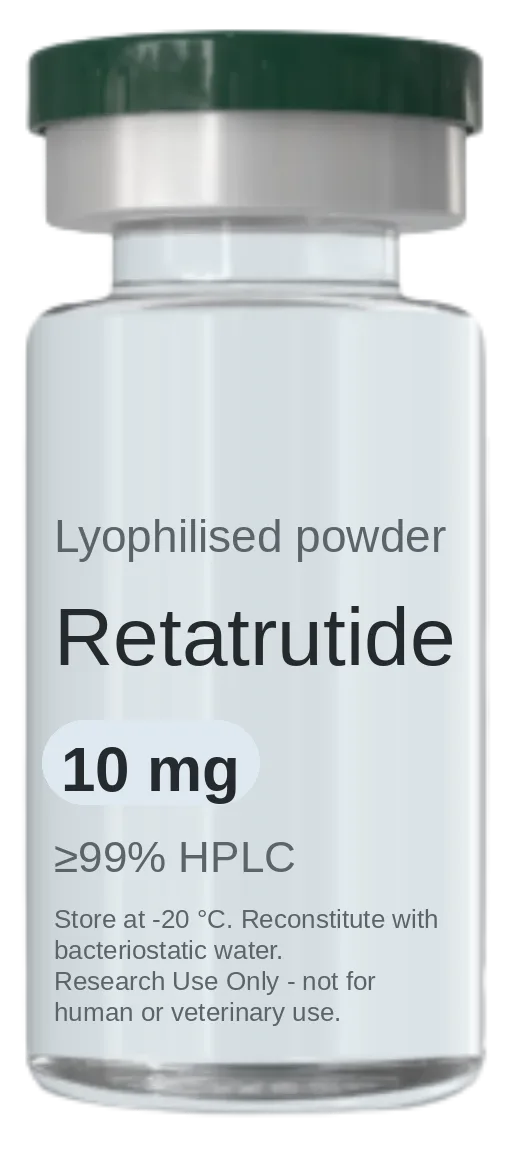
Retatrutide
Triple-agonist metabolic research peptide targeting GLP-1, GIP and glucagon receptors.
- Purity:
- ≥99% HPLC
- Sizes available:
- 10 mg
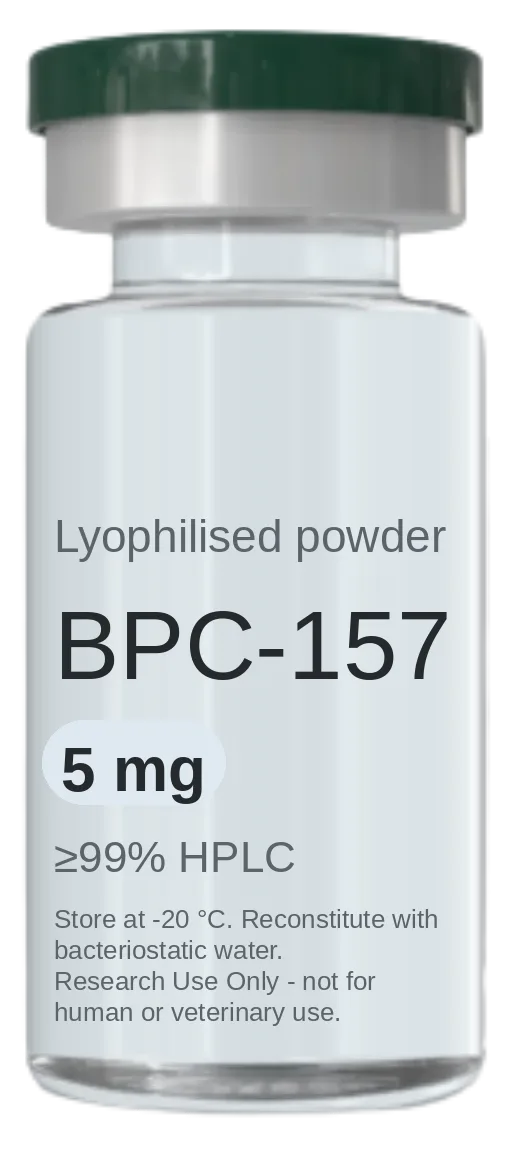
BPC-157 + TB-500
BPC-157 and TB-500 in a single vial — the pairing most studied together in tissue-repair research.
- Purity:
- ≥99% HPLC
- Sizes available:
- 5 mg + 5 mg
The consultation
One intake that settles goals, history and contraindications alongside compound, quantity, documentation and route — reviewed by a physician before anything ships.
More notes
-
Hexarelin vs GHRP-6: Key Differences
Hexarelin and GHRP-6 are both GHRP hexapeptides, but differ in receptor affinity, appetite effect, and cardiovascular research findings.
-
Argentina Customs Penalty for Bad Declarations
What happens when a research peptide shipment is misdeclared to Argentine customs: fines, smuggling charges, and seizure.
-
BPC-157 vs GHK-Cu: What's the Difference
BPC-157 and GHK-Cu are distinct research peptides with different structures and study lines. Here's what separates them, with sources.