
Note
GHRP-6 vs Ipamorelin: Key Differences
GHRP-6 and Ipamorelin activate the same receptor, but published research describes very different selectivity and side-effect profiles.
GHRP-6 and Ipamorelin are both growth hormone secretagogue peptides that bind the same receptor, GHS-R1a (the ghrelin receptor), but the published literature describes them with markedly different selectivity profiles: GHRP-6 also engages appetite, cortisol, and prolactin pathways, while Ipamorelin is characterized in the research as acting much more narrowly on those same secondary pathways. That difference in selectivity is why the two compounds show up in different research protocols despite sharing a pharmacological family.
What each peptide is, according to the literature
GHRP-6 (Growth Hormone Releasing Peptide-6) was one of the first synthetic secretagogues studied, dating back to the 1980s, as a ghrelin receptor agonist. In vitro and in vivo work describes it as stimulating pulsatile growth hormone release from the pituitary through a mechanism independent of the GHRH axis.
Ipamorelin is a newer molecule, designed specifically to preserve GH stimulation while reducing activation of receptors tied to appetite, cortisol, and prolactin. Papers characterizing it describe a "fourth-generation" pentapeptide within the GHRP family, built as a more selective research tool than its predecessors.
Both compounds share catalogue space with CJC-1295 without DAC, another secretagogue the literature often pairs in studies of synergistic action on the GH-IGF-1 axis, though it works through a different route — a GHRH analog rather than a ghrelin mimetic. PeptoClinic ships CJC-1295 without DAC to Argentina as laboratory reference material; the destination-specific documentation is on the Argentina page for CJC-1295 without DAC.
The mechanism: same receptor, different read
Both peptides are GHS-R1a agonists — the receptor that ghrelin, the endogenous hunger and GH-release hormone, normally activates. Binding that receptor in the pituitary and hypothalamus triggers release of stored growth hormone.
The difference isn't which receptor each one activates, it's how cleanly they do it. Receptor binding assays show GHRP-6 has meaningful affinity for other receptors tied to the appetite and stress axes, while Ipamorelin was optimized in the lab specifically to minimize that cross-reactivity.
Selectivity: the variable the literature keeps returning to
When papers compare the two compounds head to head, the word that recurs is "selectivity." The research describes:
- GHRP-6 measurably activating appetite-associated receptors, which in the models studied translates into increased hunger.
- GHRP-6 also being linked, across several studies, to more pronounced elevations in cortisol and prolactin than those observed with Ipamorelin.
- Ipamorelin, in comparable assay types, producing GH release of similar magnitude with much lower activation of those secondary pathways.
That's the distinction most of the literature uses to position Ipamorelin as the "cleaner" secretagogue in the GHRP family, and GHRP-6 as the more potent appetite stimulant — a property some animal models study deliberately, precisely for its orexigenic effect.
GH release potency: what the evidence actually shows
In assays that directly compare the magnitude of the GH pulse released, both peptides are effective GHS-R1a agonists, and neither clearly outperforms the other on that single parameter. The practical difference reported in the studies isn't really "how much GH does each one release," it's the rest of the activation profile — how contained the response stays to that one pathway.
That matters for anyone designing a research protocol. Choosing between the two compounds isn't a question of which releases more GH, it's a question of how specific the experimental model needs to be. A design aiming to isolate the GH-IGF-1 axis without cortisol or appetite interference will, per the literature, favor the compound with lower cross-reactivity.
Half-life and study frequency
Both are described in the literature as short-half-life peptides, which in laboratory practice means administration protocols with repeated dosing within the experimental window rather than a single exposure. That trait is shared across nearly the entire family of GH secretagogues studied to date, including Sermorelin, which works through the GHRH pathway rather than the ghrelin pathway.
Neither peptide is administered with continuous, uninterrupted exposure in the published experimental designs. Study protocols typically alternate exposure periods with compound-free periods, which is standard practice across GH-IGF-1 axis research generally.
Documentation: why the certificate matters, not the datasheet
No comparison between GHRP-6 and Ipamorelin means anything if the material that reaches the lab isn't what it claims to be. The way to verify that isn't the supplier's technical datasheet — the same party selling the compound writes that — it's the certificate of analysis (COA) from an independent laboratory, with a lot number and a stated method.
PeptoClinic applies a ≥99% HPLC purity standard to the research peptides it supplies and publishes third-party certificates of analysis backing those lots on its quality page, so they can be read directly instead of taken on the supplier's word. Before adding any secretagogue to a protocol, it's worth requesting that document and confirming the lot number matches the vial received.
Ipamorelin is available for inquiry as research material through PeptoClinic, with lot documentation sent alongside the quote.
Availability for research in Argentina
PeptoClinic supplies research peptides to Argentina as laboratory reference material, with import documentation prepared for that category. Anyone evaluating these compounds for a protocol can review shipping and documentation conditions on the Argentina page before requesting a quote.
Laboratory use only
GHRP-6 and Ipamorelin, like the rest of PeptoClinic's catalogue, are supplied strictly for laboratory research (RUO — Research Use Only). They are not medicines, are not approved for human or veterinary use, and no claim about them has been evaluated by the FDA, ANMAT, or any equivalent regulatory body. PeptoClinic does not provide dosing guidance, administration routes, or protocols for use in people, and does not respond to requests made for that purpose.
Frequently asked questions
Do GHRP-6 and Ipamorelin act on the same receptor?
Yes, both are GHS-R1a agonists, the ghrelin receptor. The difference the literature describes isn't in the primary receptor but in cross-reactivity with other pathways, including appetite, cortisol, and prolactin.
Which one is more selective according to the research?
Ipamorelin is the one the literature consistently describes as more selective: it activates GHS-R1a with less stimulation of appetite, cortisol, and prolactin compared with GHRP-6, based on published receptor binding assays.
Why is GHRP-6 associated with increased appetite in studies?
Because beyond GHS-R1a it also activates other pathways tied to hunger signaling at the hypothalamic level, an effect several animal models use deliberately to study the orexigenic axis — not as an incidental finding but as a characterized property of the compound.
Which one releases more growth hormone?
In assays comparing the magnitude of the GH pulse, both are effective GHS-R1a agonists and neither clearly outperforms the other on that isolated parameter. The reported difference is in the rest of the activation profile, not in GH release potency itself.
Are they studied in combination with other peptides?
Yes, the literature describes protocols combining ghrelin-pathway secretagogues with GHRH analogs, such as CJC-1295 without DAC, to study a synergistic effect on the GH-IGF-1 axis. Each compound acts through a distinct mechanism within that axis.
How is the purity of a GHRP-6 or Ipamorelin lot verified?
By requesting the certificate of analysis (COA) from an independent laboratory with the corresponding lot number, and confirming that number matches the vial received. A supplier's datasheet doesn't substitute for that document.
Does PeptoClinic sell these peptides for human use?
No. PeptoClinic supplies research material under the RUO standard, strictly for laboratory use. It does not provide dosing, protocols, or administration guidance for people.
Do I need a prescription to request a quote?
No, because this isn't a pharmaceutical product or a prescription sale. The process is a technical inquiry followed by a written quote, with the corresponding lot documentation.
Compounds mentioned
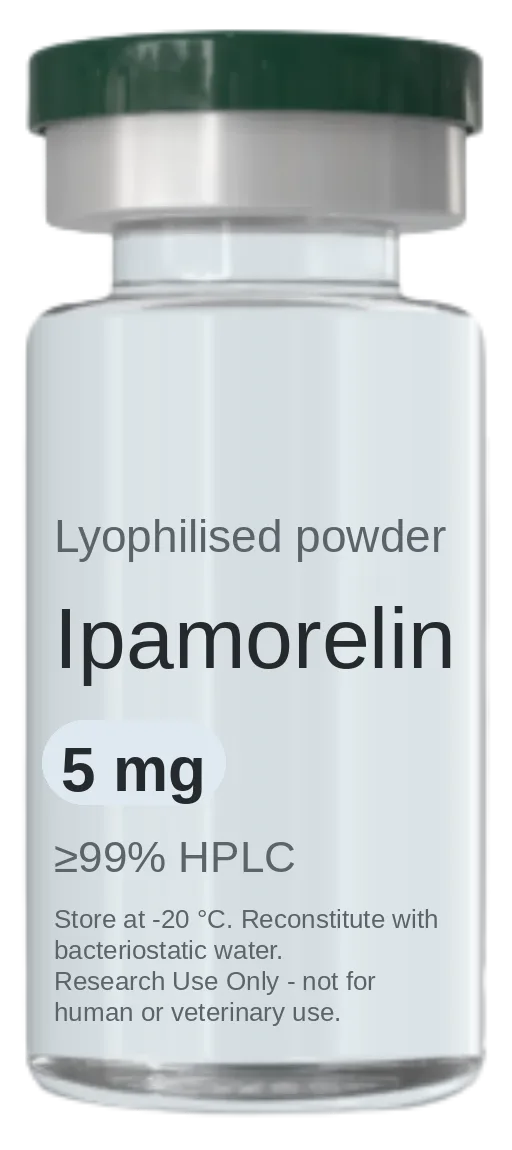
Ipamorelin
Selective ghrelin receptor (GHS-R1a) agonist pentapeptide.
- Purity:
- ≥99% HPLC
- Sizes available:
- 5 mg – 20 mg
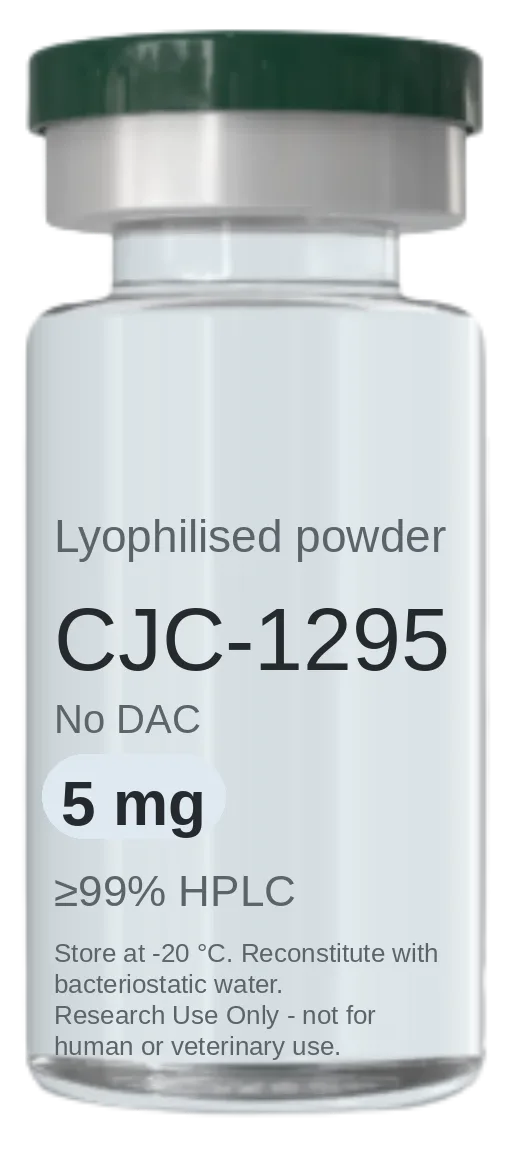
CJC-1295 (sin DAC)
Modified GRF(1-29) tetrasubstituted analogue without drug affinity complex.
- Purity:
- ≥99% HPLC
- Sizes available:
- 5 mg – 20 mg
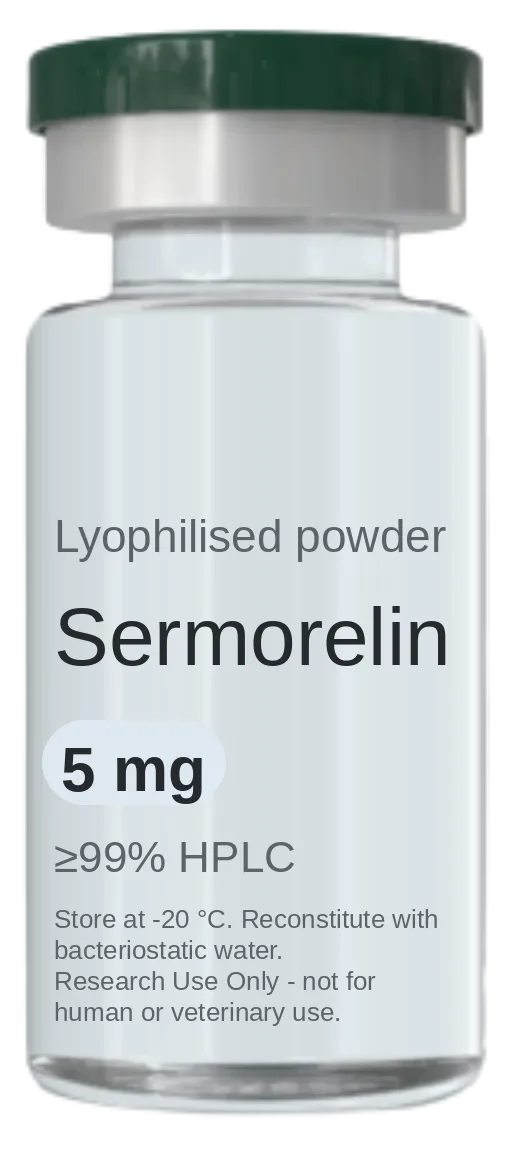
Sermorelin
Growth hormone-releasing hormone analogue used in endocrine signalling research.
- Purity:
- ≥99% HPLC
- Sizes available:
- 5 mg – 20 mg
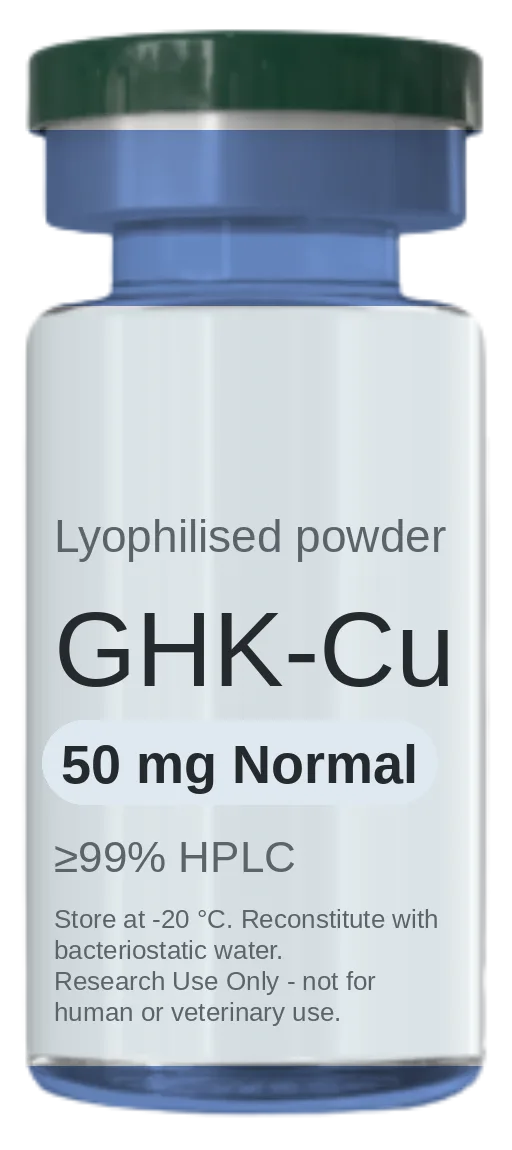
GHK-Cu (Copper Peptide)
Copper-binding tripeptide studied in extracellular matrix and dermal research models.
- Purity:
- ≥99% HPLC
- Sizes available:
- 50 mg Normal – 50 mg Plus
The consultation
One intake that settles goals, history and contraindications alongside compound, quantity, documentation and route — reviewed by a physician before anything ships.
More notes
-
What Certificate Does ANMAT Require?
ANMAT doesn't issue a certificate to release research peptides from Argentine customs — here's what documentation actually does.
-
If Argentine Customs Reclassifies a Peptide
If Argentine customs reclassifies a research peptide's tariff code, duties, controls and timelines change until the importer responds.
-
Peptides to Argentina: Post or Courier?
Postal import of research peptides into Argentina exists as a channel, but PeptoClinic ships by documented courier, not ordinary mail.