
Note
If Argentine Customs Reclassifies a Peptide
If Argentine customs reclassifies a research peptide's tariff code, duties, controls and timelines change until the importer responds.
If Argentine customs (Aduana) reclassifies the tariff code of a research peptide shipment, the import duty changes, the shipment can fall under a different control regime — ANMAT's, if it gets treated as a medicine — and it sits in bond until the importer answers the notice or files a challenge. This is not automatic and it is not instant. There is a defined procedure, and the paperwork that travels with the shipment is what decides whether that procedure resolves in days or stalls indefinitely.
What a tariff code is and why it matters
Every good that crosses the Argentine border is declared under a code from the Mercosur Common Nomenclature (NCM), an eight-digit number that fixes the import duty, taxes and control regime that apply to it. A lyophilised peptide declared as a laboratory reagent does not pay the same duty, and does not pass through the same checkpoints, as one declared a pharmaceutical active ingredient or a supplement.
The importer does not get to pick the code freely. It is determined by what the goods actually are, how they are presented, and the declared use. A 5 mg vial of a synthetic peptide sequence, with no therapeutic excipients, labelled as reference material for in vitro research, is not the same thing — for the NCM — as a product presented as fit for human consumption.
Why customs reclassifies a research peptide
Argentina's customs authority can review a declared code on its own initiative, before or after the shipment clears. The most common triggers for this category of product are:
- The invoice or packing list description is ambiguous and does not distinguish "research material" from "product for consumption."
- The peptide's trade name matches a compound that, under a different regime, is registered as a medicine or a cosmetic ingredient, and the valuation system flags it by name similarity.
- The declared value or weight does not match the expected pattern for that code, which triggers a red-channel physical inspection.
- There is no technical data sheet or certificate of analysis attached to support that the shipment is a laboratory reagent rather than a finished product.
None of these triggers means the shipment is illegal. It means customs does not, at that point, have enough on file to confirm the declared code, and defaults to the most conservative reading until it does.
What actually changes when the code is reassigned
The immediate effect is financial and about timing, not penal. Moving the shipment to a different tariff code can:
- Change the import duty rate, and with it the amount owed.
- Add a prior-intervention requirement — if the new code falls under pharmaceutical-use products, the process now requires ANMAT sign-off before release.
- Hold the shipment in bonded storage until the discrepancy is resolved, adding days, sometimes weeks, to transit time.
- Trigger a formal notice to the importer with the proposed new code and a deadline to respond or pay the difference.
None of this happens without notice. The customs system (Malvina) generates a flag, and the customs broker — or the importer directly, if acting without one — has the chance to submit additional documentation before the reclassification becomes final.
The real risk: being treated as a human-use product
The scenario that actually complicates a shipment is not paying a different duty rate. It is the new tariff code pulling the peptide into the regime for medicines, supplements or cosmetics. That is where ANMAT enters, and where a shipment of research material can sit indefinitely, because that regime requires health registration — something a laboratory reagent neither has nor needs.
That is why the documentation accompanying the shipment has to state, without ambiguity, that the product is reference material for research — not approved for human or veterinary consumption, not evaluated by any health authority — and not a finished product intended for use in people. A certificate of analysis from an independent laboratory, with lot number, measured purity and date, is the single fastest document for resolving a classification question: it gives customs something concrete to check the declaration against, instead of having to interpret a generic invoice.
How a classification is defended in practice
If the reclassification notice has already arrived, the importer has formal tools available, not just the option to pay and accept:
- Binding tariff classification ruling: this can be requested in advance, before importing, so that customs fixes the correct code and that determination holds for future shipments of the same product.
- Formal challenge to the assessment: if the shipment is already in process and a discrepancy has been notified, the challenge must be filed within the deadline stated in the notice, backed by the technical documentation that supports the original code.
- Technical opinion: for products with genuine ambiguity in composition, customs can order its own laboratory analysis. Already having a certificate of analysis from origin shortens that step, because it reduces what has to be verified from scratch.
None of these routes depends on knowing someone at customs or on an informal shortcut. They are administrative procedures with deadlines and forms, and they are won with documents, not personal connections.
The paperwork that prevents the problem before it starts
The cheapest way to handle a reclassification is for it to never trigger in the first place. That depends on what ships with the material, not on what happens afterward:
- Commercial invoice with a precise technical description: peptide name, sequence or CAS number where applicable, quantity in milligrams, form (lyophilised, vial), and an explicit statement of research-use-only intent.
- Certificate of analysis for the specific lot, not a generic catalogue document.
- Safety data sheet, if the recipient institution requires one for its own internal controls.
- An explicit statement that the product is not intended for human or animal consumption and has not been evaluated by any health authority.
This is exactly the standard each quote to Argentine destinations is prepared under: the customs file is assembled together with the order, not after the shipment has already left. Anyone importing a compound like retatrutide for an Argentine research programme should ask for that full documentation package before the shipment ships, not once it is already sitting in bonded storage waiting on a response.
What to do if your shipment was already reclassified
If the notice has already arrived, the first step is reading which new code the shipment was assigned to and why — the notice has to state a reason. With that in hand, gather whatever technical documentation is missing (certificate of analysis, technical data sheet, statement of intended use) and file it within the deadline, either directly or through the customs broker managing the shipment. The more specific and verifiable the documentation submitted, the faster it resolves: customs does not need to trust a claim, it needs a document that supports it.
Laboratory research use only
Everything quoted through this site is reference material for laboratory research — in vitro use and research studies — not a medicine, not a supplement, and not a food product. It is not approved or evaluated by ANMAT, the FDA, or any equivalent authority, and it is not intended for human or veterinary consumption, diagnosis, or treatment. The documentation prepared for every shipment to Argentina follows that same standard.
Frequently asked questions
Is a reclassification the same thing as a seizure?
No. A reclassification changes the tariff code and, with it, the duty owed or the applicable control regime. Seizure is a separate measure, reserved for prohibited or undeclared goods, and is not the normal outcome of a classification disagreement.
Who decides the correct tariff code, the importer or customs?
The importer declares it at the time of import, but customs has the authority to review it and, if it finds evidence contradicting the declaration, to notify a different code. The importer can respond with technical documentation or, where appropriate, file a formal challenge.
How long does a reclassification take to resolve?
It depends on the complexity of the case and how complete the documentation submitted in response is. A file with a certificate of analysis and a technical data sheet resolves faster than one that depends on a laboratory opinion ordered by customs itself.
Can a research peptide end up classified as a medicine?
It can, if the documentation does not clearly distinguish the declared use. That is why the invoice and the certificate of analysis need to state explicitly that the shipment is reference material for research, not a finished product for human consumption.
Is it worth requesting a tariff classification ruling before importing?
Yes. It is the mechanism designed for exactly this problem: it fixes the correct code for a given product in advance, and that determination stands as precedent for later shipments of the same compound.
Does a certificate of analysis replace a technical data sheet?
No, they are different documents. The certificate of analysis proves the composition and purity of the specific lot that is shipping. The technical data sheet describes the product in general. Customs can request either or both, depending on the case.
What happens if I don't respond to the reclassification notice?
If the deadline passes without a response or a challenge, the new code becomes final and the duty for that code is assessed. The shipment can remain held until that difference is settled.
Does this risk apply equally to every peptide?
The risk of reclassification is higher the more a peptide's trade name or presentation resembles a product already registered as a medicine, supplement, or cosmetic in some other process. Compounds with clear, consistent technical documentation across shipments have, in practice, fewer incidents.
Compounds mentioned
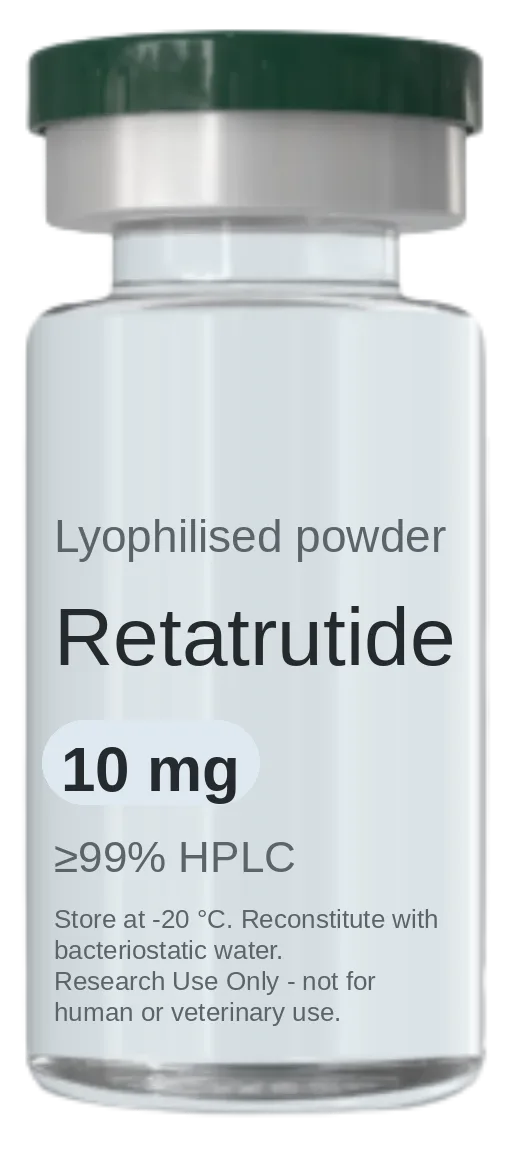
Retatrutide
Triple-agonist metabolic research peptide targeting GLP-1, GIP and glucagon receptors.
- Purity:
- ≥99% HPLC
- Sizes available:
- 10 mg
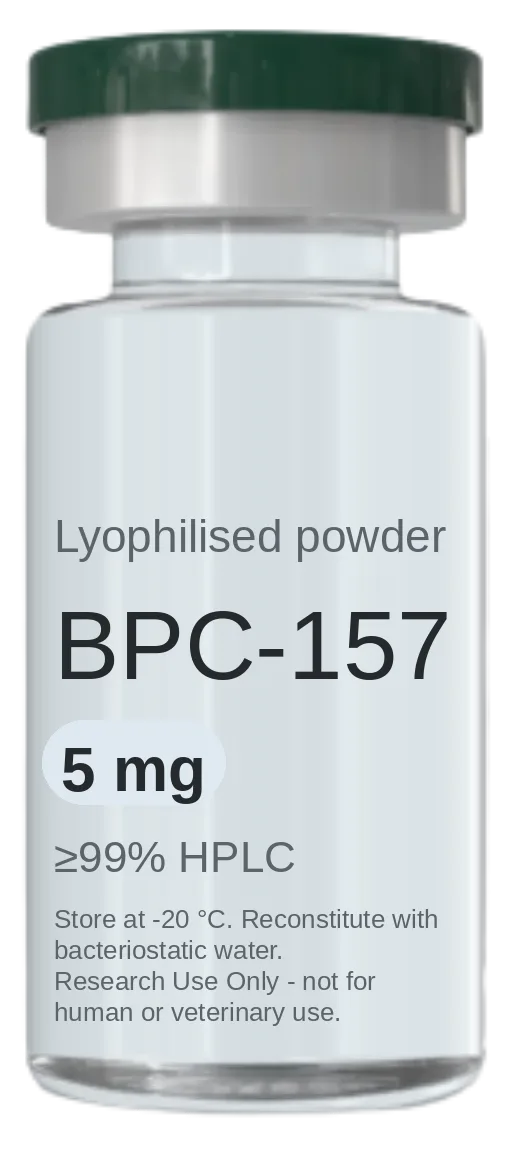
BPC-157 + TB-500
BPC-157 and TB-500 in a single vial — the pairing most studied together in tissue-repair research.
- Purity:
- ≥99% HPLC
- Sizes available:
- 5 mg + 5 mg
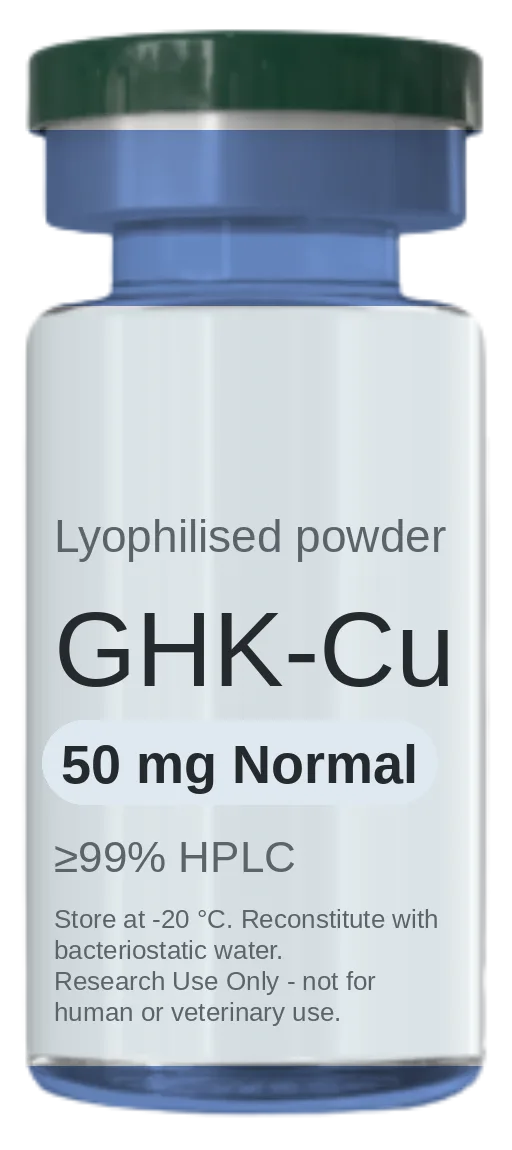
GHK-Cu (Copper Peptide)
Copper-binding tripeptide studied in extracellular matrix and dermal research models.
- Purity:
- ≥99% HPLC
- Sizes available:
- 50 mg Normal – 50 mg Plus
The consultation
One intake that settles goals, history and contraindications alongside compound, quantity, documentation and route — reviewed by a physician before anything ships.
More notes
-
Peptides to Argentina: Post or Courier?
Postal import of research peptides into Argentina exists as a channel, but PeptoClinic ships by documented courier, not ordinary mail.
-
Is NAD+ a Peptide or Something Else?
NAD+ is not a peptide — it's a dinucleotide, a coenzyme. Here's the chemical difference and why the two get mixed up.
-
Tesamorelin vs Sermorelin: The Difference
Tesamorelin and sermorelin are both GHRH analogs, but not the same molecule. Here's the structural difference and what the studies on each measure.