
Note
Peptides to Argentina: Post or Courier?
Postal import of research peptides into Argentina exists as a channel, but PeptoClinic ships by documented courier, not ordinary mail.
Yes, an international parcel can technically enter Argentina through ordinary postal mail instead of courier, but PeptoClinic does not ship research material that way. PeptoClinic supplies research peptides to [Argentina](/en/argentina/) by documented courier, with a tracked waybill and a customs file prepared so the shipment is declared as what it actually is: laboratory reference material, not a consumer product.
The question behind this search is a reasonable one, usually asked by someone who has already watched a postal package sit in a bonded warehouse for weeks, or who is wondering why a supplier charges courier freight instead of routing the parcel through the ordinary international mail system the way a marketplace purchase would travel. The short answer is that postal mail and courier are two different customs regimes, built for two different kinds of cargo, and only one of them fits this kind of material.
Postal Mail vs. Courier: What's the Difference
International postal mail — the channel that enters through a national postal operator under the postal shipments regime — is built for personal parcels: an online purchase, a gift, an envelope of documents. The customs declaration is filled out by whoever hands the parcel to the post office at origin, often with a generic description, and the package then moves through a manual review process with no reliable tracking and no predictable timeline for the recipient.
International courier (DHL, FedEx, UPS and similar carriers) runs on a different structure: door to door, with an electronic tracking event at every leg, a dedicated customs broker, and a detailed content declaration filed together with the commercial invoice. The parcel is never anonymous cargo in a generic warehouse — it carries a waybill number that identifies it from the moment it leaves origin until a broker hands it over.
For routine parcels that difference barely matters. For research material that travels with a cold-chain requirement and origin documentation, it matters a great deal.
Why Courier Is the Right Path for Laboratory Reference Material
A research peptide ships as lyophilised powder, not reconstituted, and it travels with a certificate of analysis — the purity report issued by an independent laboratory, not by the supplier itself. That certificate is what lets the recipient verify which compound it is and at what concentration, a process laid out in detail on the quality page.
That document has to travel with the parcel and stay tied to an accurate customs declaration: the contents are laboratory reference material, not a product intended for human or veterinary consumption. The postal regime is not structured to attach and verify that kind of documentation case by case. The courier regime is, because every shipment passes through a broker who can present the invoice, the content description and the supporting paperwork as one traceable filing.
There is also a practical question of transit time. The traditional postal network has no guaranteed transit window between the moment a parcel leaves origin and the moment it arrives, and that is a real problem for anything that needs to stay within controlled conditions in transit. Courier makes it possible to book a bounded, tracked leg — which is what a shipment that is not an ordinary parcel actually needs.
What Documentation Travels With the Shipment
Every order shipped to Argentina is prepared to the same standard, regardless of the compound: the customs file declares the contents as research reference material, the commercial invoice is attached, and the shipment is tied to the laboratory report for that specific batch. That applies whether the order is for Retatrutide or for any other item in the catalog.
The logic, described in full on the shipping page, is that the broker at destination has everything needed to classify the parcel correctly on the first pass, without customs having to request clarifications that stall the shipment. A parcel sent through ordinary postal mail, without that documentation packaged in advance, leaves that classification to whoever happens to review it that day — and for laboratory material that is a risk with no upside.
What If I Still Want It Sent by Postal Mail?
It is not an option PeptoClinic offers. Shipping by courier is not a marketing preference — it is the mechanism that keeps the customs file, the certificate of analysis and the physical parcel arriving together, with full traceability. Splitting that up — routing the parcel through one channel and the paperwork through another, or trusting that ordinary mail will correctly complete a generic declaration — multiplies the chance that the shipment gets held up or misclassified along the way.
Anyone who has received personal parcels by postal mail before knows the system, even when it works, offers no timing guarantee. For orders that are quoted individually against the specifics of each technical request — as described on the about page — paying for courier makes more sense than putting a batch's traceability at risk.
Is It Legal to Import Research Peptides Into Argentina?
The material is supplied strictly for Research Use Only (RUO): in vitro and laboratory research. It is not a medicine, not a supplement, not a food, and none of its claims have been evaluated by ANMAT, the FDA or any equivalent authority. The shipment is declared to customs on exactly that basis: laboratory reference material, not intended for human or veterinary consumption, not intended for diagnosis or treatment.
That framing is what lets the customs process move as an import of a laboratory reagent or input: the declaration matches what the parcel actually contains and what the accompanying certificate of analysis states.
Research Material Only — Not for Human or Veterinary Use
Everything on this site — including compounds such as MOTS-c, BPC-157 or any other catalogue item — is supplied exclusively as laboratory reference material for research. No product is approved or intended for human or veterinary consumption, diagnosis or treatment of any condition. PeptoClinic is not a pharmacy, a clinic or a telehealth provider, and does not issue or complete dosing, administration or protocol guidance. Requests made for that purpose are declined.
Frequently asked questions
Does PeptoClinic ship to Argentina?
Yes. Argentina is among the destinations PeptoClinic serves, alongside the United States, Uruguay, Chile, Paraguay, Bolivia, Peru, Brazil, Mexico and Colombia, and each order is quoted based on the compound and quantity a given request needs.
Why can't the shipment go by postal mail instead of courier?
Because the postal regime is built for personal parcels, not for laboratory material accompanied by a certificate of analysis and a cold-chain requirement. Courier makes it possible to declare the contents precisely, attach the supporting documentation, and track every leg of the shipment — none of which the traditional postal network offers with the same reliability.
What documentation travels with the parcel?
The commercial invoice, a customs declaration describing the contents as research reference material, and the certificate of analysis for the corresponding batch, issued by an independent laboratory.
Does PeptoClinic issue the certificate of analysis?
No. It is issued by a third-party laboratory that analyses the batch independently. That report is what makes it possible to verify a compound's declared purity, as explained on the quality page.
Is a prescription or medical authorization needed to import it?
No prescription is issued or required, because the material is not supplied as a medicine or for human use. The import is declared and handled as laboratory reference material.
How long does a shipment to Argentina take?
Courier allows for a bounded, tracked transit at every stage, unlike postal mail, which offers no guaranteed transit window. The process is detailed on the shipping page.
Does this same shipping approach apply to every compound in the catalogue?
Yes, the same documentation and courier standard applies to every compound in the catalogue, with no product-by-product exceptions.
What happens if a parcel is held up at customs?
Because the documentation travels with the parcel from origin, the broker at destination has what is needed to classify the shipment on the first filing. That is exactly what the postal channel, by not packaging that documentation systematically, cannot guarantee.
Compounds mentioned
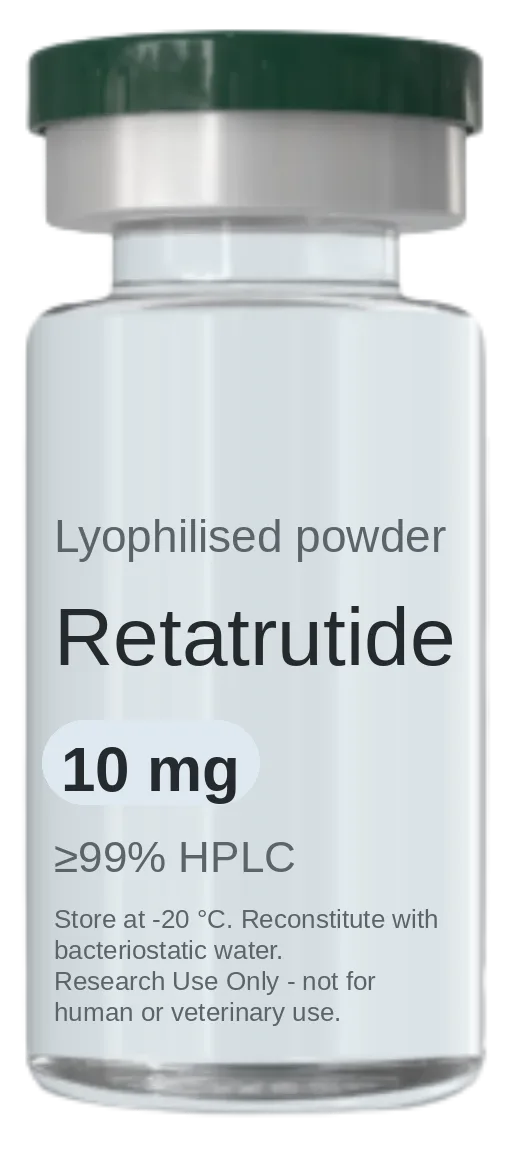
Retatrutide
Triple-agonist metabolic research peptide targeting GLP-1, GIP and glucagon receptors.
- Purity:
- ≥99% HPLC
- Sizes available:
- 10 mg
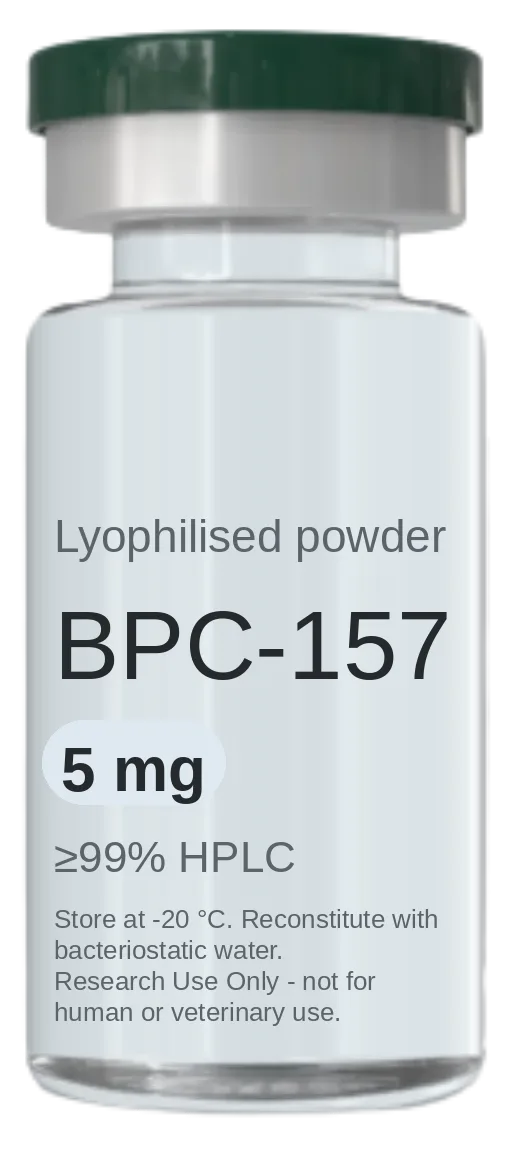
BPC-157 + TB-500
BPC-157 and TB-500 in a single vial — the pairing most studied together in tissue-repair research.
- Purity:
- ≥99% HPLC
- Sizes available:
- 5 mg + 5 mg
The consultation
One intake that settles goals, history and contraindications alongside compound, quantity, documentation and route — reviewed by a physician before anything ships.
More notes
-
Is NAD+ a Peptide or Something Else?
NAD+ is not a peptide — it's a dinucleotide, a coenzyme. Here's the chemical difference and why the two get mixed up.
-
Tesamorelin vs Sermorelin: The Difference
Tesamorelin and sermorelin are both GHRH analogs, but not the same molecule. Here's the structural difference and what the studies on each measure.
-
Peptide Supplier vs. Reseller: What Differs
The real difference is whether someone can name the lab that tested a batch and show the report — or only promise it's pure.