
Note
BPC-157 vs GHK-Cu: What's the Difference
BPC-157 and GHK-Cu are distinct research peptides with different structures and study lines. Here's what separates them, with sources.
BPC-157 and GHK-Cu are two research peptides with completely different structures, origins and mechanisms: BPC-157 is a 15-amino-acid peptide derived from a gastric protein, while GHK-Cu is a tripeptide (three amino acids) bound to a copper ion, originally isolated from human plasma. They are not variants of the same compound and they don't occupy the same role in the scientific literature — they sit in separate research lines, with separate papers, and they are not interchangeable in a laboratory protocol.
What is BPC-157
BPC-157 (Body Protection Compound-157) is a synthetic fragment derived from a protein found naturally in gastric juice. It is the most-cited peptide in the tissue-repair literature in animal models: most of the studies indexed on PubMed investigate it in rats and mice, evaluating its effect on tendon, muscle, intestinal and vascular tissue. The full molecule has 15 amino acids and is stable at room temperature for short periods, which makes it relatively straightforward to handle in the lab compared with longer peptides.
In PeptoClinic's catalogue, BPC-157 is quoted for destinations including Argentina as research material, with the corresponding batch documentation.
What is GHK-Cu
GHK-Cu (Glycyl-Histidyl-Lysine, bound to copper) is a much shorter peptide: just three amino acids — glycine, histidine, lysine — with a coordinated copper ion in its structure. It was first identified in human plasma in the 1970s, and research since then has concentrated on two main lines: skin biology (fibroblast activation, collagen remodeling) and, more recently, gene expression and cellular aging studies in in vitro models. Unlike BPC-157, which is a "free" peptide fragment, GHK-Cu depends on its bond with copper for the activity described in the papers — separating the peptide from the metal changes the molecule under study.
The Argentina page for GHK-Cu has the format and documentation details the compound ships with.
The core differences, summarized
The differences that matter to someone comparing both compounds before deciding what to request in a research order:
- Molecule size: BPC-157 has 15 amino acids; GHK-Cu has 3 plus a copper ion. These are structures of very different complexity.
- Origin of the reference compound: BPC-157 is derived from a gastric protein; GHK-Cu was identified in human plasma.
- Focus of the literature: BPC-157 is studied mainly in systemic tissue repair (tendon, intestine, vessels); GHK-Cu is studied mainly in dermal biology and gene expression models.
- Dependence on a cofactor: GHK-Cu requires the coordinated copper for the activity described in the studies; BPC-157 does not depend on a metal for its structure.
- Stability: as a longer peptide, BPC-157 typically requires more careful temperature handling than a tripeptide like GHK-Cu, though both ship lyophilized precisely to minimize that concern.
None of these points implies that one compound is "better" than the other — they are different objects of study, and which one fits a given protocol depends on what the laboratory is investigating, not on a comparison of potency.
What a laboratory report certifies for each one
PeptoClinic publishes third-party reports for its batches, all analyzed by Janoshik Analytical. The report for GHK-Cu (50 mg batch) and the report for BPC-157 — which in the analyzed lot is combined with TB-500, 5 mg of each compound out of 10 mg total — are both available for online verification on the laboratory's site. Neither report lists a purity percentage on the document itself: that's different from other compounds in the catalogue, such as retatrutide or MOTS-c, whose reports do state the exact figure.
This matters to anyone comparing suppliers: a certificate of analysis is only useful if it can be opened and checked against the laboratory that signed it. The PeptoClinic quality page explains how to read one of these documents before treating any purity number in an ad as valid.
Exclusively for laboratory research use
BPC-157 and GHK-Cu are supplied strictly for research use only (RUO): in vitro and laboratory studies. Neither compound is a medicine, a supplement or a food. Neither is approved for human or veterinary consumption, diagnosis or treatment, and none of the claims about them have been evaluated by the FDA, ANMAT or an equivalent authority. PeptoClinic is not a pharmacy or a telehealth provider, does not issue administration protocols, and does not answer inquiries oriented toward use in people.
How a batch is documented for a shipment to Argentina
Every compound in the catalogue is quoted on request: a researcher describes what their program needs — compound, purity specification, quantity — and the technical team responds with a written quote that includes the shipping route, cold-chain handling and the customs documentation needed to bring the material into Argentina as laboratory reference material. There is no published price and no shopping cart: the process is a technical inquiry, not a direct sale.
Anyone looking for either compound, or any other one in the catalogue destined for Argentina, can review the full list of compounds available for Argentina before sending an inquiry. Shipping logistics and lead-time handling are described on the shipping page.
Frequently asked questions
Can BPC-157 and GHK-Cu be combined in the same study?
There's no general answer — it depends on each laboratory's protocol design. They are two objects of study with separate mechanisms and separate literatures, and any decision to combine them in an assay belongs to the researcher designing the study, not to the supplier of the material.
Which one has more published studies?
BPC-157 has a larger volume of publications in animal models on tissue repair, accumulated over a longer period. GHK-Cu has a literature more concentrated in dermal biology and, in recent years, gene expression studies. The volume of papers is not an indicator that one compound is superior to the other — it reflects which area academic research has focused on more.
Why does the BPC-157 report include TB-500?
Because the batch PeptoClinic analyzed and published is a combination of both compounds, 5 mg of each out of 10 mg total. Anyone who needs a BPC-157 report should review that document knowing it corresponds to the combined batch, not to isolated BPC-157.
Do both compounds ship in the same format?
Both ship as a vial of lyophilized powder, which is the format PeptoClinic keeps in stock across the catalogue. A pen format is announced but not currently orderable — it's waitlist only.
Can the purity of these batches be verified independently?
Yes: the Janoshik Analytical reports for GHK-Cu and for the combined BPC-157/TB-500 batch are available for online verification on the laboratory's site. That's the same standard applied to every other compound in the catalogue — a purity figure without a verifiable report shouldn't be treated as valid.
Does GHK-Cu lose activity if it's separated from copper?
The literature describes GHK-Cu's activity as dependent on coordination with the copper ion present in the molecule. Separating the peptide from the metal changes the structure that the published studies investigate, which is why the compound is always identified as the GHK-Cu complex and not as the tripeptide alone.
Are there other peptides with research lines similar to GHK-Cu?
Yes — the catalogue includes compounds focused on dermal biology and tissue repair through mechanisms distinct from each other, such as [KPV](/en/product/kpv/), which is studied through a different pathway than GHK-Cu. Each one has its own literature and they are not direct substitutes for one another.
How is a quote requested for either compound?
A researcher describes the compound, the purity specification and the quantity their program needs, and PeptoClinic's technical team responds with a written quote that includes batch documentation and the shipping route. The full process is explained on the [catalogue page](/en/catalog/) and the [shipping page](/en/shipping/).
Compounds mentioned
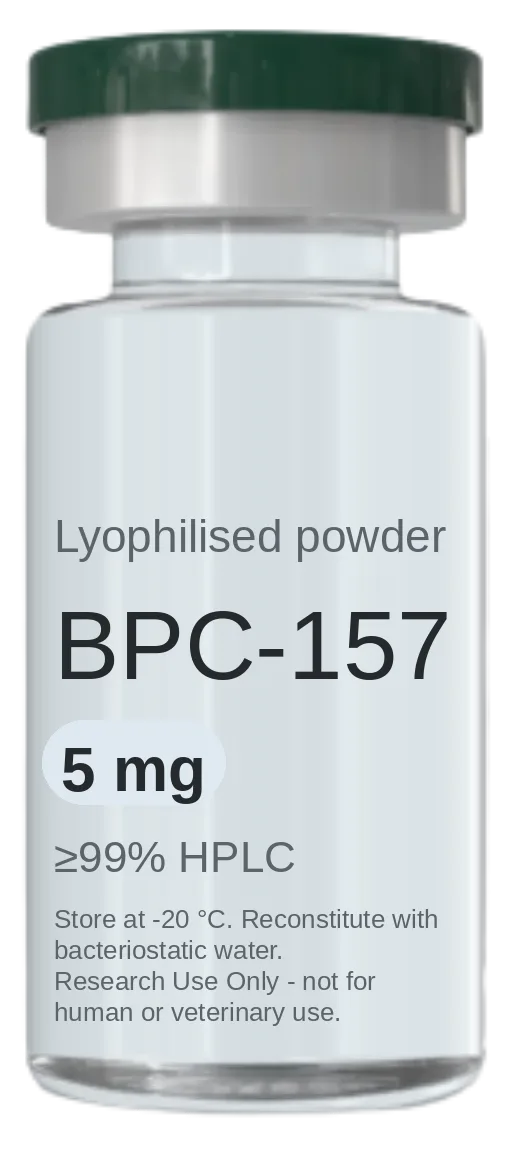
BPC-157 + TB-500
BPC-157 and TB-500 in a single vial — the pairing most studied together in tissue-repair research.
- Purity:
- ≥99% HPLC
- Sizes available:
- 5 mg + 5 mg
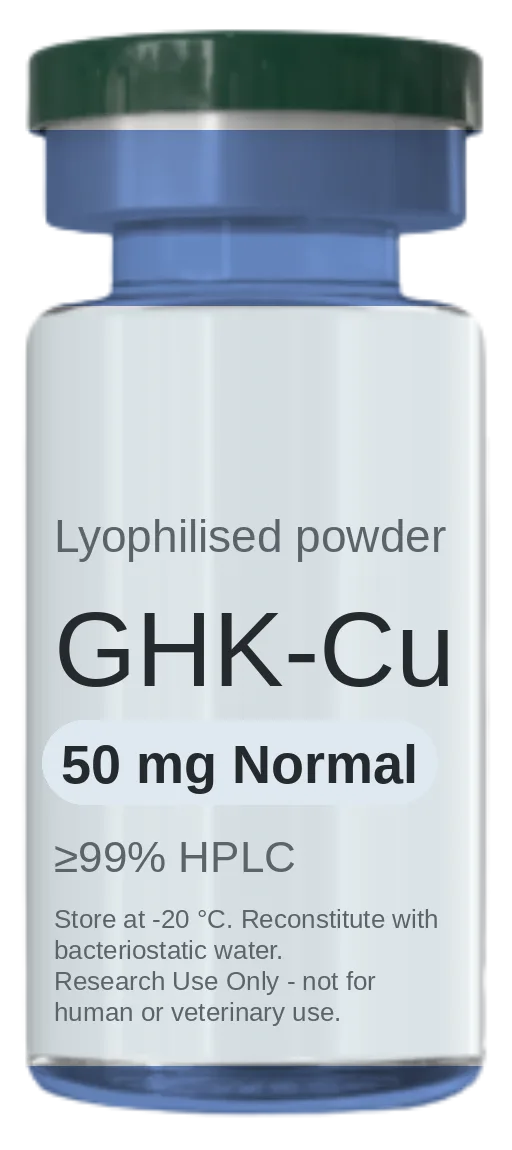
GHK-Cu (Copper Peptide)
Copper-binding tripeptide studied in extracellular matrix and dermal research models.
- Purity:
- ≥99% HPLC
- Sizes available:
- 50 mg Normal – 50 mg Plus
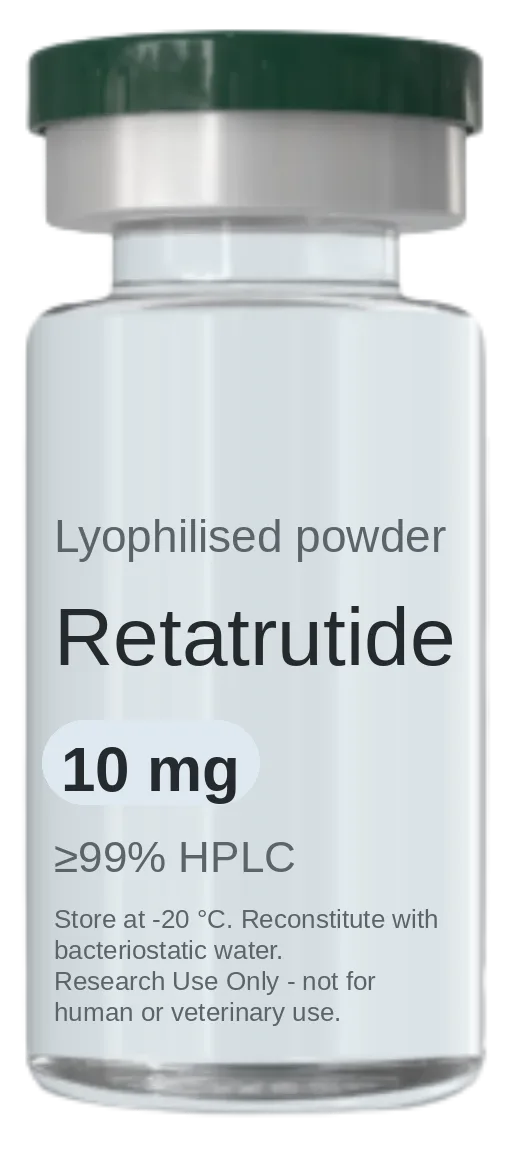
Retatrutide
Triple-agonist metabolic research peptide targeting GLP-1, GIP and glucagon receptors.
- Purity:
- ≥99% HPLC
- Sizes available:
- 10 mg
The consultation
One intake that settles goals, history and contraindications alongside compound, quantity, documentation and route — reviewed by a physician before anything ships.
More notes
-
Hexarelin vs GHRP-6: Key Differences
Hexarelin and GHRP-6 are both GHRP hexapeptides, but differ in receptor affinity, appetite effect, and cardiovascular research findings.
-
Do You Need a Customs Broker for Peptides?
Customs broker to import research peptides into Argentina: when one is required and when the courier already handles it.
-
Argentina Customs Penalty for Bad Declarations
What happens when a research peptide shipment is misdeclared to Argentine customs: fines, smuggling charges, and seizure.