
Note
Importing Selank to Argentina for Research
Selank can be imported into Argentina as laboratory research material, with customs paperwork prepared for that purpose.
Yes, Selank can be imported into Argentina as laboratory research material. PeptoClinic quotes lyophilized Selank with the customs documentation prepared for that purpose, under a Research Use Only (RUO) framework: it is a laboratory research input, not a medicine or a supplement, and it is not approved for human or veterinary consumption.
That distinction — research material versus a consumer product — is what shapes the entire import process, so it is worth understanding before requesting a quote.
What Selank is in a research context
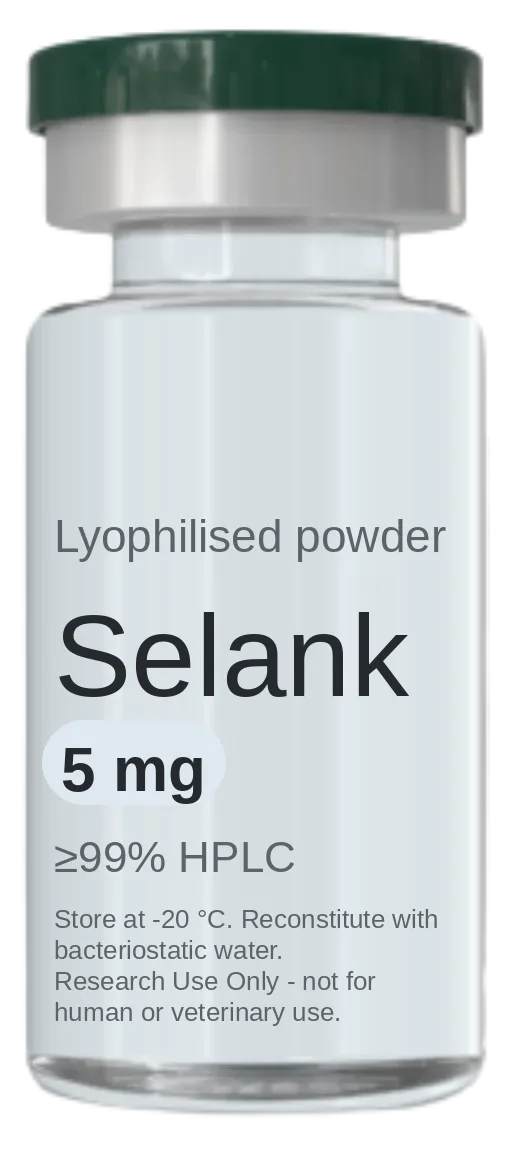
Selank is a synthetic peptide, a tuftsin analogue, studied by various research groups as a tool in preclinical models of anxiety and cognitive function. As with any peptide of this kind, what arrives at a laboratory is lyophilized powder in a sealed vial, intended for reconstitution and use on the bench, not for administration in people.
PeptoClinic does not sell Selank as a finished consumer product, and it does not define a use for whoever receives it: the role of the consultancy is technical. A researcher describes what their programme needs — compound, purity specification, quantity, batch documentation — and the technical team returns a written quote, normally within one business day.
Why it can be imported as research material
The key is how the shipment is declared. Argentina is among the destinations PeptoClinic quotes research peptides to — alongside the United States, Uruguay, Chile, Paraguay, Bolivia, Peru, Brazil, Mexico and Colombia — and the customs file for each shipment is prepared specifically for that category: a laboratory input, not a consumer product. That is the difference that determines whether a shipment clears without friction or gets stuck at customs.
None of this makes Selank an approved drug. No claim about this material has been evaluated by ANMAT, the FDA or any equivalent authority, and PeptoClinic is not a pharmacy, a clinic, or a telehealth provider. No prescription is issued because none is required: what gets quoted is an R&D input.
How the material travels
Lyophilized Selank does not need a cold chain. The dry powder stays stable at room temperature for weeks, so the box carries no gel pack, no dry ice, no thermal insulation and no temperature logger. What it does carry is a sealed vial with desiccant, protected from light.
Cold only starts to matter once the material has been reconstituted: at that point the solution is kept between 2 and 8 °C and used within 30 to 60 days. But that is laboratory handling after reconstitution, not part of international transport. If a site ever promises "cold-chain shipping" for a lyophilized peptide, that is a sign it does not understand — or does not accurately describe — what it is actually sending.
What documentation accompanies the batch
Every compound in PeptoClinic's catalogue is quoted with purity verified by an external laboratory. The published reports come from Janoshik Analytical, analyzed on April 13, 2026, and cover compounds such as retatrutide (99.893%) and MOTS-c (99.669%) with a direct verification link to the laboratory.
For Selank specifically, what accompanies the quote is the purity specification and the certificate of analysis for the corresponding batch, so the researcher can confirm what they are receiving before using it. That is, ultimately, the question most worth asking any supplier before importing anything: do you have the certificate of analysis for the exact batch you're sending me, or just a generic spec sheet? For more on how to read one of these reports and what to look for, the quality page has the full detail on how each batch is verified.
What this import covers, and what it doesn't
What PeptoClinic can resolve is the technical and logistical side: compound specification, purity documentation, and the customs file prepared as research material. What PeptoClinic does not do, under any circumstance, is give guidance on dosing, administration routes, protocols or human-use patterns. That kind of question simply is not answered, because the material is not intended for that.
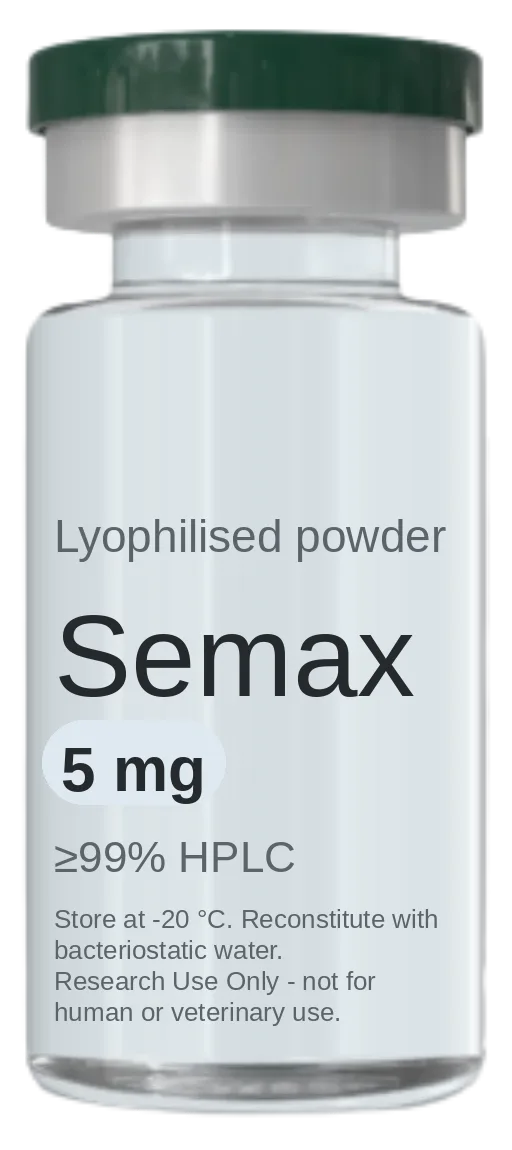
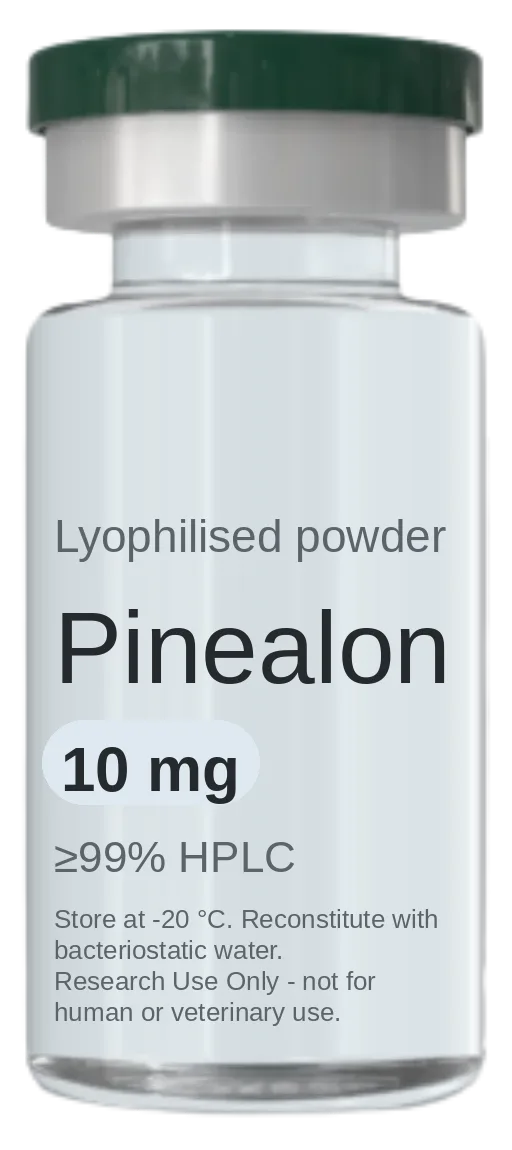
Anyone looking for Selank for research can also check the full catalogue to see which other peptides it is commonly studied alongside in neurobiology research lines — Semax and Pinealon appear frequently in the same literature — and confirm timelines and logistics on the shipping page for destinations in Argentina.
Where Argentina fits into this
Argentina has been a served destination since August 2026, by PeptoClinic's operating decision. That means the quoting, documentation and shipping flow is already established for this country, and it is not a case-by-case exception. The Argentina page details which compounds have a dedicated page for this market and how quoting is structured for Argentine destinations specifically.
It's worth noting that Selank does not yet have its own country page within that group — unlike retatrutide, MOTS-c, GHK-Cu, BPC-157, CJC-1295 no DAC, tesamorelin and bac water, which do — but that does not change whether it can be quoted and imported: the customs documentation process is the same across the whole catalogue.
The regulatory framework, plainly
Everything PeptoClinic supplies is strictly for research use (RUO): in vitro and laboratory studies. None of this is a medicine, a supplement or a food. Nothing is approved or intended for human or veterinary consumption, diagnosis or treatment. No efficacy claims are evaluated because none are made: what gets documented is the material's purity, not its effect on a person.
This distinction is not an empty legal formality — it is what defines which questions can be answered and which cannot. If a question implies use in someone's body, PeptoClinic's answer is that this is not the field it operates in.
Frequently asked questions
Is Selank legal to import into Argentina?
As laboratory research material, yes, it can be imported, with the customs file prepared for that category of use. It is not a medicine approved by ANMAT and is not imported under that regime, because it is not marketed as one.
What documentation comes with a Selank batch?
The purity specification and the certificate of analysis for the batch, issued by an external laboratory, so the researcher can verify what they received before incorporating it into their work.
Does the shipment need a cold chain?
No. Lyophilized Selank is stable at room temperature for weeks, so it travels in a sealed vial with desiccant, with no coolant or dry ice. Cold only becomes relevant after the material is reconstituted in the laboratory.
Does PeptoClinic give dosing or human-use guidance?
No. The material is quoted and documented exclusively as a research input. Any question about administration in people falls outside the scope of the consultancy.
How long does a quote for Selank take?
The technical team typically responds to a quote request within one business day, once the compound, quantity and destination are described.
What other peptides is Selank commonly studied alongside?
In research literature it appears alongside other neurological study peptides, such as Semax and Pinealon. The [catalogue](/en/catalog/) shows the full list of compounds available for quoting.
Is Argentina a regular destination for these shipments?
Yes, Argentina is among the destinations served since August 2026, with the documentation and shipping process already established for that country.
Does Selank have a verifiable purity certificate online?
The laboratory reports published by PeptoClinic come from Janoshik Analytical and, depending on the compound, include a direct verification link. For the specific Selank batch being quoted, the corresponding certificate is provided together with the quote.
Compounds mentioned
The consultation
One intake that settles goals, history and contraindications alongside compound, quantity, documentation and route — reviewed by a physician before anything ships.
More notes
-
Retatrutide vs. Tesamorelin: What's Different
Retatrutide and tesamorelin target different receptors and different research questions — here's what the documentation shows.
-
KPV vs. Selank: What's the Difference
KPV is an anti-inflammatory tripeptide; Selank is a nootropic peptide. We compare origin, research focus and documentation for each.
-
Can You Import KPV Into Argentina?
Yes — KPV ships to Argentina as laboratory research material, with the customs paperwork prepared for that purpose.