
Note
Can You Import KPV Into Argentina?
Yes — KPV ships to Argentina as laboratory research material, with the customs paperwork prepared for that purpose.
Yes, you can. PeptoClinic supplies KPV to Argentine destinations as laboratory research material, with the customs file prepared specifically for that purpose — not as a consumer product, but as a research reagent. That answers the question directly; the rest of this post covers how the process actually works.
What "research material" means here
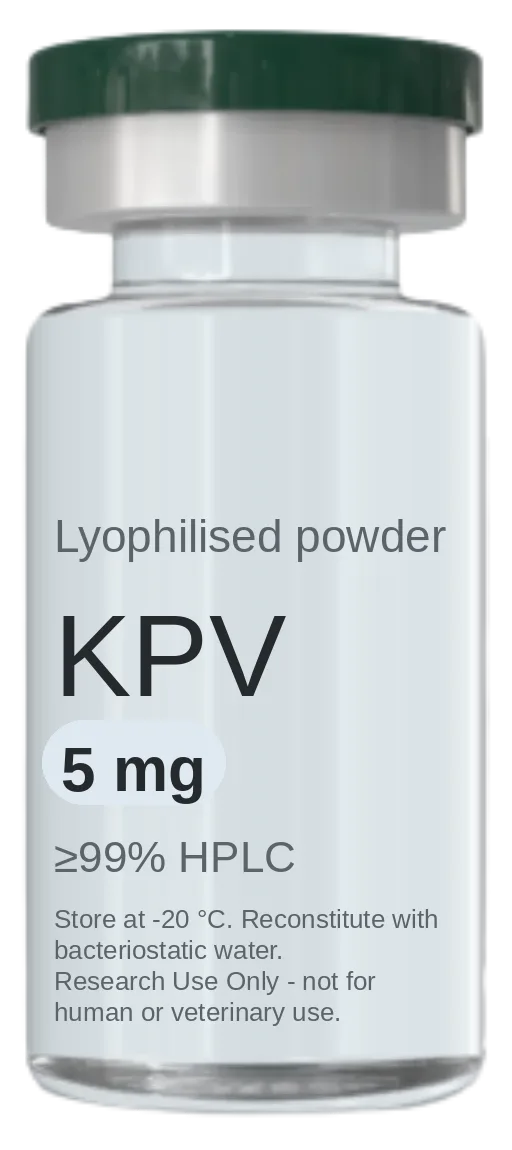
KPV is a tripeptide (lysine-proline-valine) that the scientific literature studies mainly for its activity in inflammation models and in research on the melanocortin pathway. That use — in a benchtop assay, in cell culture, in a controlled experiment — is a different thing from use in a person, and it is the only use this material is distributed for.
PeptoClinic's entire catalogue is labeled Research Use Only (RUO): material for in vitro and laboratory research, not a medicine, not a supplement, not a food. No product in the catalogue is approved or evaluated for human or veterinary consumption, diagnosis or treatment, and none of these claims have been reviewed by ANMAT, the FDA or any equivalent authority. No prescription is issued, because none is needed — this is not sold as a pharmaceutical.
That RUO label is not a legal formality separate from the product. It describes what is actually being shipped: lyophilized powder in a sealed vial, meant to be reconstituted in a laboratory setting, not administered to a person.
How the shipment to Argentina is put together
Argentina is one of the destinations PeptoClinic ships to on a regular basis, alongside Uruguay, Chile, Paraguay, Bolivia, Peru, Brazil, Mexico, Colombia and the United States. For the logistics specific to this destination, the Argentina page covers what's particular to that route.
The material is quoted per inquiry — there is no price list and no shopping cart. A researcher describes what compound they need, in what quantity, and with what batch documentation, and the technical team responds with a written quote, normally within one business day. The customs file that accompanies the shipment is prepared to declare it for what it is — laboratory reference material — and not as consumer merchandise.
One point that often causes confusion: KPV, like the rest of the catalogue, travels as lyophilized powder in a sealed vial, not in solution. Lyophilized powder stays stable at room temperature for weeks, so the shipment carries no cold chain: no coolant, no gel pack, no dry ice, no temperature logger. What protects the vial is the seal and the desiccant that keeps moisture out, not refrigeration. Cold becomes relevant only later, once the material is reconstituted in the destination lab and turned into a solution — at that point it does need 2–8 °C storage and a limited use window — but that is handling after arrival, not part of the transport itself. Packaging details are on the shipping page.
What to ask before requesting a quote
Before requesting a quote for KPV, it's worth knowing exactly what you'll receive and what documentation backs it up.
The purity standard PeptoClinic states for the research peptides in its catalogue is ≥99% by HPLC. That's not a marketing line — it's backed by reports from independent laboratories. PeptoClinic publishes reports from Janoshik Analytical for several compounds in the catalogue — Retatrutide analyzed at 99.893%, MOTS-c at 99.669%, among others — with a direct verification link to the laboratory where that link works. How to read those certificates, and what to look for in the report on any given batch, is explained on the quality page. If a supplier can't produce a report from a named laboratory, there's no way to know what's actually in the vial.
KPV is part of the catalogue of 19 compounds PeptoClinic distributes, alongside other peptides frequently requested together for research on tissue repair and cell signaling, such as BPC-157, GHK-Cu and MOTS-c. Several of these compounds have their own Argentina page with their specific lab report detail — for BPC-157, that's the Argentina BPC-157 page; for GHK-Cu, the Argentina GHK-Cu page. For KPV, the general quality reference is the quality page cited above.
What this shipment does not include
No dosing guide, administration protocol or any indication intended for use in a person is provided. PeptoClinic is not a pharmacy, not a clinic, not a telehealth service and not a medical consultancy — it is a technical supply consultancy for research material. If an inquiry asks for a human-use protocol, the answer is that the request falls outside what this operation provides.
This isn't an oversight — it's the line that separates "research material with customs documentation in order" from "consumer product with no regulatory framework." KPV arrives in Argentina under the first category, and only under that category.
Frequently asked questions
Is KPV approved for human use in Argentina?
No. KPV is distributed strictly as laboratory research material (RUO), without evaluation by ANMAT or any equivalent regulatory authority, and it is not intended for diagnosis, treatment, or human or veterinary consumption.
Do I need a prescription to request a quote for KPV?
No. Since this is research material rather than a medicine, no prescription is issued or required. The inquiry is technical: compound, purity specification, and quantity needed for the project.
How does the KPV vial reach Argentina — with cold chain or without?
Without a cold chain. The material travels as lyophilized powder in a sealed vial with desiccant, stable at room temperature during transport. Cold only becomes relevant after reconstitution in the destination laboratory.
How do I know if the KPV I receive has the stated purity?
By requesting the batch analysis report. PeptoClinic publishes reports from independent laboratories such as Janoshik Analytical for compounds in the catalogue, and explains how to read one in full on the quality page linked above.
Does PeptoClinic sell KPV with a fixed price and shopping cart?
No. The model is quote-per-inquiry: you describe the compound and quantity, and the technical team responds with a written quote, normally within one business day. There are no published prices.
Does the shipment to Argentina declare KPV as a medicine?
No. The customs file that accompanies the shipment declares it as laboratory reference material, consistent with the product's RUO label, not as consumer merchandise or a pharmaceutical product.
Does PeptoClinic provide dosing or usage instructions for KPV?
No. Inquiries asking for administration protocols intended for a person fall outside what this consultancy provides, because the material is supplied exclusively for laboratory research.
What other countries in the region does PeptoClinic ship KPV to besides Argentina?
The same circuit that covers the rest of the catalogue: Uruguay, Chile, Paraguay, Bolivia, Peru, Brazil, Mexico and Colombia, in addition to Argentina and the United States.
Compounds mentioned
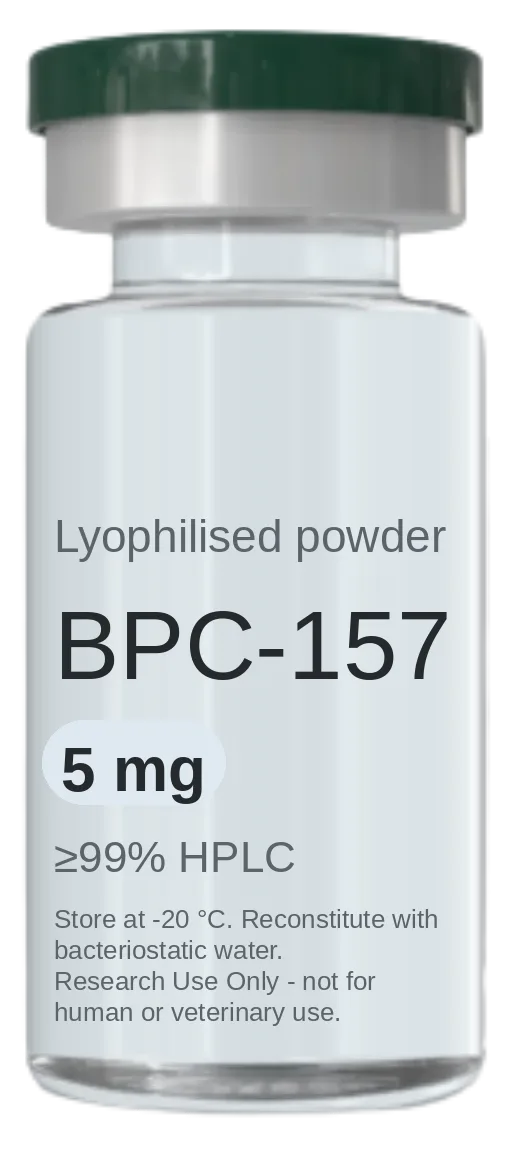
BPC-157 + TB-500
BPC-157 and TB-500 in a single vial — the pairing most studied together in tissue-repair research.
- Purity:
- ≥99% HPLC
- Sizes available:
- 5 mg + 5 mg
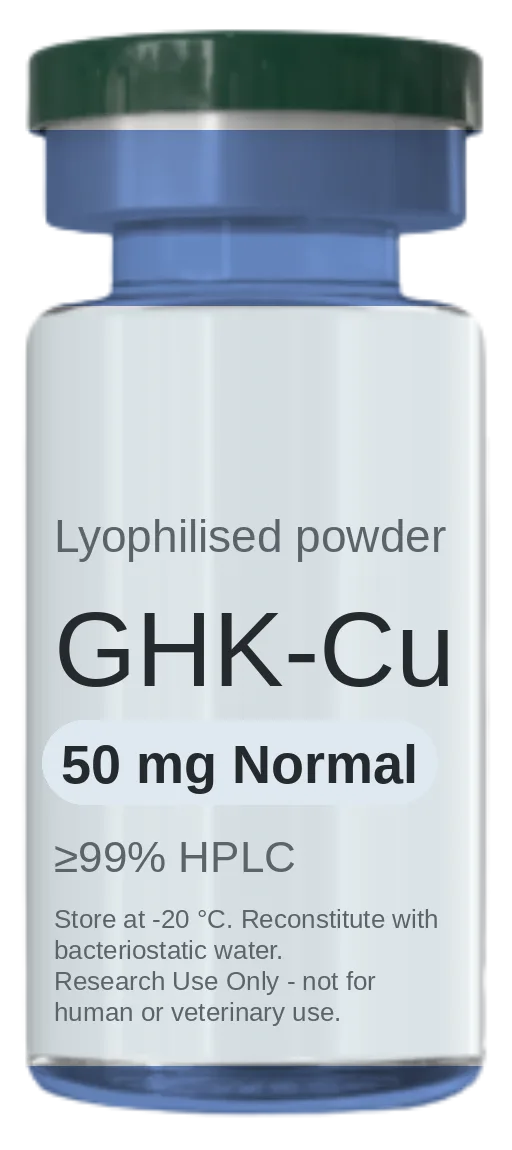
GHK-Cu (Copper Peptide)
Copper-binding tripeptide studied in extracellular matrix and dermal research models.
- Purity:
- ≥99% HPLC
- Sizes available:
- 50 mg Normal – 50 mg Plus
The consultation
One intake that settles goals, history and contraindications alongside compound, quantity, documentation and route — reviewed by a physician before anything ships.
More notes
-
Retatrutide vs. Tesamorelin: What's Different
Retatrutide and tesamorelin target different receptors and different research questions — here's what the documentation shows.
-
KPV vs. Selank: What's the Difference
KPV is an anti-inflammatory tripeptide; Selank is a nootropic peptide. We compare origin, research focus and documentation for each.
-
Can You Ship Peptides as a "Sample"?
Why declaring a paid research peptide shipment as a duty-free commercial sample is invalid in Argentina, and what paperwork works instead.