
Note
KPV vs. Selank: What's the Difference
KPV is an anti-inflammatory tripeptide; Selank is a nootropic peptide. We compare origin, research focus and documentation for each.
KPV and Selank are two research peptides with almost nothing in common beyond how they are sold: KPV is a tripeptide derived from the hormone alpha-MSH that the literature investigates for anti-inflammatory activity, while Selank is a synthetic analog of tuftsin studied in models of anxiety and cognitive function. Structure, origin and research field are different for each. What they share is the format they ship in as research material — a lyophilized vial, for laboratory use only.
What is KPV
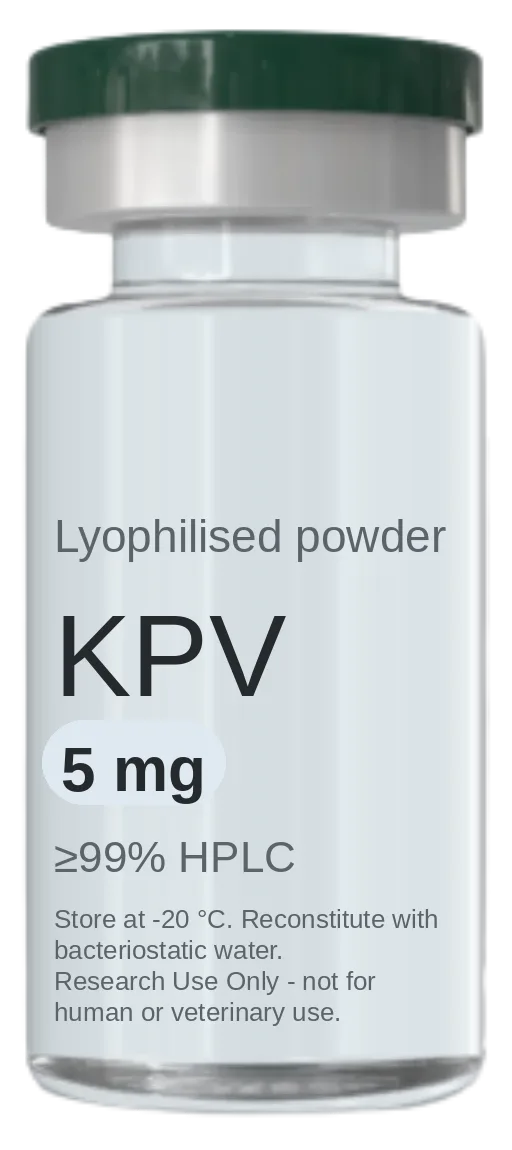
KPV takes its name from its three-amino-acid sequence: lysine-proline-valine (Lys-Pro-Val). It is the C-terminal fragment of alpha-melanocyte-stimulating hormone (α-MSH), and it is specifically the portion of that molecule that retains anti-inflammatory activity without activating the melanocortin receptors responsible for pigmentation.
The published literature on KPV concentrates on models of intestinal and cutaneous inflammation. Studies indexed on PubMed have investigated its effect on pro-inflammatory cytokine production — IL-6 and TNF-alpha among them — in experimental colitis models, and separately on keratinocytes in models of dermal inflammation. Part of the interest in the tripeptide is that, unlike larger anti-inflammatory molecules, its low molecular weight lets it cross cell membranes easily.
What is Selank
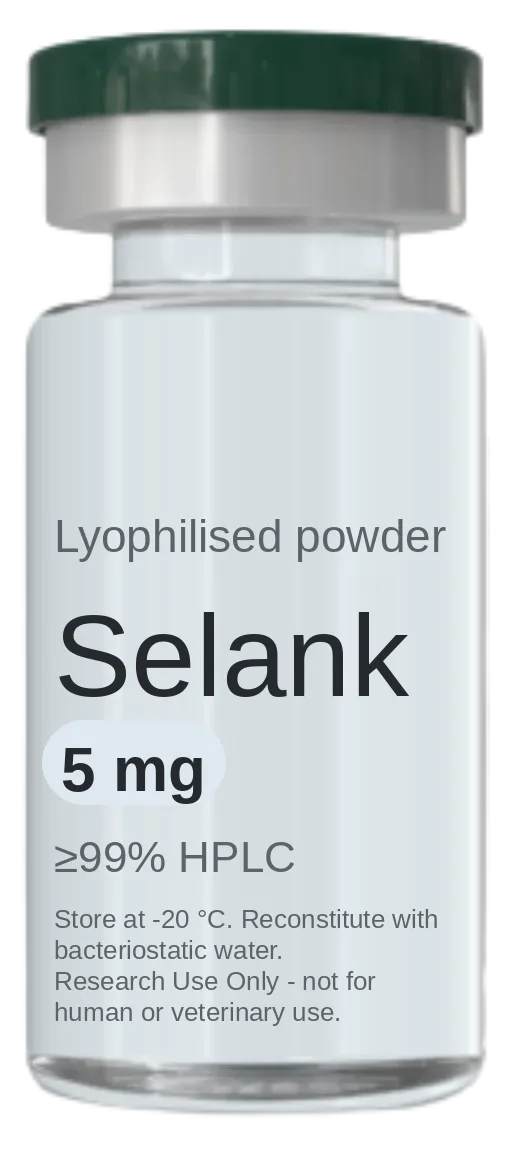
Selank is a synthetic peptide developed in Russia as a stabilized analog of tuftsin, an endogenous tetrapeptide of the immune system. Selank's sequence adds an extra fragment (Pro-Gly-Pro) to the tuftsin backbone to make it resistant to the fast enzymatic degradation the original molecule undergoes in the body.
Selank's research focus is a different field entirely: anxiety and cognition. Available studies investigate its effect on BDNF (brain-derived neurotrophic factor) expression, on monoamine oxidase A activity, and on behavioral anxiety markers in animal models. There are also Russian clinical trials — outside the regulatory framework of agencies like the FDA or ANMAT — that investigated Selank in generalized anxiety presentations. None of those findings constitute an approved indication anywhere; they are papers describing what was observed within each study's own experimental design.
The difference that matters: mechanism, not potency
The question "KPV or Selank" is usually phrased as though the two were competing options within the same category, and they are not. They do not target the same research endpoint:
- KPV is studied along the inflammation → cell-signaling axis, with a focus on gut and skin.
- Selank is studied along the central-nervous-system → anxiety and neuroplasticity axis, with a focus on behavioral models.
There is no "stronger" peptide between the two because they are not measuring the same variable. Comparing KPV to Selank is closer to comparing an anti-inflammatory to an anxiolytic: the relevant question is not which one performs better, but which one fits the experimental design a researcher is actually running.
Where the two do overlap conceptually is molecular size: both are short peptides — KPV at three amino acids, Selank at seven — which in both cases makes them easier to work with in vitro thanks to their relative stability compared with longer peptides.
What other peptides they get compared to
In the inflammation literature, KPV is mentioned alongside BPC-157, another peptide studied for its role in tissue-repair and gastrointestinal-inflammation models, although the mechanism is not the same — BPC-157 does not derive from α-MSH. In skin-focused studies, KPV is also compared to GHK-Cu, a copper peptide studied in extracellular-matrix remodeling models. Selank, by contrast, has no direct analog in the catalogue: its most-cited comparison in papers is with Semax, another Russian-developed nootropic peptide with a related mechanism but a distinct sequence.
Documentation and purity
Any decision about which research material to use should rest on the batch's certificate of analysis, not on a compound's generic data sheet. PeptoClinic publishes third-party lab reports — from Janoshik Analytical — for the batches it has analyzed, and the purity standard the catalogue holds itself to is ≥99% by HPLC. The lowest report published so far, on a batch of MOTS-c, came in at 99.669% — that is the figure worth using as a real-world reference, not the highest number in the catalogue.
Before requesting a quote on either peptide, it is worth reading the quality page, which explains how to read a certificate of analysis and what to ask if the one attached to a batch has no working verification link.
Availability for Argentina
Both compounds are part of the full catalogue and are quoted as research material, with the customs paperwork prepared for entry as a laboratory reagent. PeptoClinic supplies research peptides to Argentina, with batch documentation matching each shipment. Anyone looking for shipping specifics can review that page, where the quoting and dispatch process is laid out.
Research use only
Both KPV and Selank are supplied strictly as Research Use Only (RUO) material — for in vitro and laboratory research. Neither is approved for human or veterinary consumption, diagnosis or treatment, and none of the statements in this article have been evaluated by ANMAT, the FDA or any equivalent authority. PeptoClinic is not a pharmacy, a clinic or a telehealth provider; it does not issue or require a prescription, and it does not provide administration guidance for people.
Frequently asked questions
Can KPV and Selank be compared by potency?
No, because they investigate different variables: KPV is studied in inflammation models — cytokines, experimental colitis, cutaneous inflammation — and Selank in anxiety and neuroplasticity models. There is no common scale on which one could be called "stronger" than the other.
What molecule does each one derive from?
KPV is the C-terminal fragment of alpha-MSH. Selank is a synthetic analog of tuftsin, an endogenous immune-system peptide, with an added sequence that makes it more resistant to enzymatic degradation.
Is Selank related to Semax?
Both were developed in Russia and are studied within the field of nootropic peptides, but they have different sequences and are not interchangeable in an experimental design. Each has its own line of published literature.
Is KPV related to BPC-157?
They are mentioned together because both appear in the gastrointestinal-inflammation literature, but the mechanism is not the same: KPV derives from alpha-MSH and acts on cytokine signaling, while BPC-157 is studied for its role in tissue-repair models.
What documentation comes with a batch of KPV or Selank?
Each quoted batch includes the certificate of analysis from the laboratory that verified it. PeptoClinic publishes reports from Janoshik Analytical for the compounds in its catalogue; the quality page explains how to read them and what to check before accepting a batch.
Are these peptides approved for human use in Argentina?
No. Both are supplied exclusively as research material (RUO), without evaluation by ANMAT or any equivalent regulatory authority, and neither is approved for human or veterinary consumption.
Can KPV and Selank be quoted together in the same request?
Yes, both are part of the same catalogue and are quoted independently based on the quantity and destination of each request. The quoting process is the same for any compound in the catalogue.
Is there a pen version, or only a vial?
Both compounds are available in vial format, as lyophilized powder. The pen format has been announced but is not yet orderable — it is waitlist only.
Compounds mentioned
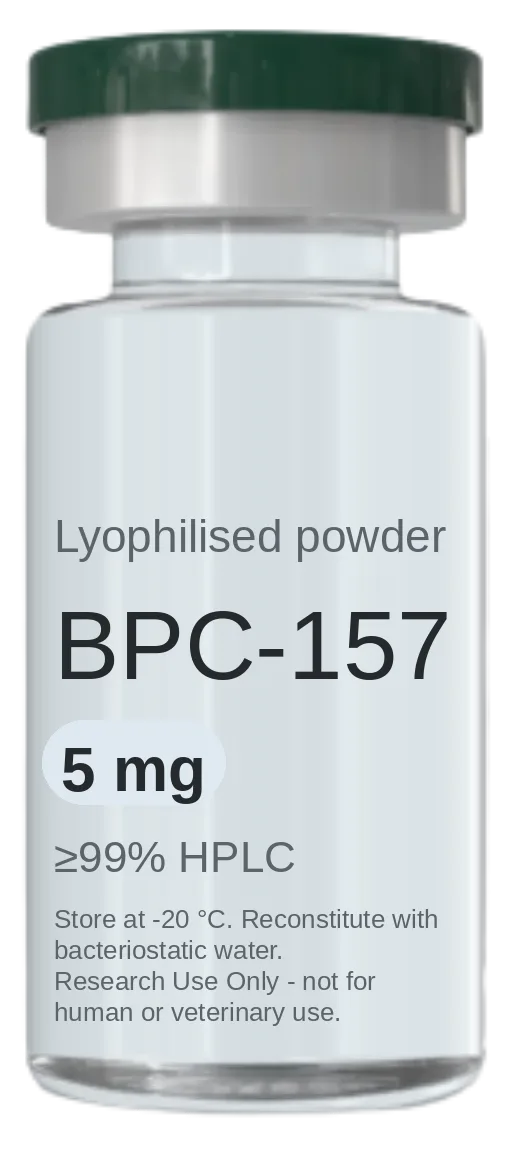
BPC-157 + TB-500
BPC-157 and TB-500 in a single vial — the pairing most studied together in tissue-repair research.
- Purity:
- ≥99% HPLC
- Sizes available:
- 5 mg + 5 mg
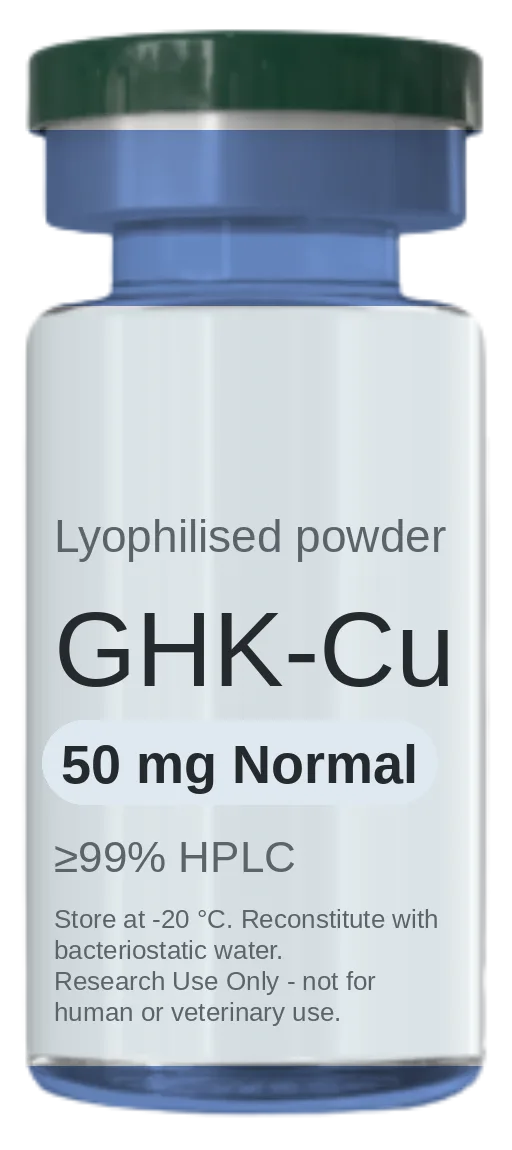
GHK-Cu (Copper Peptide)
Copper-binding tripeptide studied in extracellular matrix and dermal research models.
- Purity:
- ≥99% HPLC
- Sizes available:
- 50 mg Normal – 50 mg Plus
The consultation
One intake that settles goals, history and contraindications alongside compound, quantity, documentation and route — reviewed by a physician before anything ships.
More notes
-
Can You Ship Peptides as a "Sample"?
Why declaring a paid research peptide shipment as a duty-free commercial sample is invalid in Argentina, and what paperwork works instead.
-
Semax vs LL-37: What's the Difference
Semax is a synthetic heptapeptide; LL-37 is a human cathelicidin. Different origin, structure and research field, side by side.
-
Peptide Package Under Someone Else's Name
What happens if a research peptide shipment reaches Argentina labeled to someone other than the declared importer.