
Note
Ipamorelin vs Sermorelin: Key Differences
Ipamorelin and sermorelin are research peptides with different structures and mechanisms: what the published literature reports on each.
How ipamorelin and sermorelin differ
The core difference is structural and mechanistic: sermorelin is a synthetic fragment of growth hormone-releasing hormone (GHRH) that acts on the GHRH receptor, while ipamorelin is a pentapeptide that works as a selective agonist of the growth hormone secretagogue receptor (GHSR), the same receptor family recognized by ghrelin. They are distinct molecules with distinct amino acid sequences, studied through separate biochemical pathways in the literature, even though the endpoint researchers are usually investigating — stimulated growth hormone release in experimental models — is the same.
The two show up in the same sentence constantly because they sit in the same catalog category, they get mentioned together in research forums, and neither one is growth hormone itself: both are described in the literature as compounds that stimulate its endogenous release, through different mechanisms.
What sermorelin is in the research literature
Sermorelin corresponds to the first 29 amino acids of human GHRH (GHRH 1-29), the minimum sequence that retains biological activity on the GHRH receptor in the models studied. Because it's a fragment of a naturally occurring hormone rather than an analog engineered from scratch, the literature places it as the secretagogue closest to the original physiological mechanism: it activates the same receptor that endogenous GHRH would activate.
That has a consequence that repeats across the papers: because the response depends on the GHRH receptor, it remains subject to the negative feedback loops that already regulate that axis — somatostatin among them — which the literature describes as a physiological ceiling built into the mechanism itself.
What ipamorelin is in the research literature
Ipamorelin is a synthetic pentapeptide (Aib-His-D-2-Nal-D-Phe-Lys-NH2) designed as an agonist of the growth hormone secretagogue receptor (GHSR-1a), the same receptor recognized by endogenous ghrelin. It isn't a fragment of a natural hormone — it's a molecule built specifically for that receptor selectivity.
The property cited most often in ipamorelin studies is selectivity: unlike other peptides in the same secretagogue family (GHRP-2 or GHRP-6, for example), published work reports that ipamorelin doesn't produce a meaningful rise in other related hormones — cortisol, prolactin — in the models evaluated. That relative selectivity is the technical reason it appears so frequently in comparative research protocols: it functions as a reference for a "clean" GHSR agonist, without the cross-effects other analogs in the same family show in the literature.
Comparing by mechanism, not by outcome
It's worth separating two questions that tend to get merged: which receptor each one acts through, and what final effect the literature studies for each.
- Receptor: sermorelin activates the GHRH receptor; ipamorelin activates GHSR-1a. Two distinct receptors, with distinct intracellular signaling pathways.
- Sequence origin: sermorelin is a fragment of a human hormone; ipamorelin is a synthetic peptide designed from scratch, with no exact natural counterpart.
- Reported selectivity: ipamorelin studies highlight its low reported impact on cortisol and prolactin compared with other secretagogues in its family; sermorelin studies, because they depend on the full GHRH axis, describe a response more tied to that axis's own physiological feedback.
- Combinations seen in research protocols: it's common in the literature to see GHRH analogs combined with GHSR agonists to investigate whether they act synergistically on distinct receptors within the same axis. That's the logic behind why research protocols pair CJC-1295 without DAC — also a GHRH analog — with ipamorelin far more often than they pair sermorelin with ipamorelin: the comparison that usually matters in the literature is "GHRH analog plus GHSR agonist," not two analogs competing for the same receptor at once. Anyone researching that combination for a program in Argentina can check the CJC-1295 without DAC country page, where the same kind of batch documentation described below applies.
None of these differences amounts to a hierarchy of "better" or "worse." They're distinct mechanisms answering distinct questions within the same field of research, and which molecule fits a given experimental design is a decision made by whoever designs that experiment, with the published literature in front of them.
Why batch purity matters more than the peptide's name
Comparing two sequences on paper is one thing; comparing two real batches is another. The theoretical structure of ipamorelin or sermorelin says nothing about what a specific vial actually contains. That's stated by the laboratory report for that particular batch, not by a generic spec sheet for the compound.
PeptoClinic ships every batch with reports from an independent laboratory — Janoshik Analytical — reporting purity measured by HPLC on that specific production run. The lowest purity published in the catalog so far, on a different compound, measured 99.669%. That's the number worth checking before trusting a headline that only says "maximum purity." A third-party analysis, with its own task number and date, is what separates a documented batch from an unsupported claim.
Research use only
Everything described above documents mechanisms that the scientific literature investigates in laboratory models. Neither ipamorelin nor sermorelin is supplied here as a treatment, a supplement, or a product for human or veterinary use: both are research peptides (Research Use Only), intended for in vitro and laboratory study. Neither is approved or evaluated by the FDA, ANMAT, or any equivalent authority for diagnosis, prevention, or treatment, and no administration guidance is provided, because none of this material is intended to be administered to a person.
Shipping and import to Argentina
PeptoClinic quotes shipments of research peptides to destinations in Argentina, with customs documentation prepared to declare the material as laboratory reference material, consistent with its intended use. Each quote is resolved individually based on the compound, the quantity, and the logistics route: there's no published price or checkout, only a request that the technical team reviews before responding.
Frequently asked questions
Do ipamorelin and sermorelin act through the same receptor?
No. Sermorelin activates the GHRH receptor, while ipamorelin activates the growth hormone secretagogue receptor (GHSR-1a), the same receptor recognized by ghrelin. They're two distinct biochemical pathways within the same research axis.
Which of the two is more selective according to the literature?
Published studies on ipamorelin describe relatively high selectivity for GHSR-1a, with a low reported impact on cortisol and prolactin compared with other secretagogues in its family. Sermorelin, because it depends on the complete GHRH axis, remains subject to that axis's own physiological feedback mechanisms.
Is sermorelin a synthetic or a natural peptide?
It's synthetic in the sense that it's produced in a laboratory, but its sequence corresponds to an exact fragment of human GHRH — the first 29 amino acids. It isn't an analog designed from scratch; it's the minimum active portion of an already existing hormone.
Why do some research protocols combine CJC-1295 with ipamorelin instead of sermorelin with ipamorelin?
Because the comparison that usually matters in the literature involves two distinct receptors acting at the same time — a GHRH analog alongside a GHSR agonist — rather than two molecules competing for the same mechanism. CJC-1295 without DAC and sermorelin are, in that sense, alternatives within the same category of GHRH analogs.
Are the laboratory reports the same for both compounds?
Each batch has its own report, with its own task number and its own analysis date, regardless of which compound it is. Reported purity varies by batch and compound, and it's that document — not a generic figure repeated on a product page — that describes what a specific production run contains.
Are these peptides approved for human use in Argentina?
No. They're supplied exclusively as research material (RUO), intended for laboratory use. They aren't approved by ANMAT, the FDA, or any equivalent authority for human or veterinary use, and no communication from PeptoClinic should be read as dosing or protocol guidance for a person.
Can a laboratory report be requested before getting a quote?
Yes. The documentation for each batch — including the available Janoshik Analytical reports — can be reviewed before a quote is finalized, and it's part of what the technical team sends along with the response to each request.
Is there a published price list?
No. PeptoClinic doesn't publish prices or run a shopping cart. Every request is quoted based on the compound, the quantity, the purity specification required, and the shipping route, normally with a response within one business day.
Compounds mentioned
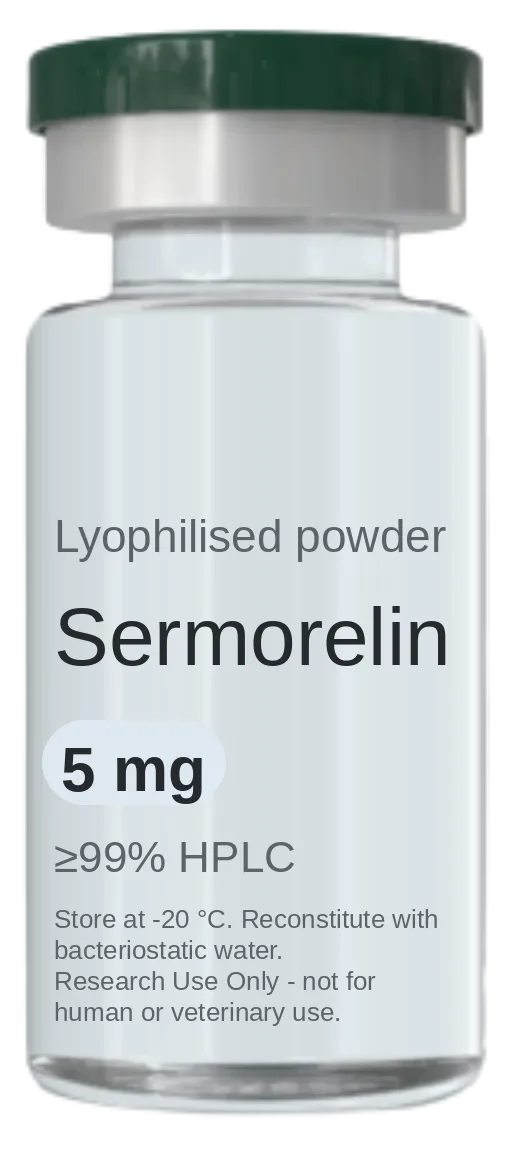
Sermorelin
Growth hormone-releasing hormone analogue used in endocrine signalling research.
- Purity:
- ≥99% HPLC
- Sizes available:
- 5 mg – 20 mg
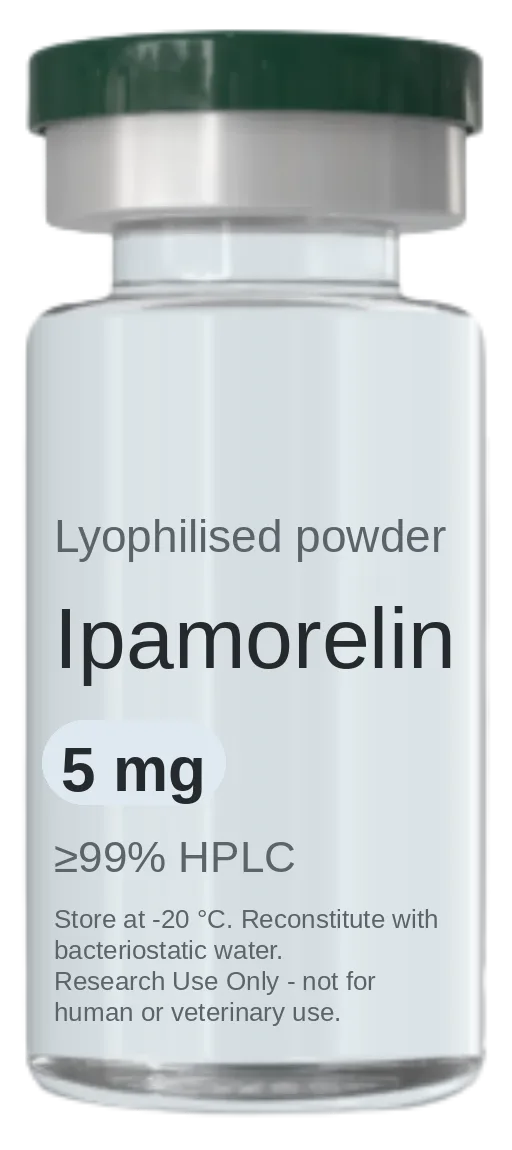
Ipamorelin
Selective ghrelin receptor (GHS-R1a) agonist pentapeptide.
- Purity:
- ≥99% HPLC
- Sizes available:
- 5 mg – 20 mg
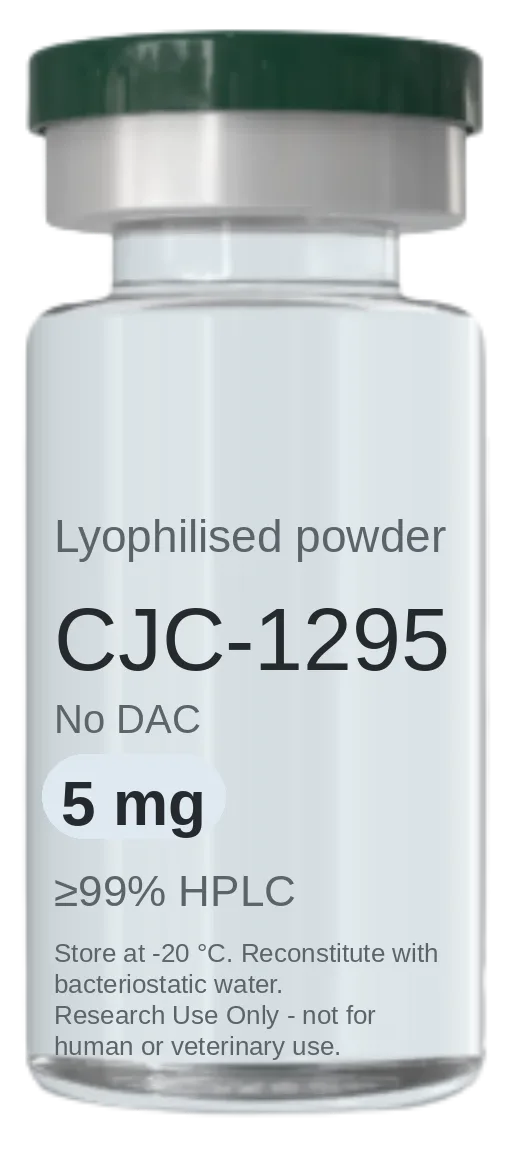
CJC-1295 (sin DAC)
Modified GRF(1-29) tetrasubstituted analogue without drug affinity complex.
- Purity:
- ≥99% HPLC
- Sizes available:
- 5 mg – 20 mg
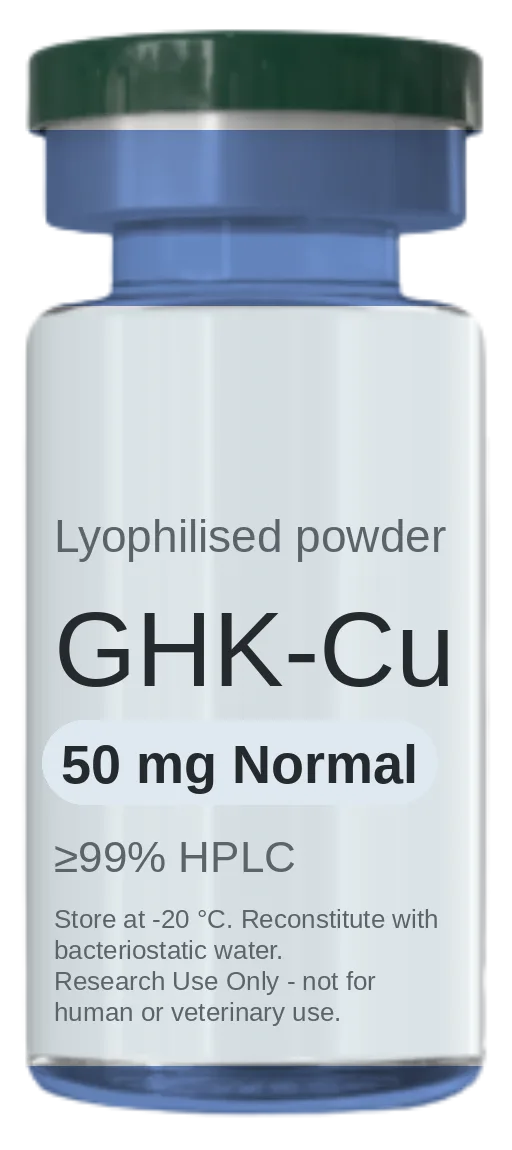
GHK-Cu (Copper Peptide)
Copper-binding tripeptide studied in extracellular matrix and dermal research models.
- Purity:
- ≥99% HPLC
- Sizes available:
- 50 mg Normal – 50 mg Plus
The consultation
One intake that settles goals, history and contraindications alongside compound, quantity, documentation and route — reviewed by a physician before anything ships.
More notes
-
Tesamorelin vs Sermorelin: The Difference
Tesamorelin and sermorelin are both GHRH analogs, but not the same molecule. Here's the structural difference and what the studies on each measure.
-
Peptide Supplier vs. Reseller: What Differs
The real difference is whether someone can name the lab that tested a batch and show the report — or only promise it's pure.
-
MOTS-c or NAD+: What's the Difference
MOTS-c and NAD+ are studied through different mitochondrial pathways; here's what each line of research actually measures.