
Note
Ipamorelin: What It Is and How It Is Studied
Ipamorelin is a synthetic pentapeptide GH secretagogue. Research literature documents its selectivity; PeptoClinic quotes it for laboratory use.
Ipamorelin is a synthetic pentapeptide that acts as a growth hormone (GH) secretagogue by binding selectively to the GHS-R1a receptor. Its sequence is Aib-His-D-2-Nal-D-Phe-Lys-NH2; two non-natural residues — α-aminoisobutyric acid at position one and D-2-naphthylalanine at position three — confer resistance to enzymatic degradation. The property most consistently noted in the published literature is selectivity: at concentrations that produce GH release, cortisol and prolactin levels do not rise significantly. PeptoClinic supplies ipamorelin as research material to Argentina and other destinations in the region.
The GHS-R1a receptor
The GHS-R1a (Growth Hormone Secretagogue Receptor, subtype 1a) is a G-protein-coupled receptor expressed primarily in the anterior pituitary and hypothalamus. Ghrelin is its endogenous ligand. Ipamorelin acts as a synthetic agonist at that same receptor: when it binds to somatotropic cells in the anterior pituitary, it activates the signalling cascade that culminates in pulsatile GH release.
This pathway is distinct from that of GHRH analogues such as sermorelin or CJC-1295 without DAC, which act on the GHRH receptor (GHRHR). In experimental designs, combining a GHS-R1a agonist with a GHRHR agonist produces greater GH release than either compound alone, because the two pathways are additive. That additivity has methodological value when an experiment needs to modulate the magnitude of GH secretion in a controlled way.
The central finding: selectivity
The reference study is Raun K et al., published in the *European Journal of Endocrinology* in 1998 (PMID 9849822). Its title states the finding directly: *Ipamorelin, the first selective growth hormone secretagogue*.
The experiment measured GH, cortisol, ACTH and prolactin in rats and pigs following administration of ipamorelin, GHRP-6 and GHRP-2. All three compounds produced GH release. The difference lay in the secondary hormones: GHRP-6 and GHRP-2 raised cortisol and ACTH at comparable concentrations; ipamorelin did not. The authors concluded that ipamorelin is the first GH secretagogue with high selectivity for the GH axis without significantly activating the corticotropic axis.
That finding is what defines ipamorelin as a compound of research interest in studies of GH regulation. It allows investigation of GH secretion without changes in cortisol introducing noise into the experimental result.
Published research models
Johansen PB et al. studied the effect of ipamorelin on longitudinal bone growth in rats, published in 1999 in *Growth Hormone and IGF Research* (PMID 10373342). The design measured tibial bone length in treated and control animals. The article is available on PubMed.
The PubMed database lists additional publications investigating ipamorelin in models of sarcopenia, post-surgical muscle recovery and sleep regulation. That literature is accessible by searching "ipamorelin" at pubmed.ncbi.nlm.nih.gov and filtering by study type.
As of August 2026, ipamorelin holds no approval as a medicine from any regulatory authority. There are no completed phase III clinical trials with ipamorelin as a standalone product. Its regulatory status in the United States, the European Union and Argentina is the same: research material without an approved therapeutic indication.
Ipamorelin versus other GH secretagogues
The PeptoClinic catalogue includes compounds that stimulate GH through distinct pathways, and those differences matter for experimental design.
Via the GHRHR pathway: sermorelin and tesamorelin are GHRH analogues. They act on the pituitary receptor for growth hormone-releasing hormone. Sermorelin has a short half-life; tesamorelin carries structural modifications that improve its stability in solution.
Via the GHS-R1a pathway: ipamorelin, GHRP-6 and GHRP-2 act on the GH secretagogue receptor. The distinction among them is the selectivity described above: GHRP-6 and GHRP-2 activate the corticotropic axis; ipamorelin does not do so at the concentrations documented in the published models.
If an experiment requires stimulating GH without confounding the result with cortisol changes, the published literature identifies ipamorelin as the compound with that profile. If a design calls for combining both pathways, the most common pairing in published studies is ipamorelin with a GHRH analogue — because the two mechanisms are additive, not redundant.
For laboratory research only
PeptoClinic supplies ipamorelin exclusively as Research Use Only (RUO) material, intended for in vitro and laboratory model research.
- Ipamorelin is not a medicine and not a supplement.
- It carries no therapeutic indication evaluated by the FDA, ANMAT or any equivalent authority.
- PeptoClinic is not a clinic, a pharmacy or a source of guidance on human use.
- Requests for administration protocols in humans are declined.
This framing is not generic legal text. It describes the type of operation PeptoClinic runs and the type of customer it can serve.
Documentation and quoting
Every lot of ipamorelin that PeptoClinic dispatches ships with a verifiable certificate of analysis from an independent laboratory. The certificate specifies the compound, the analytical method — HPLC — and the numeric purity result for that specific lot. The catalogue standard is ≥99% by HPLC.
If a research programme requires additional specifications — endotoxin testing, nominal concentration, a specific vial format — the technical team reviews those requirements as part of the consultation. A quote is requested through the catalogue page by describing the compound, the specification and the quantity. A written response arrives within the next business day.
Shipments to Argentina are prepared with documentation as laboratory reference material for customs. PeptoClinic details how that documentation is handled for each destination on its shipping page.
Frequently asked questions
What is ipamorelin?
Ipamorelin is a synthetic pentapeptide with the sequence Aib-His-D-2-Nal-D-Phe-Lys-NH2 that acts as a GHS-R1a receptor agonist. It stimulates pulsatile growth hormone secretion from the anterior pituitary. The published literature describes it as the first selective GH secretagogue because it does not raise cortisol or prolactin at concentrations that produce GH release.
What is the difference between ipamorelin and GHRP-6?
Both are GHS-R1a agonists. The documented difference, from Raun et al. (1998), is selectivity: GHRP-6 activates the corticotropic axis and raises cortisol and ACTH; ipamorelin does not do so at comparable concentrations. In experiments designed to isolate the effect on GH, ipamorelin offers a more specific activation profile according to that literature.
What is the difference between ipamorelin and CJC-1295?
They act on different receptors. CJC-1295 without DAC is a GHRH analogue that acts on the GHRHR. Ipamorelin acts on GHS-R1a. The two pathways are additive: combined, they produce greater GH release than either compound alone. That is why both compounds appear together in several published experimental designs.
Does ipamorelin have approval for human use?
No. As of August 2026, ipamorelin holds no approval as a medicine from any regulatory authority — not the FDA, EMA, ANMAT or any equivalent. PeptoClinic supplies it exclusively as research material for laboratory use.
In what research models has ipamorelin been used?
PubMed publications include studies in rats and pigs investigating selectivity of the hormonal response (Raun et al., 1998), longitudinal bone growth (Johansen et al., 1999), sarcopenia and post-surgical muscle recovery. PeptoClinic does not advise on the design of specific experiments.
What purity standard does PeptoClinic apply to ipamorelin?
The catalogue standard is ≥99% by HPLC. Each lot ships with a certificate of analysis from an independent laboratory that records the actual numeric purity result for that lot, not only whether it clears the threshold.
How is ipamorelin quoted for shipment to Argentina?
A researcher describes the compound, specification and quantity on the catalogue page, and the technical team replies with a written quote within the next business day. There is no public price list. Shipments are documented as laboratory reference material for Argentine customs.
What is the molecular weight of ipamorelin?
Ipamorelin has a molecular weight of 711.86 g/mol and CAS number 170851-70-4. The standard presentation format is lyophilised powder, which provides the stability required for storage and transport of research materials.
Compounds mentioned
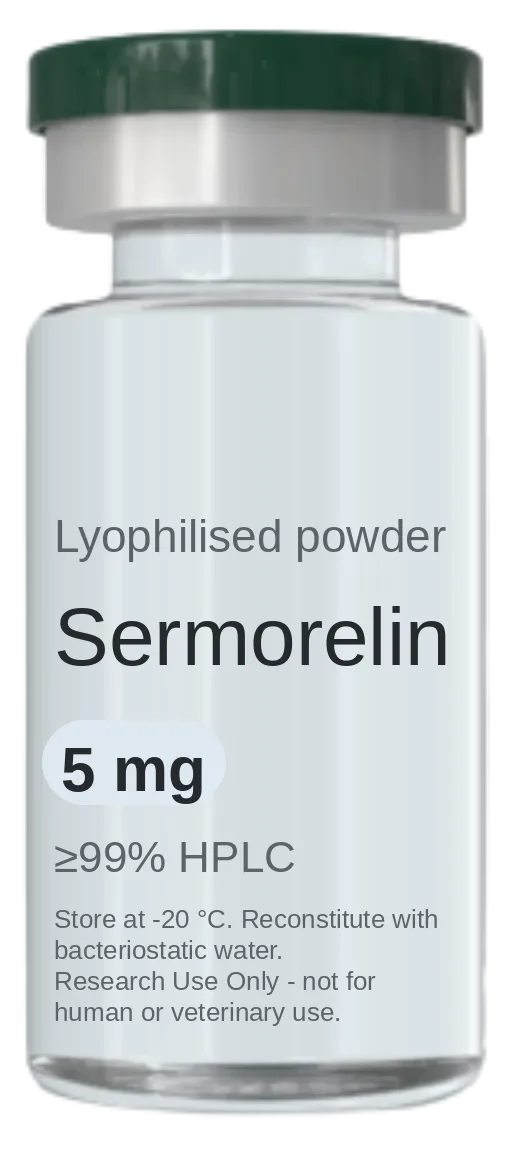
Sermorelin
Growth hormone-releasing hormone analogue used in endocrine signalling research.
- Purity:
- ≥99% HPLC
- Sizes available:
- 5 mg – 20 mg
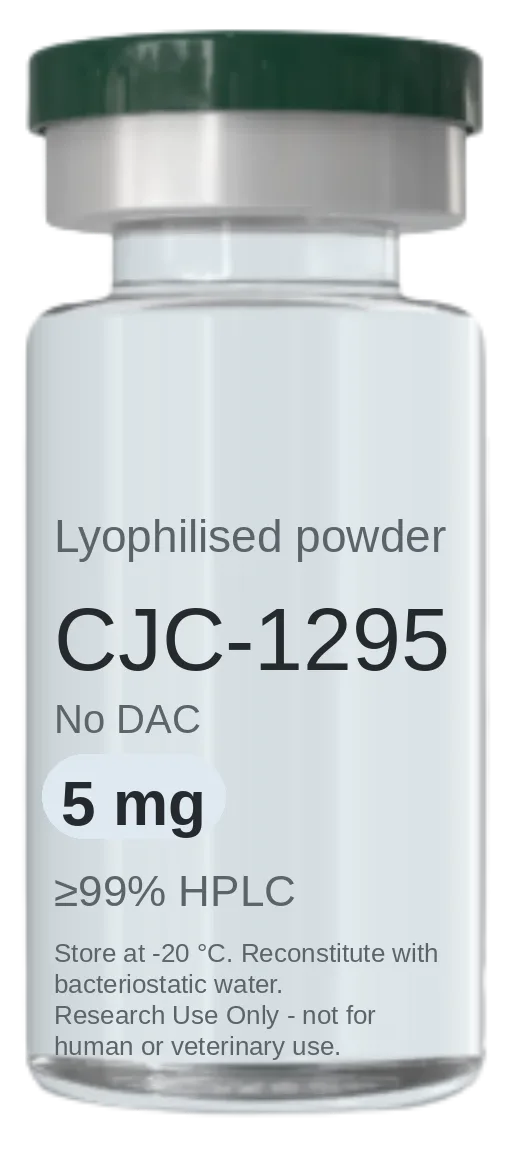
CJC-1295 (sin DAC)
Modified GRF(1-29) tetrasubstituted analogue without drug affinity complex.
- Purity:
- ≥99% HPLC
- Sizes available:
- 5 mg – 20 mg
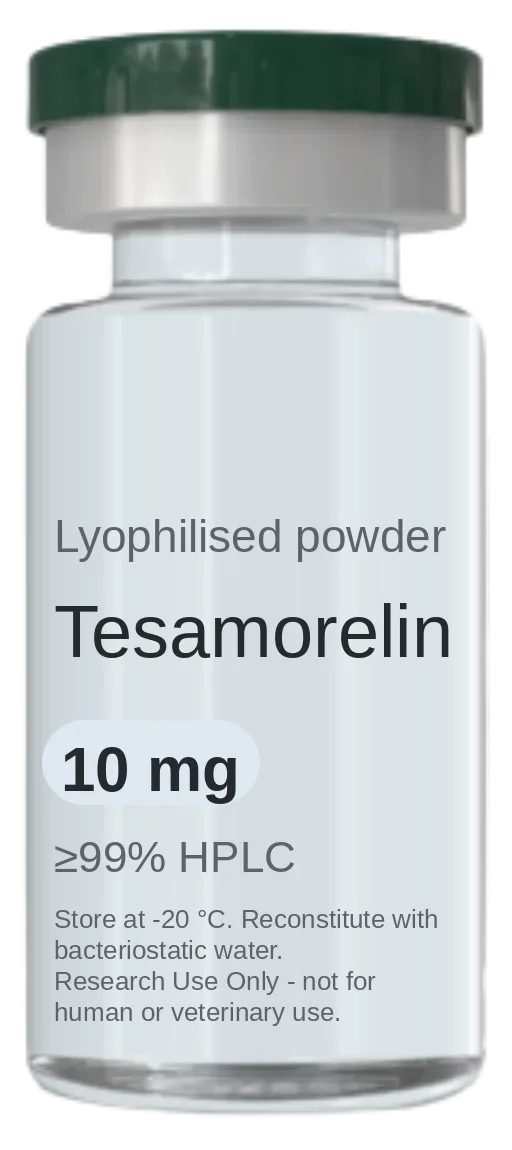
Tesamorelin
Stabilised GHRH(1-44) analogue studied in adipose tissue distribution research.
- Purity:
- ≥99% HPLC
- Sizes available:
- 10 mg – 20 mg
The consultation
One intake that settles goals, history and contraindications alongside compound, quantity, documentation and route — reviewed by a physician before anything ships.
More notes
-
Retatrutide vs. Tesamorelin: What's Different
Retatrutide and tesamorelin target different receptors and different research questions — here's what the documentation shows.
-
KPV vs. Selank: What's the Difference
KPV is an anti-inflammatory tripeptide; Selank is a nootropic peptide. We compare origin, research focus and documentation for each.
-
Can You Ship Peptides as a "Sample"?
Why declaring a paid research peptide shipment as a duty-free commercial sample is invalid in Argentina, and what paperwork works instead.