
Note
Can You Ship Peptides as a "Sample"?
Why declaring a paid research peptide shipment as a duty-free commercial sample is invalid in Argentina, and what paperwork works instead.
No, a paid shipment of research peptides cannot be declared as a "sample of no commercial value" to Argentine customs. That category exists for merchandise that moves without a sale behind it — items sent for evaluation, exhibition pieces, promotional material — and a paid order does not fit the definition no matter what label goes on the box. Declaring a purchased shipment as a sample is a false declaration, and the consequences land on the importer, not on the supplier.
The question comes up because it sounds like a shortcut: mark the package as a "sample" and skip the duties, the paperwork, or the delay at the mail facility. The instinct to simplify the shipment isn't the problem. The problem is that the category has a precise legal meaning, and a paid order isn't inside it.
What counts as a "sample of no commercial value" to customs
The sample-without-commercial-value classification is built for goods that travel without a sale attached: a manufacturer sending a product for a prospective buyer to test, advertising material, exhibition pieces. The defining feature is that no money changed hands for that specific item, and in many cases the shipment also carries some mark that it isn't for resale — a mutilated unit, a token quantity, something rendered unsellable.
An order placed through PeptoClinic starts from a written quote that the buyer accepted and paid for. That alone takes it out of the definition. There was a commercial transaction, with an amount and a counterparty. It isn't a courtesy shipment or a promotional sample. It's an international purchase of laboratory material, and that's how it gets declared.
Why mislabeling it as a sample solves nothing — and creates exposure
The temptation to use this category usually comes from wanting to avoid import duties or move faster through customs. But a declaration that doesn't match the reality of the transaction — invoice, amount paid, purpose of the shipment — is an inaccurate declaration, and that can lead to the package being held, a customs inquiry being opened, or the goods being seized. Responsibility for what's declared on import falls on whoever receives the shipment in Argentina, not on the supplier in the United States.
It also doesn't fix anything underneath. What actually matters — what the package contains, what it's used for, and what documentation travels with it — stays exactly the same no matter which label gets attached. A vial that's misdeclared doesn't stop being what it is.
How a research peptide shipment gets documented properly
What actually works, and what PeptoClinic prepares for every order bound for Argentina, is a declaration that describes the contents accurately: laboratory reference material for research, with its chemical name, quantity, and the real value of the transaction. There's no need to disguise it as anything, because it isn't anything other than what it says it is.
The package travels as lyophilized powder in a sealed vial, with desiccant and protected from light. It does not move through a cold chain — dry powder stays stable at room temperature for weeks, so the box carries no gel pack, no dry ice, and no temperature logger. That's also part of what the shipping documentation describes, and the full detail is on the shipping page.
Alongside that goes a commercial invoice with the real transaction value, and the certificate of analysis for the corresponding batch. That combination — an honest invoice plus technical documentation — is what an importer needs to clear customs without surprises, and it's the opposite of trying to hide the transaction behind a category it doesn't belong in.
What the certificate of analysis actually shows
The certificate of analysis (COA) is the document issued for each batch by an external laboratory — Janoshik Analytical, in the case of the published reports — after testing a sample drawn from that specific lot. It isn't a claim the seller writes; it's a lab result, with a date, a method, and a purity finding.
Of the reports published in the quality section, the lowest on record is 99.669% purity, from a MOTS-c batch analyzed on April 13, 2026. That's the figure worth citing when someone asks about real purity — not the best number in the catalog, but the verifiable floor. Where the laboratory publishes one, the certificate includes a verification link to confirm the result directly with the lab.
That document answers the question that's actually behind "how do I declare this": what am I receiving, and how do I confirm it without taking anyone's word for it.
The framework is research, not consumption
Everything quoted through PeptoClinic is supplied strictly for Research Use Only (RUO): in vitro and laboratory research. Nothing in the catalog — currently 19 compounds — is a drug, a supplement, or a food. Nothing is approved or intended for human or veterinary consumption, diagnosis, or treatment of any condition. None of these statements has been evaluated by ANMAT, the FDA, or any equivalent authority, and PeptoClinic holds no GMP, ISO, or other regulatory certification.
This isn't a separate legal footnote to the customs question — it's the same issue from another angle. A shipment that's described accurately — reference material for research, with its invoice and its certificate — doesn't need a special category to clear customs. What's needed isn't concealment; it's an accurate description.
Argentina as a served destination
Argentina is one of the destinations PeptoClinic quotes shipments to, with the customs file prepared so the import is processed for what it is: laboratory reference material. Compounds such as retatrutide, BPC-157, and GHK-Cu each have a page with information specific to orders bound for Argentina.
If a research program needs a compound from the catalog, the next step is a technical inquiry: the compound, purity specification, quantity, and dispatch route get reviewed, and a written quote comes back, typically within one business day.
Frequently asked questions
Can you declare a research peptide shipment as a sample of no commercial value in Argentina?
No, not if a purchase was involved. The sample-without-commercial-value category is for goods with no economic transaction behind them, and a paid order doesn't meet that condition no matter how it's labeled.
What happens if a paid shipment is declared as a sample anyway?
It's a declaration that doesn't match the reality of the transaction, and that can lead to the package being held at customs, an inquiry being opened, or the goods being seized. Responsibility for what's declared rests with whoever receives the shipment in Argentina.
What documentation accompanies a PeptoClinic order bound for Argentina?
A commercial invoice showing the real transaction value, and the certificate of analysis for the corresponding batch, describing the contents as laboratory reference material for research.
Does the certificate of analysis replace any import procedure?
It doesn't replace any procedure — it's technical documentation about the quality of the batch, not an import permit. What it does is give the declaration accuracy, which is what an importer needs to present to customs.
Why doesn't the shipment travel in a cold chain?
Because the material ships as lyophilized powder in a sealed vial, which stays stable at room temperature for weeks. Cold becomes necessary only after the vial is reconstituted, when the solution needs to be kept between 2 and 8°C.
Are research peptides approved for human consumption in Argentina?
No. The entire catalog is supplied strictly for laboratory research (RUO), with no approval for human or veterinary use and no evaluation by ANMAT, the FDA, or any equivalent body.
Does PeptoClinic publish prices for orders to Argentina?
There are no published prices. Every order starts from a technical inquiry about the compound, specification, and quantity, which is answered with a written quote.
How do I verify that a certificate of analysis result is real?
Published reports include, where the laboratory offers one, a direct verification link to Janoshik Analytical, the lab that ran the test. That's the channel to confirm the result without relying on the supplier's word.
Compounds mentioned
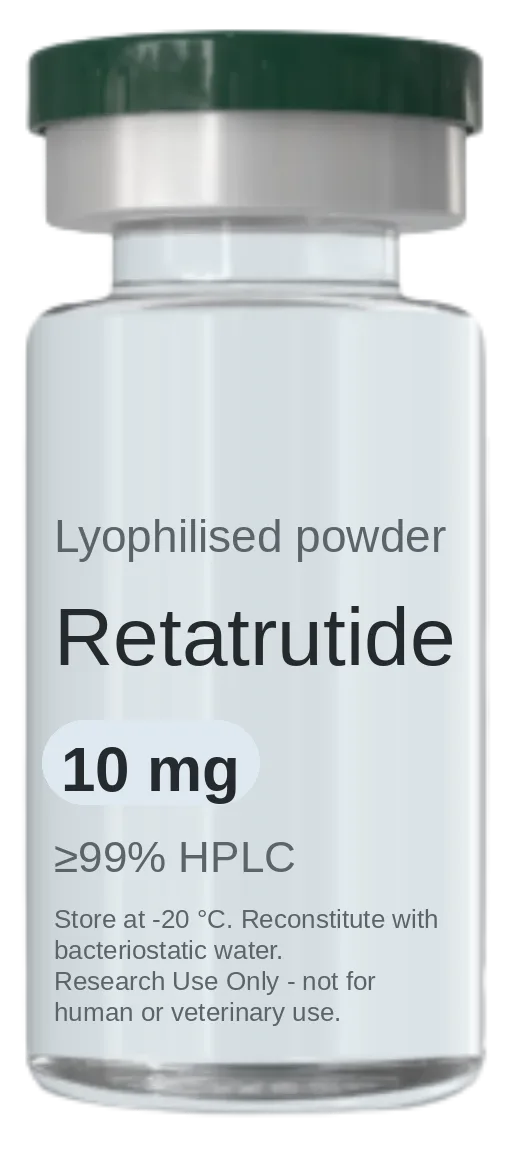
Retatrutide
Triple-agonist metabolic research peptide targeting GLP-1, GIP and glucagon receptors.
- Purity:
- ≥99% HPLC
- Sizes available:
- 10 mg
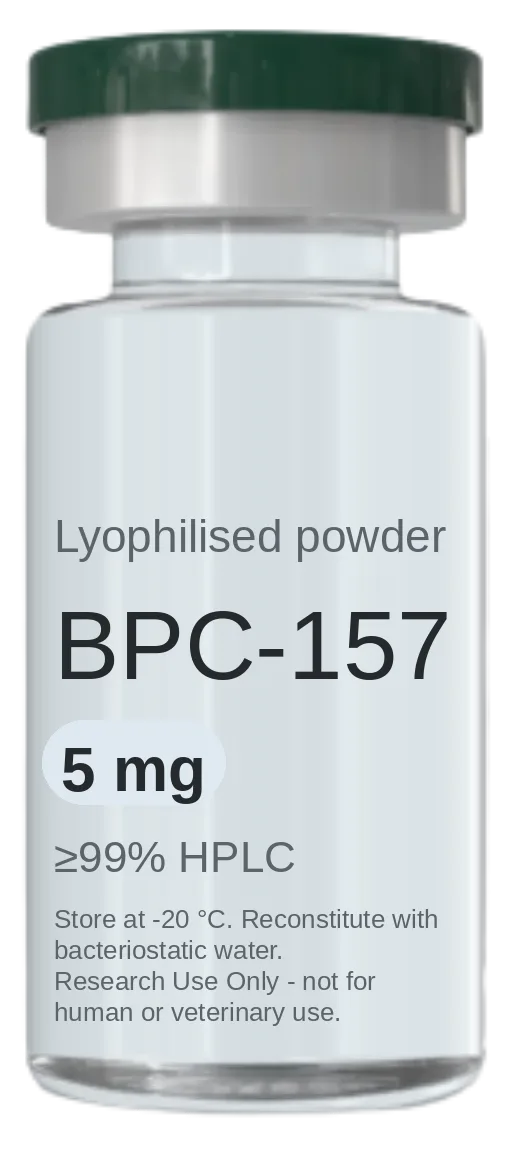
BPC-157 + TB-500
BPC-157 and TB-500 in a single vial — the pairing most studied together in tissue-repair research.
- Purity:
- ≥99% HPLC
- Sizes available:
- 5 mg + 5 mg
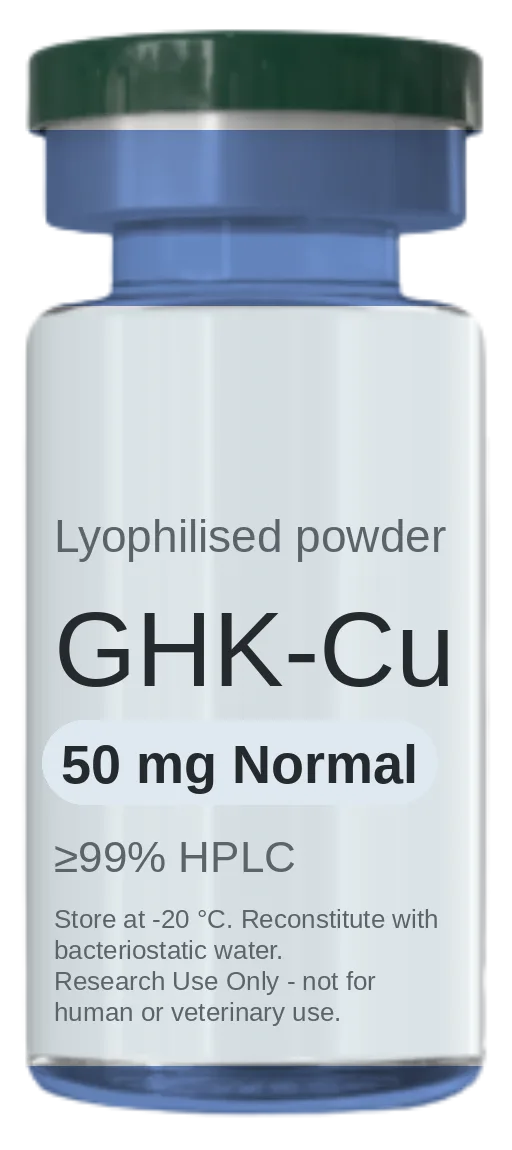
GHK-Cu (Copper Peptide)
Copper-binding tripeptide studied in extracellular matrix and dermal research models.
- Purity:
- ≥99% HPLC
- Sizes available:
- 50 mg Normal – 50 mg Plus
The consultation
One intake that settles goals, history and contraindications alongside compound, quantity, documentation and route — reviewed by a physician before anything ships.
More notes
-
Peptide Invoice: What Argentine Customs Wants
What a research peptide invoice needs so Argentine customs releases the shipment instead of holding it in bonded storage.
-
Hexarelin vs CJC-1295: The Differences
Hexarelin is a ghrelin-mimetic GHRP; CJC-1295 is a GHRH analog. What separates the two mechanisms and their documentation.
-
Certificate of Origin to Import Peptides?
Do you need a certificate of origin to import research peptides into Argentina? What customs actually asks for, and what document matters.