Note
Is Epitalon Legal in the US?
By the PeptoClinic editorial team · Medically reviewed by Dr. Emily Parker
Epitalon is not approved by the FDA and sits on its bulk drug substances list, meaning pharmacies cannot legally compound it.
Epitalon is not approved by the FDA as a drug, and it is not a controlled substance either. The honest answer sits between those two facts: the FDA has placed epitalon on its list of bulk drug substances that compounding pharmacies are barred from using because of possible safety risks, which means no US pharmacy can legally formulate it into a prescription product for a patient — but buying and possessing the research compound itself is not a federal crime the way buying a Schedule I or II substance would be.
What the FDA actually regulates here
The FDA does not keep a yes/no list for every peptide someone searches for. It approves specific drug products — a named molecule, in a named dose, for a named condition, made by a named manufacturer — and it separately maintains a list of bulk substances that compounders may not use because the agency has flagged a significant safety concern. Epitalon is on that second list, alongside other peptides like BPC-157, ipamorelin, GHK-Cu in injectable form, KPV, MOTS-c, selank, semax, DSIP, and TB-500, as published on the FDA's bulk drug substances page. That listing is the clearest regulatory signal that exists for this compound, and it answers the search better than a generic "is it legal" ever could: epitalon has no approved drug status, and the one legal channel that sometimes lets unapproved substances reach a prescription pad — pharmacy compounding — is specifically closed to it.
The broader regulator, the FDA, has not approved epitalon for any human indication, has not reviewed a New Drug Application for it, and has not evaluated any manufacturer's claims about it. No agency anywhere has approved it. That is a different statement from "illegal," and conflating the two is where most of the confusion online comes from.
Where epitalon comes from
Epitalon (also written epithalon or epithalone) is a synthetic tetrapeptide developed from research on the pineal gland by Russian gerontologist Vladimir Khavinson's laboratory, built around the idea that a short peptide fragment of a pineal gland protein might influence telomerase activity and circadian signaling. A 2025 review in the International Journal of Molecular Sciences summarizes the laboratory and preclinical literature on the molecule, covering proposed mechanisms around telomerase, melatonin regulation, and oxidative stress markers in cell and animal models — see Araj et al., Int J Mol Sci, 2025. That body of work is laboratory research. It has not produced a Phase 3 human trial, an FDA submission, or an approved product, and nothing in that literature is a claim about what the compound does in a person taking it.
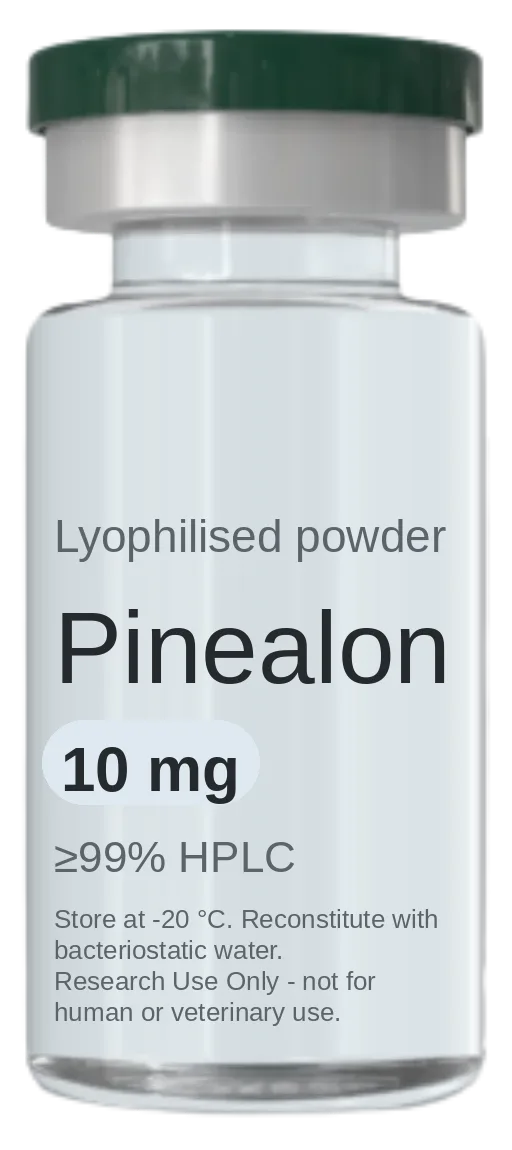
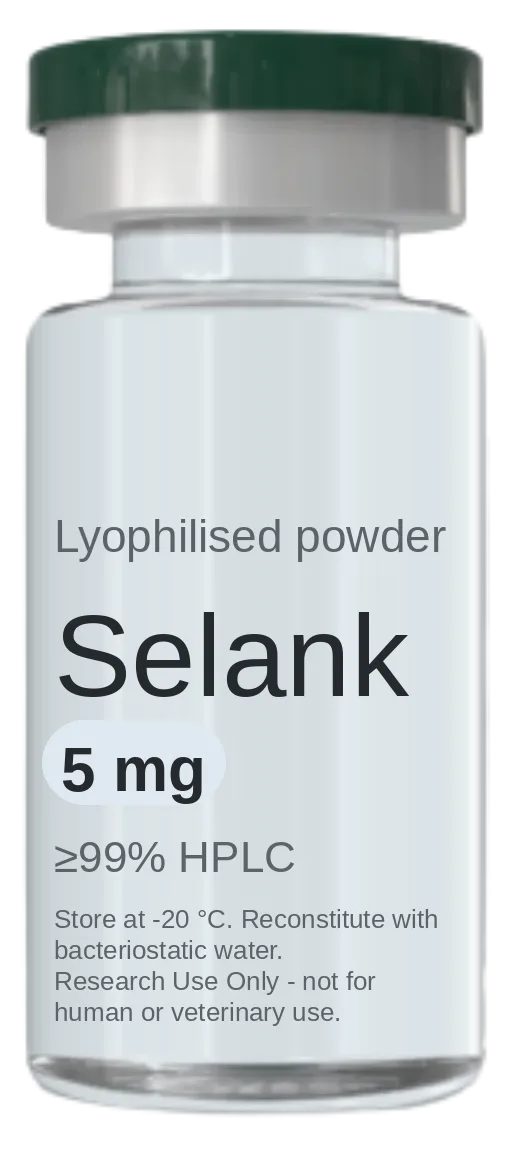
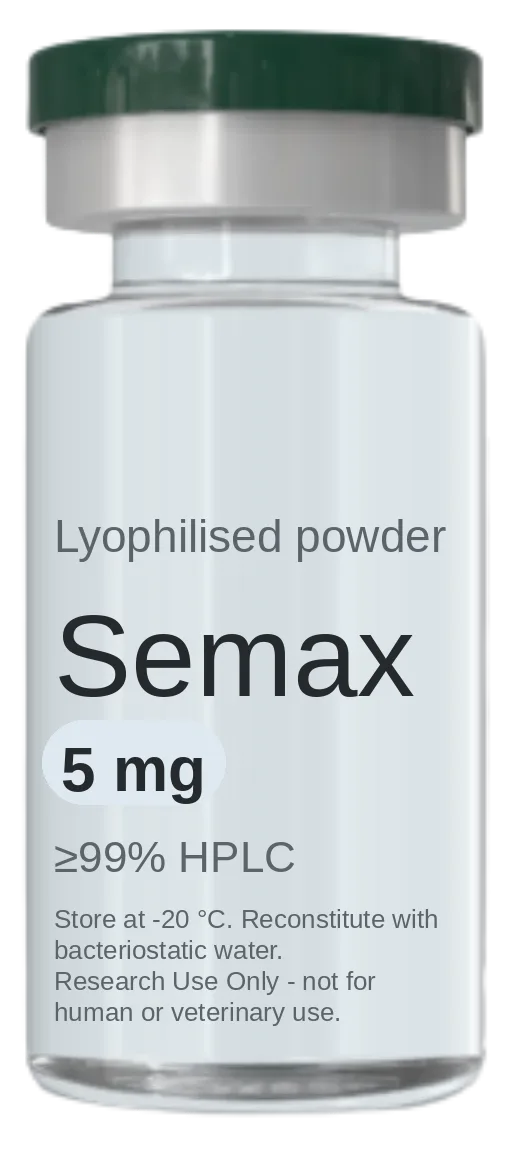
Khavinson's group produced a family of related short peptides studied for comparable mechanisms — pinealon is one, described in a 2011 paper on cell viability by Khavinson et al., Rejuvenation Res, 2011. That lineage is why epitalon so often gets discussed in the same breath as other short regulatory peptides from the same research tradition, including selank and semax, two peptides studied for their effects on functional brain connectivity in a 2020 paper by Panikratova et al., Dokl Biol Sci, 2020. None of them carry FDA approval either, and several — selank, semax, and DSIP among them — sit on the same bulk substances list as epitalon.
Why it's on the list and not a banned substance
The FDA's bulk substances list exists for a narrow reason: when Congress passed the Drug Quality and Security Act, it gave the agency authority to decide which non-FDA-approved bulk substances compounding pharmacies may still use under limited circumstances, and which ones present enough of an open safety question that compounders should not use them at all pending further review. Being on that list is a statement about an absence of adequate safety data for human dosing in a compounded product — not a controlled-substance scheduling decision, and not a finding that the molecule is dangerous outright. It is closer to "we don't have what we'd need to let a pharmacy put this in a prescription," which is also exactly why nobody can point to an approved epitalon drug on a pharmacy shelf anywhere in the country.
This is not legal advice, and the compound's status can change if a sponsor eventually files for approval — none has, as of this writing.
How PeptoClinic handles a compound like this
PeptoClinic is a clinic: a physician reviews every consultation before anything ships, and the material is sourced and tested the same way across the catalog — each batch analyzed by an independent laboratory, with the certificate of analysis available to check rather than taken on faith. That testing standard is described on the quality page, and it is the same standard applied to epitalon as to everything else sold. None of that changes the regulatory picture above: a clean certificate of analysis says a vial matches its label, not that the FDA has approved the molecule inside it.
Pricing for epitalon and the rest of the catalog is published on the pricing page rather than quoted individually, and orders to a US address ship the way described on the shipping page — as a sealed, lyophilised vial that travels at room temperature, since dry powder does not need a cold chain the way a reconstituted solution does.

Medical review
Dr. Emily Parker

Reviews every consultation as it comes in
Frequently asked questions
Is epitalon a controlled substance in the US?
No. Epitalon does not appear on any DEA controlled substance schedule. The relevant restriction is the FDA's bulk drug substances list, which governs whether pharmacies can compound it — a separate legal category from DEA scheduling.
Can a doctor prescribe epitalon?
There is no FDA-approved epitalon drug product for a physician to prescribe, and because the compound sits on the FDA's bulk substances list, a US compounding pharmacy cannot legally formulate it into a prescription product either.
Is epitalon the same thing as melatonin?
No. Epitalon is a synthetic tetrapeptide studied for a proposed effect on telomerase activity and pineal gland signaling, distinct from melatonin, which is a hormone with its own, separate regulatory status as a dietary supplement.
Has the FDA approved any drug related to epitalon?
No. No epitalon-derived product has received FDA approval. The peptides studied alongside it from the same research lineage — pinealon, selank, semax — also have no approved drug status in the United States.
Why does the FDA list epitalon as a risk for compounding specifically?
The bulk drug substances list reflects the FDA's judgment that there isn't enough established safety data to let compounding pharmacies formulate the substance for patients, under the authority Congress gave the agency in the Drug Quality and Security Act — it is not the same determination as a controlled-substance scheduling.
Is it legal to buy epitalon for research?
Buying the bulk compound itself is not prohibited by a controlled-substance schedule. What's restricted is the compounding-pharmacy pathway that would turn it into a dispensed, prescribed product — that route is closed because of its listing.
Does a certificate of analysis mean epitalon is approved?
No. A certificate of analysis from a laboratory like the one referenced on PeptoClinic's quality page confirms that a vial's contents match its label and purity claim. It says nothing about FDA approval, which is a separate regulatory process the molecule has not gone through.
Where can I read the actual research on epitalon?
The most current summary of laboratory and preclinical findings is the 2025 review by Araj and colleagues in the International Journal of Molecular Sciences, which covers proposed mechanisms and the state of the evidence without extending to human clinical outcomes.
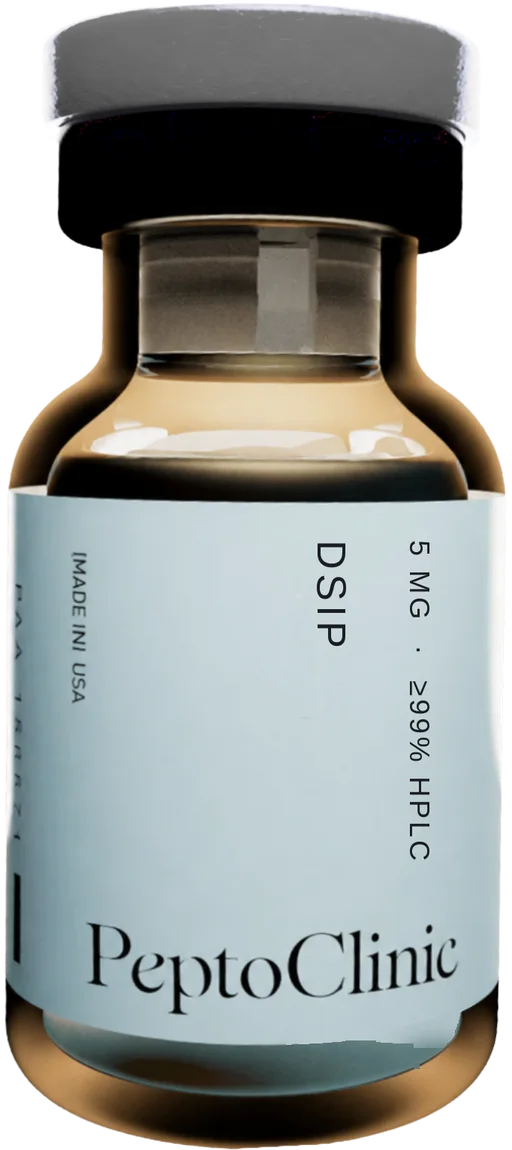
Compounds mentioned
The consultation
One intake that settles goals, history and contraindications alongside compound, quantity, documentation and route — reviewed by a physician before anything ships.
More notes
-
Is Selank Legal in the US?
Selank isn't a scheduled drug, but it's also not FDA-approved, and compounding pharmacies are barred from using it. Here's what that means.
-
Is Thymosin Alpha 1 Legal in the US?
Thymosin alpha 1 hasn't been approved by the FDA and sits on its bulk drug substances list. Here's what that means for buying it in the US.
-
Semax vs Selank: How They Differ
Two synthetic Russian peptides with distinct profiles. What the published literature shows about Semax and Selank, and how they differ.
-
Selank: What It Is and What Science Shows
Selank is a synthetic heptapeptide derived from tuftsin. Its structure, origin, and what the published literature studies about it.
-
Thymosin Alpha 1 vs Selank: How They Differ
Thymosin Alpha 1 and Selank sit in different research families—one studied in immunomodulation, the other in the anxiolytic-cognitive axis.