Note
LL-37: what it is and how it is studied
LL-37 is the only human cathelicidin peptide. Studied for antimicrobial activity, immunomodulation, and its role in innate immunity.
LL-37 is the only cathelicidin peptide encoded in the human genome. Its name describes the molecule directly: "LL" refers to the two leucine residues at the N-terminal end, and "37" is the total number of amino acids in the chain. It derives from the precursor protein hCAP18 and appears throughout the scientific literature as a component of innate immunity, with documented activity against bacteria, fungi, and certain viruses in in vitro and animal models.
Molecular structure
The amino acid sequence of LL-37 is LLGDFFRKSKEKIGKEFKRIVQRIKDFLRNLVPRTES. Its molecular weight is approximately 4,493 Da, and its net positive charge at physiological pH (+6 to +7) places it within the class of cationic antimicrobial peptides (AMPs).
In the presence of lipid membranes, LL-37 adopts an amphipathic alpha-helical configuration: one face of the helix concentrates hydrophobic residues while the other groups positively charged ones. This architecture is considered relevant to its interaction with bacterial membranes, though the precise models vary across published studies.
The precursor protein hCAP18 (human cationic antimicrobial protein of 18 kDa) is stored in the specific granules of neutrophils. When those cells are activated, the enzyme proteinase 3 cleaves the C-terminal portion of hCAP18 and releases LL-37 in its active form. This proteolytic processing mechanism is documented across multiple studies in neutrophil biology.
Where LL-37 is expressed
LL-37 is not confined to neutrophils. The literature describes its expression across several cell types:
- Epithelial cells of skin, lung, gastrointestinal tract, and reproductive tract
- Macrophages and monocytes
- Natural killer (NK) cells
- Platelets
- Keratinocytes, in response to skin injury
Some studies associate reduced LL-37 levels in skin with chronic inflammatory conditions. Those observations belong to basic research and carry no implication for any therapeutic intervention.
Antimicrobial activity in laboratory models
Antimicrobial activity is the most studied aspect of LL-37. PubMed lists more than 3,000 papers citing this peptide, most of them generated from cell cultures or animal models.
Under in vitro conditions, LL-37 showed activity against gram-positive and gram-negative organisms, including some with resistance to conventional antibiotics. Antifungal activity against Candida albicans and antiviral activity against enveloped viruses have also been documented. The exact mechanisms and effective concentration ranges differ between studies.
Disruption of bacterial biofilms is an active research line. Several groups studied LL-37's capacity to disorganize extracellular matrices in laboratory models. The Antimicrobial Peptide Database (APD) documents the physicochemical properties of LL-37 and centralizes bibliographic references for researchers working in this field.
No approved therapeutic indication exists for synthesized LL-37 as an isolated molecule. In vitro results do not translate automatically into clinical applications.
Immunomodulatory properties
Research has documented immunomodulatory functions of LL-37 that extend beyond direct antimicrobial action:
- Chemoattraction: LL-37 acts as a recruitment signal for neutrophils, monocytes, and T cells in in vitro studies
- TLR modulation: several papers describe how LL-37 alters macrophage responses mediated by Toll-like receptors (TLR4, TLR9)
- Proangiogenic activity: stimulation of new vessel formation has been documented in cell models, with potential relevance for tissue repair research
- FPRL1 interaction: some studies report that LL-37 activates formyl peptide receptor-like 1 (FPRL1) on immune cells, with consequences for the resolution of inflammatory responses
This combination positions LL-37 at the intersection of antimicrobial defense and innate immune regulation.
LL-37 in wound healing models
A portion of the literature examines the role of LL-37 in wound healing models in animals and cell cultures. Proposed mechanisms include keratinocyte activation, stimulation of cell migration, and the proangiogenic effect noted above. Some studies in diabetic animal wound models used LL-37 as a research tool to study differences between normally healing tissue and tissue with impaired healing. These are basic science studies and do not establish clinical protocols.
Behavior in oncology models
The literature records a dual behavior in cancer models. In certain cell lines studied in vitro, LL-37 showed antiproliferative effects; in others, effects that promoted tumor growth or cell migration. This duality depends on cell type, concentration, and experimental context, and has been discussed in dedicated reviews within the field.
No consensus exists on a net effect in oncology. The heterogeneous behavior is one reason LL-37 remains an object of active basic research without yet producing any clinical indication.
Synthesis and analytical quality
LL-37 is synthesized by solid-phase peptide synthesis (SPPS). At 37 residues, it is a medium-to-long peptide: synthesis impurities, truncations, and coupling failures become more frequent as chain length increases, making analytical quality a critical point when evaluating any batch.
A certificate of analysis for LL-37 should include:
- A reverse-phase HPLC chromatogram with purity expressed as a percentage of area under the curve
- A mass spectrum (ESI-MS or MALDI-TOF) confirming the molecular weight of approximately 4,493 Da
- Batch number and date of analysis
The absence of mass spectrometry is a warning sign. An HPLC chromatogram alone does not rule out peptides with similar apparent purity but an incorrect sequence. The quality section of PeptoClinic describes what analytical documentation accompanies each research peptide batch.
Research material, not a medicine
Synthesized LL-37 for research is research use only (RUO) material, intended exclusively for in vitro and laboratory research. It is not approved for human or veterinary use by any regulatory authority, including the FDA. It is not a medicine, a supplement, or a product with a therapeutic indication, and no clinical or dosing guidance is provided.
PeptoClinic supplies research peptides to laboratories in the United States, Argentina, and other destinations in the Americas. Material is quoted as a laboratory reference with analytical documentation included. To review available compounds or request a quote, contact [email protected] or browse the research peptide catalog.
Frequently asked questions
What does the name LL-37 mean?
The two letters "LL" indicate the leucine-leucine residues at the N-terminal end of the molecule. The number "37" is the count of amino acids in the chain. This nomenclature is standard in the scientific literature and distinguishes LL-37 unambiguously from cathelicidins expressed in other species, such as mouse CRAMP or rabbit CAP18.
Is LL-37 the only human cathelicidin peptide?
Yes. Other species, including mice and rabbits, express multiple cathelicidins. The human genome encodes only one: hCAP18, whose active product following proteolytic processing is LL-37. This uniqueness makes it the reference compound for studying cathelicidin-based innate immunity in human models.
Where is LL-37 produced in the body?
Neutrophils are the most studied source. Expression has also been documented in epithelial cells of skin, lung, gastrointestinal tract, and reproductive tract, as well as in macrophages, NK cells, keratinocytes, and platelets. In several tissues, production increases in response to infection or injury, according to in vitro and animal models.
Is there clinical evidence supporting LL-37 as a treatment?
No approved therapeutic indication exists for synthesized LL-37. Published evidence is fundamentally preclinical. Some exploratory clinical trials have been registered in various countries, but none has resulted in regulatory approval by any authority.
What analytical documentation should a research batch of LL-37 include?
At minimum, a reverse-phase HPLC chromatogram with purity expressed as area under the curve, and a mass spectrum confirming the molecular weight of approximately 4,493 Da. Batch number, date of analysis, and identification of the analytical laboratory are baseline data for verifying material traceability before use in any laboratory protocol.
Why does the literature record opposite behaviors of LL-37 in oncology models?
The duality depends on cell type and experimental context. In some cell lines, LL-37 activated proapoptotic pathways; in others, it stimulated proliferation or cell migration. No unified mechanism has been established to explain both behaviors, which is part of why the peptide remains in active basic research without having generated a clinical application.
How should lyophilized LL-37 be stored in a laboratory setting?
The standard for lyophilized peptides is storage at −20 °C under low-humidity conditions, protected from light and sealed until use. Specific conditions may vary depending on the material supplier and the receiving laboratory's protocols.
How does LL-37 differ from GHK-Cu or BPC-157 as a research subject?
LL-37 is a defense peptide of innate immunity with a primary antimicrobial research focus. [GHK-Cu](/en/product/ghk-cu/) is a copper tripeptide studied in collagen synthesis and tissue repair models — a different mechanism, with some overlap in wound biology research. [BPC-157](/en/product/bpc-157/) is a peptide derived from gastric binding protein, studied in connective tissue and healing models, without a direct antimicrobial angle. [KPV](/en/product/kpv/) is a tripeptide fragment of alpha-MSH studied in mucosal inflammation models, sharing some immunomodulatory research space with LL-37 while addressing distinct receptor targets. The three represent distinct lines of investigation.
Compounds mentioned
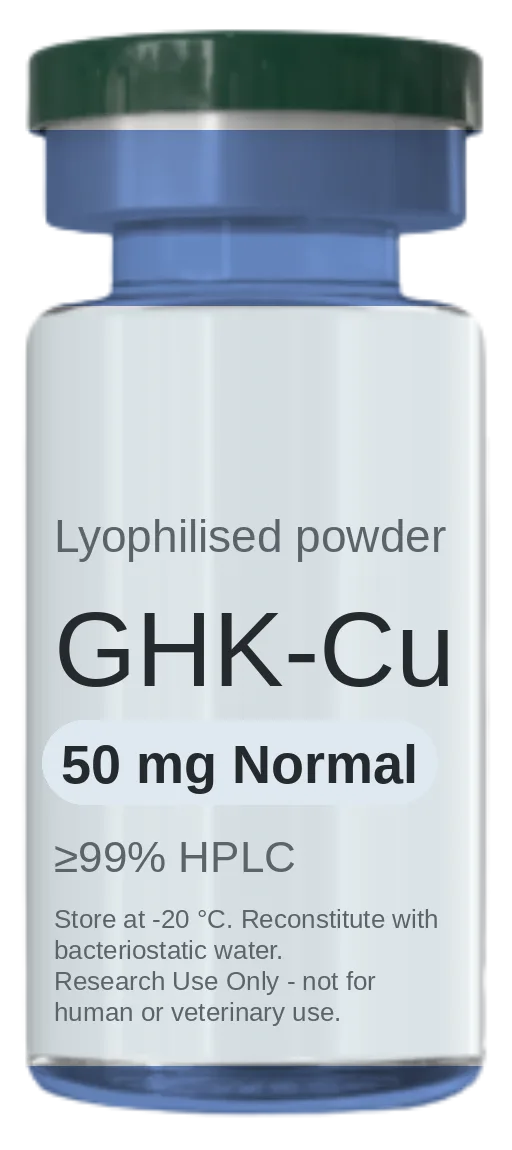
GHK-Cu (Copper Peptide)
Copper-binding tripeptide studied in extracellular matrix and dermal research models.
- Purity:
- ≥99% HPLC
- Sizes available:
- 50 mg Normal – 50 mg Plus
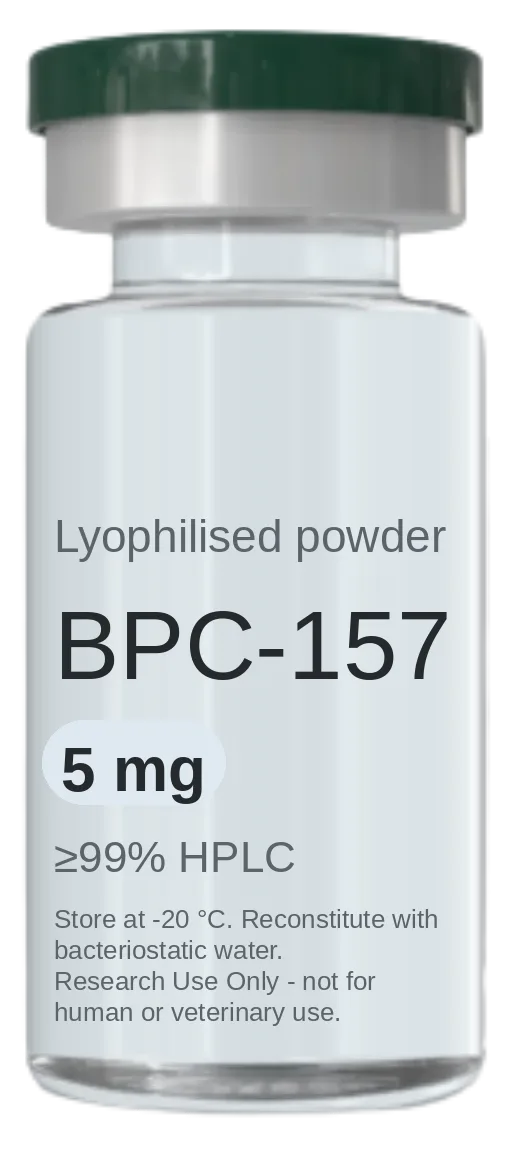
BPC-157 + TB-500
BPC-157 and TB-500 in a single vial — the pairing most studied together in tissue-repair research.
- Purity:
- ≥99% HPLC
- Sizes available:
- 5 mg + 5 mg
The consultation
One intake that settles goals, history and contraindications alongside compound, quantity, documentation and route — reviewed by a physician before anything ships.
More notes
-
Tesamorelin vs Sermorelin: The Difference
Tesamorelin and sermorelin are both GHRH analogs, but not the same molecule. Here's the structural difference and what the studies on each measure.
-
Peptide Supplier vs. Reseller: What Differs
The real difference is whether someone can name the lab that tested a batch and show the report — or only promise it's pure.
-
MOTS-c or NAD+: What's the Difference
MOTS-c and NAD+ are studied through different mitochondrial pathways; here's what each line of research actually measures.