
Note
Mod GRF 1-29: Importing to Argentina
Mod GRF (1-29) ships to Argentina as laboratory reference material. What documentation each lot carries and how customs classification works.
Mod GRF (1-29) can be imported to Argentina. PeptoClinic quotes and ships this research peptide to Argentine destinations as laboratory reference material, with customs documentation prepared for that classification. The compound enters the country, but not as a medicine: it enters as a research input.
What Mod GRF (1-29) is, and why it goes by two names
Mod GRF (1-29) — short for Modified GRF 1-29 — is a synthetic analogue of growth hormone-releasing hormone (GHRH). The native peptide degrades rapidly in solution; the modified version incorporates four amino acid substitutions that extend its stability. In English-language technical literature, the compound also appears as CJC-1295 without DAC (*without drug affinity complex*), the commercial name established by the first large-scale synthesiser. Both names refer to the same molecule.
In PeptoClinic's catalogue, the compound is listed as CJC-1295 without DAC. Researchers sourcing this material for Argentine programmes should start at the CJC-1295 without DAC — Argentina page, which has the specific logistics and documentation detail for Argentine imports.
Published research on the compound — searchable through PubMed — covers primarily in vitro work on somatotropic axis physiology and GH secretion. PeptoClinic does not provide interpretation of that literature or guidance on applications.
How Argentina regulates this compound
ANMAT regulates medicines, biologics, medical devices, and cosmetics in Argentina. Compounds classified as laboratory reference material — no therapeutic indication, no sanitary registration number, intended exclusively for research — do not enter as medicines and are not subject to the pharmaceutical control regime ANMAT applies to registered products.
The relevant customs classification is research reagent or analytical reference material. Under that classification, what the file requires is compound identity supported by laboratory analysis, lot traceability, a declaration of in vitro research use, and a safety data sheet for the material.
What complicates or blocks entry is material presented with therapeutic indications, package inserts, or dosing references. That converts the compound, in regulatory terms, into an unregistered medicine, and the resulting control regime is significantly more demanding.
PeptoClinic prepares the documentation for each shipment to Argentina under the laboratory reference material classification and reviews the file individually before quoting, because quantity, the receiving laboratory, and the exact lot composition can all affect how customs handles the import.
What documentation ships with each lot
Every shipment to Argentina includes:
- Certificate of Analysis (COA) issued by the independent analytical laboratory that ran the analysis, with compound identity, HPLC purity result, task number, and lot number.
- Safety Data Sheet (SDS) for the material, in the format required for laboratory inputs.
- Declaration of use: the material is supplied exclusively for in vitro and laboratory research, with no indication for administration to humans or animals.
- Supporting documentation for the Argentine customs file, prepared under the reference material framework.
The analytical laboratory that signs the lot reports for PeptoClinic is Janoshik Analytical. Every certificate includes the task number with which the result can be verified directly on the laboratory's website. Published reports for the analysed lots are listed on the Quality page.
The minimum purity PeptoClinic specifies for its research peptides is ≥99% by HPLC. The lowest figure published in Janoshik certificates for analysed lots in the line is 99.669%. The highest published result is not cited here because the floor is the figure a buyer can demand as a minimum; the best result varies by lot.
Why the customs declaration determines the outcome
A common failure in research peptide imports is arriving with a generic declaration — no classification that distinguishes research input from consumer product. That creates ambiguity at customs, because the officer must interpret the material without documentation that frames it.
When a compound enters as a research reagent with COA, SDS, and declaration of use, the classification is more straightforward. There is no safety evaluation for consumption because the material is not destined for consumption; what matters is identity and purity as a reference compound.
A second frequent problem is a mismatch between the package and its documentation: a correctly named compound presented in packaging that carries clinical use information can fall into the same regime as an unregistered medicine. PeptoClinic ships the material without use instructions on the primary container, consistent with the research classification.
The final customs determination is the importer's responsibility, but PeptoClinic does not ship until the documentation is complete, and can support the importer with written backup during any customs query.
How to request a quote for Mod GRF (1-29) to Argentina
There are no published prices and no online stock. The process is a technical consultation: describe the compound, the quantity the programme requires, the purity specification, and the Argentine destination. PeptoClinic reviews the available lot against its documentation and returns a written quote, normally within one business day. The quote includes the material cost, Argentine logistics, and the import documents.
To open a consultation, write to [email protected] or go directly to the CJC-1295 without DAC — Argentina page.
If the programme also requires other peptides — Ipamorelin, for example, for a comparative in vitro study on GH secretagogues — those can be included in the same consultation. PeptoClinic quotes combined shipments under a single customs file.
For laboratory research only
Mod GRF (1-29) is a research peptide. PeptoClinic supplies this material exclusively for in vitro and laboratory research use. It is not approved or intended for administration to humans or animals.
This compound has not been evaluated by ANMAT, the FDA, or any equivalent authority as a medicine, supplement, or consumer product. PeptoClinic is not a pharmacy, a clinic, or a healthcare provider. No prescription is written, no clinical guidance is offered, and requests for human administration protocols are declined.
Compliance with applicable regulations on the import and use of research material is the responsibility of the recipient and their institution.
Frequently asked questions
Are Mod GRF (1-29) and CJC-1295 without DAC the same compound?
Yes. Both names refer to the same molecule: a GHRH analogue with four amino acid substitutions relative to the native peptide. "Modified GRF 1-29" describes the structural modification; "CJC-1295 without DAC" is the commercial name that consolidated in English-language technical literature. Catalogues and publications use both denominations for the same compound interchangeably.
Does importing it require prior authorisation from ANMAT?
Laboratory reference material without therapeutic indication does not require prior ANMAT registration to enter Argentina. What is needed is the correct documentation for customs classification: a certificate of analysis, safety data sheet, and declaration of research use. PeptoClinic prepares that documentation with every shipment.
Can an individual researcher import it, or only an institution?
PeptoClinic quotes to laboratories and individual researchers. Whether import under an individual's name or under an institutional umbrella is appropriate depends on the customs regime applicable in each specific case. The technical consultation is the first step; the most suitable import arrangement can be reviewed in that process before any order is confirmed.
Can customs hold the shipment?
Yes, as with any imported material. The risk is reduced when the documentation is complete and the customs classification is correct from the point of origin. A detained shipment requires action from the importer; PeptoClinic provides the documentary backup that customs requests during the procedure.
How long does delivery take?
PeptoClinic does not publish fixed delivery times, because the timeframe depends on the customs process for each individual shipment and on cold-chain requirements. An estimated timeframe is part of the written quote provided before an order is confirmed.
How do I verify the lot matches its certificate?
Every shipment includes the certificate of analysis issued by Janoshik Analytical, with the task number that allows the result to be verified directly on the laboratory's website. Published reports for the analysed lots in PeptoClinic's line are available on the [Quality page](/en/quality/).
Can I request a small quantity to evaluate the compound before scaling the project?
Minimum quantities and available options are part of the quote. PeptoClinic does not publish a fixed-unit catalogue; each project is quoted according to its concrete requirements for quantity, purity specification, and documentation.
Is PeptoClinic a laboratory or a pharmacy?
Neither. PeptoClinic is a technical supply consultancy for research peptides. It does not formulate or dispense medicines, holds no pharmaceutical licence, and does not participate in prescribing chains. Material is supplied to laboratories and researchers exclusively for scientific use.
Compounds mentioned
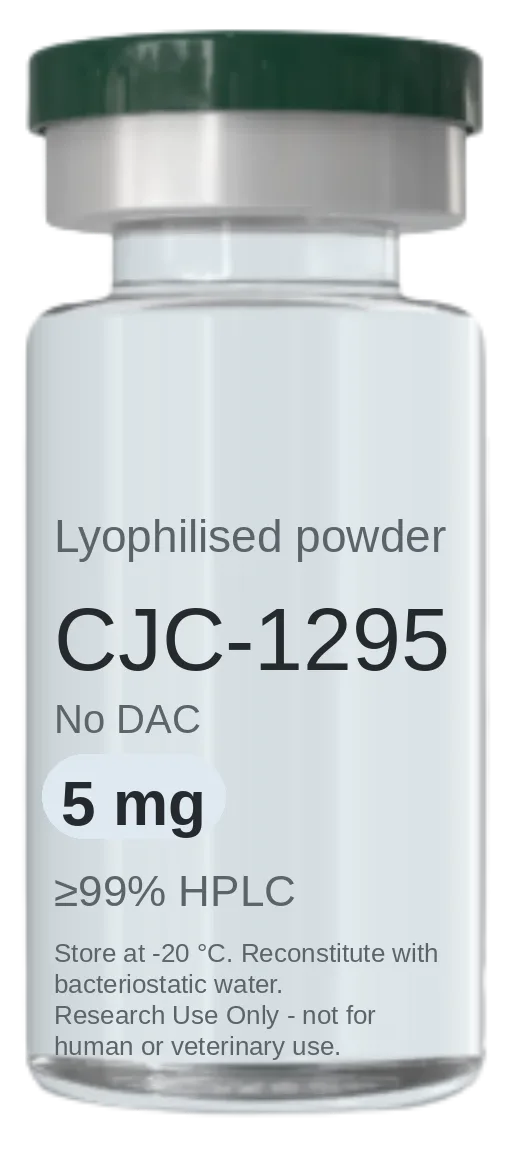
CJC-1295 (sin DAC)
Modified GRF(1-29) tetrasubstituted analogue without drug affinity complex.
- Purity:
- ≥99% HPLC
- Sizes available:
- 5 mg – 20 mg
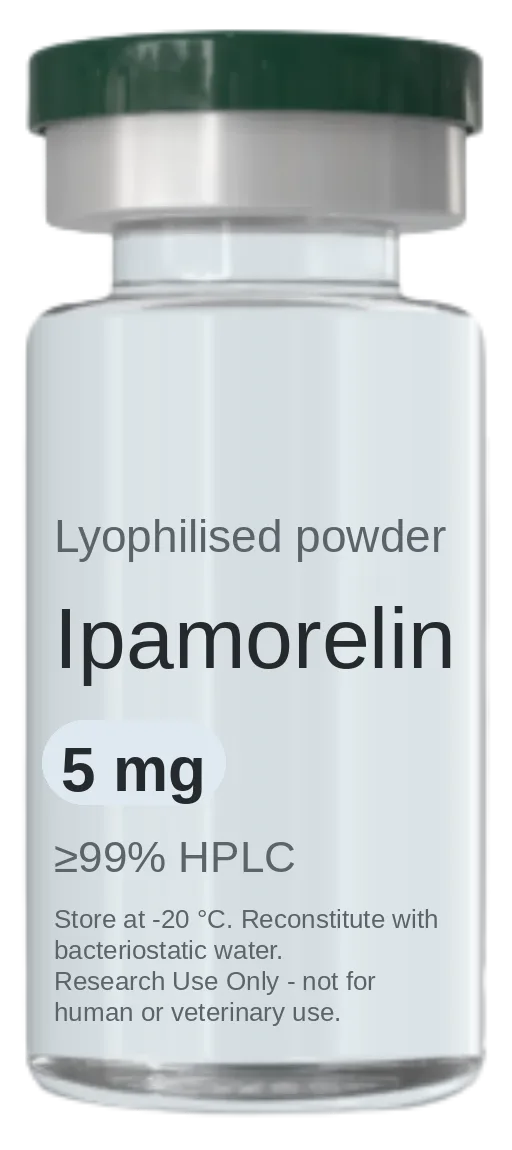
Ipamorelin
Selective ghrelin receptor (GHS-R1a) agonist pentapeptide.
- Purity:
- ≥99% HPLC
- Sizes available:
- 5 mg – 20 mg
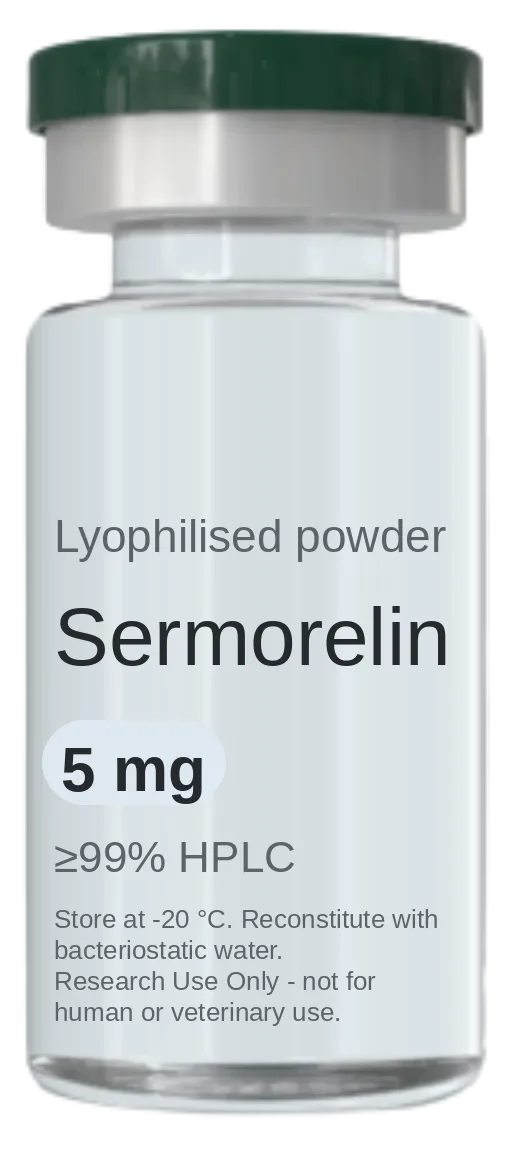
Sermorelin
Growth hormone-releasing hormone analogue used in endocrine signalling research.
- Purity:
- ≥99% HPLC
- Sizes available:
- 5 mg – 20 mg
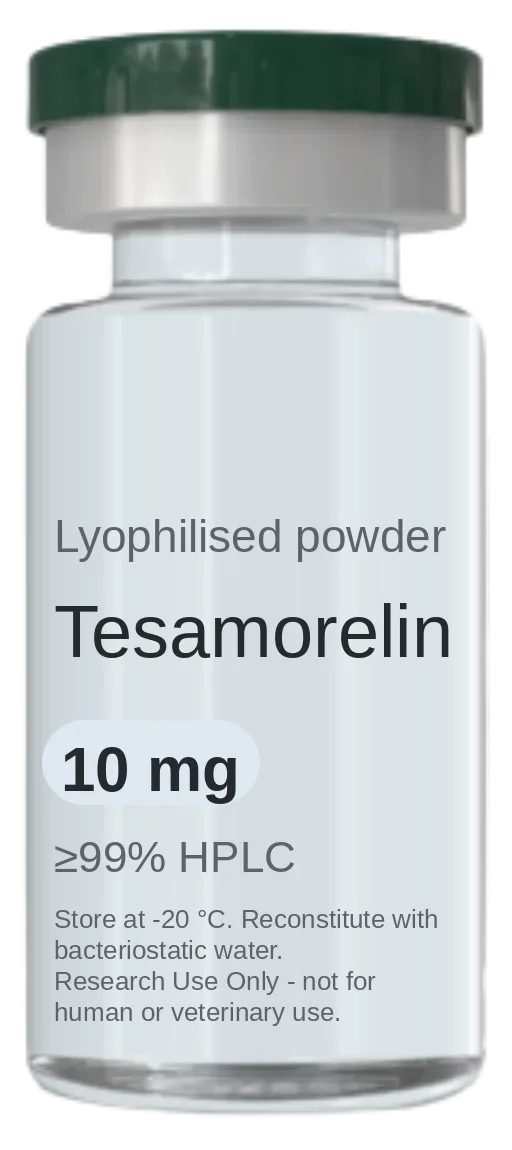
Tesamorelin
Stabilised GHRH(1-44) analogue studied in adipose tissue distribution research.
- Purity:
- ≥99% HPLC
- Sizes available:
- 10 mg – 20 mg
The consultation
One intake that settles goals, history and contraindications alongside compound, quantity, documentation and route — reviewed by a physician before anything ships.
More notes
-
Tesamorelin vs Sermorelin: The Difference
Tesamorelin and sermorelin are both GHRH analogs, but not the same molecule. Here's the structural difference and what the studies on each measure.
-
Peptide Supplier vs. Reseller: What Differs
The real difference is whether someone can name the lab that tested a batch and show the report — or only promise it's pure.
-
MOTS-c or NAD+: What's the Difference
MOTS-c and NAD+ are studied through different mitochondrial pathways; here's what each line of research actually measures.