
Note
NAD+ vs Selank: What's the Difference?
NAD+ is a cellular coenzyme; Selank is a synthetic peptide derived from tuftsin. Structure, mechanism, and what each one is studied for.
NAD+ and Selank show up in the same research forums, but structurally and mechanistically they have nothing in common. NAD+ is a coenzyme that every human cell already manufactures and runs through energy metabolism and DNA repair. Selank is a synthetic seven-amino-acid peptide, derived from tuftsin, that does not occur in nature and is studied for its activity on the central nervous system and the immune system. One is a molecule the body produces continuously; the other is a compound engineered in a lab.
What NAD+ is
NAD+ (nicotinamide adenine dinucleotide) is a coenzyme, not a peptide. It participates in hundreds of redox reactions inside the cell: it's the electron carrier in the mitochondrial respiratory chain, which ties it directly to ATP production. It's also the substrate used by sirtuins and PARPs, two enzyme families the literature links to DNA repair and to the epigenetic regulation of cellular aging.
As a cell ages, available NAD+ levels decline. That's the observation behind why NAD+ turns up so often in aging biology literature — not because it "reverses aging," but because it's the fuel for processes that become less efficient when it runs short. The PubMed index on NAD+ metabolism and aging is the place to read the primary studies, not a secondhand summary.
In the catalog, NAD+ is supplied as lyophilized reference material, the same format as the rest of the compounds PeptoClinic distributes.
What Selank is
Selank is a synthetic heptapeptide developed from tuftsin, an endogenous peptide with immunomodulatory activity. The Russian laboratories that originally described it added a stabilizing fragment to the tuftsin sequence to extend its biological activity, because natural tuftsin degrades very quickly in plasma.
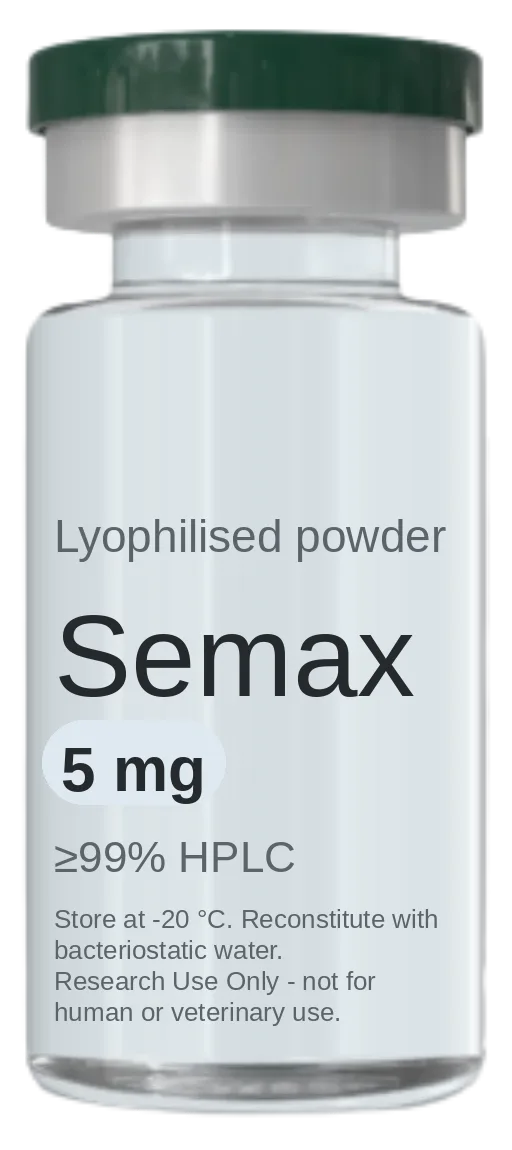
Published research on Selank concentrates on two lines: its interaction with the GABAergic and serotonergic axes in animal models — the basis for interest in its anxiolytic profile in preclinical studies — and its effect on cytokine expression, the immunomodulatory part it inherits from tuftsin. It's structurally related to Semax, another compound from the same line of Russian peptide research into fragments of endogenous hormones, though Semax derives from an ACTH fragment rather than from tuftsin.
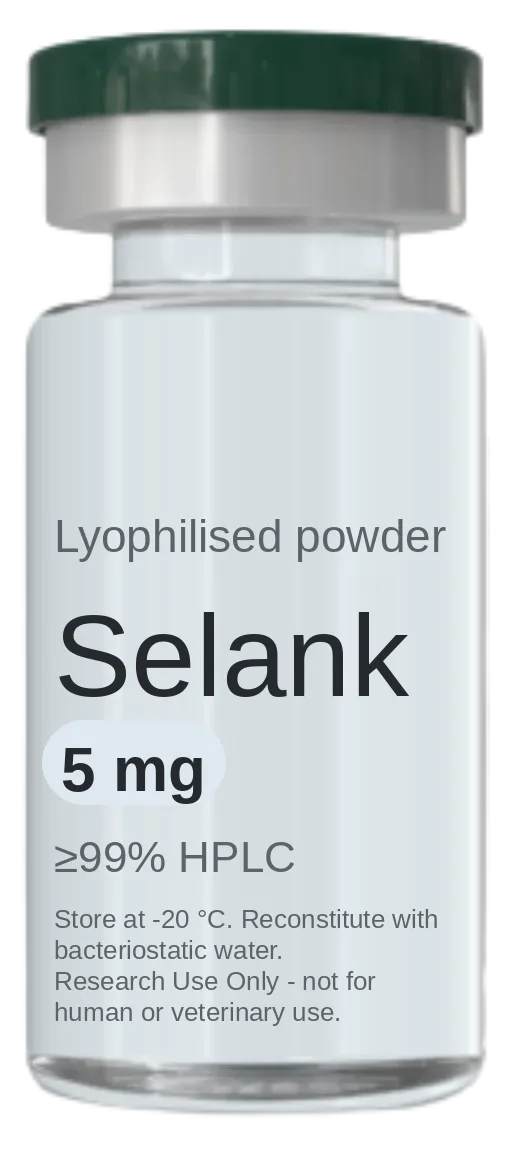
Selank also ships as lyophilized powder in a sealed vial.
The differences that matter
- Chemical nature: NAD+ is a dinucleotide, a small molecule that is part of the baseline metabolism of any cell. Selank is a short-chain peptide, seven amino acids, synthesized specifically for research.
- Mechanism: NAD+ acts as an enzymatic cofactor in oxidation-reduction reactions and as a substrate for sirtuins and PARPs. Selank acts as a ligand that modulates receptors and signaling pathways in the central nervous system and the immune system.
- Research area: NAD+ is studied in the context of energy metabolism, mitochondrial function, and cellular aging biology. Selank is studied in the context of anxiety in animal models, cognition, and immune modulation.
- Origin: NAD+ is a universal endogenous molecule, present in every cell with oxidative metabolism. Selank is a synthetic peptide with no exact natural equivalent; it's derived from tuftsin but it isn't tuftsin.
- Molecular role: in terms of molecular weight the two are roughly comparable, but the relevant difference isn't size — it's that one is a metabolic cofactor and the other is a peptide with signaling activity.
Choosing between the two doesn't make sense if the research question is different: they aren't substitutes, they're tools for separate lines of study. A protocol investigating mitochondrial metabolism works with NAD+; one investigating modulation of the GABAergic axis or immune response works with Selank or with peptides from that family.
What documentation ships with the material
PeptoClinic works to a purity standard of ≥99% HPLC on the research peptides in its catalog. The lowest published report to date, analyzed by Janoshik Analytical, came in at 99.669% purity — that's the floor figure worth citing, not the best one ever seen. Full analysis reports, with the method used and the corresponding batch, are explained on the quality page, which shows how to read a certificate of analysis instead of trusting an unsupported seal.
The full catalog, with specifications for each compound, is at catalog.
Shipping to Argentina
Material is quoted for destinations in Argentina, with customs documentation prepared to bring it in as laboratory reference material. The process starts with a technical inquiry: describe the compound, the quantity, and the intended use in the research program, and the technical team responds with a written quote. Shipping details for the region are at Argentina.
Research use only
Both NAD+ and Selank are supplied strictly for research use (Research Use Only). They are not medicines, supplements, or foods, and they are not approved for human or veterinary consumption, diagnosis, or treatment. None of the claims in this article have been evaluated by ANMAT, the FDA, or any equivalent authority, and nothing published here should be read as a usage recommendation for people. The material is supplied for studies in laboratory models, in vitro work, or research programs operating under their own regulatory framework.
Frequently asked questions
Can NAD+ and Selank be compared on purity?
Yes, in the sense that both are supplied under the same ≥99% HPLC standard and the same batch-documentation policy. But they aren't comparable on any other axis: they don't serve the same biochemical function and they aren't studied in the same context.
Does Selank derive from the same peptide as Semax?
No. Selank derives from tuftsin, an endogenous immunomodulatory peptide. Semax derives from a fragment of the ACTH hormone. Both come out of the same Russian line of research into short-chain neuroactive peptides, but their parent structures are different.
Is NAD+ a peptide?
No. NAD+ is a dinucleotide, a coenzyme formed by two linked nucleotides, not a chain of amino acids. The confusion is common because it's grouped alongside research peptides in the same catalog, but chemically it belongs to a different family of molecules.
What does a certificate of analysis for a peptide batch measure?
It measures the compound's purity by HPLC (high-performance liquid chromatography) and, depending on the laboratory, the actual content of the vial against what's declared on the label. The [quality](/en/quality/) page explains how to read one point by point, with real reports from Janoshik Analytical.
Can NAD+ and Selank be requested in the same shipment to Argentina?
Quotes are built per inquiry: describe which compounds the research program needs and the technical team responds with a combined quote that includes customs documentation for the whole shipment. The steps are detailed at [Argentina](/en/argentina/).
Does Selank have a published purity report?
The reports published so far by Janoshik Analytical cover retatrutide, MOTS-c, GHK-Cu, and the BPC-157 plus TB-500 combination. For the rest of the catalog, including Selank, batch documentation is provided together with the quote.
Why is NAD+ so closely associated with cellular aging?
Because it's the substrate for sirtuins and PARPs, two enzyme families studied in relation to DNA repair and epigenetic regulation, and because available NAD+ levels decline with cellular age. The primary literature on the topic is indexed on [PubMed](https://pubmed.ncbi.nlm.nih.gov/?term=NAD%2B+metabolism+aging).
Is Selank studied only in animal models?
Most of the published literature on Selank corresponds to preclinical studies in animal models, focused on its interaction with the GABAergic, serotonergic, and immune axes. The indexed bibliography is available on [PubMed](https://pubmed.ncbi.nlm.nih.gov/?term=selank+peptide).
Compounds mentioned
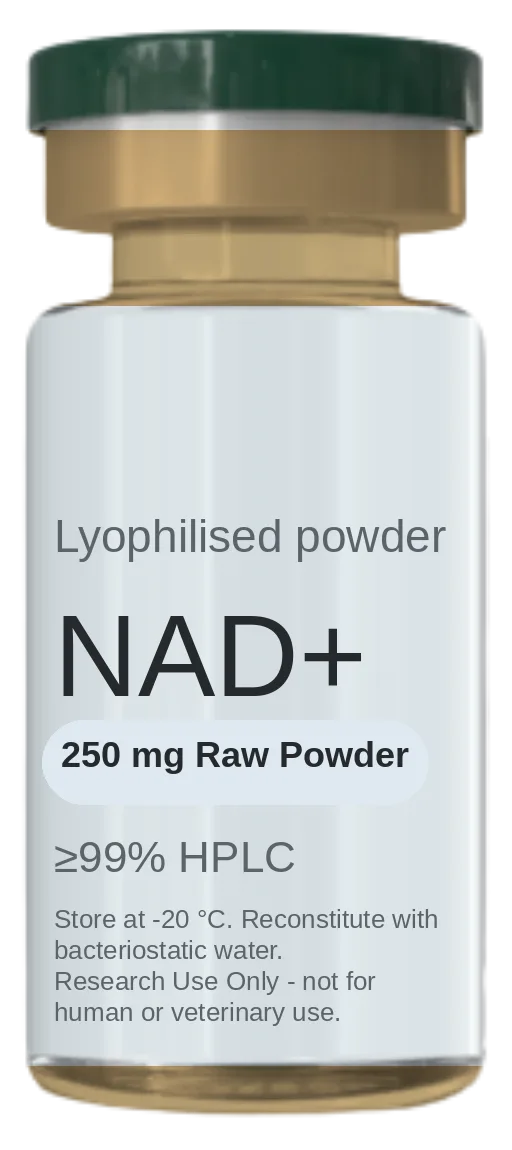
NAD+ (Nicotinamide Adenine Dinucleotide)
Essential redox cofactor central to cellular metabolism and sirtuin research.
- Purity:
- ≥99% HPLC
- Sizes available:
- 250 mg Raw Powder – 300 mg
The consultation
One intake that settles goals, history and contraindications alongside compound, quantity, documentation and route — reviewed by a physician before anything ships.
More notes
-
Retatrutide vs. Tirzepatide: Differences
Retatrutide adds a third receptor that tirzepatide doesn't activate — here's how the two differ in structure, mechanism, and published research.
-
Peptide Customs Clearance Cost in Argentina
What determines customs clearance cost for a research peptide shipment to Argentina, and what documentation PeptoClinic prepares for it.
-
AFIP Importer Registration for Peptides?
Whether receiving research peptides in Argentina requires registering as an AFIP importer, and what paperwork actually ships with the package.