
Note
AFIP Importer Registration for Peptides?
Whether receiving research peptides in Argentina requires registering as an AFIP importer, and what paperwork actually ships with the package.
No, registering as an importer with AFIP is not a step a laboratory or an individual researcher needs to complete to receive a shipment of research peptides in Argentina. AFIP's importer/exporter registry exists for people who make importing a recurring commercial activity — buying to resell, clearing bulk merchandise, working with a customs broker on an ongoing basis. Receiving a one-off shipment of research material, declared as such, is a different thing entirely in scale and in kind, and it moves through the courier/parcel channel with the documentation that accompanies that type of shipment, not through the commercial import registry.
What actually happens instead
When a package enters Argentina by mail or courier, customs reviews it at the border — there is no prior registration check on the recipient. Customs looks at the documentation travelling with the parcel — invoice, description of contents, tariff code — and processes it on that basis. For someone receiving an occasional shipment of a laboratory reagent, what matters is the paperwork on that specific shipment, not a registration that authorizes the person to import on a general, ongoing basis.
AFIP's importer registration (which creates a standing in its "Sistema Registral" and allows someone to work with a customs broker on a sustained basis) is a separate track, built for people who import as an economic activity. Conflating the two is where this question usually comes from: everyday language uses "import" for anything that arrives from abroad, but customs regulation draws a sharp line between registered commercial importing and receiving a single courier parcel.
What paperwork travels with the shipment
Every batch PeptoClinic ships to an Argentine destination goes out with the customs file prepared to declare the contents as laboratory reference material, consistent with the Research Use Only (RUO) designation printed on the vial. That declaration — not a prior registration by the recipient — is what customs needs to process the parcel at the border.
The material travels as lyophilized powder in a sealed vial, protected from light, with no cold chain: the powder stays stable at room temperature for weeks, so the box carries no coolant, no gel pack, no dry ice. That simplifies the logistics considerably compared with what a reconstituted, solution-phase product would require. Anyone who wants the full picture of how a batch is packaged, and what changes once it's reconstituted, can read the shipping page.
What "research peptide" means here
A research peptide is a compound supplied strictly for in vitro and laboratory research use (RUO). It is not a medicine, not a supplement, not a food. Nothing in the catalog is approved or intended for human or veterinary consumption, diagnosis or treatment, and none of these statements have been evaluated by ANMAT, the FDA or any equivalent authority. That designation — material declared and documented as a laboratory reagent, not as a consumer product — is exactly what determines how customs handles it at the border, and it's the reason the importer-registration question doesn't apply to this case.
Anyone who wants a concrete example of how a batch is documented can look at the page for retatrutide in Argentina or BPC-157 in Argentina: both detail what accompanies each shipment to the country.
How to verify what actually arrives
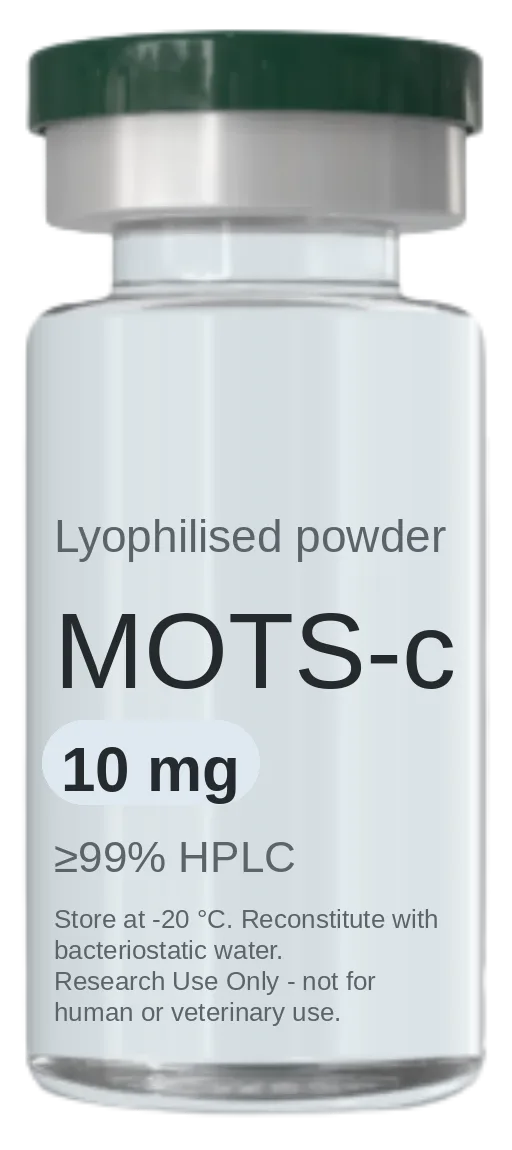
Beyond the customs paperwork, the real question for any researcher is whether the contents of the vial match what's declared on the label. That isn't answered by a customs form — it's answered by an independent laboratory report. PeptoClinic publishes reports from Janoshik Analytical on batches in its catalog — the MOTS-C assay, for example, found a purity of 99.669% — and that kind of certificate of analysis is what confirms the actual content of a batch, independent of how it was classified on entry into the country. Anyone who wants to understand how to read one of these reports can check the quality page, which walks through what to look for in a certificate of analysis before treating any batch as verified.
Why this isn't a commercial import procedure
The key difference is volume and declared purpose. A registered AFIP importer operates habitually: bringing in goods to resell, to feed into their own production process, or to distribute. A researcher or laboratory receiving a single batch of reference peptide isn't doing any of that — they're receiving a reagent for their own research — and that movement is processed through the international parcel channel with the relevant content documentation, not through the importer registry.
This is consistent with how any laboratory reagent imported occasionally from abroad is typically handled: what determines the procedure isn't the fact that something crosses a border, but the scale and nature of that specific transaction.
Research material, not for human use
Everything above describes the movement of a laboratory reagent. No compound in PeptoClinic's catalog is approved for human or veterinary consumption, or for the diagnosis or treatment of any condition. The material is supplied exclusively under the RUO (Research Use Only) designation, for in vitro and laboratory research. PeptoClinic is not a pharmacy, not a clinic, does not issue or fill prescriptions, and does not provide dosing, administration or protocol guidance for use in people. Any request oriented toward human use falls outside the scope of this technical supply consultancy.
Anyone who wants to see the full range of available compounds can check the catalog page, and the about page describes the scope and limits of the operation.
Frequently asked questions
¿Hace falta algún registro previo en AFIP para recibir un envío de péptidos de investigación?
No. El registro de importador en AFIP corresponde a quien importa de forma habitual como actividad comercial. Un envío puntual de material de laboratorio se procesa por el circuito de paquetería/courier con la documentación de contenido que acompaña al paquete, sin que el destinatario necesite estar inscripto como importador.
¿Qué pasa en la aduana cuando llega el paquete?
La aduana revisa la documentación que viaja con el envío —factura, descripción del contenido y clasificación arancelaria— y procesa el paquete según esa declaración. PeptoClinic prepara ese archivo de aduana declarando el contenido como material de referencia de laboratorio para cada lote enviado a un destino argentino.
¿El envío necesita cadena de frío?
No. El material viaja como polvo liofilizado en vial sellado, estable a temperatura ambiente durante semanas, así que no lleva refrigerante, gel pack ni hielo seco. La cadena de frío pasa a ser relevante recién después de la reconstitución, cuando el compuesto queda en solución.
¿Cómo se sabe que el contenido del vial corresponde a lo declarado en la etiqueta?
Revisando el certificado de análisis del lote. PeptoClinic publica reportes de laboratorios independientes como Janoshik Analytical sobre compuestos de su catálogo, que detallan la pureza encontrada en el ensayo. La página de [calidad](/en/quality/) explica qué mirar en uno de estos informes.
¿Esto aplica igual a cualquier compuesto del catálogo?
El criterio de documentación aduanera —declarar el contenido como material de referencia de laboratorio— aplica por igual a los compuestos del catálogo enviados a destinos argentinos. Las páginas específicas por compuesto, como la de [retatrutida en Argentina](/en/argentina/retatrutide/), detallan la documentación que acompaña a ese producto en particular.
¿PeptoClinic funciona como farmacia o como clínica en Argentina?
No. PeptoClinic es una consultoría técnica de suministro de péptidos de investigación. No es una farmacia, no es una clínica, no emite prescripciones y no brinda indicaciones de dosis o administración. El material se cotiza para uso exclusivo en investigación de laboratorio.
¿Se puede pedir un péptido de investigación para uso personal?
El material se suministra estrictamente bajo la condición RUO (Research Use Only), para investigación in vitro y de laboratorio. No está aprobado para consumo humano ni veterinario, y las solicitudes orientadas a uso en personas quedan fuera del alcance de esta operación.
¿A qué otros países se envía además de Argentina?
PeptoClinic suministra a destinos en Argentina, Estados Unidos, Uruguay, Chile, Paraguay, Bolivia, Perú, Brasil, México y Colombia. El criterio de documentación aduanera se adapta a la normativa de cada destino; la página de [envíos](/en/shipping/) tiene el detalle general del proceso.
Compounds mentioned
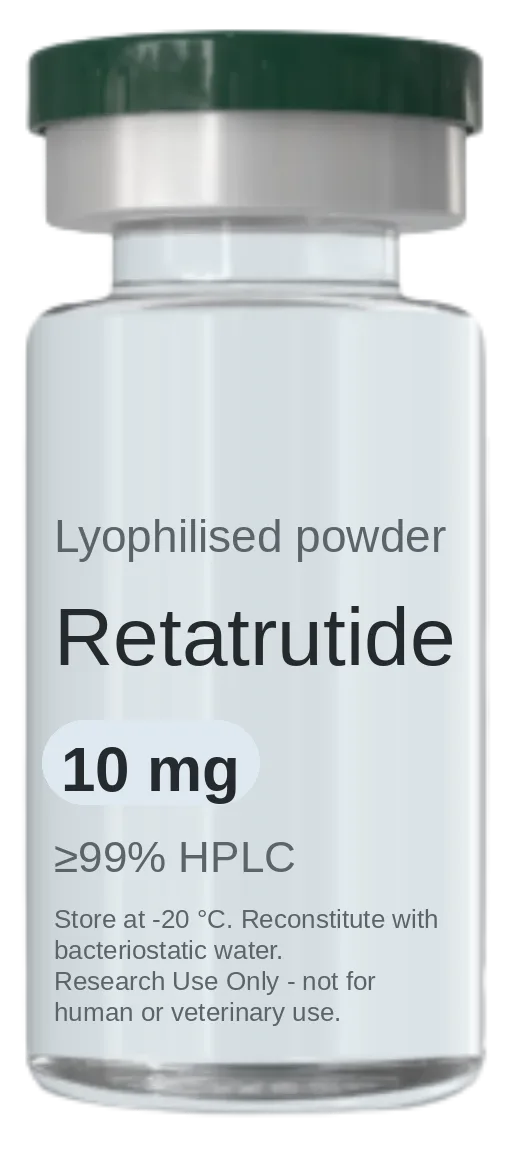
Retatrutide
Triple-agonist metabolic research peptide targeting GLP-1, GIP and glucagon receptors.
- Purity:
- ≥99% HPLC
- Sizes available:
- 10 mg
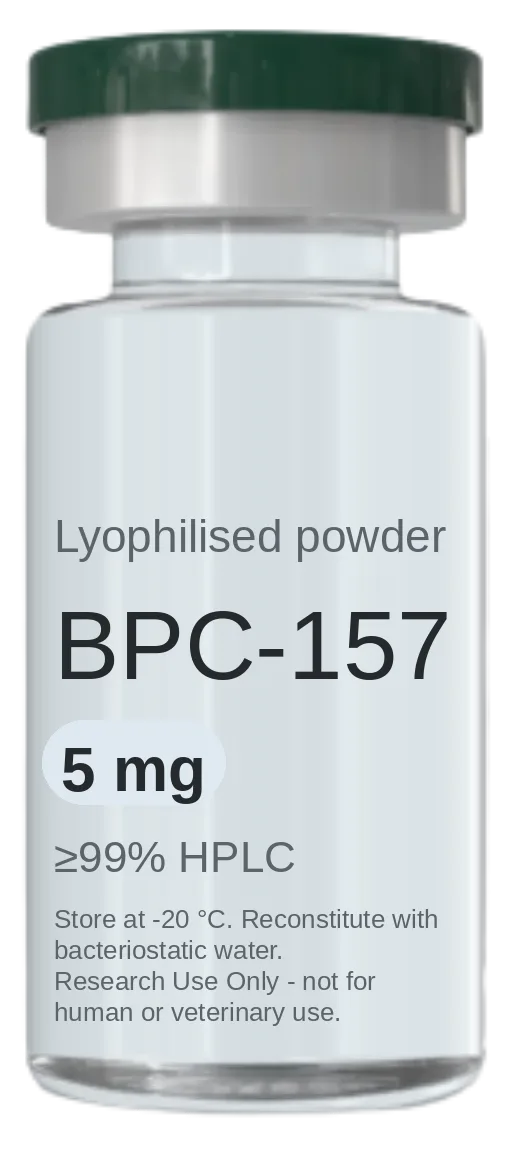
BPC-157 + TB-500
BPC-157 and TB-500 in a single vial — the pairing most studied together in tissue-repair research.
- Purity:
- ≥99% HPLC
- Sizes available:
- 5 mg + 5 mg
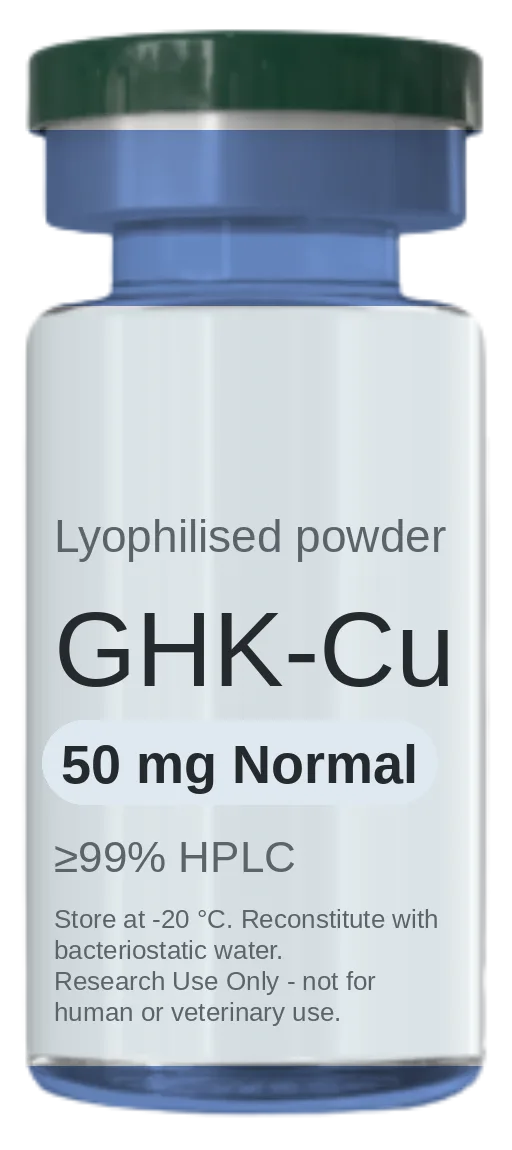
GHK-Cu (Copper Peptide)
Copper-binding tripeptide studied in extracellular matrix and dermal research models.
- Purity:
- ≥99% HPLC
- Sizes available:
- 50 mg Normal – 50 mg Plus
The consultation
One intake that settles goals, history and contraindications alongside compound, quantity, documentation and route — reviewed by a physician before anything ships.
More notes
-
Retatrutide vs. Tirzepatide: Differences
Retatrutide adds a third receptor that tirzepatide doesn't activate — here's how the two differ in structure, mechanism, and published research.
-
NAD+ vs Selank: What's the Difference?
NAD+ is a cellular coenzyme; Selank is a synthetic peptide derived from tuftsin. Structure, mechanism, and what each one is studied for.
-
Peptide Customs Clearance Cost in Argentina
What determines customs clearance cost for a research peptide shipment to Argentina, and what documentation PeptoClinic prepares for it.