
Note
Retatrutide vs. Tirzepatide: Differences
Retatrutide adds a third receptor that tirzepatide doesn't activate — here's how the two differ in structure, mechanism, and published research.
The central difference between retatrutide and tirzepatide is the number of receptors each molecule activates. Tirzepatide is a dual agonist: it acts on the GLP-1 receptor and the GIP receptor. Retatrutide is a triple agonist: it adds a third receptor, glucagon, to those same two. That third activation is what separates the two molecules in the research literature, and it's why they turn up side by side in papers and research forums alike.
What tirzepatide is
Tirzepatide is a synthetic peptide designed as a dual agonist of the GIP and GLP-1 receptors. It was one of the first compounds in this class to reach advanced-phase clinical trials, which is why it's the reference point against which any new molecule in the same group — including retatrutide — gets compared. Its structure combines sequences derived from both endogenous peptides into a single chain, letting one molecule activate both receptors at once.
What retatrutide is
Retatrutide is also a synthetic peptide, but it adds activation of the glucagon receptor on top of GIP and GLP-1. That's why the literature describes it as a "triagonist," or triple-receptor agonist. Retatrutide for Argentina is part of the research-peptide catalogue available for the Argentine market, with batch documentation supplied alongside it.
A laboratory report published by Janoshik Analytical (task 136921, analysed on April 13, 2026) measured 99.893% purity on a retatrutide batch carrying 11.96 mg of content against a 10 mg label. That kind of report — with the method, the result, and the date stated — is what lets a researcher check a real batch against what the label claims, instead of relying on an unsupported statement.
The key difference: one more receptor
Activating glucagon in addition to GIP and GLP-1 changes the molecule's pharmacological profile, and that's the reason the two peptides aren't interchangeable in any research protocol. The glucagon receptor is implicated in metabolic pathways distinct from the ones GIP and GLP-1 activate on their own, so any experimental design comparing the two molecules has to control for that variable from the outset — not assume they "do the same thing with one extra molecule."
In terms of size and sequence, both are long-chain peptides with modifications intended to extend stability, but they don't share the same amino acid sequence or the same lipidation pattern. These are distinct compounds that get compared because they belong to the same incretin-mimetic family, not because one is a variant of the other.
What the scientific literature studies about each
The literature studying tirzepatide and retatrutide in preclinical models and early-phase clinical trials looks at their effect on incretin receptors, metabolic signalling, body weight, and glucose and lipid markers in study subjects. Papers comparing dual against triple agonists tend to focus on whether the third activation — glucagon — produces a metabolic response distinct from that of the two-receptor agonists, and at what doses and experimental conditions that difference shows up.
That body of research is exactly what the material for retatrutide and the rest of the catalogue is intended to support: laboratory and in vitro studies, not use in people. No published result on these compounds constitutes a medical indication or replaces review by a regulatory authority.
Why the two get compared so often
Tirzepatide and retatrutide show up together in almost any search because both belong to the generation of peptides that test activating more than one incretin receptor at a time, and because retatrutide is routinely framed as "the next step" after dual agonists. That comparison makes sense from a molecular-design standpoint — one molecule with a receptor the other lacks — but it says nothing about equivalence of use: these are two distinct chemical entities, with independent purity records and batch documentation.
Anyone researching both compounds within the same laboratory programme needs to treat them as separate variables: batch, purity, analysis date, and supplier documented independently for each. The catalogue and the quality page explain what documentation accompanies each batch that gets quoted.
Documentation and purity: what to ask for
Before adding any peptide to a research protocol, the reasonable step is to request the laboratory report for that specific batch, not a generic technical data sheet for the compound. The report needs to state the analytical method, the laboratory that performed it, the date, and the purity result. The standard declared for research material here is purity equal to or above 99% by HPLC, verifiable against the corresponding batch report before dispatch.
If a research protocol calls for reconstituting lyophilised material, the diluent needs documentation too. Bacteriostatic water, USP grade is listed in the catalogue alongside the rest of the laboratory supplies, with the same expectation of a traceable spec.
Research use only
All material described in this article — retatrutide, tirzepatide, and any other peptide in the same family — is supplied strictly for laboratory research use (Research Use Only). It is not approved as a drug, a supplement, or a food; it is not intended for human or veterinary consumption; and none of the statements in this text have been evaluated by the FDA, ANMAT, or any equivalent regulatory authority. Nothing here is dosing guidance, an administration protocol, or guidance for use in people.
Frequently asked questions
Do retatrutide and tirzepatide activate the same receptors?
Not exactly. Tirzepatide activates two receptors, GIP and GLP-1. Retatrutide activates those same two plus a third, the glucagon receptor, which is why it's classified as a triple agonist rather than a dual one.
Are they the same molecule under a different name?
No. They are two distinct chemical entities, with different sequences and modification patterns. They belong to the same family of incretin-mimetic peptides, but each has its own synthesis record, purity profile, and batch documentation.
Which one is purer?
Purity isn't a property of the compound in the abstract — it's a property of the specific batch that gets analysed. One laboratory report on a retatrutide batch measured 99.893% purity; that describes that particular batch, not a fixed property of the peptide. Any batch, of either compound, needs its own report to confirm its actual purity.
Why is retatrutide described as "the next generation"?
Because it adds an additional receptor activation on top of the design already used by dual agonists like tirzepatide, and the literature comparing both classes of molecules investigates whether that extra activation changes the metabolic response observed in studies.
Can both peptides be used in the same research protocol?
Yes, as long as each one is documented separately — its own batch, purity report, and analysis date for each compound, without mixing the records of one with the other.
Is tirzepatide part of the current catalogue?
The current catalogue includes retatrutide, with its laboratory report and batch documentation available. Before assuming availability of any other compound, the correct step is to check the [updated catalogue](/en/catalog/).
What does "Research Use Only" (RUO) mean?
It means the material is intended exclusively for laboratory and in vitro studies, not for human or veterinary consumption. It does not imply a medical indication and does not replace review by a regulatory authority.
Where can I review retatrutide batch documentation before requesting a quote?
The [Argentina retatrutide page](/en/argentina/retatrutide/) and the [quality section](/en/quality/) explain what laboratory report accompanies each batch and how to verify it before a quote.
Compounds mentioned
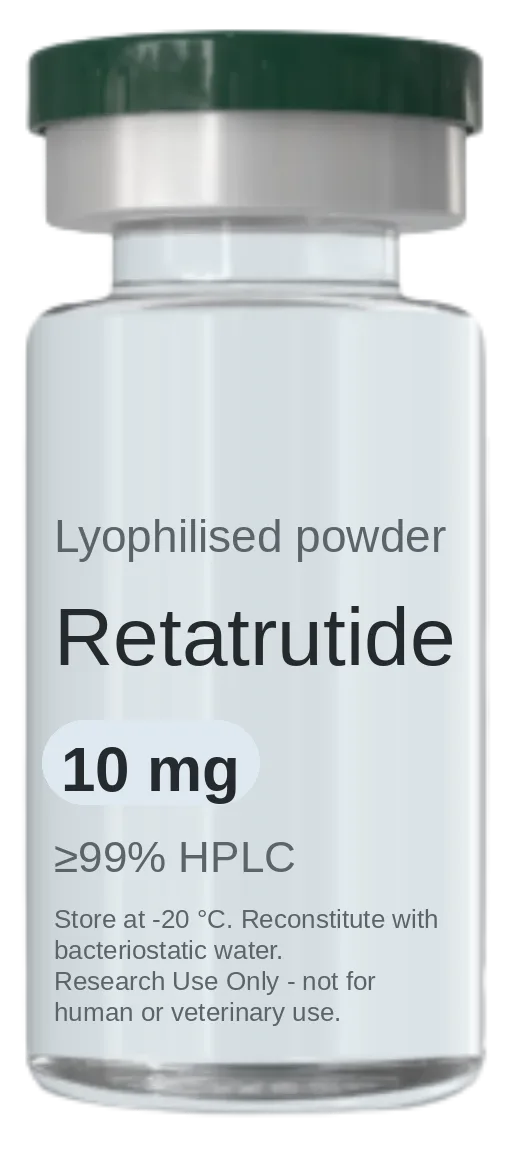
Retatrutide
Triple-agonist metabolic research peptide targeting GLP-1, GIP and glucagon receptors.
- Purity:
- ≥99% HPLC
- Sizes available:
- 10 mg
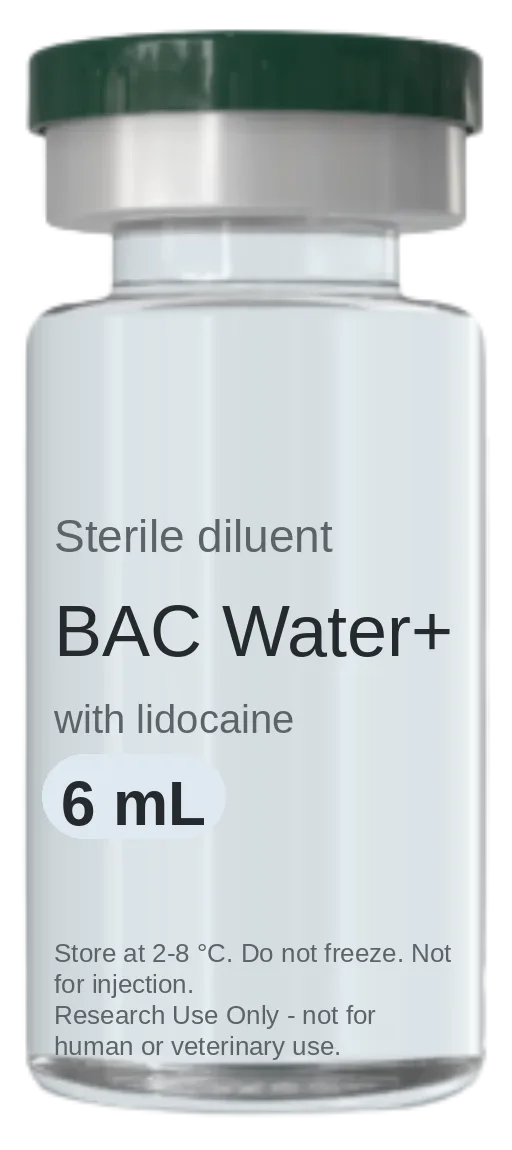
BAC Water+ (6mL con Lidocaína)
Bacteriostatic water with lidocaine, 6 mL, for laboratory reconstitution.
- Purity:
- USP grade
- Sizes available:
- 6 mL
The consultation
One intake that settles goals, history and contraindications alongside compound, quantity, documentation and route — reviewed by a physician before anything ships.
More notes
-
NAD+ vs Selank: What's the Difference?
NAD+ is a cellular coenzyme; Selank is a synthetic peptide derived from tuftsin. Structure, mechanism, and what each one is studied for.
-
Peptide Customs Clearance Cost in Argentina
What determines customs clearance cost for a research peptide shipment to Argentina, and what documentation PeptoClinic prepares for it.
-
AFIP Importer Registration for Peptides?
Whether receiving research peptides in Argentina requires registering as an AFIP importer, and what paperwork actually ships with the package.