
Note
Customs Import Declaration for Peptides
What a customs import declaration is and when a research peptide shipment into Argentina needs one, with the documents that go with it.
A customs import declaration (*destinación de importación*) is the filing submitted to Argentine customs that states under which regime a shipment coming from abroad is entering the country. A research peptide needs one on every single crossing, with no exception: there is no "lab reagent" category that sits outside customs control because of what the material is or how small the shipment is. What varies from case to case is not whether a declaration is required, but which regime applies and which paperwork travels with it.
What a customs import declaration actually is
It is the formal filing, presented to Argentina's Dirección General de Aduanas, that fixes the legal status a shipment will have once it clears the border. It is not a loose form: it determines whether the goods remain in the country permanently, whether they are due to leave again within a set period, whether they are only passing through Argentine territory on the way somewhere else, or whether they sit in bonded storage while their final status is decided.
For anyone receiving a research peptide at a home address or a laboratory, the regime that applies in nearly every case is the definitive import for consumption (*destinación definitiva de importación para consumo*). "For consumption" is customs terminology for "stays in the country permanently" — it has nothing to do with the use the material is put to afterward. A laboratory reagent that stays in Argentina falls under that regime exactly like any other merchandise that does not leave again.
Why a research peptide needs this filing at all
The question that usually comes up is whether a small-volume research reagent can skip the process. It cannot. The obligation to declare a customs regime is not a function of volume or value — it is a function of the shipment crossing a border at all. A single-vial shipment weighs the same, in customs terms, as a large commercial order. What differs is the channel through which it is processed and the documentation demanded, not whether a declaration exists in the first place.
Everything entering the country also needs to be classified under the Mercosur Common Nomenclature (NCM), the code that identifies the merchandise for customs purposes. That code is what determines, among other things, whether an additional intervention from another regulatory body is required before customs releases the shipment. For a peptide declared as a laboratory research reagent, the description of the goods on the commercial invoice and on the packing list has to match that classification exactly — a vague description, or one that implies a different use than the one declared, is the single most common cause of a shipment getting held.
The documents that go with the filing
A customs import file for a research peptide is built from several documents, and they all have to say the same thing:
- Commercial invoice, with the exact description of the goods, the quantity, and the value.
- Packing list, detailing how the shipment is packed.
- Certificate of analysis (CoA) for the batch, issued by the laboratory that ran the quality control. This is the document that backs up which compound is inside and at what purity it was analyzed — something you can check before ordering, because a certificate that can't be verified against the lab that issued it doesn't prove anything.
- Statement of intended use: the goods have to be identified as laboratory research material, not intended for human or veterinary consumption. That statement is what ends up on record in the customs file, and it has to hold up against every other document in the shipment.
A mismatch between what the invoice says, what the certificate of analysis says, and what the statement of intended use says is what gets a shipment flagged. It's rarely about quantity or country of origin — it's almost always about the documents not agreeing with each other.
Definitive import versus the other regimes
Definitive import is not the only regime that exists, even though it's the one that applies to essentially every purchase of research material. The other regimes are built for goods that don't stay in the country permanently:
- Suspensive regime for temporary import: for goods due to leave the country again within a set period, without being consumed or transformed.
- Transit: when the goods are only passing through Argentine territory on the way to another destination.
- Bonded storage: when the goods sit under customs control while a final status is decided.
A peptide ordered for laboratory use, delivered to a home address or an institution and not leaving the country again, doesn't fit any of those three. That's why definitive import is the regime that applies, and it's what shows up on any correctly filed customs record for this kind of shipment.
Who files it
In Argentina, filing a customs import declaration requires a licensed customs broker (*despachante de aduana*), except under the simplified regimes built specifically for low-volume courier or postal shipments. Which of the two channels applies depends on how the shipment is organized on the supplier and carrier side, not on a choice made by whoever is receiving the material. What stays constant across both channels is the same demand for documentary consistency: the invoice, the description of the goods, and the statement of intended use all have to line up.
What PeptoClinic prepares before a shipment goes out
PeptoClinic doesn't sell off a published price list or a cart. Every order is quoted after the technical team reviews the compound, the purity specification, the requested quantity, the batch documentation, and the shipping route — customs included. That means the file that will travel with the shipment — invoice, certificate of analysis, and the exact description of the goods — is put together before dispatch, not improvised once the package is already in transit. You can see how shipping into Argentina works and which compounds are cleared for that destination, or look directly at the research profile for retatrutide as an example of how a specific compound is documented before it's quoted. The full catalog and the shipping page cover the rest of the logistics.
This material is supplied strictly for laboratory research use (Research Use Only). It is not a medicine, a supplement, or a food, it is not approved for human or veterinary consumption, and none of its specifications have been evaluated by ANMAT, the FDA, or any equivalent regulatory authority. The customs documentation that accompanies each shipment reflects exactly that declared use.
Frequently asked questions
Does every import need a customs declaration, regardless of value?
Yes. The obligation to declare a customs regime depends on the shipment crossing a border, not on the value or quantity of the goods. What can vary with volume is the administrative channel used to file it — general regime with a licensed broker, or a simplified courier regime — but not whether the filing itself is required.
Which regime applies to a research peptide that stays in the country?
In nearly every case, definitive import for consumption, which is the regime for goods entering the country permanently and not leaving again.
Is the certificate of analysis (CoA) required for the customs file?
It's the document that backs up which compound is inside the shipment and at what specification it was analyzed, and it forms part of the file alongside the commercial invoice. Without a CoA that matches the description of the goods, the shipment is exposed to being flagged.
Who files the customs import declaration?
A licensed customs broker, except under the simplified regimes set up for courier or postal shipments, where the process can be handled through that specific channel.
What happens if the invoice and the statement of intended use don't match?
It's the most common cause of delays: when the description of the goods on the invoice, the packing list, and the statement of intended use don't say exactly the same thing, the file gets flagged until the discrepancy is resolved.
Does the Mercosur Common Nomenclature (NCM) apply to research peptides?
Yes. Every imported good has to be classified under an NCM code, and that classification is what determines, among other things, whether the shipment needs an additional regulatory intervention before customs releases it.
Does PeptoClinic sell peptides at a published price for direct import?
No. Every order is quoted after the technical team reviews the compound, the specification, the quantity, and the shipping route. There is no published pricing and no shopping cart.
Is this material approved for human use in Argentina?
No. The entire catalog is supplied strictly for laboratory research (Research Use Only). It is not a medicine or a supplement, it is not intended for human or veterinary consumption, and none of its specifications have been evaluated by ANMAT or any equivalent regulatory authority.
Compounds mentioned
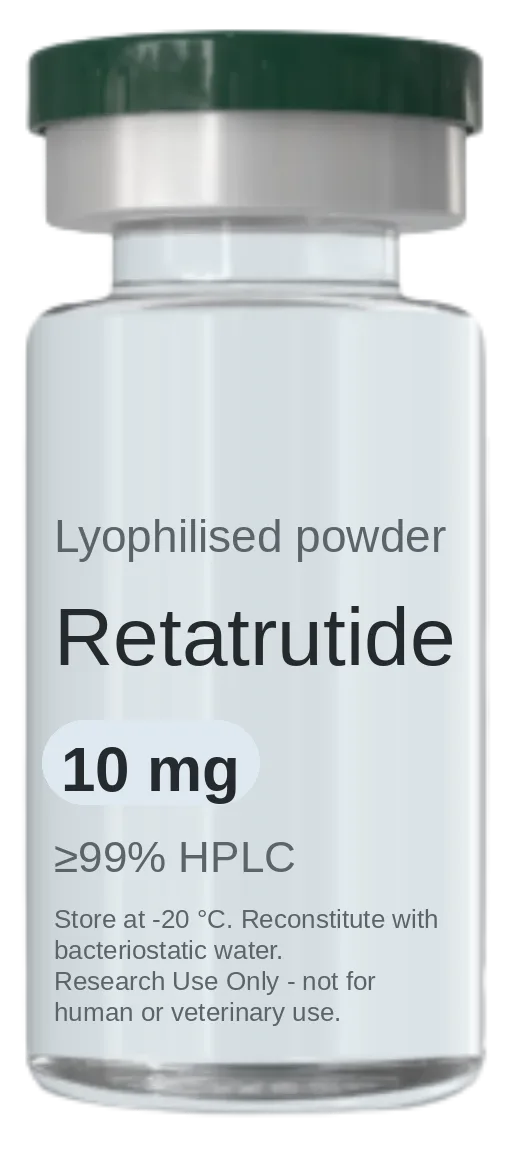
Retatrutide
Triple-agonist metabolic research peptide targeting GLP-1, GIP and glucagon receptors.
- Purity:
- ≥99% HPLC
- Sizes available:
- 10 mg
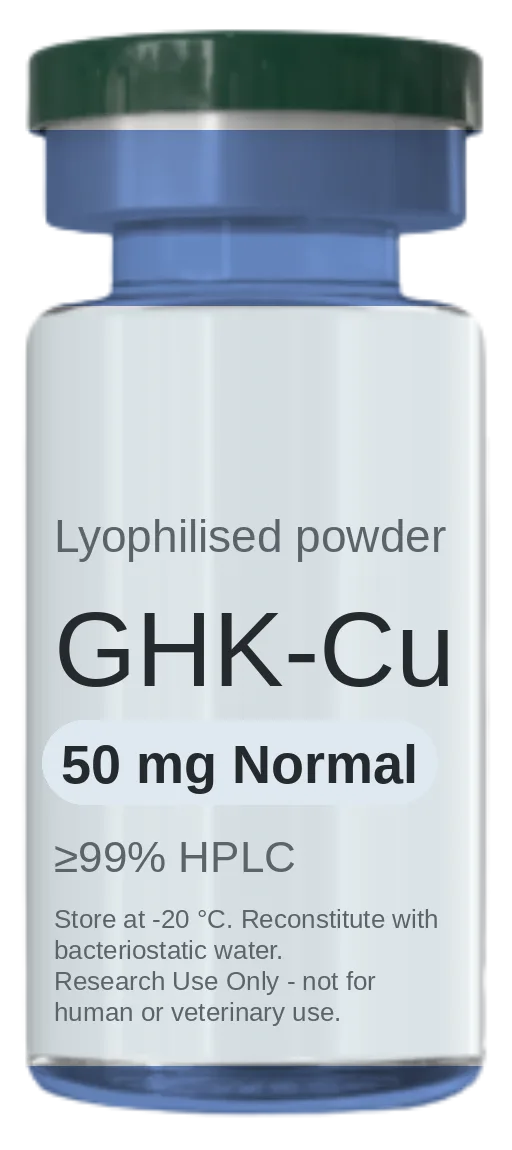
GHK-Cu (Copper Peptide)
Copper-binding tripeptide studied in extracellular matrix and dermal research models.
- Purity:
- ≥99% HPLC
- Sizes available:
- 50 mg Normal – 50 mg Plus
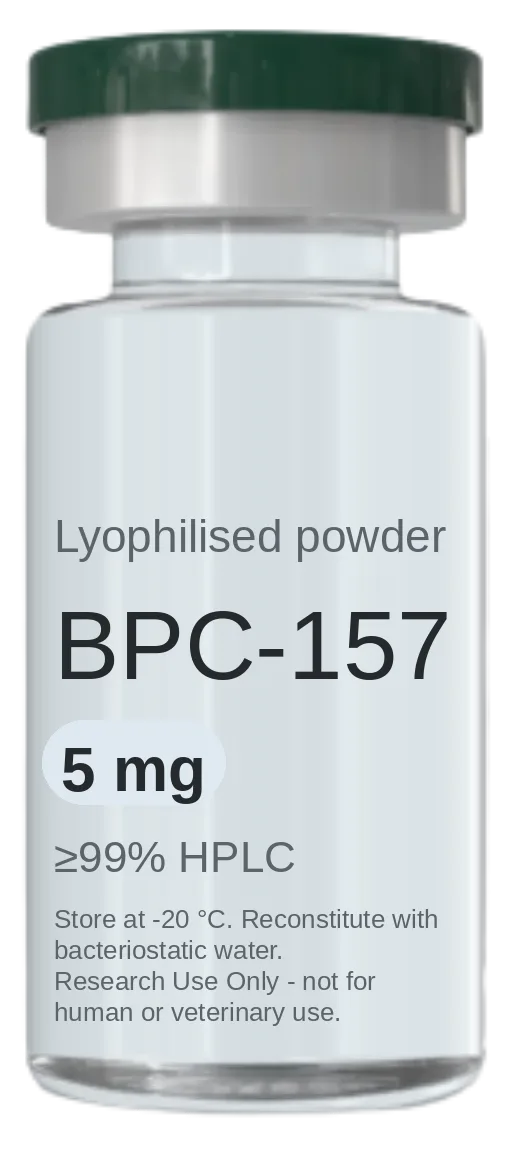
BPC-157 + TB-500
BPC-157 and TB-500 in a single vial — the pairing most studied together in tissue-repair research.
- Purity:
- ≥99% HPLC
- Sizes available:
- 5 mg + 5 mg
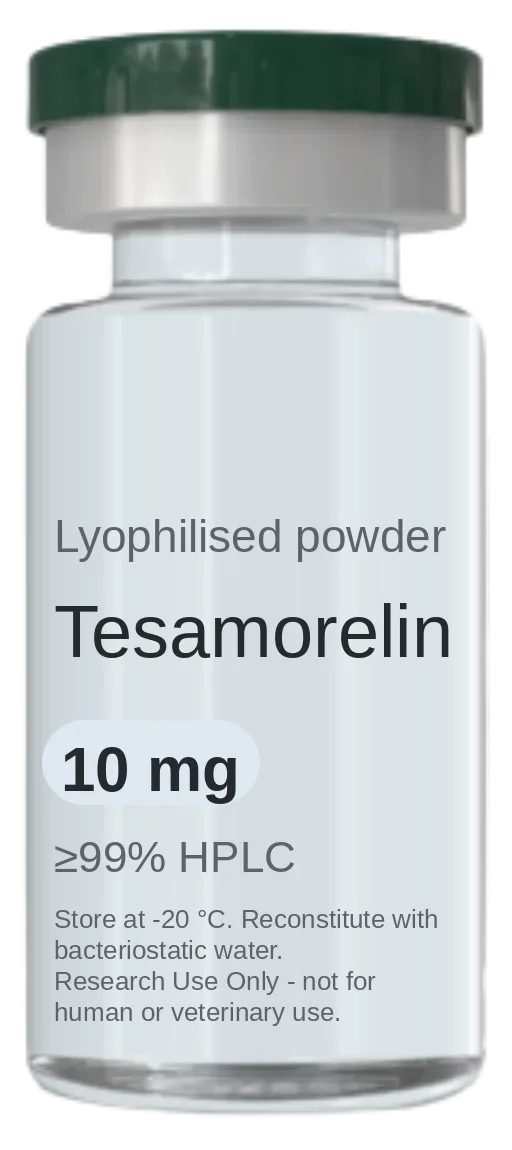
Tesamorelin
Stabilised GHRH(1-44) analogue studied in adipose tissue distribution research.
- Purity:
- ≥99% HPLC
- Sizes available:
- 10 mg – 20 mg
The consultation
One intake that settles goals, history and contraindications alongside compound, quantity, documentation and route — reviewed by a physician before anything ships.
More notes
-
Tesamorelin vs Sermorelin: The Difference
Tesamorelin and sermorelin are both GHRH analogs, but not the same molecule. Here's the structural difference and what the studies on each measure.
-
Peptide Supplier vs. Reseller: What Differs
The real difference is whether someone can name the lab that tested a batch and show the report — or only promise it's pure.
-
MOTS-c or NAD+: What's the Difference
MOTS-c and NAD+ are studied through different mitochondrial pathways; here's what each line of research actually measures.