
Note
Selank vs LL-37: What's the Difference
Selank and LL-37 belong to different peptide families with distinct structures and research fields. Here's how they actually compare.
Selank and LL-37 differ in almost everything that matters: origin, size, structure, and the research field each one gets cited in. Selank is a synthetic heptapeptide, a tuftsin analog developed in a Russian laboratory and studied mainly in neuroscience. LL-37 is a 37-amino-acid peptide the human body itself produces as part of the innate immune system, studied mainly in microbiology and immunology. The two show up in the same search largely because they both get called "research peptides," not because they resemble each other.
What Selank is
Selank is a synthetic seven-amino-acid peptide derived from tuftsin, a natural tetrapeptide of the immune system, with an added sequence that makes it more resistant to enzymatic degradation. It was developed at the Institute of Molecular Genetics in Moscow, and the research literature around it centers on the central nervous system: animal models of anxiety, cognition, and stress response.
Part of that literature also describes activity related to angiotensin-converting enzyme (ACE) and to the modulation of certain cytokines, which places Selank at an intersection of neuroscience and immunology. PeptoClinic includes Selank in its catalog of research material, with the batch documentation and technical specification available for each lot.
What LL-37 is
LL-37 is the only cathelicidin the human body produces, encoded by the CAMP gene and released from a precursor protein called hCAP-18. Unlike Selank, it is not a laboratory design — it is a molecule that circulates naturally in neutrophils, epithelial cells, and other cell types as part of the first line of defense of the innate immune system.
Its 37-amino-acid structure folds into an amphipathic alpha helix on contact with bacterial membranes, which is why the literature studies it mostly in the context of antimicrobial activity. It also appears in research models of tissue healing and immune cell chemotaxis, an area that shares some research interest with peptides like BPC-157, although the pathways described for each in the literature are distinct.
The structural differences
The most concrete difference is one of size and molecular architecture:
- Selank: 7 amino acids, linear sequence, low molecular weight. A small molecule, straightforward to synthesize chemically.
- LL-37: 37 amino acids, folding into an amphipathic alpha helix in the presence of lipid membranes. A considerably larger molecule, and its three-dimensional conformation is part of how it interacts with its biological target.
That size difference is not a minor detail — it shapes the stability of each peptide, how it is synthesized, and how its purity is documented on a certificate of analysis. A heptapeptide and a 37-residue helix do not behave the same way on an HPLC trace or a mass spectrum.
The difference in what the research literature covers
The other difference — the one that matters most to someone sourcing material for their own research program — is the field each peptide is cited in:
- Selank is cited in studies on anxiety, memory, neuroplasticity, and stress response, with a focus on the central nervous system.
- LL-37 is cited in studies on antimicrobial activity against bacteria, fungi, and some viruses, along with its role in innate immune response and tissue repair processes.
In practice, these are two separate research lines that rarely intersect. Choosing between them depends entirely on the question a laboratory is investigating, not on which one is "stronger" or "more effective" — they are molecules with different study objectives, not versions of each other.
Why they turn up together in searches
It is common for someone to search "Selank vs LL-37" because they are actually comparing two lists of peptides seen on different sites, without any real structural or functional relationship between the two. The same thing happens with other frequent comparisons in the catalog, such as Selank against Semax — there the comparison makes more sense, because both are nootropic peptides of Russian origin with a shared development history. With LL-37 that closeness doesn't exist: the only thing the two have in common is that both get sold as research material in lyophilized vials.
Documentation and purity
Any peptide used in a serious research program needs traceability: which batch it came from, which laboratory analyzed it, and what purity was reported. The standard PeptoClinic applies to the research peptides in its catalog is purity of 99% or higher by HPLC, with corresponding batch documentation available on request. The quality page explains how to read a certificate of analysis and what to check before accepting a lot.
LL-37 is not currently part of PeptoClinic's catalog. If a research program requires that specific molecule, the same documentation — a certificate of analysis with reported purity and laboratory verification — should be requested from any supplier offering it, applying the same standard that would apply to Selank or to any other catalog peptide.
Laboratory research material only
Selank, LL-37, and the other peptides mentioned in this article are described here within the frame of published scientific literature. This material is supplied strictly for Research Use Only (RUO): in vitro and laboratory research. It is not a drug, a supplement, or a food, it is not approved for human or veterinary consumption, and none of these statements have been evaluated by the FDA, ANMAT, or any equivalent authority. Anyone sourcing research material for Argentina receives, along with the quote, the customs documentation prepared specifically for that purpose — laboratory reference material.
Frequently asked questions
Can Selank and LL-37 be compared by potency?
No, because they investigate different biological phenomena. Selank appears in central nervous system literature and LL-37 in antimicrobial and innate immunity literature; there is no common potency scale between peptides that act on such different systems.
Is LL-37 synthetic like Selank?
The LL-37 sequence synthesized in a laboratory replicates the one the human body naturally produces from the CAMP gene, while Selank is a synthetic design that does not exist as such in nature — a tuftsin analog with modifications aimed at greater stability.
Why isn't LL-37 in PeptoClinic's catalog?
PeptoClinic's catalog currently includes the research peptides listed on the [catalog](/en/catalog/) page, and LL-37 is not part of that selection at this time.
Does Selank have a published certificate of analysis?
Every Selank lot PeptoClinic ships carries traceability documentation. For the specific detail of certificates of analysis published by an external laboratory, the [quality](/en/quality/) page explains what documentation accompanies each compound.
Can Selank and LL-37 be studied in the same protocol?
Each research protocol defines which compounds it includes based on the question it is trying to answer. Since these are peptides with different mechanisms and study fields, that decision depends on each laboratory's experimental design, not on any general compatibility between the two.
Which of the two peptides has more published literature?
Both have published literature, but in different fields: LL-37 has been studied extensively in microbiology and immunology for more than two decades, while Selank has a narrower body of research, concentrated in neuroscience and developed mainly in Russia.
Does PeptoClinic ship research peptides to Argentina?
Yes. PeptoClinic quotes and ships research material to Argentina, among other countries in the region, with the corresponding customs documentation prepared as laboratory reference material.
What format does the quoted Selank come in?
The Selank PeptoClinic quotes is supplied in a vial, as lyophilized powder, the same format as the rest of the research peptides in the catalog.
Compounds mentioned
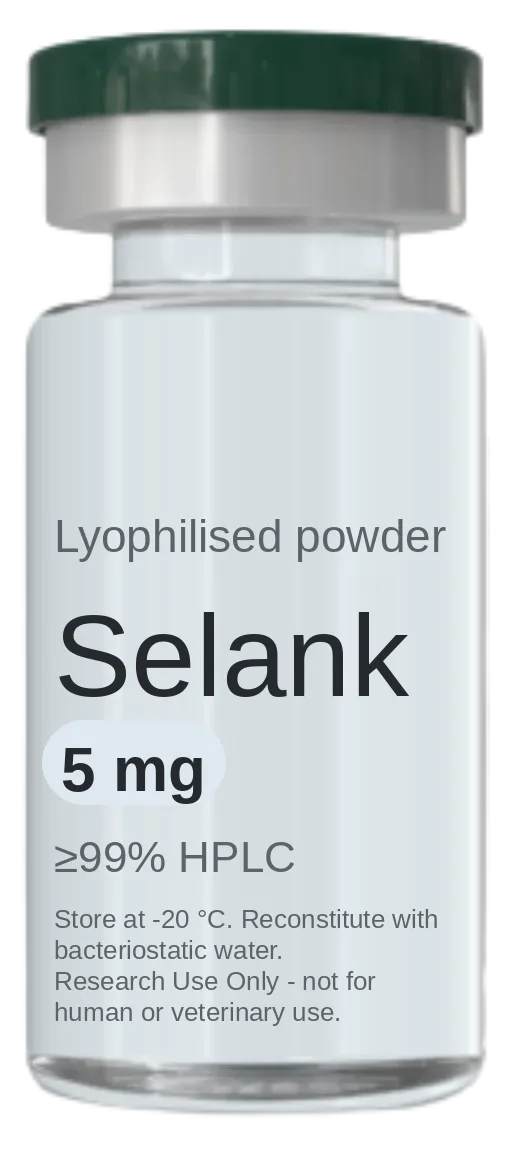
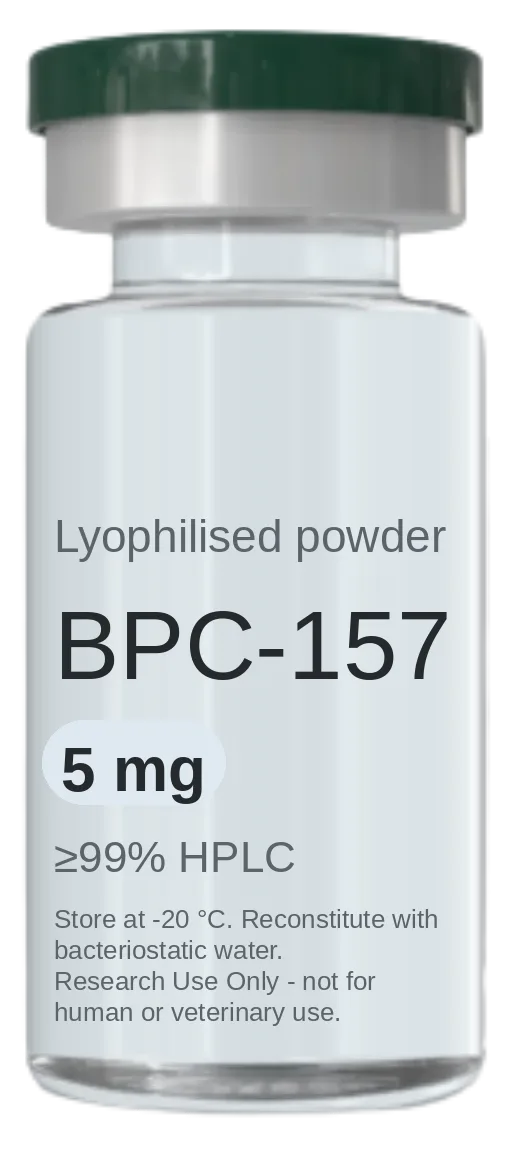
BPC-157 + TB-500
BPC-157 and TB-500 in a single vial — the pairing most studied together in tissue-repair research.
- Purity:
- ≥99% HPLC
- Sizes available:
- 5 mg + 5 mg
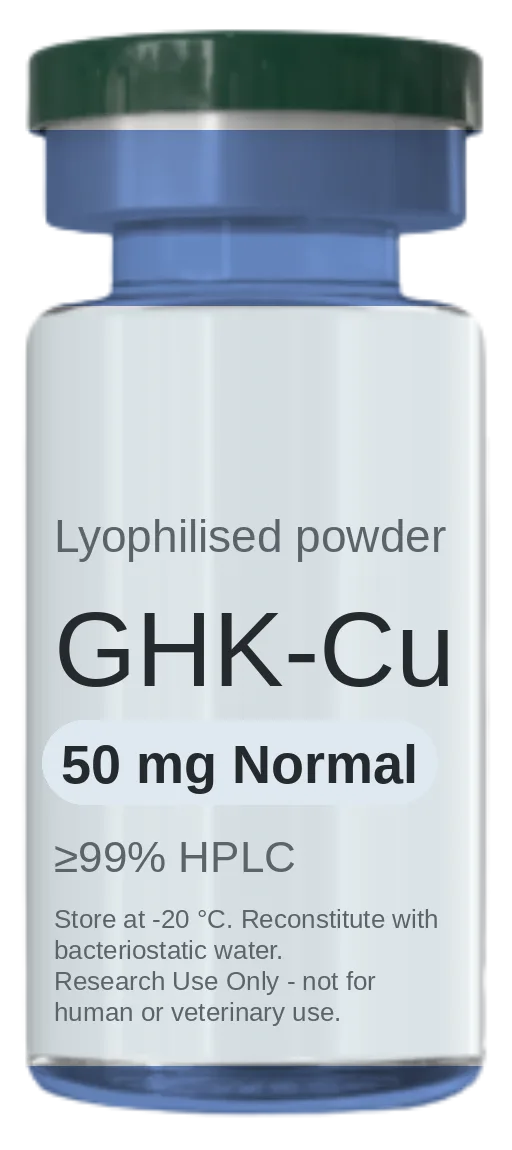
GHK-Cu (Copper Peptide)
Copper-binding tripeptide studied in extracellular matrix and dermal research models.
- Purity:
- ≥99% HPLC
- Sizes available:
- 50 mg Normal – 50 mg Plus
The consultation
One intake that settles goals, history and contraindications alongside compound, quantity, documentation and route — reviewed by a physician before anything ships.
More notes
-
Temporary Import Regime & Peptides
Temporary import covers goods that leave the country again; a research peptide shipment stays and gets used up.
-
Retatrutide vs GHK-Cu: What's the Difference
Retatrutide and GHK-Cu are different molecules studied for different reasons. Here's what each investigates and what documentation backs a batch.
-
Invoiced vs. Unbilled Peptide Suppliers
What changes when a research peptide supplier invoices the transaction versus one that takes payment and leaves no paper trail.