
Note
Temporary Import Regime & Peptides
Temporary import covers goods that leave the country again; a research peptide shipment stays and gets used up.
Temporary import is a customs regime that lets goods enter a country without paying the duties of a permanent import, in exchange for a specific commitment: the goods leave again, in the same condition they arrived in, within a set deadline. A shipment of research peptides does not fit that description, because the material does not leave again — it gets used, stored, or consumed in the lab that ordered it. The regime that actually applies to a shipment bound for Argentina is import for consumption, with the paperwork drawn up to reflect what the contents actually are: laboratory reference material.
What the temporary import regime actually is
The logic behind temporary import is straightforward: some goods need to enter a country for a limited time and then leave again, without that counting as a permanent trade transaction. The typical examples are machinery brought in for a specific construction job, filming equipment arriving for a shoot, professional instruments a technician carries in for one assignment, or samples displayed at a trade fair and then shipped back to origin. In every one of those cases the good keeps its identity: it enters, serves a function, and exits the country the way it came in.
That condition — the goods have to leave again, unchanged and unconsumed — is what defines the regime, more than the type of product involved. So it is not enough to ask "is this a lab reagent?" to decide whether the regime applies. The right question is whether the good is going to be re-exported, or whether it stays and gets used here.
Why it does not apply to a research peptide shipment
A vial of lyophilised peptide arriving at an Argentine lab is not passing through. It gets reconstituted, used in an assay, stored for a later test, or used up entirely. In no realistic scenario does that vial cross the border again in the same state it arrived in — and that is exactly the condition temporary import requires. A consumable reagent is, by definition, not re-exportable: it gets consumed as part of the research work that prompted the order in the first place.
This is not a reading unique to this site — it is the structural logic of the regime itself. Temporary import is built for capital goods or equipment that travel with a person or a project and return with it, not for supplies that get absorbed into whatever process receives them. Trying to fit a research shipment into that box does not simplify anything — it complicates it, because it forces a declared re-export commitment that nobody will be able to honor.
What regime actually applies
The regime that applies to a shipment that stays in the country is import for consumption (also called permanent import). It is the standard regime for any goods entering to stay, and it is the one used on the customs paperwork for an order bound for Argentina: the contents are declared for what they are, laboratory reference material, with the compound and quantity specified, with no re-export commitment attached anywhere.
The practical difference is this: temporary import assumes the good leaves again at some future point; import for consumption assumes no such thing, because the good becomes part of the destination country's stock. A research order falls into the second category almost by definition, since the whole point of the shipment is for the material to end up available in the lab that requested it.
What it means to declare the shipment as laboratory reference material
A customs declaration does not describe what the recipient plans to do with something later — it describes the product as it is at the moment it crosses the border. A research peptide, in its vial-of-lyophilised-powder format, is declared as exactly that: a research reference compound, with no declared therapeutic, consumer or commercial use. That description is what determines the customs treatment, not whatever timeline the recipient has in mind for using it.
The shipping format backs that description up. The material travels as lyophilised powder in a sealed vial, and that format is stable at room temperature for weeks — the logistics behind how it ships are built around that fact, with no cold chain needed in transit. Cold only becomes relevant after the vial has arrived, and above all if the material gets reconstituted for an assay; up to that point, what crosses customs is a stable solid, not a solution with special storage requirements.
The paperwork that actually matters: the certificate of analysis
What travels with each batch is not a re-export commitment — it is the traceability of what the compound is and how pure it is. Every order references an independent laboratory's report on that specific batch, checkable on the quality page, where the methodology and result are laid out. That is the documentation a researcher needs to decide whether a compound fits their protocol — not a temporary-import filing that has no bearing on the type of goods actually being received.
A typical order to an Argentine lab might include compounds like retatrutide or BPC-157, always catalogued and shipped for what they are: research material, with its provenance documentation, with no connection to a regime built for goods that are supposed to leave the country again.
The material is for laboratory research only
Everything quoted in this catalogue is intended strictly for in vitro and laboratory research (RUO, Research Use Only). Nothing shipped is a medicine, a supplement or a food, and nothing is approved or intended for human or veterinary consumption, diagnosis or treatment. No claims about these compounds have been evaluated by ANMAT, the FDA, or any equivalent authority. That status — RUO, no consumer destination — is exactly what makes the temporary-import framing beside the point here: there is no therapeutic use and no "enters and leaves" cycle to declare, just a research input that stays in the lab that ordered it.
Frequently asked questions
¿Cuál es la diferencia central entre importación temporaria e importación para consumo?
Temporary import requires the goods to leave the country again, unchanged, within a set deadline; import for consumption is the route for goods that stay in the destination country with no such re-export commitment. A shipment that is going to be used, reconstituted or consumed in a lab falls into the second category, because there is no scenario where that vial leaves again the way it arrived.
¿Por qué alguien podría pensar que la importación temporaria aplica a un envío de investigación?
Because the word "temporary" sounds like it applies to anything that is not permanent, and a lab reagent can look like something "in transit" before it turns into assay results. But the regime does not measure how long the good's use takes inside the country — it measures whether the physical good is going to be re-exported. A compound consumed in an experiment does not meet that condition, no matter how much or how little time it spends in the lab.
¿Un laboratorio necesita algún permiso especial de ANMAT para recibir péptidos de investigación?
There is no ANMAT approval process that applies here, because these compounds are not medicines and are not intended for human or veterinary use. No claim in this catalogue has been evaluated by ANMAT or an equivalent authority. What does accompany every order is documentation identifying the material as RUO and the laboratory report on the batch's purity.
¿Qué pasa si un envío se clasifica erróneamente bajo el régimen de importación temporaria?
Misclassifying the regime creates a structural problem: temporary import implies a commitment to re-export the goods within a deadline, and a reagent that gets consumed in a lab cannot meet that commitment. That is why paperwork for a research shipment is drawn up directly under import for consumption, describing the contents for what they are, without routing through a regime that does not fit that type of goods.
¿Qué documentación acompaña un envío hacia la Argentina?
The shipment includes the customs declaration with the compound and quantity specified, and references the independent laboratory report for the corresponding batch, available for review on the quality page. That documentation supports both the correct customs classification and the traceability of the material the lab receives.
¿Los péptidos de investigación necesitan cadena de frío durante el transporte?
Not in the format they ship in. The material travels as lyophilised powder in a sealed vial, stable at room temperature for weeks, so the shipment needs no coolant, no dry ice and no temperature control in transit. Cold storage only becomes relevant after arrival, and in particular if the material is reconstituted for an assay.
¿Qué es exactamente la importación para consumo?
It is the standard customs regime for goods entering a country to stay, with no re-export commitment attached. It is the route that applies to a shipment of research material, because the compound becomes part of the work of the lab that requested it instead of leaving the country again.
¿Cómo se verifica la pureza de un lote antes de pedirlo?
Every batch references a report from an independent laboratory detailing the analytical method used and the purity result found. That information is available on the site's quality page, and it is what a researcher should check before deciding whether a compound fits their protocol.
Compounds mentioned
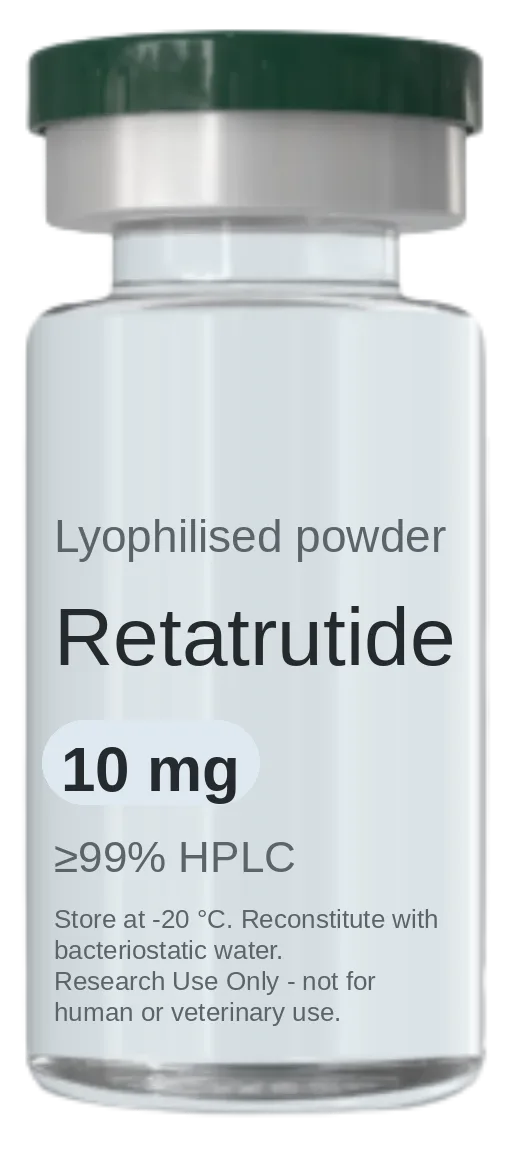
Retatrutide
Triple-agonist metabolic research peptide targeting GLP-1, GIP and glucagon receptors.
- Purity:
- ≥99% HPLC
- Sizes available:
- 10 mg
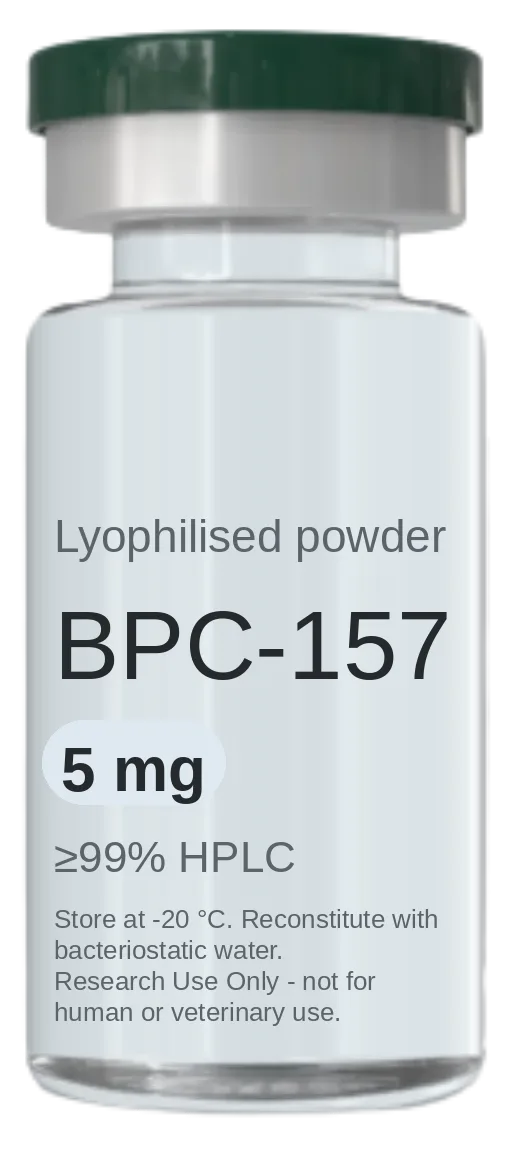
BPC-157 + TB-500
BPC-157 and TB-500 in a single vial — the pairing most studied together in tissue-repair research.
- Purity:
- ≥99% HPLC
- Sizes available:
- 5 mg + 5 mg
GHK-Cu (Copper Peptide)
Copper-binding tripeptide studied in extracellular matrix and dermal research models.
- Purity:
- ≥99% HPLC
- Sizes available:
- 50 mg Normal – 50 mg Plus
The consultation
One intake that settles goals, history and contraindications alongside compound, quantity, documentation and route — reviewed by a physician before anything ships.
More notes
-
Retatrutide vs GHK-Cu: What's the Difference
Retatrutide and GHK-Cu are different molecules studied for different reasons. Here's what each investigates and what documentation backs a batch.
-
Invoiced vs. Unbilled Peptide Suppliers
What changes when a research peptide supplier invoices the transaction versus one that takes payment and leaves no paper trail.
-
Do You Apostille a Certificate of Analysis?
No — a lab's certificate of analysis isn't a public document, so it doesn't get apostilled to import a research peptide into Argentina.