
Note
Retatrutide vs GHK-Cu: What's the Difference
Retatrutide and GHK-Cu are different molecules studied for different reasons. Here's what each investigates and what documentation backs a batch.
Retatrutide and GHK-Cu show up in the same searches, but they investigate different things: retatrutide is a triple receptor agonist studied in the context of body weight and hormonal signaling, while GHK-Cu is a copper-tripeptide complex studied in tissue remodeling and gene expression. They aren't interchangeable and their potency isn't comparable, because they don't share a mechanism or a chemical family.
What retatrutide is
Retatrutide is a triple agonist peptide: it acts on GIP, GLP-1, and glucagon receptors at the same time. That triple action is what sets it apart from single- or dual-pathway molecules, and it's why the compound appears frequently in preclinical research on metabolic regulation and body weight in animal models.
It's a large molecule with a long peptide chain, supplied as lyophilized powder in a vial. PeptoClinic quotes retatrutide for Argentina as laboratory reference material, with batch documentation attached to every quote.
The retatrutide batch analyzed by Janoshik Analytical on April 13, 2026 (task 136921) came back at 99.893% purity on a content of 11.96 mg against a 10 mg label. That's the figure on that specific report — not a catalogue-wide floor.
What GHK-Cu is
GHK-Cu is chemically different at its core: it's a tripeptide (glycyl-histidyl-lysine) bound to a copper ion. It appears in research literature tied to studies on extracellular matrix remodeling and the expression of genes associated with tissue repair in in vitro models.
Unlike retatrutide, which is a long peptide targeting specific hormone receptors, GHK-Cu is a small molecule with a coordinated metal in its structure. That difference in size and mechanism is exactly why neither compound substitutes for the other in a research protocol — they answer different questions.
GHK-Cu also has its own Argentina page, quoted on request the same way as the rest of the catalogue.
The mechanism difference, in one line
Retatrutide acts on membrane receptors from the incretin family (GIP, GLP-1) and on the glucagon receptor. GHK-Cu doesn't act on membrane receptors of that kind: its studied role has to do with modulating gene expression linked to collagen synthesis and the signaling associated with copper as a cofactor. These are two separate biological logics, which is why the literature citing each one rarely overlaps.
Why they're searched together despite not being alike
Both appear in the same type of catalogue — high-purity research peptides — and both require the same class of documentation to verify: a report from an external laboratory backing the declared purity. Someone searching "retatrutide vs GHK-Cu" is usually comparing suppliers, not mechanisms. The right way to compare suppliers is to read the certificate of analysis for each batch, not to assume that two peptides with different names compete for the same use.
To understand what to look for in that document, it's worth reading PeptoClinic's quality page, which explains what a laboratory report certifies and what it doesn't.
What certificate backs each one
PeptoClinic's catalogue includes four published reports from Janoshik Analytical, all dated April 13, 2026:
- Retatrutide (task 136921): 99.893% purity, 11.96 mg content against a 10 mg label.
- MOTS-c (task 136923): 99.669% purity, 11.31 mg content.
- GHK-Cu (task 204977): report on a 50 mg label, verifiable on the laboratory's site.
- BPC-157 + TB-500 (task 204975): 10 mg total, 5 mg of each compound.
The lowest figure published across the whole catalogue is 99.669%, from the MOTS-c report. That's the real floor, not the best available result — and it's the number worth asking for when evaluating a supplier, instead of a generic figure with no report behind it.
How the two are supplied
Both arrive as lyophilized powder in a sealed vial, with desiccant and protected from light. Neither travels in a cold chain: lyophilized powder is stable at room temperature for weeks, so the shipment carries no coolant and no dry ice. Cold only becomes relevant after reconstitution, when the solution is kept between 2 and 8 °C.
Anyone who wants to see the full range of compounds available, including both of these, can check the PeptoClinic catalogue.
Research use only
Both retatrutide and GHK-Cu are supplied strictly for Research Use Only (RUO): in vitro and laboratory studies. Neither is a medicine, a supplement, nor a food, and neither is approved for human or veterinary consumption, diagnosis, or treatment. None of the claims about these compounds have been evaluated by the FDA, ANMAT, or an equivalent authority. No dosing, administration, or protocol guidance for people is provided or can be requested.
How each one is quoted
PeptoClinic doesn't publish prices: each request describes the compound, the quantity, and the destination, and the technical team returns a written quote, normally within one business day. The quoting process is the same for retatrutide, GHK-Cu, and the rest of the catalogue. Anyone who wants the full picture of shipping to the region can check the shipping page.
Frequently asked questions
Can retatrutide and GHK-Cu be combined in the same study?
That depends entirely on each laboratory's experimental design. Since they act through different mechanisms, some research protocols include them separately depending on the variable under evaluation; PeptoClinic doesn't define or recommend combinations, it only supplies the documented material.
Which one has higher purity?
There's no general "higher": each batch has its own report. The retatrutide batch analyzed by Janoshik came back at 99.893%; the GHK-Cu report is available with a verification link on the laboratory's site. Comparing purity means reading the certificate for a specific batch, not a catalogue-wide figure.
Does GHK-Cu contain pure metallic copper?
No. GHK-Cu is a complex where a copper ion is coordinated inside the structure of the glycyl-histidyl-lysine tripeptide. It's not elemental copper or a loose copper salt.
Does retatrutide act on a single receptor?
No. It's a triple agonist: it acts on GIP, GLP-1, and glucagon receptors simultaneously. That's precisely the feature that sets it apart from single- or dual-pathway agonists in the literature.
Do both come in the same format?
Yes, both are supplied as lyophilized powder in a sealed vial. The pen format is announced but not orderable — waitlist only.
What document accompanies a batch of either one?
A report from an external laboratory — in this catalogue, Janoshik Analytical — with the analysis date and the purity result. Two of the four published reports also include a direct verification link on the laboratory's site.
Can both be requested in the same quote?
Yes, a single request can include several compounds from the catalogue. The technical team returns a combined quote detailing each item, its documentation, and the shipping destination.
Is there a Spanish version of this comparison?
The site keeps mirrored content in English and Spanish for the whole catalogue, including retatrutide and GHK-Cu, with the same documentary basis in both languages.
Compounds mentioned
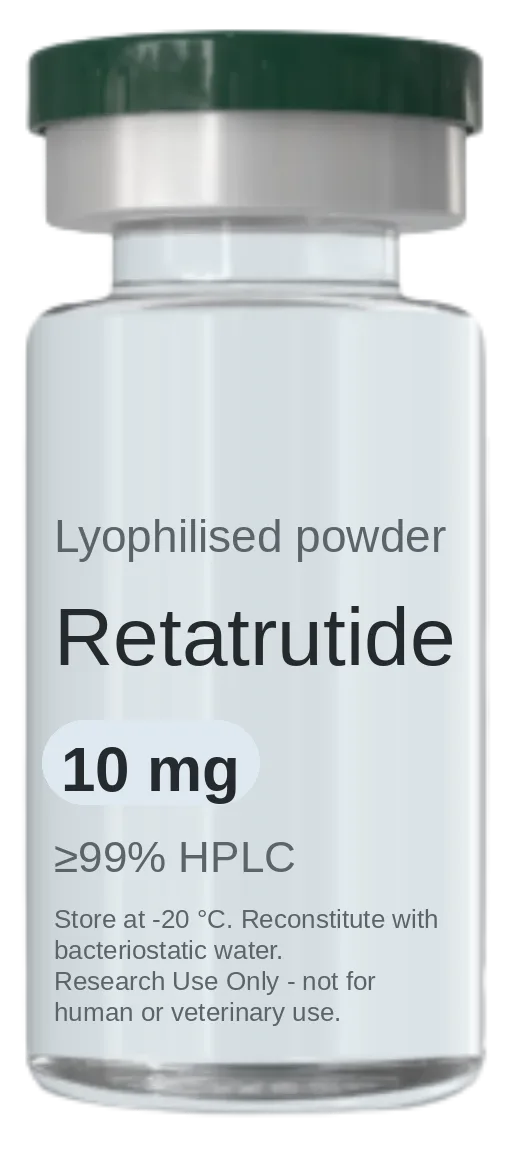
Retatrutide
Triple-agonist metabolic research peptide targeting GLP-1, GIP and glucagon receptors.
- Purity:
- ≥99% HPLC
- Sizes available:
- 10 mg
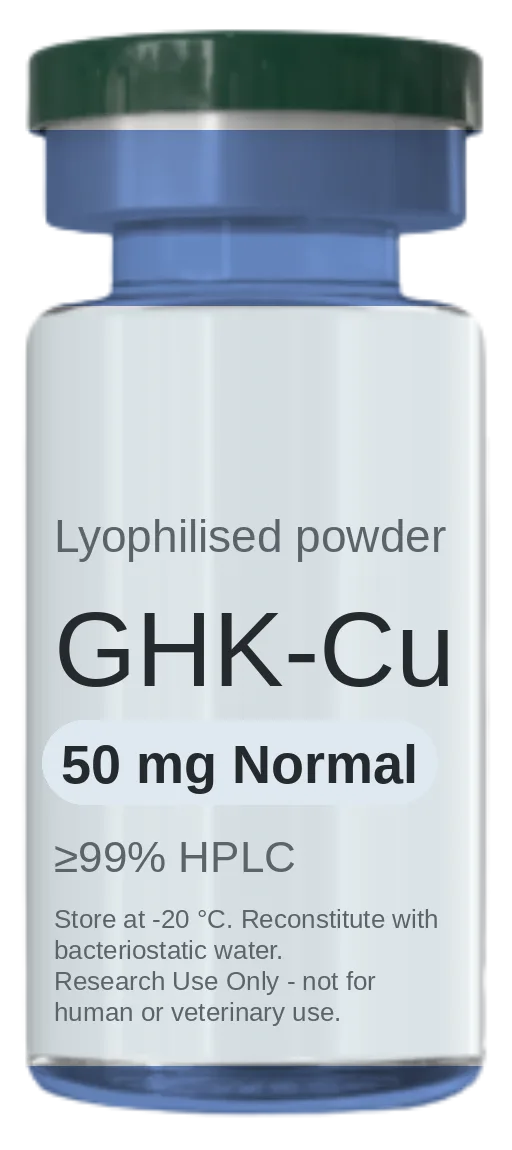
GHK-Cu (Copper Peptide)
Copper-binding tripeptide studied in extracellular matrix and dermal research models.
- Purity:
- ≥99% HPLC
- Sizes available:
- 50 mg Normal – 50 mg Plus
BPC-157 + TB-500
BPC-157 and TB-500 in a single vial — the pairing most studied together in tissue-repair research.
- Purity:
- ≥99% HPLC
- Sizes available:
- 5 mg + 5 mg
The consultation
One intake that settles goals, history and contraindications alongside compound, quantity, documentation and route — reviewed by a physician before anything ships.
More notes
-
Temporary Import Regime & Peptides
Temporary import covers goods that leave the country again; a research peptide shipment stays and gets used up.
-
Invoiced vs. Unbilled Peptide Suppliers
What changes when a research peptide supplier invoices the transaction versus one that takes payment and leaves no paper trail.
-
Do You Apostille a Certificate of Analysis?
No — a lab's certificate of analysis isn't a public document, so it doesn't get apostilled to import a research peptide into Argentina.