Note
Semaglutide vs. Wegovy: The Difference
By the PeptoClinic editorial team · Medically reviewed by Dr. Emily Parker
Semaglutide is the peptide; Wegovy is Novo Nordisk's brand name for it, approved by the FDA for weight management.
Semaglutide is the active peptide molecule. Wegovy is the brand name Novo Nordisk gave to a specific semaglutide product, at a specific weekly dose, approved by the FDA for a specific use: chronic weight management. They aren't two different drugs competing with each other — Wegovy *is* semaglutide, sold under one of its three brand names, at the dose and in the delivery device studied for weight loss rather than diabetes.
The confusion is understandable. The same molecule shows up under three names depending on what it's being used for and how it's delivered, and a semaglutide vial sold for research is a fourth thing entirely, distinct from all three branded products.
Semaglutide vs. Wegovy, side by side
| Aspect | Semaglutide | Wegovy |
|---|---|---|
| What it is | The GLP-1 receptor agonist peptide itself | Novo Nordisk's brand name for semaglutide at the weekly dose studied for weight management |
| Mechanism | Binds and activates the GLP-1 receptor | Same mechanism — semaglutide is the active ingredient in the injector |
| Other brand names for the same molecule | Ozempic (lower weekly dose, type 2 diabetes), Rybelsus (oral tablet, type 2 diabetes) | None — Wegovy is specific to the weight-management dose and indication |
| Pivotal trial | Wilding et al., NEJM 2021 (STEP 1) studied semaglutide 2.4 mg once weekly against placebo over 68 weeks | Wegovy is the commercial product built on that same 2.4 mg weekly regimen |
| FDA status | Approved under Ozempic, Wegovy and Rybelsus, each for a distinct indication | Approved by the FDA specifically for chronic weight management |
| Research-grade vial sold by PeptoClinic | Same peptide sequence, supplied as a sealed vial of lyophilised powder | Is not Wegovy and is not an approved product |
How semaglutide works as a GLP-1 receptor agonist
Semaglutide is a GLP-1 receptor agonist: it binds the same receptor that the gut hormone glucagon-like peptide-1 activates after a meal. That receptor sits on cells in the pancreas, the gut and parts of the brain involved in appetite regulation, which is why the same molecule has utility in both glycemic control and weight management — two different clinical questions answered by the same biology.
Wilding et al. (NEJM, 2021) is the trial most directly behind Wegovy: the STEP 1 study randomized adults with overweight or obesity to semaglutide 2.4 mg once weekly or placebo and reported significantly greater body weight reduction in the semaglutide group over 68 weeks. That trial, and the dose it tested, is what Novo Nordisk later brought to market as Wegovy.
Wegovy, Ozempic, Rybelsus: same molecule, three products
This is where most of the "semaglutide vs. Wegovy" confusion actually lives — not between semaglutide and Wegovy, but between the three brand names attached to semaglutide:
- Ozempic — a lower weekly dose, approved for type 2 diabetes.
- Wegovy — a higher weekly dose, approved for chronic weight management.
- Rybelsus — an oral tablet form, approved for type 2 diabetes.
All three contain semaglutide. None of them is a different molecule competing with the others; they're the same active ingredient packaged, dosed and labeled for different approved uses. A patient asking a pharmacist "is Wegovy stronger than Ozempic" is really asking about the dose on the label, not about a different drug.
Is semaglutide approved by the FDA?
Semaglutide received FDA approval under all three of those brand names — Ozempic, Wegovy and Rybelsus — each tied to its own indication and dosing regimen. The underlying evidence base for the weight-management use is the STEP program, including the STEP 1 trial above.
What is not approved by the FDA is semaglutide sold outside of those three named, manufactured products — including compounded versions and research-grade vials of the peptide itself. The molecule being the same one studied in STEP 1 does not make every vial of it an approved drug; approval attaches to the specific manufactured product, its manufacturing process and its labeling, not to the peptide sequence in the abstract.
What a semaglutide vial from PeptoClinic actually is
The semaglutide PeptoClinic catalogs is supplied as sealed vials of lyophilised powder, for research purposes — it is not Wegovy, it is not Ozempic, and it is not approved by the FDA under any name. It's the same peptide sequence studied in the trials cited above, held to the purity standard PeptoClinic applies across its catalog: ≥99% HPLC, verified by laboratory analysis rather than asserted on a label.
Wegovy's approval covers a specific injector, manufactured by Novo Nordisk under its own quality systems, carrying its own labeling for patient use. A research vial of semaglutide carries none of that — not the device, not the FDA-reviewed labeling, not the indication. The two shouldn't be treated as interchangeable just because the peptide sequence is identical. Anyone comparing options against a pricing sheet is comparing a branded, approved pharmaceutical product against a research material, not two versions of the same purchase.
Compounded semaglutide and the FDA's warning
A separate category — compounded semaglutide, sold by some pharmacies as an alternative to the branded products when they're in short supply — is something the FDA has specifically addressed. The agency's page on unapproved and compounded GLP-1 drugs lays out its concerns about these products, including inconsistent sourcing and dosing accuracy across compounders. That guidance is specifically about pharmacy-compounded drug products intended for patient use, not about research material; the two shouldn't be conflated, but the underlying point — that only the branded, FDA-reviewed product carries the agency's review of manufacturing and labeling — applies to both categories of alternative.

Medical review
Dr. Emily Parker

Reviews every consultation as it comes in
Frequently asked questions
Is Wegovy just semaglutide?
Yes. Wegovy is Novo Nordisk's brand name for semaglutide formulated and dosed specifically for chronic weight management; the active ingredient is the same molecule sold under the Ozempic and Rybelsus names for different uses.
What's the difference between Wegovy and Ozempic?
Both contain semaglutide. Ozempic is approved for type 2 diabetes at a lower weekly dose; Wegovy is approved for chronic weight management at a higher weekly dose, the one studied in [the STEP 1 trial](https://pubmed.ncbi.nlm.nih.gov/33567185/).
Is semaglutide approved by the FDA?
Semaglutide has received FDA approval under three brand names — Ozempic, Wegovy and Rybelsus — each for a distinct indication. Semaglutide sold outside those named manufactured products, including compounded or research material, is not approved by the FDA.
Is compounded semaglutide the same as Wegovy?
No. Compounded semaglutide is prepared by a pharmacy rather than manufactured and labeled by Novo Nordisk under its approved process. The FDA has published its [concerns about unapproved and compounded GLP-1 drugs](https://www.fda.gov/drugs/postmarket-drug-safety-information-patients-and-providers/fdas-concerns-unapproved-glp-1-drugs-used-weight-loss), including sourcing and dosing consistency.
Is research-grade semaglutide legal in the United States?
Semaglutide itself is not a controlled substance; the legal distinction is between an FDA-approved manufactured product sold under its label and a research peptide, which is not the same product and is not reviewed or approved by the FDA.
What dose of semaglutide did the Wegovy trial study?
The [STEP 1 trial (Wilding et al., NEJM 2021)](https://pubmed.ncbi.nlm.nih.gov/33567185/) studied semaglutide 2.4 mg once weekly against placebo over 68 weeks, and that regimen is what Novo Nordisk later brought to market as Wegovy.
Does PeptoClinic sell Wegovy?
No. PeptoClinic's catalog lists [semaglutide](/en/product/semaglutide/) as a research peptide supplied in vials of lyophilised powder, which is not the Wegovy injector and carries no FDA approval of its own.
Where can I see what semaglutide costs from PeptoClinic?
Current pricing for every compound in the catalog, including semaglutide, is published on the [pricing page](/en/pricing/).
Compounds mentioned
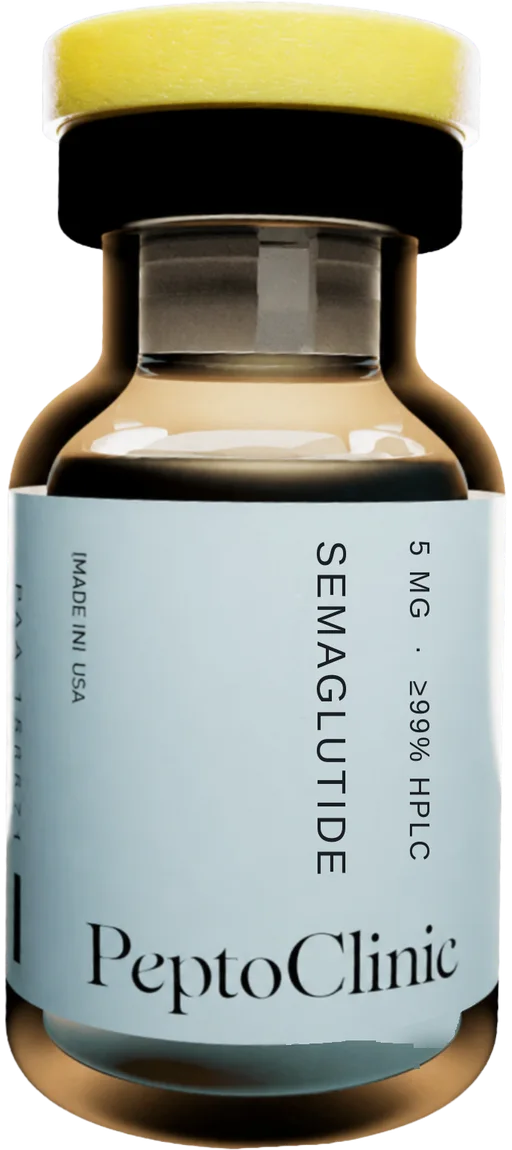
Semaglutide
GLP-1 receptor agonist, the molecule in Ozempic and Wegovy.
- Purity:
- ≥99% HPLC
- Sizes available:
- 5 mg
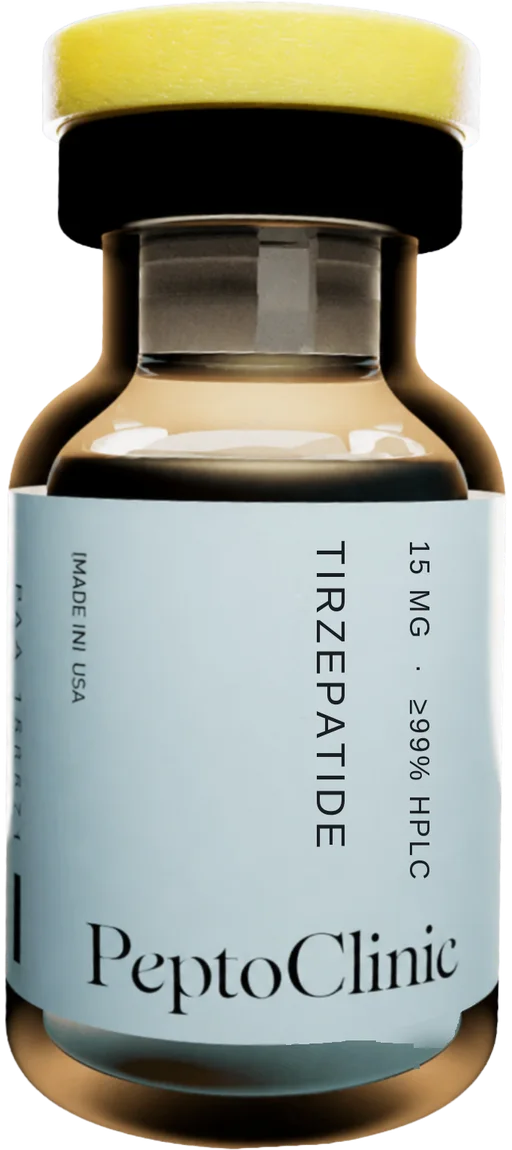
Tirzepatide
Dual GIP and GLP-1 receptor agonist, the molecule in Mounjaro and Zepbound.
- Purity:
- ≥99% HPLC
- Sizes available:
- 15 mg – 30 mg
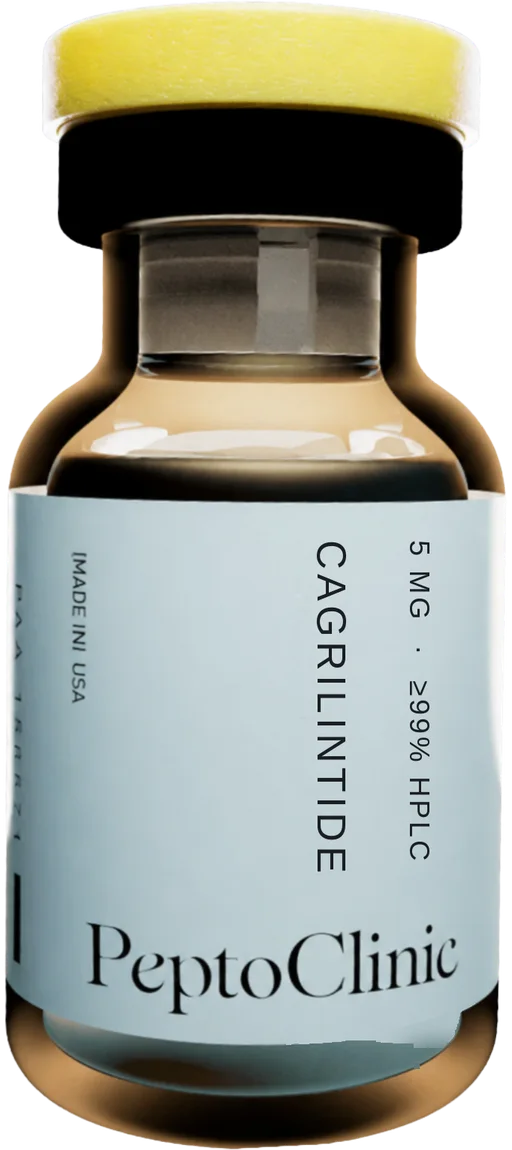
Cagrilintide
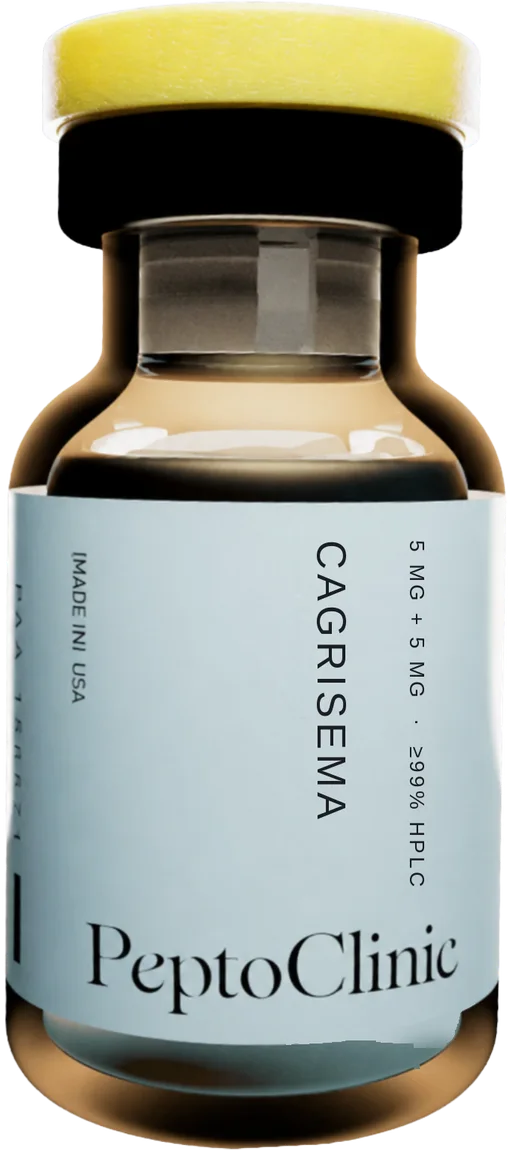
Long-acting amylin analogue, the cagrilintide half of CagriSema.
- Purity:
- ≥99% HPLC
- Sizes available:
- 5 mg
The consultation
One intake that settles goals, history and contraindications alongside compound, quantity, documentation and route — reviewed by a physician before anything ships.
More notes
-
What Is Cagrilintide? Mechanism & Status
Cagrilintide is an amylin analog studied with semaglutide as CagriSema; here's what the phase 3 trials show and its FDA status.
-
CagriSema vs. Cagrilintide
CagriSema pairs cagrilintide with semaglutide. Here is what the REDEFINE trials measured and how the two compounds differ.
-
CagriSema Weight Loss Results Explained
What the REDEFINE trial data show about weight loss on CagriSema, cagrilintide plus semaglutide, and its FDA approval status.
-
Retatrutide vs Wegovy: What's the Difference
Retatrutide is a phase 3 investigational triple agonist, while Wegovy's semaglutide has received FDA approval. Here's how they compare.
-
Tirzepatide vs Semaglutide in the Trials
What SURMOUNT-1 and STEP 1 actually measured for tirzepatide and semaglutide, and how the trial designs differ.