
Note
Tirzepatide vs Semaglutide in the Trials
By the PeptoClinic editorial team · Medically reviewed by Dr. Emily Parker
What SURMOUNT-1 and STEP 1 actually measured for tirzepatide and semaglutide, and how the trial designs differ.
Tirzepatide and semaglutide were tested in separate trial programs with different dosing ranges and different primary endpoints, and the headline weight-loss numbers reported for tirzepatide were larger than those reported for semaglutide — but the two were not run against each other in a single head-to-head obesity trial, so that comparison rests on reading two separate studies side by side rather than one.
How the two trial programs differ
Tirzepatide was tested in SURMOUNT-1, a phase 3 trial in adults with obesity or overweight and at least one weight-related condition, published by Jastreboff et al., NEJM 2022. Semaglutide was tested in STEP 1, a similarly designed phase 3 trial in adults with overweight or obesity, published by Wilding et al., NEJM 2021. Both trials ran 68 weeks, both measured percent change in body weight from baseline as a primary endpoint, and both enrolled participants without type 2 diabetes. Neither trial put the two molecules in the same room.
| Aspect | Tirzepatide (SURMOUNT-1) | Semaglutide (STEP 1) |
|---|---|---|
| Receptor mechanism | Dual agonist: GLP-1 and GIP receptors | Single agonist: GLP-1 receptor only |
| Trial | SURMOUNT-1, phase 3 (Jastreboff et al., NEJM 2022) | STEP 1, phase 3 (Wilding et al., NEJM 2021) |
| Trial duration | 68 weeks | 68 weeks |
| Population | Adults with obesity/overweight plus a weight-related condition, without diabetes | Adults with obesity/overweight, without diabetes |
| Primary endpoint | Percent change in body weight from baseline | Percent change in body weight from baseline |
| FDA approval status (brand) | Zepbound, approved for chronic weight management (2023) | Wegovy, approved for chronic weight management |
| Also approved for type 2 diabetes | Mounjaro | Ozempic |
Because SURMOUNT-1 and STEP 1 are separate trials with separate control arms, any cross-trial comparison of the exact percentages reported is an indirect comparison, not a controlled one. Differences in baseline characteristics, dosing escalation schedules, and trial years can all move a number without reflecting a true difference between the molecules.
Why the mechanisms differ
The difference that trial designers point to is the receptor target. Semaglutide acts on the GLP-1 receptor alone. Tirzepatide is a dual agonist, acting on both the GLP-1 receptor and the GIP receptor, which is the mechanistic rationale the SURMOUNT-1 authors give for testing it separately from single-receptor GLP-1 drugs (Jastreboff et al., NEJM 2022). This is also the reasoning behind testing triple agonists: retatrutide, which adds a third receptor target (glucagon) on top of GLP-1 and GIP, was carried into its own phase 2 trial in adults with obesity by Jastreboff et al., NEJM 2023 and into phase 3 by Jastreboff et al., NEJM 2026, precisely to see whether adding receptor targets changes the outcome measured.
A related question the field has asked is whether combining a different second mechanism — amylin agonism instead of GIP — produces a comparable effect. That is what the CagriSema trials tested: Garvey et al., NEJM 2025 in REDEFINE 1 and Davies et al., NEJM 2025 in REDEFINE 2 both studied the combination of cagrilintide and semaglutide against semaglutide alone and against placebo in adults with overweight or obesity. Readers comparing tirzepatide and semaglutide in the literature will usually run into CagriSema at the same time, since all three programs are asking a version of the same question: does adding a second or third hormone target change the measured outcome beyond a single GLP-1 agonist.
What the trials measured in type 2 diabetes
Both molecules also have a diabetes-specific trial history separate from the obesity trials above. Tirzepatide's diabetes program supports Mounjaro's approval; semaglutide's supports Ozempic's. Those are distinct trial registrations from SURMOUNT-1 and STEP 1, which were designed around weight as the primary outcome in participants largely without diabetes. A reader researching the diabetes indication specifically should look for the diabetes-specific trial registrations on ClinicalTrials.gov rather than assume the obesity-trial numbers transfer.
Regulatory status in the United States
Semaglutide is the active ingredient in two brand products that received FDA approval: Ozempic, approved for type 2 diabetes, and Wegovy, approved for chronic weight management, both made by Novo Nordisk. Tirzepatide is the active ingredient in two brand products that also received FDA approval: Mounjaro, for type 2 diabetes, and Zepbound, approved for chronic weight management in 2023 per the FDA's own announcement, both made by Eli Lilly. Neither of those facts describes the material [PeptoClinic](/en/about/) supplies. PeptoClinic's tirzepatide and semaglutide are not Zepbound, Mounjaro, Wegovy, or Ozempic, and they are not approved by the FDA.
Separately, the FDA has published its own concerns about unapproved and compounded versions of GLP-1 drugs sold for weight loss outside the brand-name products, warning that these products have not been evaluated by the agency for safety, effectiveness, or quality (FDA, concerns about unapproved GLP-1 drugs). That page is worth reading directly before drawing any conclusion about what is or isn't a legal gray area for a given product.
What this means for someone comparing the two
The honest version of "tirzepatide vs semaglutide in the trials" is: two separate phase 3 programs, two separate molecules with different receptor targets, similar trial designs (68 weeks, percent body weight change as the primary endpoint), and different magnitudes of the headline result as reported in each paper independently. Nobody ran a trial where the same investigators randomized the same population to tirzepatide or semaglutide under one protocol and reported one set of numbers. Anyone citing a specific percentage difference between the two is citing an indirect, cross-trial comparison, and should say so.
For a full view of where other receptor-target combinations stand, the full catalog lists what's in active trial programs, and pricing is published for anyone past the research stage and into sourcing.

Medical review
Dr. Emily Parker

Reviews every consultation as it comes in
Frequently asked questions
Did SURMOUNT-1 and STEP 1 enroll the same type of patient?
Both trials enrolled adults with obesity or overweight who did not have type 2 diabetes, and both used body weight change as the primary endpoint over 68 weeks, but they were separate trials run by separate sponsors with their own placebo arms, so differences in the exact populations enrolled are a factor in any comparison of the reported results ([Jastreboff et al., NEJM 2022](https://pubmed.ncbi.nlm.nih.gov/35658024/); [Wilding et al., NEJM 2021](https://pubmed.ncbi.nlm.nih.gov/33567185/)).
Is there a head-to-head trial of tirzepatide against semaglutide?
The trials cited for each molecule's weight-loss data — SURMOUNT-1 for tirzepatide and STEP 1 for semaglutide — were not head-to-head trials against each other; each compared its molecule against placebo within its own study population.
Why does tirzepatide target two receptors instead of one?
Tirzepatide was designed as a dual agonist acting on both the GLP-1 and GIP receptors, a mechanistic approach the SURMOUNT-1 investigators describe as distinct from single-receptor GLP-1 agonists like semaglutide ([Jastreboff et al., NEJM 2022](https://pubmed.ncbi.nlm.nih.gov/35658024/)).
How does retatrutide fit into this comparison?
Retatrutide adds a third receptor target, glucagon, on top of the GLP-1 and GIP targets that tirzepatide uses, and was tested in its own phase 2 and phase 3 trials to evaluate whether the additional mechanism changes the measured outcome ([Jastreboff et al., NEJM 2023](https://pubmed.ncbi.nlm.nih.gov/37366315/); [Jastreboff et al., NEJM 2026](https://pubmed.ncbi.nlm.nih.gov/42814954/)).
Is tirzepatide or semaglutide approved by the FDA?
Both molecules exist as brand products that received FDA approval in the United States: semaglutide as Ozempic (diabetes) and Wegovy (weight management), and tirzepatide as Mounjaro (diabetes) and Zepbound (weight management, approved in 2023). PeptoClinic's material under either name is not those brand products and is not approved by the FDA.
What is CagriSema and how does it relate to this comparison?
CagriSema combines cagrilintide, an amylin receptor agonist, with semaglutide, and was tested against semaglutide alone and against placebo in the REDEFINE 1 and REDEFINE 2 phase 3 trials, asking a similar question to the tirzepatide trials: does adding a second hormone target change the measured result beyond semaglutide by itself ([Garvey et al., NEJM 2025](https://pubmed.ncbi.nlm.nih.gov/40544433/); [Davies et al., NEJM 2025](https://pubmed.ncbi.nlm.nih.gov/40544432/)).
Does the FDA have a position on compounded or non-brand versions of these drugs?
Yes. The FDA has published its concerns specifically about unapproved and compounded GLP-1 products marketed for weight loss, stating these have not been evaluated by the agency for safety, effectiveness, or quality, and that page should be read directly by anyone weighing a non-brand source ([FDA concerns page](https://www.fda.gov/drugs/postmarket-drug-safety-information-patients-and-providers/fdas-concerns-unapproved-glp-1-drugs-used-weight-loss)).
Where can I see the full trial registry for these compounds?
[ClinicalTrials.gov](https://clinicaltrials.gov/search?intr=retatrutide) maintains the public registry of trials for these molecules, including status updates as programs move between phases.
Compounds mentioned
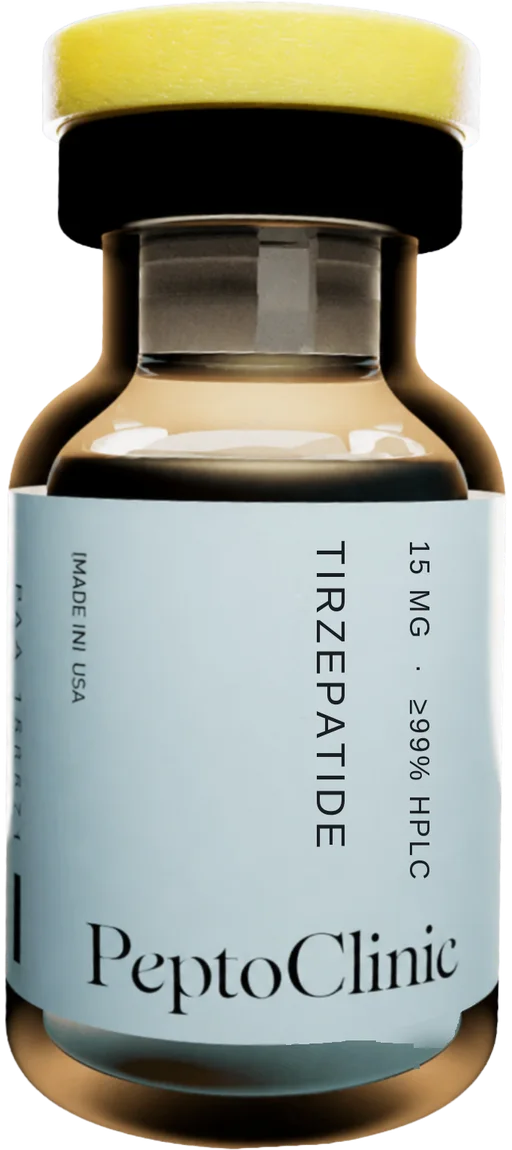
Tirzepatide
Dual GIP and GLP-1 receptor agonist, the molecule in Mounjaro and Zepbound.
- Purity:
- ≥99% HPLC
- Sizes available:
- 15 mg – 30 mg
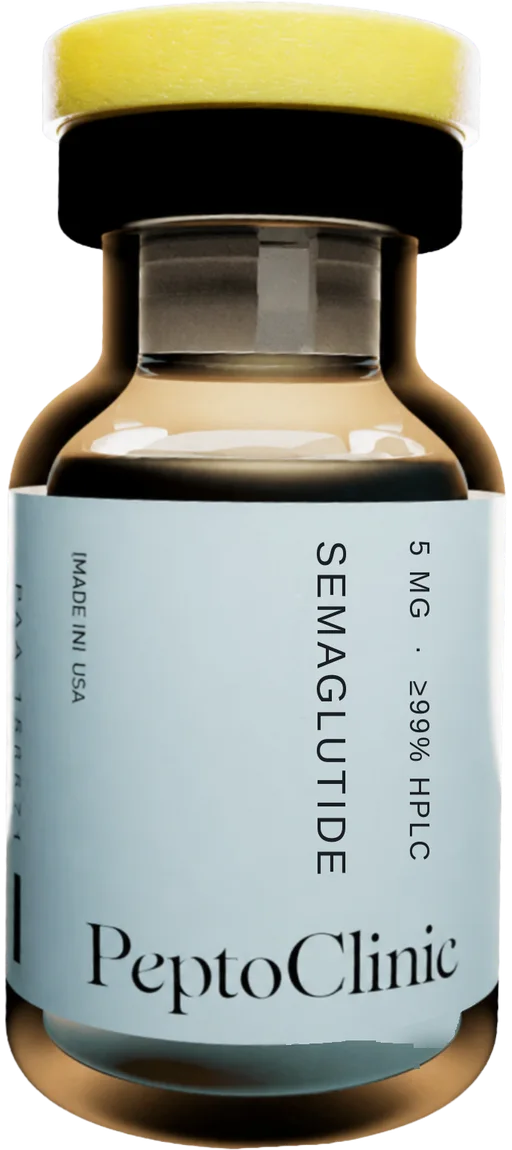
Semaglutide
GLP-1 receptor agonist, the molecule in Ozempic and Wegovy.
- Purity:
- ≥99% HPLC
- Sizes available:
- 5 mg
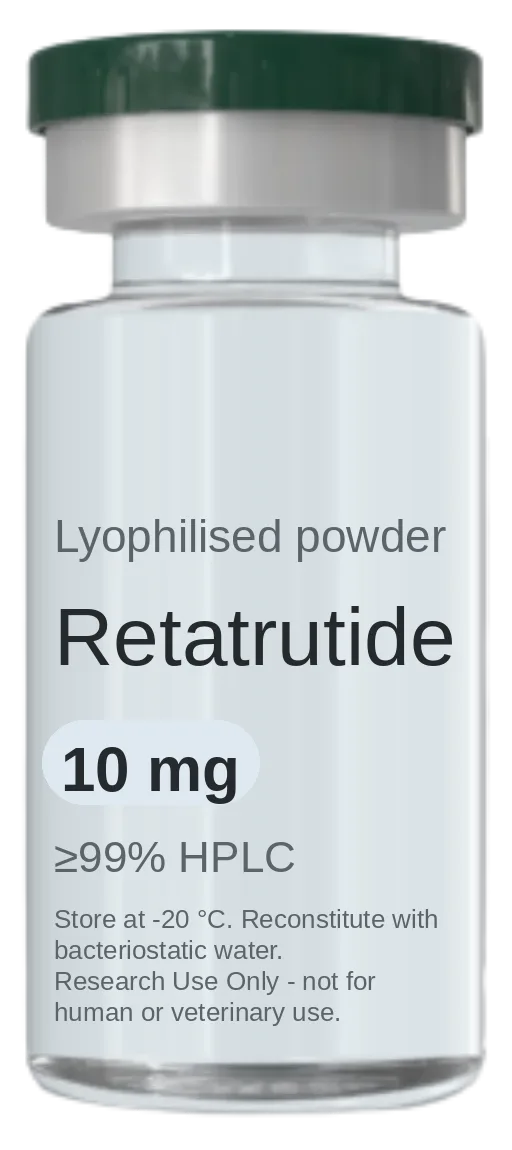
Retatrutide
Triple-agonist metabolic research peptide targeting GLP-1, GIP and glucagon receptors.
- Purity:
- ≥99% HPLC
- Sizes available:
- 10 mg
The consultation
One intake that settles goals, history and contraindications alongside compound, quantity, documentation and route — reviewed by a physician before anything ships.
More notes
-
Compounded Tirzepatide vs Mounjaro
Compounded tirzepatide and Mounjaro share a molecule but not a regulatory status. Here is what separates them.
-
Retatrutide Phase 3 Trials: What We Know
What retatrutide's phase 2 and 3 trials showed, how it compares to tirzepatide and semaglutide, and where FDA approval stands today.
-
Do You Need a Prescription for Retatrutide?
Retatrutide has no FDA-approved product and no prescription exists for it. Here is what its phase 3 status actually means.
-
GLP-1 Agonist vs. Retatrutide Explained
A GLP-1 agonist activates one receptor; retatrutide activates three. Here's the mechanistic difference and its trial phase.
-
Retatrutide vs Wegovy: What's the Difference
Retatrutide is a phase 3 investigational triple agonist, while Wegovy's semaglutide has received FDA approval. Here's how they compare.