
Note
Sermorelin or CJC-1295: What Research Says
A comparison of published research on sermorelin and CJC-1295 without DAC: mechanisms, key studies, and structural differences.
Sermorelin carries a longer published record in humans because it spent years on the market as a regulated pharmaceutical. CJC-1295 without DAC shares the same 29-amino-acid core sequence but incorporates four substitutions that improve enzymatic stability, extending its activity window without changing the mechanism of action. Both peptides work through the same pituitary receptor, and the research places them firmly in the same family of GH secretagogues — though the published data are not equivalent in volume or study design.
Sermorelin: The Reference Molecule and Its Research History
Sermorelin is a synthetic analogue of the active fragment of human GHRH — the first 29 amino acids, which represent the minimum sequence with agonist activity at the GHRH-R receptor on pituitary somatotrophs.
Clinical research focused on two applications: evaluating pituitary function and examining the secretory response in adults with documented GH deficiency. Walker (2006), writing in *Clinical Interventions in Aging*, reviewed the accumulated evidence and noted that sermorelin's plasma half-life — estimated at 10 to 20 minutes — requires frequent stimulation to maintain sustained pulses. That review also argued that this pulsatile profile more faithfully reproduced physiological GHRH secretion than exogenous recombinant GH, which suppresses the hypothalamic-pituitary axis through negative feedback.
Thorner et al. (1997), in the *Journal of Clinical Endocrinology & Metabolism*, published results from a six-month trial in adults with GH deficiency. The group receiving sermorelin showed changes in serum IGF-1 and body composition. The authors attributed those effects to stimulation of the subject's own GH secretion and noted that the magnitude of the response depended on preserved pituitary function.
Serono marketed sermorelin as Geref® in the United States for specific GH deficiency indications. In 2008 the product was withdrawn for commercial reasons — not safety — and since then sermorelin has circulated as a research compound or as a preparation compounded in licensed facilities. It is not approved as a medicine in Argentina.
The rapid degradation of sermorelin is not an accidental limitation. It is a direct consequence of its fidelity to the native GHRH sequence, which makes it sensitive to the same plasma peptidases that act on the endogenous hormone.
CJC-1295 Without DAC: The Same Sequence, Four Substitutions
CJC-1295 without DAC — also called Mod GRF(1-29) or Modified GRF(1-29) — retains the 29 amino acids of the GHRH active fragment but incorporates four substitutions at positions 2, 8, 15, and 27. Those modifications increase resistance to enzymatic degradation without adding the DAC (Drug Affinity Complex) component that defines the extended half-life version.
DAC is a chemical modification that allows the peptide to bind serum albumin and circulate for days. The version without DAC lacks that binding: its half-life is considerably shorter than the DAC variant, though longer than sermorelin's thanks to the four substitutions.
The most frequently cited studies on CJC-1295 correspond to the DAC version. Teichman et al. (2006), also in the *Journal of Clinical Endocrinology & Metabolism*, published a trial in healthy volunteers where a single administration of the DAC analogue produced GH and IGF-1 elevations that persisted for weeks. That paper remains the central reference for long-acting GHRH analogues.
For CJC-1295 without DAC supplied to Argentina specifically, the human dataset is more limited. The most common extrapolation in the literature rests on the structural parallel with sermorelin — the same 29-amino-acid sequence, modified for greater stability — and on the assumption that the pulsatile stimulation profile is preserved, with a modestly extended activity window. Published studies can be reviewed directly on PubMed by searching "CJC-1295" or "sermorelin GHRH analog".
The Shared Mechanism and Where They Diverge
Both peptides target the GHRH-R receptor on pituitary somatotrophs. Binding activates the adenylate cyclase pathway, raises intracellular cyclic AMP, and stimulates the organism's own GH secretion. Neither molecule is exogenous GH: both act on the pituitary so that it releases the endogenous hormone.
That distinction matters when reading the studies. Trials measuring the effect of these peptides record serum GH and IGF-1 as indirect markers of pituitary activity, not the circulating peptide itself.
The differences between the two molecules from a research standpoint fall into three categories.
Plasma stability: sermorelin degrades in 10–20 minutes; CJC-1295 without DAC sits between sermorelin and the DAC version as a result of the four substitutions.
Volume of published data: sermorelin has more human trials behind it because of its history as a regulated drug; CJC-1295 without DAC has comparatively fewer direct clinical observations.
Relevance of the time profile: the experimental design determines which molecule is more appropriate for a given variable. A protocol that requires discrete pulses has different requirements from one seeking sustained stimulation.
What the Research Has Not Resolved
A PubMed search under "CJC-1295" and "sermorelin" shows that most recent papers are narrative reviews or studies in animal and preclinical models. The number of controlled clinical trials for either compound remains limited, and the most frequently cited papers are decades old with small sample sizes.
The exact conditions in those trials — purity of the research material, route of administration, study population — are not always described in sufficient detail to allow reproduction in a laboratory with different infrastructure. Comparing results across different studies requires reading the methods section with the same attention as the results.
Sourcing for Research Programmes in Argentina
Incorporating GHRH secretagogues into a research programme in Argentina depends on suppliers able to demonstrate compound identity, documented purity, and batch traceability. The documentation accompanying each shipment — a certificate of analysis from an independent laboratory, a safety data sheet, batch data — is what allows a research team to confirm the material meets the specifications of their protocol before use.
PeptoClinic supplies sermorelin and CJC-1295 without DAC to Argentina as research material, with an independent laboratory certificate of analysis included with each batch. The full catalogue of research peptides available for Argentina is on the site. Purity documentation for available batches, including analyses from Janoshik Analytical, is published on PeptoClinic's quality page.
Research Material: The Correct Frame
Sermorelin and CJC-1295 without DAC are materials for laboratory research use only. PeptoClinic supplies them exclusively for in vitro and laboratory research — not for human or veterinary use. They are not medicines. No regulatory authority — ANMAT, FDA, or any equivalent — has evaluated these materials for therapeutic indications, and no such claim is made here.
Published studies cited in this article were conducted under institutional supervision, with ethics committee approval and dedicated clinical analysis infrastructure. Reproducing those protocols outside that framework is beyond the scope of a research material supplier. Requests for clinical guidance or protocols involving human subjects fall outside what PeptoClinic can address.
Frequently asked questions
Do sermorelin and CJC-1295 without DAC share the same mechanism of action?
Yes. Both are GHRH-R agonists at pituitary somatotrophs and activate the same adenylate cyclase pathway to stimulate endogenous GH secretion. The difference lies in plasma stability: CJC-1295 without DAC incorporates four substitutions that increase resistance to peptidases and extend its activity window relative to sermorelin.
Why does sermorelin have more human studies than CJC-1295 without DAC?
Sermorelin was available as a regulated pharmaceutical in the United States under the name Geref®, which drove institutionally supervised clinical trials over several years. CJC-1295 without DAC was developed as a research molecule without reaching that regulatory stage, leaving a comparatively smaller human dataset.
What is the difference between CJC-1295 with DAC and CJC-1295 without DAC?
The DAC (Drug Affinity Complex) is a chemical modification that enables the peptide to bind serum albumin, extending its half-life to several days. CJC-1295 without DAC lacks that modification: it retains the four enzymatic stability substitutions of the base molecule but degrades in hours and produces a more pulsatile activity profile — closer to sermorelin than to the DAC version.
What do studies of these peptides actually measure?
Studies record serum GH and IGF-1 as indirect markers of activity on the hypothalamic-pituitary axis. The administered peptide is not the variable measured directly: what is measured is the secretory response of the pituitary to stimulation of the GHRH-R receptor.
Are the older trials from the 1990s and 2000s still relevant?
They are valid bibliographic references for understanding mechanisms and designing protocols, but must be read in context. Sample sizes are small, experimental conditions are not always described in enough detail to reproduce, and the purity standards of the research material used in those trials do not always match current specifications from research material suppliers.
Does PeptoClinic supply these peptides to Argentina?
Yes. PeptoClinic supplies sermorelin and CJC-1295 without DAC to Argentina as research material, with an independent laboratory certificate of analysis included with each batch. The process begins with a technical consultation to review specifications, quantity, and required documentation. There is no published price: every order is quoted in writing.
Which compound is more appropriate for a protocol requiring pulsatile stimulation?
The literature suggests both produce pulsatile stimulation, but sermorelin has the shorter activity window because of its greater peptidase sensitivity. CJC-1295 without DAC extends that window without reaching the sustained profile of the DAC version. The choice depends on the experimental design — specifically on sampling intervals and what parameter the protocol is designed to measure.
How can the purity of material received from PeptoClinic be verified?
Each shipment includes the certificate of analysis (CoA) issued by the external laboratory that analysed the batch. The document identifies the compound, states the lot number, describes the analytical method used (HPLC), reports the purity result, and carries the date of analysis. Available reports are published on the quality page of the site so research teams can review them before placing an order.
Compounds mentioned
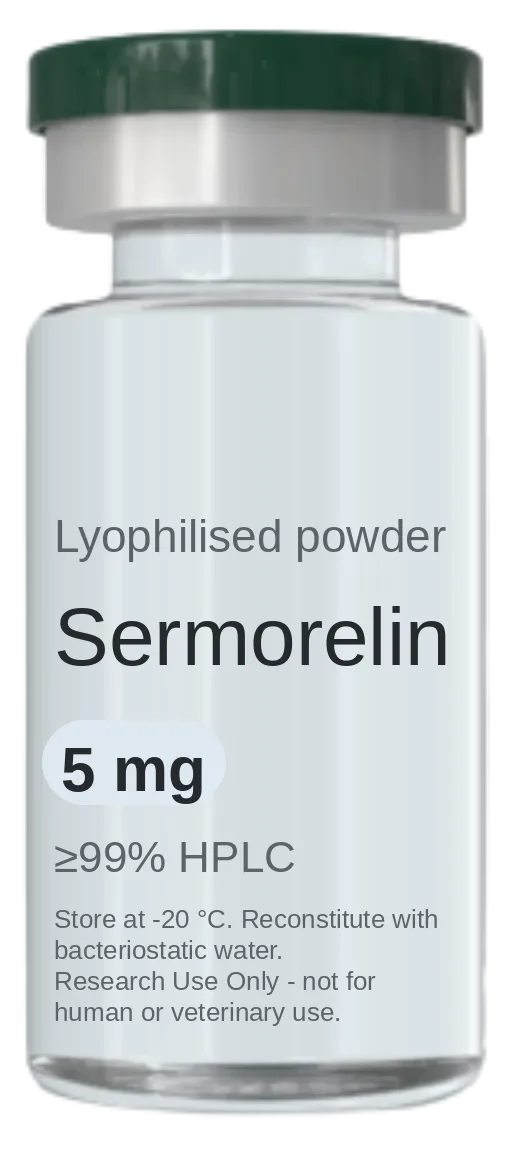
Sermorelin
Growth hormone-releasing hormone analogue used in endocrine signalling research.
- Purity:
- ≥99% HPLC
- Sizes available:
- 5 mg – 20 mg
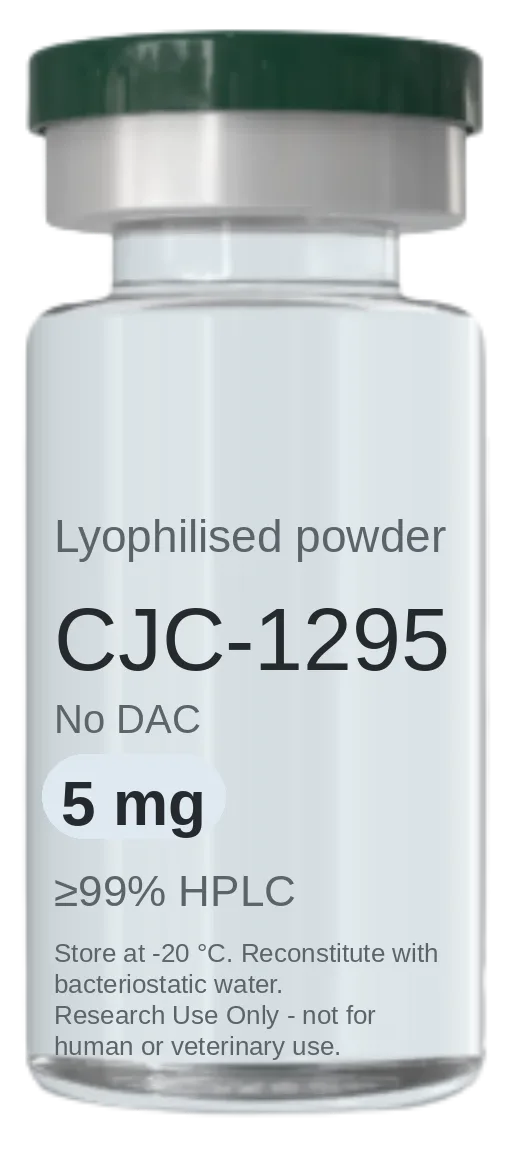
CJC-1295 (sin DAC)
Modified GRF(1-29) tetrasubstituted analogue without drug affinity complex.
- Purity:
- ≥99% HPLC
- Sizes available:
- 5 mg – 20 mg
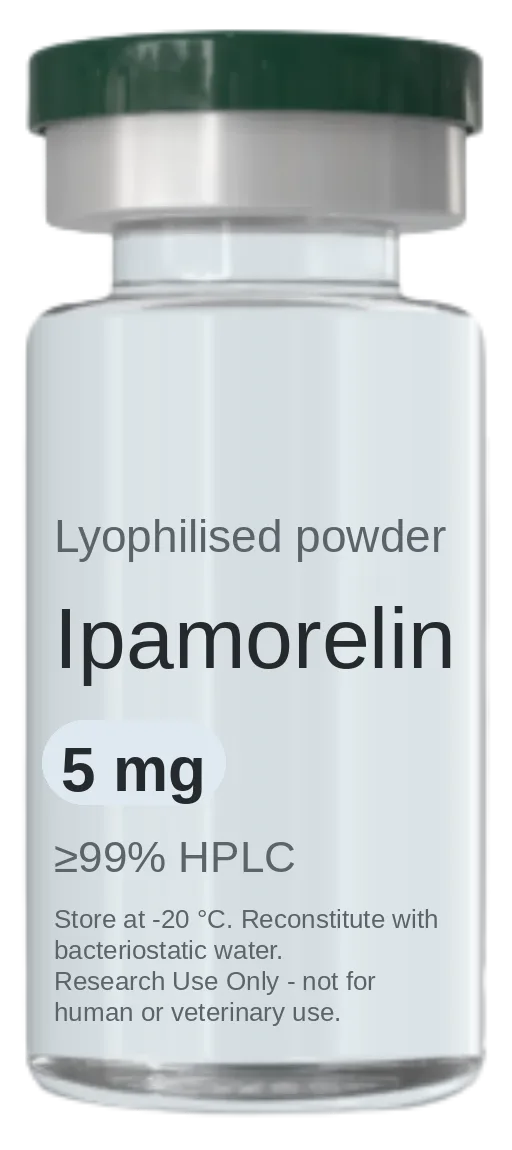
Ipamorelin
Selective ghrelin receptor (GHS-R1a) agonist pentapeptide.
- Purity:
- ≥99% HPLC
- Sizes available:
- 5 mg – 20 mg
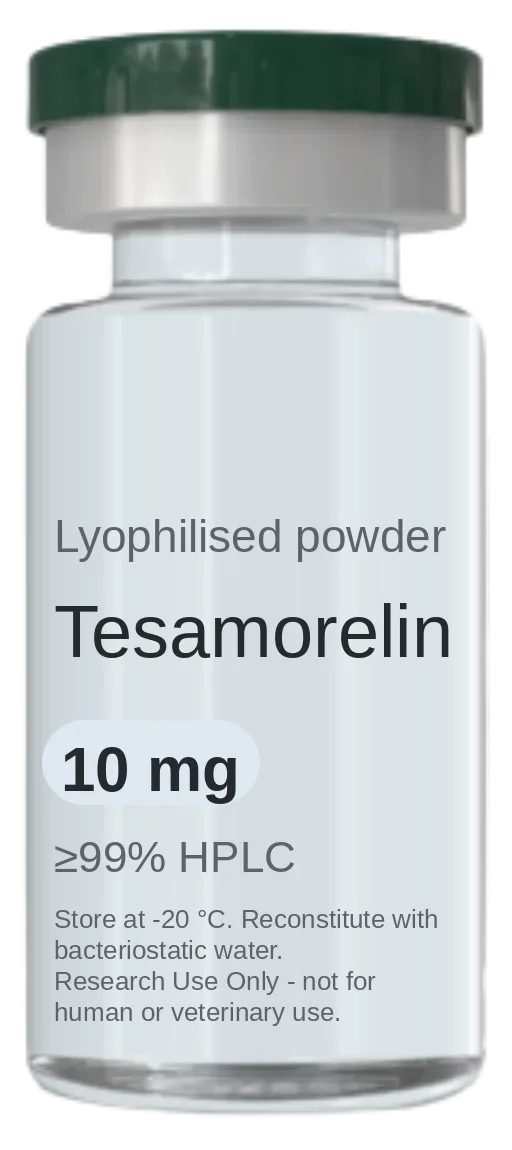
Tesamorelin
Stabilised GHRH(1-44) analogue studied in adipose tissue distribution research.
- Purity:
- ≥99% HPLC
- Sizes available:
- 10 mg – 20 mg
The consultation
One intake that settles goals, history and contraindications alongside compound, quantity, documentation and route — reviewed by a physician before anything ships.
More notes
-
Tesamorelin vs Sermorelin: The Difference
Tesamorelin and sermorelin are both GHRH analogs, but not the same molecule. Here's the structural difference and what the studies on each measure.
-
Peptide Supplier vs. Reseller: What Differs
The real difference is whether someone can name the lab that tested a batch and show the report — or only promise it's pure.
-
MOTS-c or NAD+: What's the Difference
MOTS-c and NAD+ are studied through different mitochondrial pathways; here's what each line of research actually measures.