
Note
SS-31 (Elamipretide): What Is It?
By the PeptoClinic editorial team · Medically reviewed by Dr. Emily Parker
SS-31, also called elamipretide, is a mitochondria-targeted peptide now approved as Forzinity for Barth syndrome. Here's the mechanism and status.
What is SS-31?
SS-31 is the laboratory name for elamipretide, a short synthetic peptide designed to concentrate inside mitochondria and stabilize a membrane lipid called cardiolipin. The molecule reached the market in 2026 as Forzinity, approved under an accelerated pathway for Barth syndrome, a rare genetic disorder of mitochondrial function (Shirley, Drugs, 2026). "SS-31" and "elamipretide" refer to the same peptide — SS-31 is the research designation used before and alongside the brand name, and it is still the name used in laboratory catalogues like PeptoClinic's SS-31 product page.
The name comes from "Szeto-Schiller," the two researchers who developed a family of mitochondria-targeted peptides, of which SS-31 was the lead candidate. Unlike many peptides that act on a surface receptor, SS-31 works inside the cell, which is the detail that explains almost everything else about how it behaves.
How does SS-31 work?
SS-31 is built from alternating cationic and aromatic amino acids, a pattern that lets it cross cell membranes without a transporter and accumulate preferentially in the inner mitochondrial membrane, where it binds cardiolipin. Cardiolipin is a lipid that anchors the protein complexes of the electron transport chain — the machinery that converts nutrients into ATP, the cell's energy currency.
A 2025 mechanistic review in heart failure models describes how, when cardiolipin is oxidized or disorganized, the electron transport chain becomes inefficient and leaks reactive oxygen species. SS-31 stabilizing cardiolipin's structure is reported to improve the efficiency of that chain and reduce the oxidative byproducts tied to mitochondrial dysfunction (Sabbah et al., Biomedicine & Pharmacotherapy, 2025). That is the proposed mechanism behind interest in SS-31 across conditions where mitochondrial energy production is compromised — not just Barth syndrome, but also the broader category of cardiac and skeletal muscle research where mitochondrial efficiency is a limiting factor.
Is SS-31 approved by the FDA?
Elamipretide, under the brand name Forzinity, received accelerated approval from the FDA for Barth syndrome — a rare condition where a genetic defect in cardiolipin remodeling causes cardiomyopathy, skeletal myopathy, and growth delay (Shirley, Drugs, 2026). Barth syndrome is the only approved indication; it is not an approval for general mitochondrial support, athletic recovery, or aging-related use.
PeptoClinic's SS-31 material is not Forzinity and is not approved by the FDA for any use. It is sold as a research peptide, reviewed through a consultation before it ships, the same as the rest of the catalog. Anyone comparing it to the brand drug should keep that line clear: same molecule, different regulatory status, different chain of manufacturing and testing behind the specific vial.
SS-31 compared to other mitochondrial peptides
SS-31 is often mentioned alongside other peptides studied for cellular energy and aging-related mitochondrial decline, even though the mechanisms differ substantially.
| Aspect | SS-31 (Elamipretide) | MOTS-c |
|---|---|---|
| Origin | Synthetic peptide, Szeto-Schiller series | Mitochondrial-derived peptide, encoded in mitochondrial DNA |
| Primary target | Cardiolipin, inner mitochondrial membrane | AMPK pathway, nuclear gene expression under metabolic stress |
| Reported effect studied | Stabilizing electron transport chain efficiency, reducing oxidative byproducts | Metabolic homeostasis signaling between mitochondria and nucleus |
| Approval status | Approved as Forzinity for Barth syndrome | Not approved for any use |
| Discovery context | Rational peptide design, 1990s–2000s | Identified in 2015 as a naturally occurring mitochondrial signal |
| Development phase | Approved drug exists; broader research continues | Early-stage research |
The two are frequently discussed together because both are framed around mitochondrial function, but SS-31 works structurally, on a membrane lipid, while MOTS-c works as a signaling peptide that influences gene expression (Lee et al., Cell Metabolism, 2015). Neither should be treated as interchangeable with the other based on the "mitochondrial peptide" label alone.
Why is SS-31 studied for the heart?
Cardiac muscle is unusually dependent on mitochondrial output — the heart has one of the highest mitochondrial densities of any tissue because it cannot stop contracting to recover energy debt. That dependence is why most of the clinical research backing elamipretide's eventual approval centered on heart failure and genetic cardiomyopathies, where failing energy supply at the cellular level is a documented driver of reduced contractile function (Sabbah et al., Biomedicine & Pharmacotherapy, 2025). Barth syndrome, specifically, causes a structural cardiolipin abnormality, which is why a cardiolipin-stabilizing peptide was a rational candidate for that disease in particular, rather than for heart failure broadly.
This is also why elamipretide shows up in literature searches well beyond cardiology — any tissue with high mitochondrial turnover (skeletal muscle, kidney, retina) has attracted research interest in the same mechanism, even where no approval exists.
Where does SS-31 fit with longevity-related peptides?
SS-31 is sometimes grouped with longevity and cellular-energy compounds such as NAD+ or Thymosin Alpha-1, but the mechanisms are distinct and shouldn't be conflated. NAD+ is a coenzyme substrate consumed directly by metabolic and repair enzymes; Thymosin Alpha-1 is an immune-modulating peptide studied separately from mitochondrial bioenergetics, including recent review work on its relationship to aging processes (Simonova et al., International Journal of Molecular Sciences, 2025). SS-31 is neither a substrate nor an immune signal — it is a structural stabilizer acting directly on a membrane lipid. Grouping all three under "longevity peptides" obscures how differently each one is studied.
Anyone comparing options across the catalog should treat the mechanism, not the marketing category, as the basis for comparison. Pricing for the full catalog, including SS-31, is listed on the pricing page.
How does SS-31 reach a US address?
Material is shipped as a lyophilised powder in a sealed vial, which does not require a cold chain in transit — dry powder is stable at room temperature for the trip. Cold matters later, once the vial is reconstituted into solution, when refrigeration becomes relevant. Details on packaging and delivery to a US address are on the shipping page, and information on sourcing and testing standards is on the quality page.

Medical review
Dr. Emily Parker

Reviews every consultation as it comes in
Frequently asked questions
Is SS-31 the same thing as elamipretide?
Yes. SS-31 is the original research name for the peptide; elamipretide is the generic drug name used once it advanced toward approval. Both terms refer to the identical molecular sequence.
What does SS-31 target inside the cell?
SS-31 targets cardiolipin, a lipid in the inner mitochondrial membrane that anchors the protein complexes responsible for producing cellular energy. It does not act on a cell-surface receptor the way many peptide hormones do.
Is elamipretide an FDA-approved drug?
Elamipretide received accelerated approval from the FDA under the brand name Forzinity, specifically for Barth syndrome, a rare mitochondrial disorder ([Shirley, Drugs, 2026](https://pubmed.ncbi.nlm.nih.gov/41335372/)). That approval does not extend to other uses.
Is PeptoClinic's SS-31 the same as Forzinity?
No. PeptoClinic's SS-31 is a research peptide, not the approved pharmaceutical product, and it is not approved by the FDA for any use. It is reviewed through a consultation before shipping, consistent with the rest of the catalog.
Why is SS-31 studied in heart research?
Cardiac tissue depends heavily on mitochondrial energy output, and cardiolipin abnormalities are documented in conditions like Barth syndrome that cause cardiomyopathy. A peptide that stabilizes cardiolipin was a logical candidate to study in that context ([Sabbah et al., Biomedicine & Pharmacotherapy, 2025](https://pubmed.ncbi.nlm.nih.gov/40294492/)).
How is SS-31 different from MOTS-c?
SS-31 is a synthetic peptide that structurally stabilizes a mitochondrial membrane lipid. MOTS-c is a naturally occurring mitochondrial-derived peptide that signals metabolic stress to the cell nucleus ([Lee et al., Cell Metabolism, 2015](https://pubmed.ncbi.nlm.nih.gov/25738459/)). They are studied for related but mechanistically distinct reasons.
Does SS-31 arrive in a cold-chain shipment?
No. It ships as a sealed, lyophilised vial, which is stable at room temperature in transit. Refrigeration becomes relevant only after reconstitution into solution.
Compounds mentioned

SS-31 (Elamipretide)
Mitochondria-targeted tetrapeptide that binds cardiolipin, also called elamipretide.
- Purity:
- ≥99% HPLC
- Sizes available:
- 50 mg
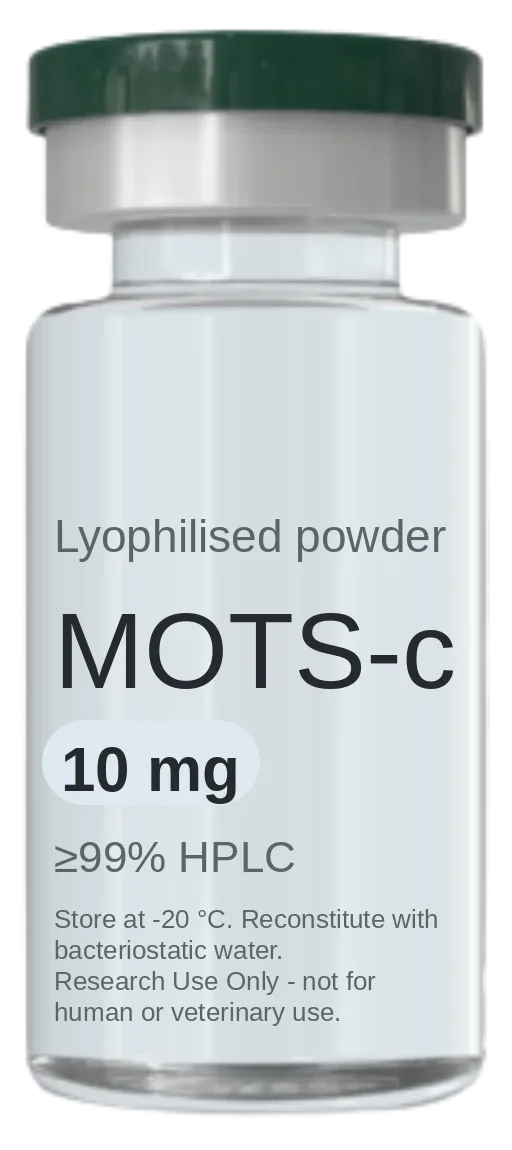
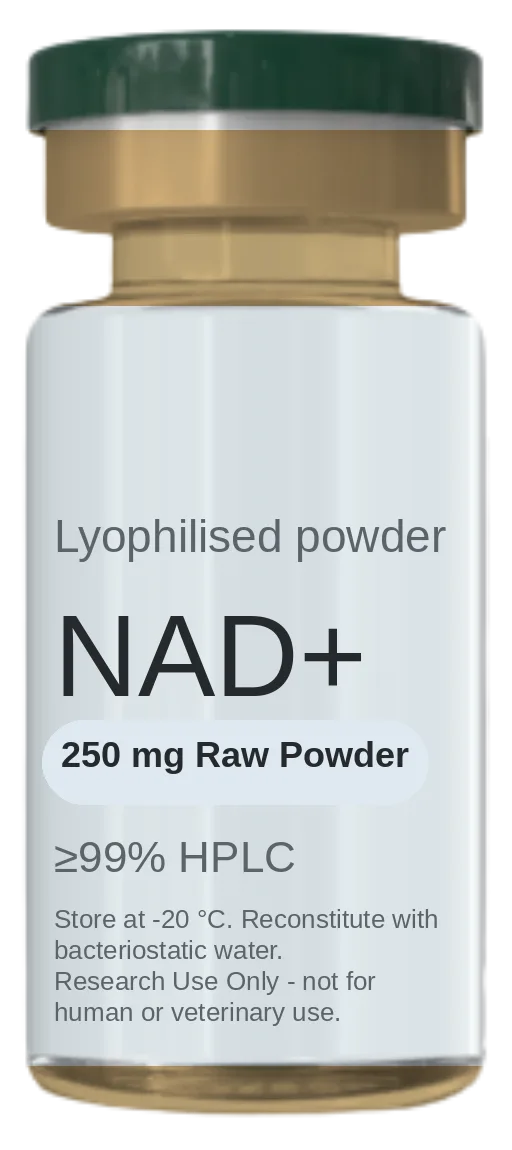
NAD+ (Nicotinamide Adenine Dinucleotide)
Essential redox cofactor central to cellular metabolism and sirtuin research.
- Purity:
- ≥99% HPLC
- Sizes available:
- 250 mg Raw Powder – 300 mg

Thymosin Alpha-1
28-amino-acid thymic peptide studied as an immune modulator; synthetic form thymalfasin.
- Purity:
- ≥99% HPLC
- Sizes available:
- 10 mg
The consultation
One intake that settles goals, history and contraindications alongside compound, quantity, documentation and route — reviewed by a physician before anything ships.
More notes
-
MOTS-c vs SS-31: How They Differ
MOTS-c and SS-31 both target mitochondria but through different mechanisms, with different research and regulatory histories.
-
MOTS-c or NAD+: What's the Difference
MOTS-c and NAD+ are studied through different mitochondrial pathways; here's what each line of research actually measures.
-
Thymosin Alpha 1: What Is It?
Thymosin alpha 1 is a 28-amino-acid thymic peptide studied for immune modulation. Not approved by the FDA; here's what the research shows.
-
Humanin vs MOTS-c: What's the Difference?
Humanin and MOTS-c are distinct mitochondrial peptides—different genes, different receptors, different research focus. Here's how they compare.
-
What Is MOTS-c and What Science Studies
A 16-amino-acid peptide encoded in mitochondrial DNA. Published research, Janoshik analysis, and where to find prices.