
Note
TB-500 vs Sermorelin: What's the Difference
TB-500 and sermorelin belong to different research peptide families studied for different purposes, per the published literature.
TB-500 and sermorelin differ in family and in what each one is studied for: TB-500 is a synthetic fragment of Thymosin Beta-4, investigated in tissue-repair models, while sermorelin is an analog of growth hormone-releasing hormone (GHRH), investigated in the growth hormone axis. They are not interchangeable and they are not comparable on "potency" — they answer different research questions entirely.
The confusion shows up often because both names circulate together in forums and peptide lists marketed around "recovery," but the literature places them on separate shelves. It is worth understanding why before choosing one for a lab protocol.
What TB-500 is, according to the literature
TB-500 is the synthetic, smaller-sized version of Thymosin Beta-4 (TB4), a protein that binds actin — the protein that forms the cellular cytoskeleton. That actin-binding property is what in vitro literature uses to explain why TB4 and its fragments are studied in models of cell migration, angiogenesis, and tissue remodeling.
Published studies on TB4/TB-500 are, overwhelmingly, done in cell culture or in animal models (primarily rodents). They aim to understand the protein's role in wound-healing and tissue-remodeling processes, not in people. It belongs to the family of cytoskeletal regulators, and that is where the resemblance to sermorelin ends: neither compound acts on the same receptor or operates in the same biological pathway as the other.
What sermorelin is, according to the literature
Sermorelin is a 29-amino-acid peptide corresponding to the active fragment of human GHRH — the hormone that, in the hypothalamic-pituitary axis, stimulates the release of growth hormone (GH) from the pituitary. Research on sermorelin concentrates precisely on that axis: the GHRH receptor in the pituitary, pulsatile GH secretion, and from there, the GH/IGF-1 axis.
By design, sermorelin shares a family with other GHRH analogs that make up the catalog entry for sermorelin and with compounds like CJC-1295 without DAC, which pursues the same pathway with a different half-life in the models where it is studied. The difference between sermorelin and CJC-1295 without DAC is one of kinetics within the same family; the difference between sermorelin and TB-500 is a difference of family entirely.
The real difference: mechanism, not "strength"
This is the point most comparisons circulating online get wrong: there is no common scale on which TB-500 is "stronger" or "weaker" than sermorelin. They are distinct axes of study:
- TB-500 is investigated in the actin and tissue-repair pathway (cell migration, angiogenesis, tissue remodeling in animal models).
- Sermorelin is investigated in the GH/IGF-1 axis pathway (GHRH receptor, pulsatile GH secretion, pituitary response).
Asking "which one is better" is like asking whether a reagent for studying coagulation is better than one for studying glucose metabolism: the answer depends on which research question the protocol in front of you is asking, not on a hierarchy between the two compounds.
This also explains why, in research practice, each one shows up paired with different partners. TB-500 is typically studied alongside BPC-157 — another peptide from the tissue-repair family, and in fact PeptoClinic has published a laboratory report on a combined BPC-157 and TB-500 vial — while sermorelin is typically studied alongside other GH-axis analogs such as tesamorelin. Each family has its own set of reasonable comparisons, and crossing families does not produce useful information.
What the laboratory documentation shows
PeptoClinic publishes batch-analysis reports from Janoshik Analytical, the same independent laboratory that issued the four reports underlying the catalog's documentation, all dated April 13, 2026. The most conservative figure among those reports — the one worth citing instead of the best case — is a purity of 99.669% found in one of the analyzed batches. That is the documented floor, not the average and not the best result.
Not every published report lists an explicit purity percentage: the report on the combined BPC-157 and TB-500 vial (10 mg total, 5 mg of each compound) and the one on GHK-Cu are verifiable, but the report itself does not state that specific figure. The correct way to read this — and, in general, the correct way to read any certificate of analysis before trusting it — is explained on the quality and documentation page.
What is consistent across every compound in the catalog is the standard PeptoClinic states for research material: purity of 99% or higher by HPLC, USP-grade diluents, and batch documentation available for review before confirming a quote.
Research material, not for human or veterinary use
Everything PeptoClinic supplies — including TB-500 and sermorelin — is provided strictly as research material (Research Use Only). Neither compound is approved for human or veterinary use, neither is a drug nor a supplement, and no regulatory authority has evaluated these statements. PeptoClinic is not a pharmacy, clinic, or telehealth provider; it does not issue dosing protocols or administration guidance, and it does not participate in any use outside the laboratory setting.
If the goal is to design a study protocol in Argentina with either compound — or with other peptides from the GH axis or the tissue-repair family — the starting point is the shipping and documentation page for Argentina and the full catalog, where the specification for each available batch is listed.
Frequently asked questions
¿TB-500 y sermorelin se pueden comparar en una misma tabla de potencia?
No tiene sentido comparar potencia entre los dos porque actúan sobre vías biológicas distintas: TB-500 se estudia en la vía de la actina y la reparación tisular, sermorelin en el eje GHRH/GH. Una comparación de "fuerza" solo es válida dentro de la misma familia, por ejemplo entre distintos análogos de GHRH.
¿Sermorelin pertenece a la misma familia que CJC-1295 sin DAC?
Sí, los dos son análogos de la hormona liberadora de hormona de crecimiento (GHRH) y se estudian en el mismo eje biológico, aunque con diferencias de cinética entre un compuesto y otro dentro de los modelos donde se investigan.
¿TB-500 se estudia solo o combinado con otros péptidos?
En la literatura aparece estudiado tanto de forma aislada como junto a BPC-157, dentro de la misma familia de investigación sobre reparación tisular. PeptoClinic publica un informe de laboratorio específico sobre un vial que combina ambos compuestos.
¿Los informes de laboratorio de PeptoClinic indican la pureza de todos los compuestos?
No todos los informes publicados consignan un porcentaje de pureza explícito. El dato de pureza más bajo documentado entre los informes disponibles es 99,669 %, y conviene usarlo como referencia conservadora en vez del mejor resultado publicado.
¿Qué laboratorio analiza los lotes?
Janoshik Analytical, un laboratorio independiente. Los informes públicos están fechados el 13 de abril de 2026 y cubren distintos compuestos del catálogo.
¿TB-500 o sermorelin están aprobados para uso humano o veterinario?
No. Los dos se suministran exclusivamente como material de investigación (RUO), sin evaluación de ninguna autoridad regulatoria y sin estar destinados a consumo, diagnóstico o tratamiento humano o veterinario.
¿PeptoClinic da indicaciones de dosis o protocolo para estos compuestos?
No. PeptoClinic no emite guías de administración ni protocolos de uso. El material se cotiza para investigación de laboratorio y la documentación que acompaña cada lote es técnica, no clínica.
¿Dónde se revisa la documentación disponible antes de cotizar?
En la página de [catálogo](/en/catalog/) está la especificación de cada compuesto, y en la página de [calidad](/en/quality/) se explica cómo leer un certificado de análisis antes de confiar en una cifra de pureza.
Compounds mentioned
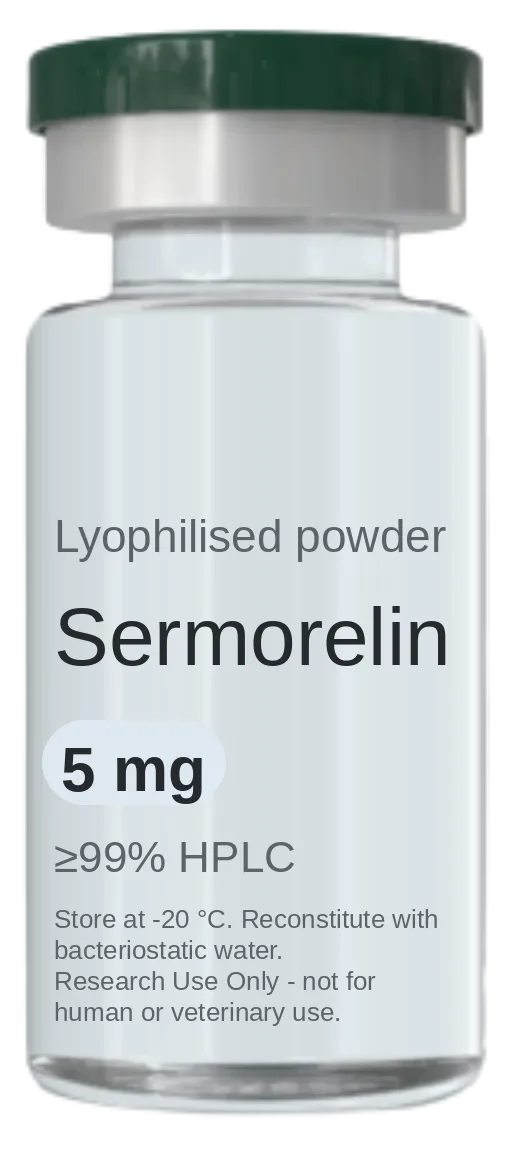
Sermorelin
Growth hormone-releasing hormone analogue used in endocrine signalling research.
- Purity:
- ≥99% HPLC
- Sizes available:
- 5 mg – 20 mg
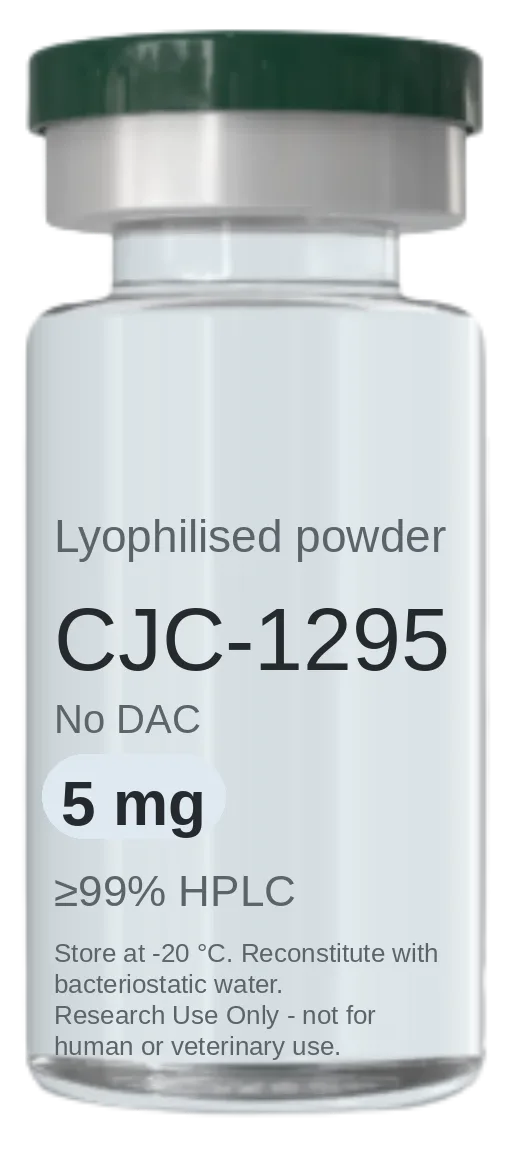
CJC-1295 (sin DAC)
Modified GRF(1-29) tetrasubstituted analogue without drug affinity complex.
- Purity:
- ≥99% HPLC
- Sizes available:
- 5 mg – 20 mg
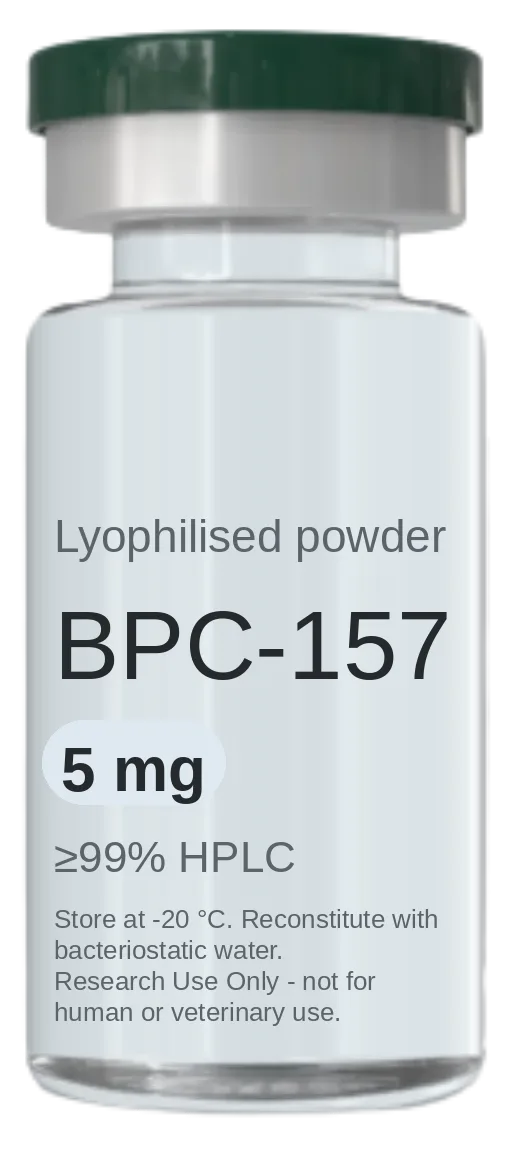
BPC-157 + TB-500
BPC-157 and TB-500 in a single vial — the pairing most studied together in tissue-repair research.
- Purity:
- ≥99% HPLC
- Sizes available:
- 5 mg + 5 mg
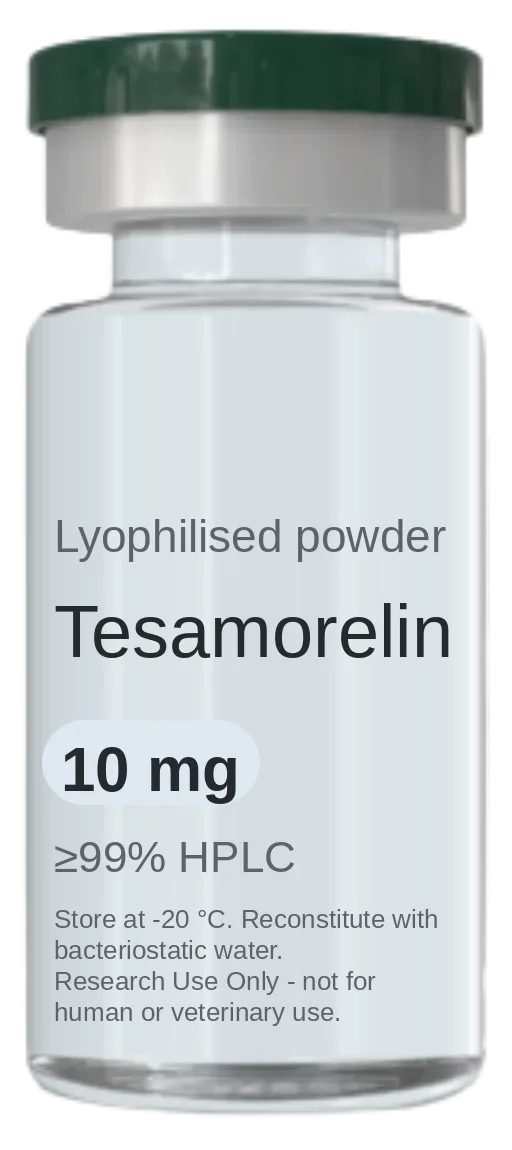
Tesamorelin
Stabilised GHRH(1-44) analogue studied in adipose tissue distribution research.
- Purity:
- ≥99% HPLC
- Sizes available:
- 10 mg – 20 mg
The consultation
One intake that settles goals, history and contraindications alongside compound, quantity, documentation and route — reviewed by a physician before anything ships.
More notes
-
Retatrutide vs. Tirzepatide: Differences
Retatrutide adds a third receptor that tirzepatide doesn't activate — here's how the two differ in structure, mechanism, and published research.
-
NAD+ vs Selank: What's the Difference?
NAD+ is a cellular coenzyme; Selank is a synthetic peptide derived from tuftsin. Structure, mechanism, and what each one is studied for.
-
Peptide Customs Clearance Cost in Argentina
What determines customs clearance cost for a research peptide shipment to Argentina, and what documentation PeptoClinic prepares for it.