
Note
TB-500: What It Is and What the Science Says
TB-500 is a synthetic analogue of Thymosin Beta-4, studied for cell migration and angiogenesis. RUO material with Janoshik analytical report.
TB-500 is a synthetic analogue of Thymosin Beta-4 (Tβ4), a 43-amino-acid peptide present in virtually all mammalian tissues. Researchers study it primarily for its role in cell migration, new blood vessel formation, and modulation of the inflammatory response. PeptoClinic supplies TB-500 as Research Use Only material, accompanied by an analytical report from Janoshik Analytical.
Peptide structure and origin
Thymosin Beta-4 was first isolated from bovine thymus in the 1960s by biochemist Allan Goldstein and colleagues. Later work established that the protein is present in platelets, leukocytes, and wound fluid. In active wounds, the local concentration of Tβ4 reaches five to ten times that of circulating plasma — an observation that drew researchers toward its possible role in tissue repair.
The best-documented molecular mechanism of Tβ4 is sequestration of G-actin monomers. The protein contains the sequence LKKTETQ, recognised as an actin-binding domain. By binding those monomers, Tβ4 regulates cytoskeletal polymerisation and, with it, cell processes that depend on actin reorganisation: division, migration, adhesion, and the formation of new tissue structures.
The name TB-500 refers to the synthetic analogue of the full Tβ4 sequence. Published scientific literature uses Tβ4 almost exclusively; TB-500 is the term most commonly used in the research supply market for the synthetic product.
Active research areas
Cardiac repair
A paper published in *Nature* by Bock-Marquette et al. (2004) showed that Tβ4 activated cardiac progenitor cells in infarcted mice and improved ventricular function at four weeks, compared with saline-treated controls. The authors identified integrin-linked kinase (ILK) as the mediating molecule: Tβ4 bound ILK, promoted its activity, and triggered the survival and migration of cardiomyocytes. That paper was among the first to define a molecular mechanism for Tβ4's effect in damaged cardiac tissue.
Later studies evaluated Tβ4 on ventricular function in longer-duration infarct models and dilated cardiomyopathy models, with consistent findings of reduced infarct zone size and improved ejection fraction.
Angiogenesis and wound healing
Tβ4 stimulates endothelial cell migration and vascular tube formation in in vitro cultures. Animal studies of cutaneous wounds documented that Tβ4 application accelerated wound contraction and re-epithelialisation, with upregulation of pro-angiogenic factors including VEGF. Studies of corneal wound healing reported similar findings in models of superficial injury.
The high concentration of Tβ4 in wound fluid is consistent with an active role in early repair of damaged tissue, though the exact regulatory mechanisms remain under investigation.
Inflammatory response
Tβ4 inhibits NFκB transcription factor activation and reduces production of pro-inflammatory cytokines — particularly IL-1β and TNF-α — in cell models. That property led to research in autoimmune disease models. Studies in experimental autoimmune encephalomyelitis (EAE), a murine model of multiple sclerosis, reported reduced demyelination and axonal damage in Tβ4-treated animals, with anti-inflammatory activity and stimulation of remyelination proposed as mechanisms.
Neuroprotection
Studies in murine brain ischaemia models found that Tβ4 administration reduced infarct area and improved performance in motor function tests. Authors proposed that promotion of cerebral angiogenesis and activation of neuroplasticity mechanisms accounted for part of the observed results. This research area remains active, with current focus on spinal cord injury and peripheral neuropathy models.
All of this evidence comes from preclinical models. No Phase III clinical trial has been completed and approved by any regulatory authority demonstrating efficacy of Tβ4 or TB-500 in humans for any condition.
TB-500 and BPC-157 in the literature
In PeptoClinic's catalogue, TB-500 and BPC-157 are the two peptides that appear together most often in research orders covering tissue repair models. Published work has studied both compounds in the context of tendon and muscle injuries in animal models. Their mechanisms of action are distinct: BPC-157 acts primarily through growth hormone signalling and the nitric oxide pathway, while TB-500 operates mainly through the actin cytoskeleton. Rigorous studies evaluate each compound separately before proposing combinations.
Batch documentation
PeptoClinic supplies TB-500 with an analytical report from Janoshik Analytical, the reference laboratory for research peptide analysis. The available lot was analysed on 13 April 2026 (task 204975): a 10 mg vial containing 5 mg of TB-500 and 5 mg of BPC-157, with identity and content analysis for each component separately.
Documentation is available before dispatch. To review which reports are available and how to read them, see PeptoClinic's quality page.
Laboratory research material only
TB-500 is supplied as Research Use Only (RUO) material, intended exclusively for in vitro and laboratory research. It is not a medicine, a supplement, or a food. It holds no approval from the FDA, ANMAT, or any equivalent authority for use in humans or animals. PeptoClinic does not write or provide administration protocols for people, does not indicate use amounts, and does not offer clinical guidance of any kind. Requests of that nature are declined.
Frequently asked questions
What is the difference between TB-500 and Thymosin Beta-4?
Thymosin Beta-4 (Tβ4) is the endogenous 43-amino-acid peptide produced by mammals, which has appeared in the scientific literature since the 1960s. TB-500 is the name used in the research supply market for the synthetic analogue of that peptide. Published studies use Tβ4 almost exclusively; TB-500 is the product name for the synthetic material available for laboratory orders.
What biological models does TB-500 research use?
Most published literature uses murine models. The most common are experimental myocardial infarction, cutaneous wound healing, corneal injury, brain ischaemia, experimental autoimmune encephalomyelitis (EAE), and tendon injuries. In vitro studies use endothelial cell lines, fibroblasts, and cardiomyocytes. [PubMed](https://pubmed.ncbi.nlm.nih.gov/?term=thymosin+beta-4) lists Tβ4 research extending from the 1970s to the present.
Is there an approved clinical trial for TB-500 in humans?
As of this post's publication date, no Phase III clinical trial has been completed and approved for TB-500 or Tβ4 in any condition. Earlier-phase studies have been conducted in conditions such as chronic corneal ulcers and post-infarct cardiac injury, but none has concluded the full regulatory process.
What documentation accompanies a TB-500 order from PeptoClinic?
Each order includes the lot analytical report issued by Janoshik Analytical, covering compound identification and content. Documentation is available before dispatch and can be requested by email to [email protected] before confirming an order.
Does PeptoClinic ship TB-500 to Argentina?
PeptoClinic accepts research orders with destination in Argentina. Material is prepared with customs documentation as laboratory reference material. To request a quote, visit the product page or write to [email protected].
What format is PeptoClinic's TB-500 supplied in?
The available lot is lyophilised (dry powder) in a vial. The Janoshik report covers the combination lot of 10 mg total — 5 mg of TB-500 and 5 mg of BPC-157. For current presentation options, write to [email protected].
What other peptides appear alongside TB-500 in scientific literature?
The most common combination studies in animal models involve BPC-157, particularly in musculoskeletal and tendon tissue. Peptides from the GH/IGF-1 axis also appear in cardiac regeneration research. Rigorous work evaluates each compound separately before proposing combinations.
What does RUO mean and why does it apply to TB-500?
RUO (Research Use Only) indicates that the material is intended solely for laboratory research and is not approved for diagnostic, therapeutic, or preventive use in humans or animals. TB-500 has not undergone the regulatory review required for any clinical application, and all published evidence comes from basic and preclinical research. PeptoClinic operates exclusively within this category.
Compounds mentioned
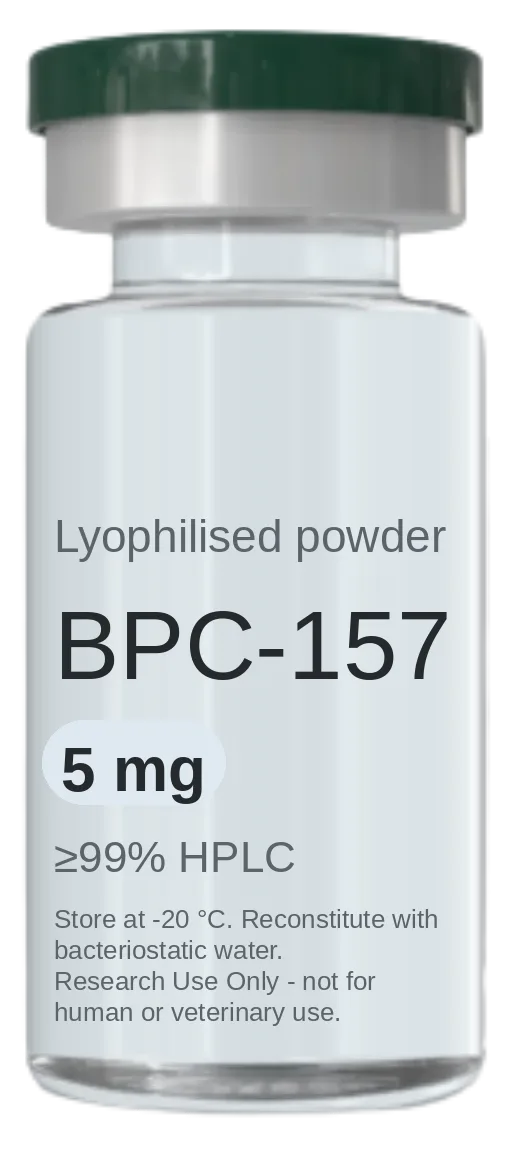
BPC-157 + TB-500
BPC-157 and TB-500 in a single vial — the pairing most studied together in tissue-repair research.
- Purity:
- ≥99% HPLC
- Sizes available:
- 5 mg + 5 mg
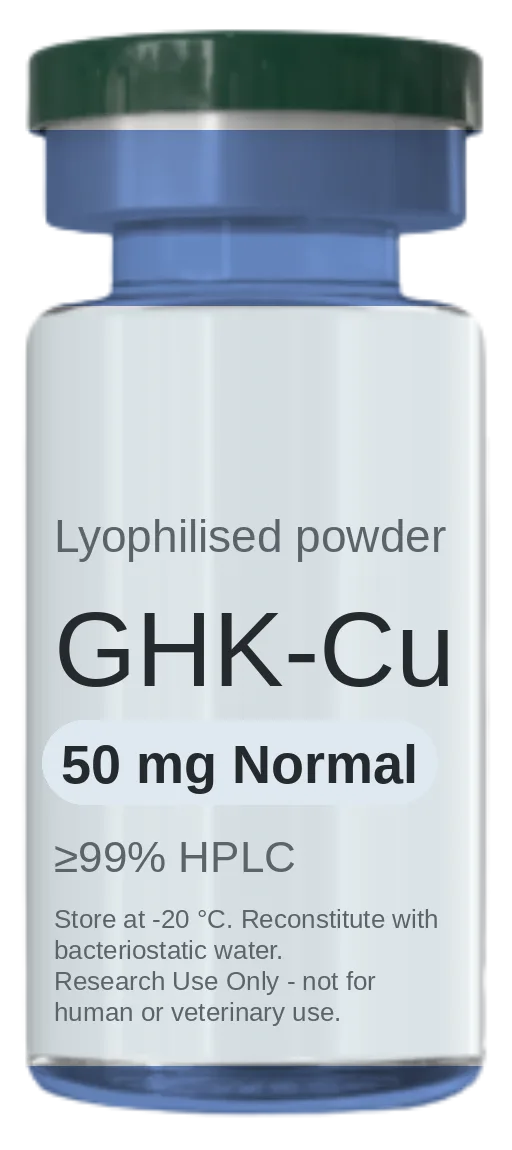
GHK-Cu (Copper Peptide)
Copper-binding tripeptide studied in extracellular matrix and dermal research models.
- Purity:
- ≥99% HPLC
- Sizes available:
- 50 mg Normal – 50 mg Plus
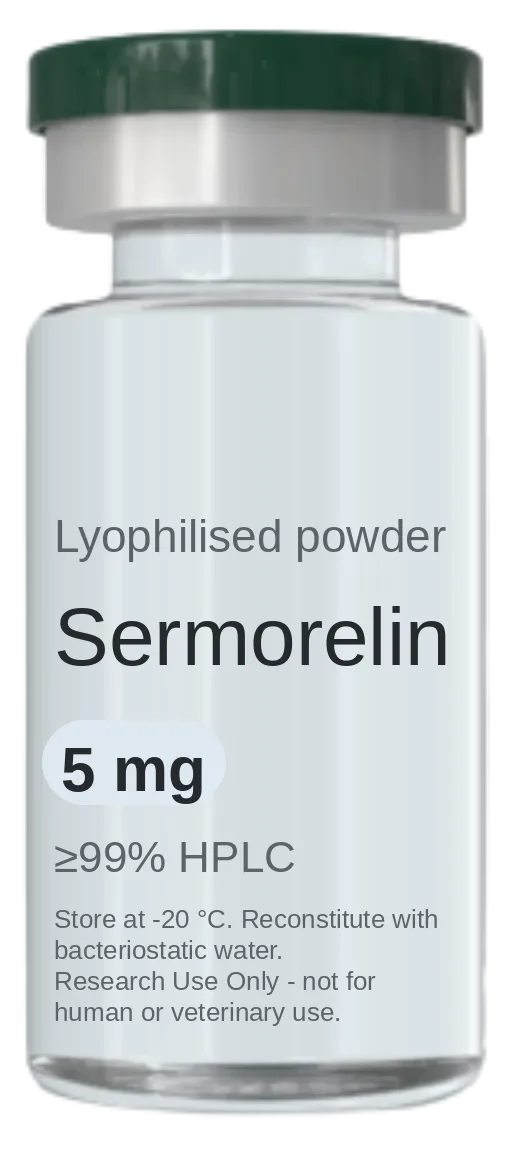
Sermorelin
Growth hormone-releasing hormone analogue used in endocrine signalling research.
- Purity:
- ≥99% HPLC
- Sizes available:
- 5 mg – 20 mg
The consultation
One intake that settles goals, history and contraindications alongside compound, quantity, documentation and route — reviewed by a physician before anything ships.
More notes
-
Peptide Invoice: What Argentine Customs Wants
What a research peptide invoice needs so Argentine customs releases the shipment instead of holding it in bonded storage.
-
Thymosin Alpha 1 vs Selank: How They Differ
Thymosin Alpha 1 and Selank sit in different research families—one studied in immunomodulation, the other in the anxiolytic-cognitive axis.
-
Temporary Import Regime & Peptides
Temporary import covers goods that leave the country again; a research peptide shipment stays and gets used up.