
Note
What 99% Purity Means in a Peptide
What the purity percentage in a peptide actually measures, how HPLC calculates it, and how to verify that a CoA number is real.
The purity percentage in a peptide indicates what fraction of the sample is the target molecule, measured as the percentage of peak area attributed to the main compound in an HPLC chromatogram. A result of 99% means that 99 out of every 100 units of detected area correspond to the peptide of interest. The remaining 1% is everything else: truncated sequences, oxidized forms, residual synthesis salts, and other byproducts.
That 1% matters in research. A sample labeled at 95% purity contains five times more uncharacterized material than one at 99%. When an experiment yields an unexpected result, the question "could the impurity have contributed?" is much harder to rule out in the less pure sample.
How HPLC calculates purity
The instrument injects a known quantity of the sample into a column packed with a stationary phase. A solvent flow carries it forward. The different molecules in the mixture interact with the stationary phase at different strengths, so they travel at different speeds and emerge from the column separated.
An ultraviolet detector — typically at 220 nm for peptides — measures how much signal each fraction produces as it exits. The result is a chromatogram: a plot of time against absorbance, with one peak per compound present in the sample. Purity is calculated by dividing the area of the main peak by the total area of all peaks combined.
The method has one limit: it does not distinguish between molecules that absorb similarly at 220 nm. For that reason, reference analytical laboratories combine HPLC with mass spectrometry to confirm molecular identity. The chromatograph separates; the mass spectrometer identifies.
What can be in that remaining percentage
In a synthetic peptide, the material that is not the target molecule can include:
- Truncated sequences: peptides missing one or more amino acids because the synthesis did not complete every coupling cycle. These may have a different biological profile from the full compound.
- Oxidized forms: amino acids such as methionine or cysteine oxidize if the purification process or storage conditions do not adequately control the environment.
- TFA salts: trifluoroacetic acid used in solid-phase synthesis remains as a counterion and may not be fully removed during purification.
- Residual moisture: in a lyophilized powder, water contributes to the mass of the vial but is not counted in the HPLC purity figure, so the actual peptide content may differ from the nominal label weight.
Why the number alone is not enough
A label that says "99% purity" is a starting point, not a verifiable claim. What matters is who analyzed the sample, using what method, and whether the report can be checked independently.
Two laboratories can report "99%" while measuring different things. If one uses HPLC at 254 nm and another uses 220 nm with confirmatory mass spectrometry, the numbers are not comparable even when they happen to be equal. A useful certificate of analysis includes the laboratory name with a task identifier, the wavelength and method used, the complete chromatogram, and a mechanism to verify that the report exists in the laboratory's own system.
PeptoClinic publishes the certificate of analysis for each lot in the quality section of the site. All reports are issued by Janoshik Analytical, a Czech laboratory that specialises in research peptides.
What the published reports show
All four certificates published by PeptoClinic were analyzed on April 13, 2026 by Janoshik Analytical. Two of them state the HPLC purity explicitly:
The retatrutide lot, task 136921, returned 99.893% purity. The vial was labeled 10 mg; the actual measured content was 11.96 mg — the difference reflects the weight of TFA salt incorporated in the lyophilized powder.
The MOTS-c lot, task 136923, returned 99.669% purity. Actual content: 11.31 mg.
The lowest purity figure published is 99.669%. That is the documented floor, not the laboratory's best result. A supplier that only cites its best lot is not being transparent. One that publishes every lot — including those at 99.6% — exposes the full track record.
All four reports — retatrutide, MOTS-c, GHK-Cu and BPC-157 + TB-500 — carry a working verification link to the Janoshik Analytical website, each opening against its own task number.
How to verify a certificate of analysis yourself
Any CoA, from any supplier, can be checked with these steps:
- Find the laboratory independently. Do not use the link the supplier gives you. Search the laboratory name, navigate to the site directly, and find the verifier there.
- Enter the task number. Most analytical laboratories have a page where you can type in the report identifier and confirm that it exists in their system.
- Compare the data. The compound, the purity figure, and the date shown by the verifier must match exactly what the document states. Any discrepancy invalidates the CoA.
- Check the stated method. A complete report names the column, the wavelength, and the solvent gradient. If it only says "HPLC: 99%", it is a number without analytical backing.
A supplier that delivers a CoA with a verifiable laboratory identifier is exposing their lot to external scrutiny. That is harder to fabricate than any badge displayed on a web page.
This material is for laboratory research only
The peptides that PeptoClinic Research Supply provides are strictly for research use only (RUO): in vitro experiments and laboratory work.
None of these compounds is a medicine, a supplement, or a food. None has received approval from any regulatory authority — FDA, ANMAT, or equivalent — for use in humans or animals. PeptoClinic Research Supply is not a pharmacy, not a clinic, and not a source of administration protocols or dosing guidance. No prescriptions are issued and requests for human-use protocols are declined.
If your research programme requires a compound from the catalogue, you can request a written quote specifying purity, quantity, and lot documentation.
Frequently asked questions
What is the practical difference between a peptide at 95% and one at 99% purity?
The sample at 95% contains five times more uncharacterized material than the one at 99%. In research where the observed response depends on a precise concentration, that difference can affect reproducibility across experiments and make it harder to attribute results to the target compound.
Why does the actual vial content differ from the label weight?
The nominal label weight is the production target. The actual weight varies because the lyophilized powder contains TFA salt as a counterion and residual moisture, neither of which is included in the HPLC purity percentage. In PeptoClinic's published lots, the retatrutide vial labeled at 10 mg contained 11.96 mg actual; the MOTS-c vial contained 11.31 mg. The relevant figure for a researcher is the actual content, not the label weight.
Is HPLC purity sufficient to confirm that the peptide is what it claims to be?
Not on its own. HPLC purity measures what fraction of the detected signal corresponds to the main peak, but does not verify the identity of that compound. For that, mass spectrometry is required — it confirms the molecular weight and the peptide sequence. A complete report includes both analyses.
What makes a certificate of analysis verifiable?
A verifiable CoA includes the laboratory name, a task number that can be entered on the laboratory's own website to confirm the report exists in their system, and the method details. A certificate without a laboratory identifier or an external verification mechanism is a document that cannot be checked.
Does peptide purity change over time?
Yes. The purity declared in a CoA reflects the sample on the date of analysis. After that date, degradation depends on the compound, temperature, humidity, and light exposure. Lyophilized peptides are stored cold and dry to preserve the integrity of the material. The analysis date on the certificate is a relevant piece of information when evaluating how current the report is.
Why do some suppliers not publish the full chromatogram?
The chromatogram shows directly whether additional peaks are present, how large they are relative to the main peak, and the quality of the baseline. Publishing it exposes the analysis to external review. A supplier that provides only the final number without the graph offers no way to corroborate that number. That is not a privacy policy — it is the absence of evidence.
How often does PeptoClinic analyze lots?
The four published reports correspond to lots analyzed on April 13, 2026 by Janoshik Analytical. PeptoClinic provides the certificate for the specific lot quoted; the task number on the report allows verification directly on the laboratory's website.
Does PeptoClinic ship research peptides to Argentina?
Yes. PeptoClinic Research Supply provides research peptides to Argentina, with customs documentation prepared for import as laboratory reference material. Shipping details and quotes are handled by consultation. [More information about shipments to Argentina](/en/argentina/).
Compounds mentioned
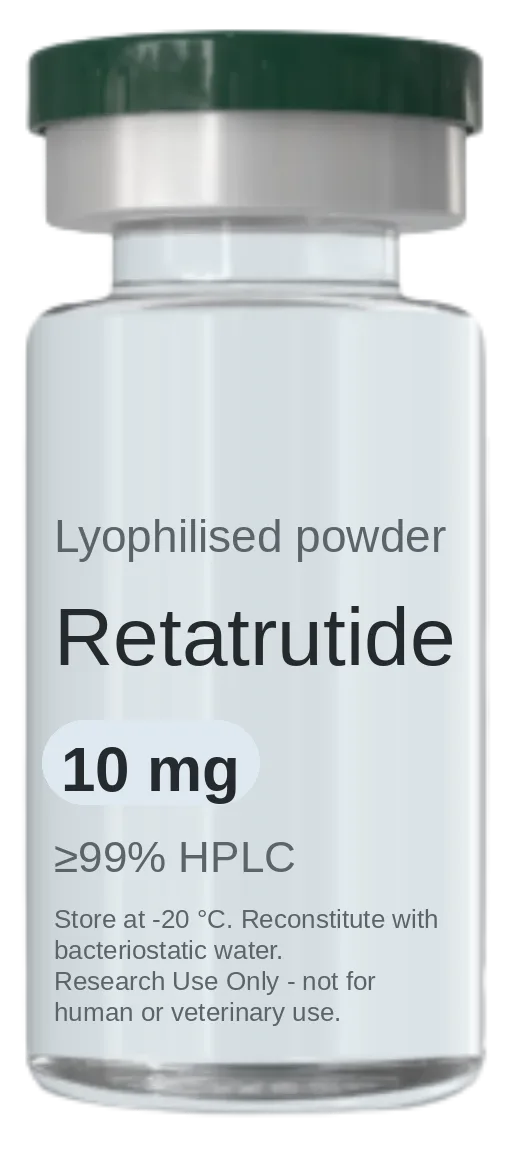
Retatrutide
Triple-agonist metabolic research peptide targeting GLP-1, GIP and glucagon receptors.
- Purity:
- ≥99% HPLC
- Sizes available:
- 10 mg
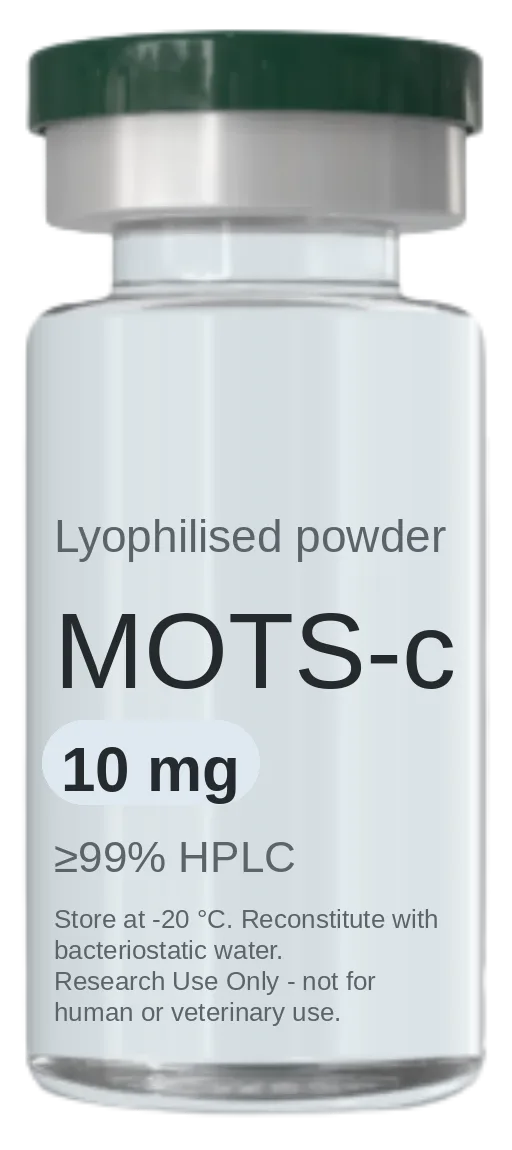
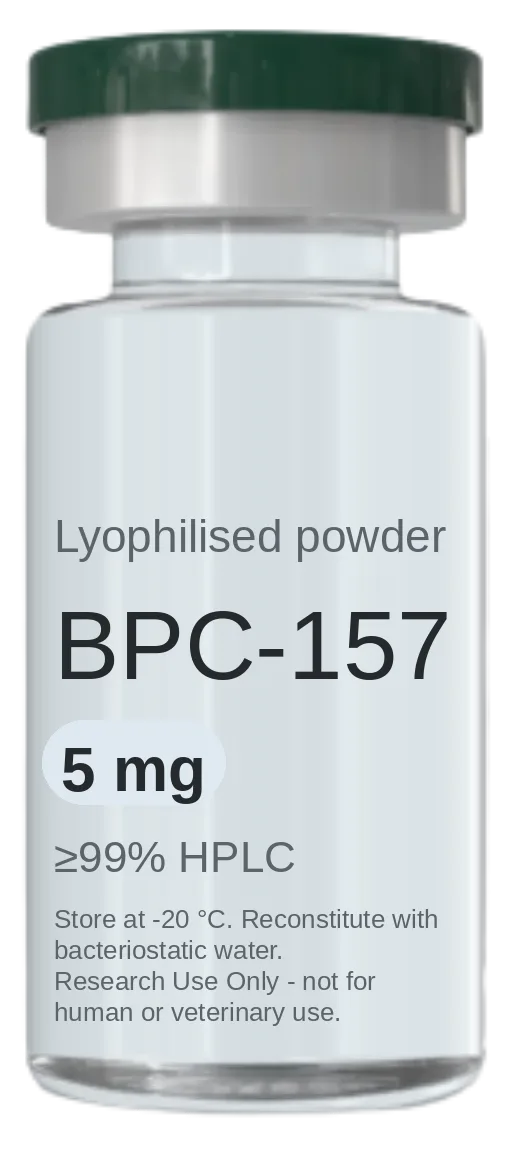
BPC-157 + TB-500
BPC-157 and TB-500 in a single vial — the pairing most studied together in tissue-repair research.
- Purity:
- ≥99% HPLC
- Sizes available:
- 5 mg + 5 mg
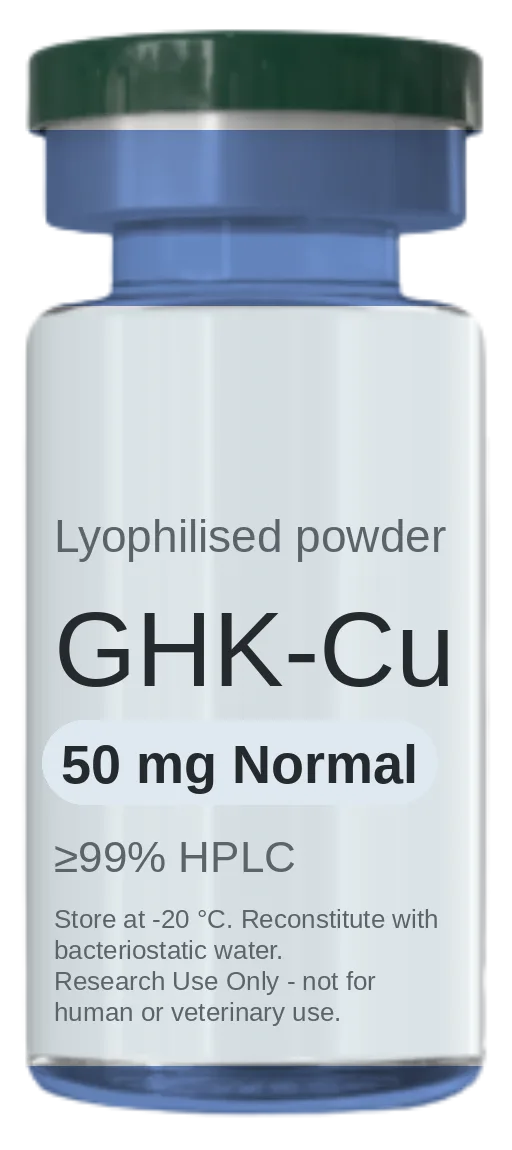
GHK-Cu (Copper Peptide)
Copper-binding tripeptide studied in extracellular matrix and dermal research models.
- Purity:
- ≥99% HPLC
- Sizes available:
- 50 mg Normal – 50 mg Plus
The consultation
One intake that settles goals, history and contraindications alongside compound, quantity, documentation and route — reviewed by a physician before anything ships.
More notes
-
Import Tesamorelin to Argentina as Research
Yes, tesamorelin can be imported to Argentina as laboratory research material, with customs paperwork built for that purpose.
-
Humanin vs MOTS-c: What's the Difference?
Humanin and MOTS-c are distinct mitochondrial peptides—different genes, different receptors, different research focus. Here's how they compare.
-
If Argentine Customs Rejects Your Shipment
What happens after Argentine customs permanently rejects a research peptide shipment, and what documentation lowers the risk on the next one.