
Note
What Is Epithalon: The Pineal Tetrapeptide
Synthetic tetrapeptide Ala-Glu-Asp-Gly derived from pineal research. What studies investigate and how to verify a lot from an independent lab.
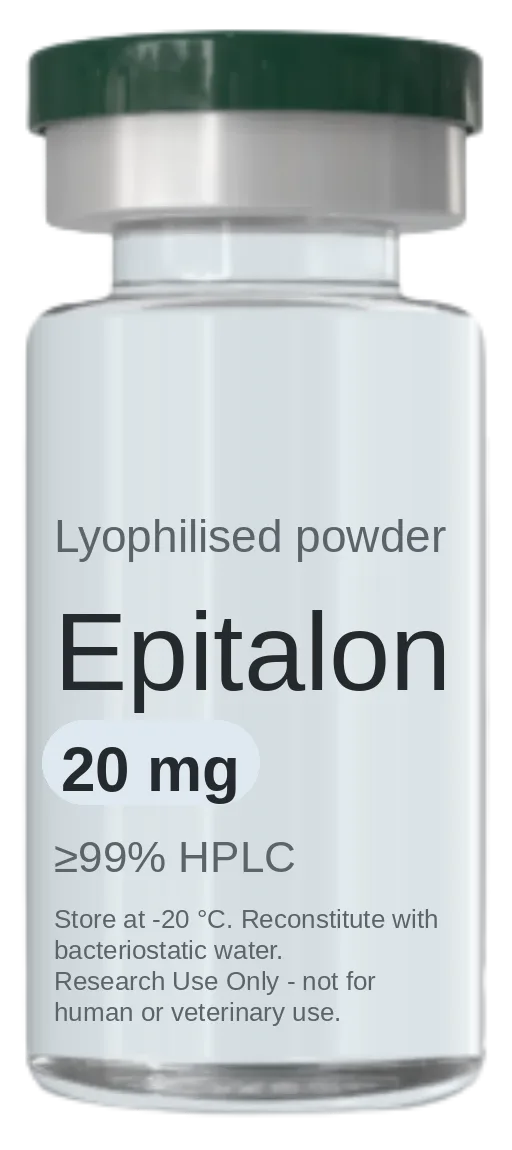
Epithalon is a synthetic tetrapeptide with the sequence Ala-Glu-Asp-Gly — four amino acids: alanine, glutamic acid, aspartic acid, and glycine. The science has studied it since the 1980s, primarily in relation to telomerase activity, melatonin synthesis, and the physiology of the pineal gland in laboratory models.
What epithalon is
Epithalon (also spelled *epitalon*) is the synthetic version of a peptide isolated from a glandular extract called epithalamina. That extract was identified and studied by the Institute of Bioregulation and Gerontology in St. Petersburg, under the direction of researcher Vladimir Khavinson.
Epithalamina is derived from bovine pineal tissue. From that extract, Khavinson's group isolated the smallest active fraction that retained effects in the models they were studying. That four-amino-acid fraction is what is known today as epithalon.
As a synthetic peptide, epithalon is produced by solid-phase peptide synthesis (SPPS), with no need for animal tissue. The material circulating as research supply is the sequence Ala-Glu-Asp-Gly synthesized in a laboratory, with identity and purity verifiable by HPLC and mass spectrometry. PeptoClinic's epithalon research material ships with the report from the independent analytical laboratory that verified the specific lot.
Origin of the research
Khavinson's Institute of Bioregulation and Gerontology operated within the framework of experimental gerontology developed in the Soviet Union and continued in Russia. The group published studies from the 1980s onward comparing the effects of different peptide glandular extracts on animal aging models.
The central hypothesis was that certain glands produce peptide regulators that modulate circadian rhythm, melatonin secretion, and processes associated with cellular aging. Epithalamina was one of several extracts the group studied in parallel with thymus preparations and extracts from other glands.
The Institute of Bioregulation and Gerontology in St. Petersburg has decades of publications on peptide bioregulators indexed in PubMed. Epithalon, being the smallest synthesizable fraction, later attracted interest from groups outside the original institute.
The sequence and analytical verification
A tetrapeptide has four amino acid residues. Ala-Glu-Asp-Gly means, in that order: alanine (Ala), glutamic acid (Glu), aspartic acid (Asp), and glycine (Gly). It is a short, relatively stable sequence compared to longer peptides, which makes analytical control during synthesis more tractable.
Solid-phase synthesis allows this sequence to be produced with a high degree of purity control. A laboratory working with HPLC can verify the identity and purity of the final product. Mass spectrometry confirms that the compound's molecular mass matches the theoretical formula.
For details on what parameters to look for in a certificate of analysis and how to read a report from an independent laboratory, the PeptoClinic quality page describes what a valid report must include.
What published studies investigate
Telomeres and telomerase
The most cited research line in relation to epithalon is its effect on telomerase in cell cultures. Telomeres are the repetitive sequences at the ends of chromosomes that shorten with each cell division. Telomerase is the enzyme capable of extending those sequences.
In human somatic cell cultures, Khavinson et al. published results reporting telomerase activation and telomere elongation following exposure to epithalon. That work is part of the body of publications available on PubMed for epithalon and telomerase, accessible for direct review.
Those results are from cell cultures (*in vitro*). Animal model research includes mouse studies from the same group. Some aspects of these findings were taken up by groups outside the original institute, though the body of evidence remains largely Russian in origin.
Pineal gland and melatonin
The second axis of investigation links epithalon to pineal gland function. The pineal produces melatonin, the hormone that regulates the sleep-wake cycle and whose production declines with age in the studied models.
Work from Khavinson's group in animal models reported associations between epithalon administration and changes in melatonin levels. The hypothesis proposed in that literature is that epithalon modulates melatonin synthesis in the pineal gland by acting as a peptide signaling molecule.
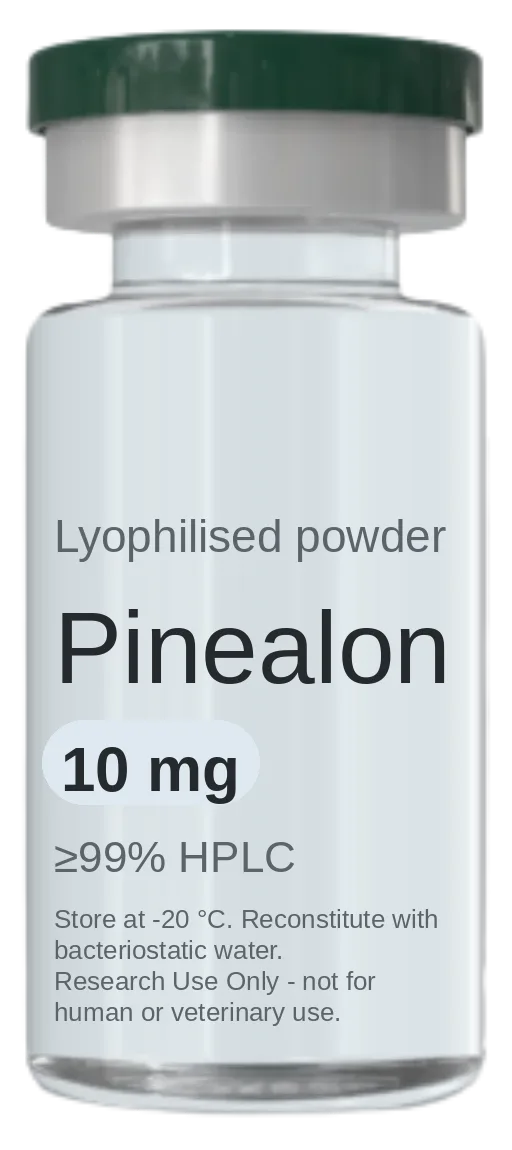
The pineal gland is also the focus of another peptide from the same research lineage. Pinealon is a tripeptide (Glu-Asp-Arg) that the same research tradition associates with neuroprotection and pineal function. PeptoClinic supplies it as an independent research material.
Long-term animal models
Khavinson's group published long-duration studies in rats and mice reporting extended median survival in treated groups relative to controls. Those studies were conducted under controlled laboratory conditions and are not directly transferable to any other context.
There is also a line of work on markers related to cellular behavior in tumor models, where the effect of telomerase modulation is a subject of investigation. The institute's body of publications on peptide bioregulators is available in PubMed.
Laboratory research material only
The epithalon PeptoClinic supplies is strictly for laboratory research use only (Research Use Only, RUO): in vitro research and laboratory models.
It is not approved or intended for human or veterinary use, nor for the diagnosis, treatment, or prevention of any health condition. It is not a medicine, a supplement, or a food. No evaluation by ANMAT, the FDA, or any equivalent authority has reviewed its safety or efficacy for use in people. PeptoClinic does not provide administration protocols, dosing guidance, or any orientation for use in humans or animals.
Researchers working with this compound do so within laboratory protocols approved by the ethics committees of their institutions.
Lot documentation and how to request a quote
When PeptoClinic quotes a lot of epithalon, the documentation includes the report from the independent analytical laboratory that verified the purity and identity of that specific lot. The report specifies the analytical method used, the result obtained, and the issuing laboratory's details. Reports published on the site correspond to Janoshik Analytical, a European laboratory whose analyses are independently verifiable at the laboratory's own platform.
The minimum purity PeptoClinic publishes for its research material is 99% by HPLC.
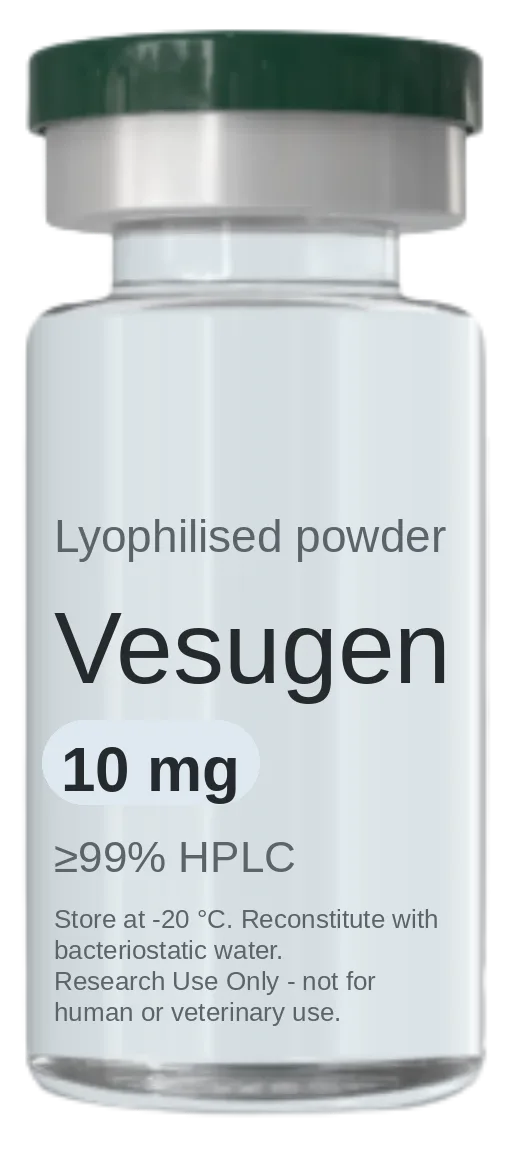
Vesugen is another peptide bioregulator from the Khavinson lineage available in the catalogue. Vesugen, Pinealon, and Epithalon share the theoretical framework of peptide bioregulators developed by the St. Petersburg Institute, though each corresponds to a different tissue and a distinct research line.
For information on how shipments travel, customs documentation for laboratory reference material, and destinations PeptoClinic currently serves, the shipping page has detail by destination. Argentina is among the destinations PeptoClinic ships to as laboratory reference material, with the customs file prepared for import accordingly.
Frequently asked questions
What does it mean that epithalon is a tetrapeptide?
It means the compound is built from exactly four amino acids in sequence. For epithalon, that sequence is alanine, glutamic acid, aspartic acid, and glycine (Ala-Glu-Asp-Gly). Peptides are classified by residue count: a dipeptide has two, a tripeptide has three, a tetrapeptide has four. Four amino acids make epithalon a small molecule with relatively low molecular mass and purity verifiable by standard analytical methods including HPLC and mass spectrometry.
Where does the name "epithalon" come from?
The name derives from "epithalamina," the pineal gland extract from which the original active fraction was isolated. The prefix refers to the epithalamus, the brain region where the pineal gland is located. The synthetic four-amino-acid version took the name as an abbreviated form of the natural compound from which it was isolated. The alternative spelling *epitalon* reflects a different transliteration from Russian used in some publications.
What is the difference between epithalon and epithalamina?
Epithalamina is a polypeptide extract obtained from bovine pineal tissue that contains multiple peptides. Epithalon is the four-amino-acid sequence identified as the smallest fraction with activity in the models Khavinson's group studied. Epithalon can be produced by chemical synthesis in the laboratory, with no animal tissue required, and with precise control over identity and purity.
What do studies on epithalon and telomeres investigate?
Published studies, primarily from the Institute of Bioregulation and Gerontology in St. Petersburg, investigate whether epithalon activates telomerase in cell cultures and whether that activation is associated with changes in telomere length. The published work includes in vitro research in human somatic cells and long-duration animal model studies. All of that work is basic research and does not constitute clinical evidence in humans or substitute for a controlled clinical trial.
Are epithalon and epitalon the same compound?
Yes. The two spellings refer to the same tetrapeptide sequence Ala-Glu-Asp-Gly. The variation is a transliteration artifact: "epithalon" comes from one rendering of the Russian name and "epitalon" from another. Both appear in the scientific literature and in supply documentation.
Are epithalon and pinealon the same compound?
No. They are two distinct peptides from the same research lineage. Epithalon has four amino acids (Ala-Glu-Asp-Gly) and the research associates it with telomerase activity and general pineal gland function. Pinealon has three amino acids (Glu-Asp-Arg) and the research associates it primarily with neuroprotection. They share an origin in the same institute and the same theoretical framework of peptide bioregulators, but they are different sequences with separate research lines.
Is epithalon approved for use in humans?
No. Epithalon is research material (RUO, Research Use Only) with no approval from any regulatory authority for use in humans. There is no approval from ANMAT, the FDA, or any equivalent body for its therapeutic, diagnostic, or preventive use in people. PeptoClinic supplies it exclusively for in vitro and laboratory research, within protocols approved by researchers' institutional committees.
What documentation ships with a PeptoClinic lot?
A lot includes the report from the independent analytical laboratory that verified the identity and purity of that specific lot. The report specifies the analytical method, the result obtained, and the issuing laboratory's details. Reports for lots published on the site correspond to Janoshik Analytical and are verifiable directly at the laboratory. The minimum purity PeptoClinic publishes is 99% by HPLC. Researchers can request a quote and full documentation details by contacting [email protected].
Compounds mentioned
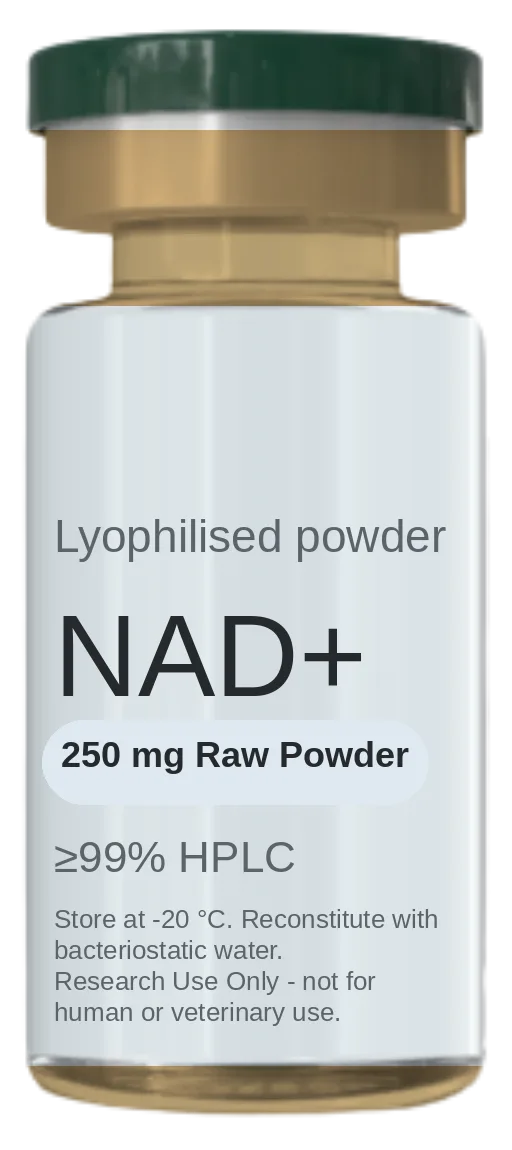
NAD+ (Nicotinamide Adenine Dinucleotide)
Essential redox cofactor central to cellular metabolism and sirtuin research.
- Purity:
- ≥99% HPLC
- Sizes available:
- 250 mg Raw Powder – 300 mg
The consultation
One intake that settles goals, history and contraindications alongside compound, quantity, documentation and route — reviewed by a physician before anything ships.
More notes
-
No Batch Number on the Invoice: Customs
If a peptide shipment's invoice skips the batch number, Argentine customs can hold it and request supporting documents.
-
Real Peptide Stock or Catalog?
How to tell if a research peptide supplier holds real stock or is just quoting from a generic catalog, before you pay anything.
-
How to Verify a Janoshik COA
What to check on a Janoshik Analytical certificate to confirm a research peptide matches its stated batch.