
Note
No Batch Number on the Invoice: Customs
If a peptide shipment's invoice skips the batch number, Argentine customs can hold it and request supporting documents.
If the commercial invoice for a research peptide shipment doesn't carry a batch number, Argentine customs won't reject the package outright, but it can hold it and request supporting documentation before release. The batch number is one of the data points an inspector uses to check that what the invoice says matches what's inside the box, and leaving it out is the kind of inconsistency that turns a routine clearance into a flagged one.
What the batch number is for on an import invoice
A commercial invoice for research peptides describes the contents of a shipment: the compound name, the number of vials, the declared weight, and — if it's assembled correctly — the manufacturing batch of each product. That batch number isn't a decorative field. It's what physically connects the vial that arrives to the laboratory report backing its purity. Without it, an inspector who opens the box has nothing to cross-reference against — just lyophilised powder with no paper trail.
That's different from what happens with a consumer-goods parcel, where the batch is almost never checked because the declared value is low and the perceived risk is too. A research peptide shipment sits in another category entirely: customs scrutinizes it more closely because it's a chemical product with no obvious end-use visible at a glance, and that's exactly where traceability — batch, origin, and a recipient declared for research use — makes the difference between direct clearance and a shipment parked in a bonded warehouse.
What customs does when the data is missing
Outright seizure is not the common outcome. Delay is. The system flags the shipment for document review, and the customs broker (or the recipient directly, if there's no broker involved) receives a request for clarification or additional documentation. While that gets sorted out, the package sits in a bonded warehouse — it doesn't move again until the file is complete.
The possible outcomes, from least to most serious:
- Request for a corrected or supplementary invoice. The importer submits a corrected invoice or an addendum with the batch number, and customs resumes processing.
- Extended physical inspection. The inspector opens the package, compares it against what was declared, and documents the discrepancy before deciding.
- Return to sender, if the inconsistency isn't resolved within the bonded warehouse's holding period.
- Seizure, in the most extreme scenario, when the missing data is compounded by other red flags — an under-declared value, an unresponsive recipient, or an ambiguous description of the contents.
Most missing-batch cases end at the first or second point, not the last. But every day the file stays open is a day of delay that wasn't in the plan, and in some cases a storage cost at the bonded warehouse that falls on the recipient.
What happens if the batch on the invoice doesn't match the vial
This is a different problem, and in practice a more serious one than simply leaving the field blank: an invoice that declares one batch, and a vial that carries another. To an inspector, that discrepancy doesn't read as a typo — it reads as documentation that doesn't accurately describe the real contents of the shipment, which is exactly what a customs control is designed to catch. The fix isn't leaving the field blank to avoid the risk of an error. It's making sure the batch number on the invoice is the same one that appears on the laboratory's certificate of analysis for that shipment.
PeptoClinic runs that check as part of assembling the file for shipments to Argentina: the batch declared on the commercial invoice has to match the one shown on the Janoshik Analytical report for that product. The reports published on the quality and certificates of analysis page show that number alongside the purity result — the lowest published to date is 99.669%, on MOTS-c — and that's the same number that has to appear on the invoice customs reviews.
How a shipment's documentation should be assembled
A research peptide import file that doesn't generate a flag usually has these elements aligned with each other:
- Commercial invoice with the compound description, quantity, manufacturing batch, and a stated-use declaration (laboratory research, not human or veterinary consumption).
- Packing list that matches the invoice number for number — same batch, same vial count, same weight.
- Certificate of analysis (COA) for the matching batch, available to present if customs requests it as backing for traceability.
- Recipient declared consistently across the rest of the file — not one name on the invoice and another on the waybill.
None of these documents replaces the others. The invoice is the first thing a risk-control system looks at; the COA answers the question the invoice alone can't — whether that specific batch was actually analyzed and what purity it returned.
The material is for laboratory research, not consumption
Everything PeptoClinic supplies is provided strictly for Research Use Only (RUO): in vitro and laboratory research. Nothing in the catalog — including retatrutide or BPC-157 — is approved or intended for human or veterinary consumption, diagnosis, or treatment. None of these statements have been evaluated by ANMAT, the FDA, or an equivalent authority, and that same stated-use declaration is what goes on the documentation for every shipment.
How PeptoClinic handles it
Every quote to an Argentine destination includes preparing the customs file with the batch number already cross-checked against the laboratory's certificate of analysis. The material travels as lyophilised powder in a sealed vial — not in a cold chain, because a lyophilised product is stable at room temperature for weeks — with the shipping documentation assembled so the number the inspector sees is the same one that backs the purity report. More on who we are and how we work on the about page.
Frequently asked questions
Does Argentine customs automatically seize a shipment without a batch number on the invoice?
Not automatically. The usual outcome is that the shipment is held in a bonded warehouse while supplementary documentation is requested; seizure is the least common outcome and tends to happen when other inconsistencies are stacked on top, not from a missing batch number alone.
What's the difference between not declaring the batch and declaring one that doesn't match the vial?
They're two different problems. A missing data point usually gets resolved by submitting a corrected invoice. A mismatch between the declared batch and the actual vial reads as documentation that doesn't accurately describe the contents, which triggers a more thorough review.
Where do I find a product's batch number before the shipment arrives?
It's on the certificate of analysis (COA) from the laboratory that tested that specific batch. PeptoClinic provides that reference as part of the quote, before dispatch.
Does the certificate of analysis replace the commercial invoice?
No. The invoice is the document customs evaluates first within its risk-control system; the COA is the backing that answers whether the declared batch was actually tested. The two have to match each other.
How long can a shipment held for missing documentation be delayed?
It varies by bonded warehouse and how quickly the requested documentation is submitted. There's no fixed timeline — it depends on when the importer or broker responds to the request.
Who pays for storage while the shipment is held?
Generally it falls on the shipment's recipient while the file stays open at the bonded warehouse, according to the terms of the warehouse holding the cargo.
Does this apply to every compound in the catalog or just some?
It applies to any research peptide shipment bound for Argentina, regardless of compound — the customs review evaluates the shipment's documentation, not a particular product.
Is this material approved for human use in Argentina?
No. Everything supplied is strictly for laboratory research (RUO) and is not approved for human or veterinary consumption, diagnosis, or treatment, nor evaluated by ANMAT or any equivalent authority.
Compounds mentioned
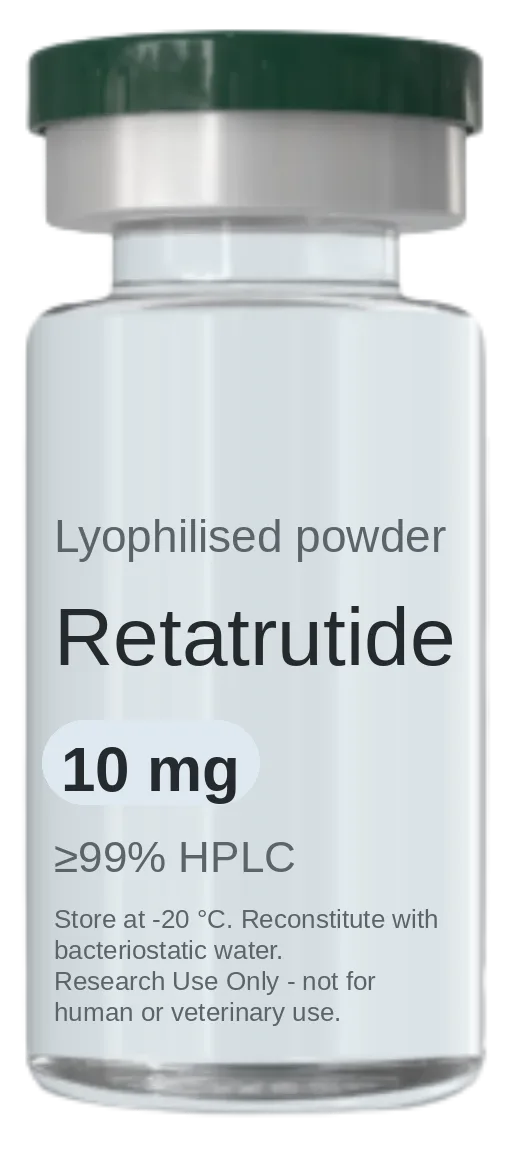
Retatrutide
Triple-agonist metabolic research peptide targeting GLP-1, GIP and glucagon receptors.
- Purity:
- ≥99% HPLC
- Sizes available:
- 10 mg
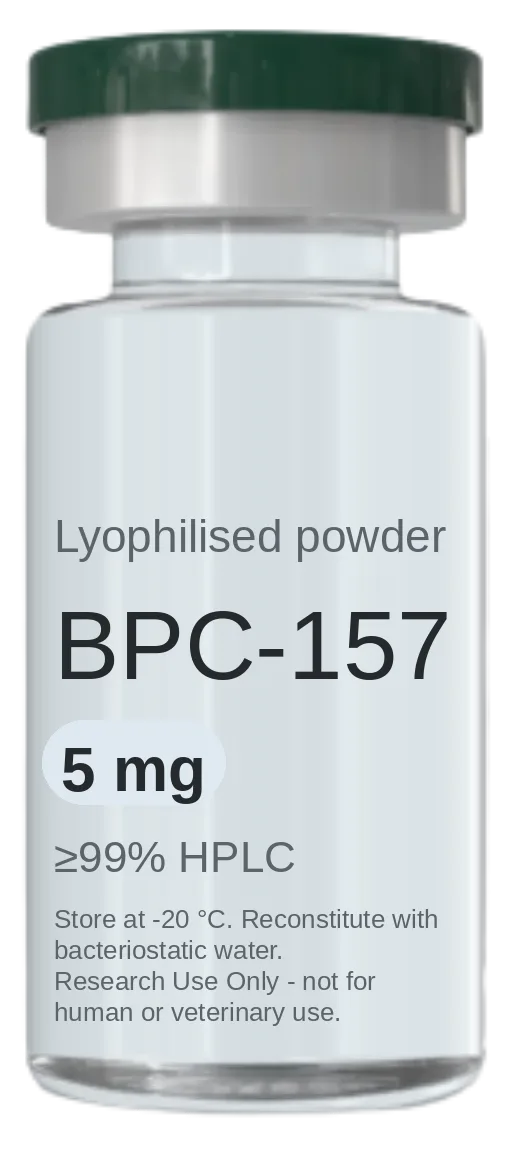
BPC-157 + TB-500
BPC-157 and TB-500 in a single vial — the pairing most studied together in tissue-repair research.
- Purity:
- ≥99% HPLC
- Sizes available:
- 5 mg + 5 mg
The consultation
One intake that settles goals, history and contraindications alongside compound, quantity, documentation and route — reviewed by a physician before anything ships.
More notes
-
Retatrutide vs. Tesamorelin: What's Different
Retatrutide and tesamorelin target different receptors and different research questions — here's what the documentation shows.
-
KPV vs. Selank: What's the Difference
KPV is an anti-inflammatory tripeptide; Selank is a nootropic peptide. We compare origin, research focus and documentation for each.
-
Importing Selank to Argentina for Research
Selank can be imported into Argentina as laboratory research material, with customs paperwork prepared for that purpose.