
Note
Bacteriostatic Water: What It Is Used For
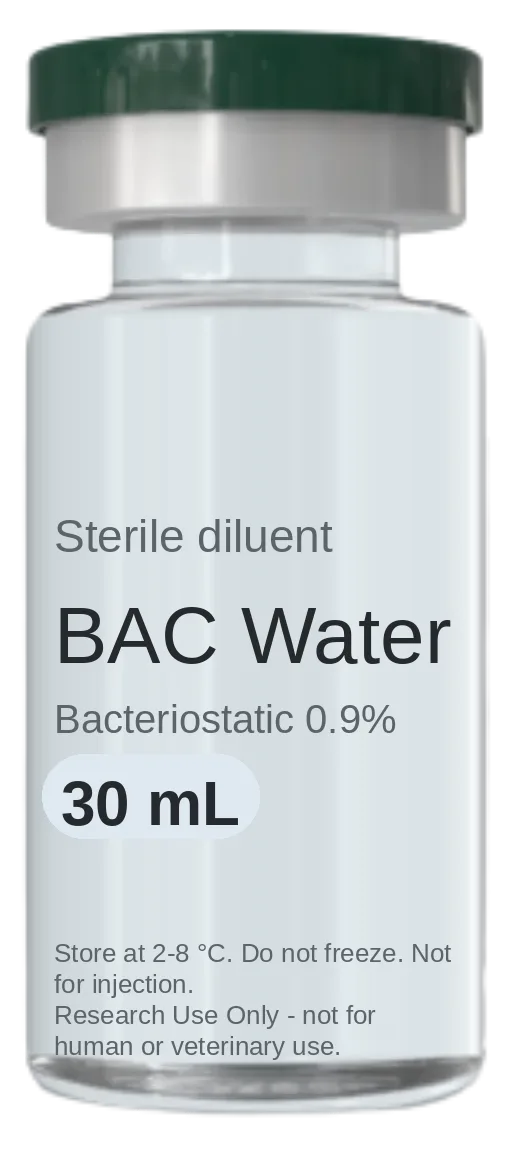
Bacteriostatic water contains 0.9% benzyl alcohol as a preservative. It is the laboratory standard for reconstituting lyophilized peptides and proteins.
Bacteriostatic water is sterile water for injection that contains 0.9% benzyl alcohol as a preservative. The benzyl alcohol inhibits the growth of bacteria and fungi, which allows the vial to be resealed between uses and refrigerated without the contents becoming contaminated. In laboratory research, bacteriostatic water is used primarily to reconstitute lyophilized materials — peptides, proteins, hormonal analogs — that arrive as dry powder and need to pass into aqueous solution before assays can be run.
How it differs from sterile water for injection
Sterile water for injection carries no preservative. Once a vial is opened, any subsequent handling introduces contamination risk. If a protocol requires drawing from the same vial at different points across the week, sterile water is not the right tool: the solution is unprotected between openings.
Bacteriostatic water resolves that problem. The 0.9% benzyl alcohol creates an antimicrobial barrier that tolerates repeated openings without compromising the microbiological integrity of the contents. The vial can go back into refrigeration and remain available for the next sampling point in the same experimental series.
There are situations where sterile water is the correct choice: when the protocol specifies that the preservative may interfere with the assay, or when the prepared solution will be used entirely within a single session. The choice between the two depends on experimental design, not on any intrinsic quality difference between the products.
Benzyl alcohol at 0.9%: why that concentration
The percentage is not arbitrary. At 0.9%, benzyl alcohol is effective against gram-negative and gram-positive bacteria and the most common ambient fungi encountered in laboratory settings. At the same time, it sits below the concentrations that denature most small peptides and proteins used as analytes in research.
The peptide stability literature works repeatedly in that range precisely because it balances two simultaneous requirements: protecting the sample against microbial contamination and preserving the integrity of the compound. A search on PubMed for peptide stability in aqueous preservative surfaces decades of work on that equilibrium.
The United States Pharmacopeia defines bacteriostatic water for injection as water containing one or more approved antimicrobial agents. Benzyl alcohol is the most extensively documented preservative in that category. That classification establishes the manufacturing standard that makes it possible to compare lots across suppliers and demand consistent specifications.
Lyophilized peptides and the reconstitution step
Research peptides are supplied in lyophilized form because dry powder is far more stable than solution. Without water, enzymatic and hydrolytic degradation essentially stops. Most lyophilized peptides remain stable for months; in solution, useful shelf life drops to days or weeks depending on the compound and storage conditions.
To use them in an assay — receptor binding, in vitro cytotoxicity, cell migration, fluorescence assays and similar work — the powder has to move into aqueous solution. For most water-soluble peptides, bacteriostatic water is the standard choice because:
- It keeps pH close to neutral without buffers that could interfere with the assay.
- The preservative covers the period between reconstitution and the end of the experimental series.
- It is compatible with downstream dilution into laboratory buffer (PBS, DMEM, balanced saline solution).
For peptides with low aqueous solubility, the first step may require a co-solvent such as DMSO or dilute acetic acid. In those cases bacteriostatic water typically enters at the final dilution step rather than the initial reconstitution.
Standard and Plus formulations
PeptoClinic supplies both formulations: the standard bacteriostatic water and the Plus version. The difference is in the preservative formulation: the Plus version provides broader antimicrobial coverage, intended for protocols with extended storage of the reconstituted solution or for working conditions with higher ambient contamination risk.
The standard version covers the majority of normal-duration laboratory protocols. Which one a protocol calls for depends on storage time and working conditions, not on a quality hierarchy between the two.
Storage and shelf life
An unopened vial of bacteriostatic water carries a manufacturer-certified expiry date. Checking it before use is a basic quality-control step for any protocol.
Once a lyophilized material has been reconstituted, stability in solution depends on the compound, not on the solvent. The preservative controls bioburden; it does not stop the chemical degradation of the analyte. Standard laboratory practice is to aliquot the reconstituted material: freeze what will not be used within the next few days, and keep only the active fraction of the week in refrigeration. This minimizes freeze-thaw cycles and extends the useful life of the lot.
Laboratory use only
The bacteriostatic water supplied by PeptoClinic is intended exclusively for in vitro laboratory research. It is not approved for human or veterinary use. It is not a medicine, it does not replace any pharmaceutical product, and it is not indicated for any therapeutic, diagnostic or preventive purpose in people or animals.
All materials in the PeptoClinic catalog are research supplies classified as Research Use Only (RUO). Lot documentation and certificates of analysis are prepared under that classification. No regulatory authority has evaluated these materials for use in humans. PeptoClinic does not provide information on protocols, administration or dosing in people; those requests are outside the scope of the company.
Solvent documentation as part of the protocol
In reproducible research, the solvent is not a minor detail. A lot of bacteriostatic water has its own lot number, manufacturing date and preservative specifications. When a result is published, reproducibility depends on the next laboratory being able to replicate exactly the same conditions, solvent included.
PeptoClinic understands that requirement. The quality documentation that accompanies each order includes certificates of analysis for the lyophilized material, issued by Janoshik Analytical, an independent analytical laboratory. For bacteriostatic water, the supplier's lot traceability completes that documentation chain. Shipments to Argentina and other destinations are prepared with customs documentation for laboratory reference material, because that is what PeptoClinic supplies.
Frequently asked questions
What is bacteriostatic water used for?
Bacteriostatic water is used to dissolve lyophilized materials — peptides, proteins and research compounds — that arrive as dry powder and need to pass into aqueous solution before assays are run. The preservative (0.9% benzyl alcohol) allows the vial to be reopened multiple times within an experimental series without compromising the microbiological integrity of the solution.
How does bacteriostatic water differ from sterile water for injection?
Sterile water carries no preservative. Once the vial is opened, it is not designed for multiple draws at separate points in time. Bacteriostatic water, with its 0.9% benzyl alcohol, withstands repeated openings within an experimental series and can be refrigerated between uses without the contents being left unprotected.
Does benzyl alcohol affect the structure of research peptides?
At the standard 0.9% concentration, benzyl alcohol is compatible with most research peptides. That concentration was adopted as the standard because it balances antimicrobial activity with the integrity of small biological materials. Peptides with more complex tertiary structure or higher pH sensitivity may require case-by-case evaluation against the protocol's specifications.
How long does an unopened vial of bacteriostatic water last?
The manufacturer certifies the shelf life of the vial; that date is printed on the packaging and must be verified before the product is used. Once opened, the vial can be reused within the window the protocol determines, provided it is kept refrigerated and seal integrity is maintained between uses.
What is the difference between the standard version and the Plus version?
The Plus version has a preservative formulation with broader antimicrobial coverage. It is more appropriate when the protocol calls for extended storage of the reconstituted solution or when working conditions present a higher ambient contamination risk. For normal-duration protocols, the standard version is sufficient.
Does PeptoClinic ship bacteriostatic water to Argentina?
Yes. PeptoClinic supplies research materials to Argentina, including laboratory diluents such as bacteriostatic water in both formulations. Shipments are prepared with customs documentation for laboratory reference material. Quotation requests are handled through [email protected].
Can distilled or mineral water be used instead of bacteriostatic water?
No, not for rigorous laboratory research. Mineral water contains salts and minerals that can interfere with assays and alter the pH of the solution. Distilled water does not meet the water for injection (WFI) specification and carries no preservative. Both introduce uncontrolled variables that compromise reproducibility and experimental integrity.
Does lot documentation include the bacteriostatic water?
The primary documentation that accompanies a PeptoClinic order covers the lyophilized material with the Janoshik Analytical certificate of analysis. For bacteriostatic water, lot traceability comes from the diluent supplier. When compiling an experiment record, both documentation sources form part of the protocol's reproducibility chain.
Compounds mentioned
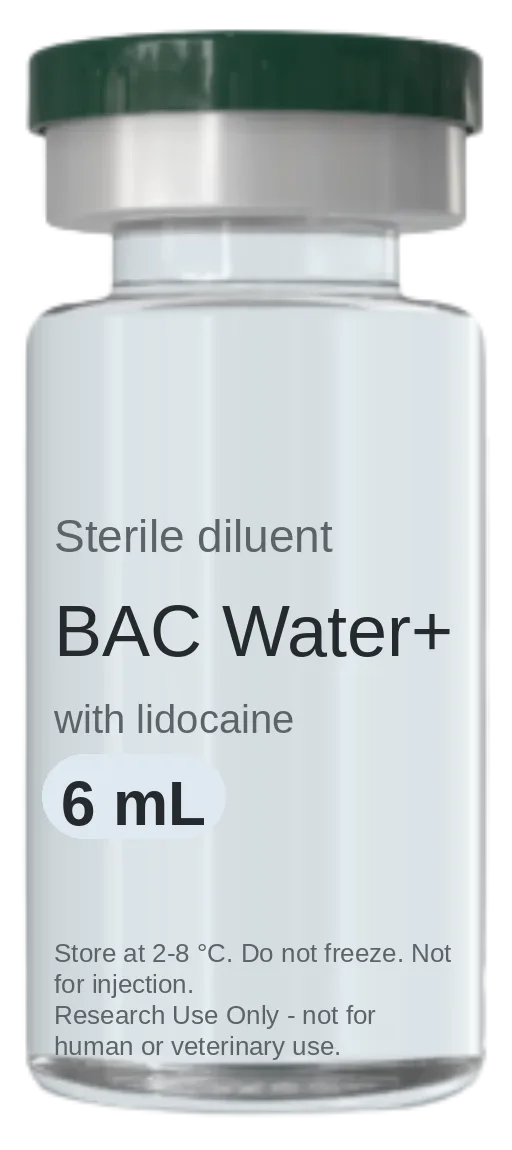
BAC Water+ (6mL con Lidocaína)
Bacteriostatic water with lidocaine, 6 mL, for laboratory reconstitution.
- Purity:
- USP grade
- Sizes available:
- 6 mL
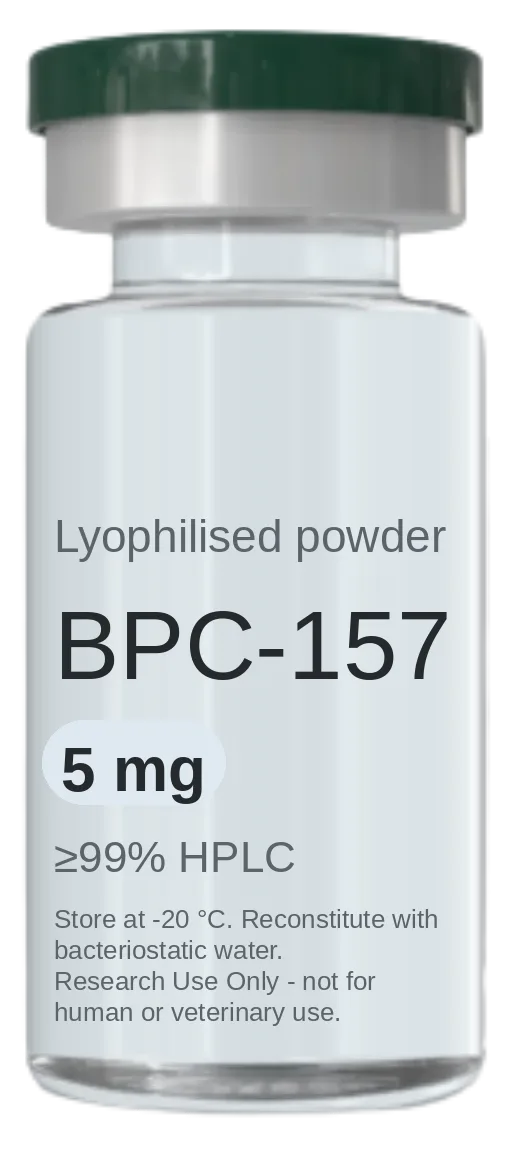
BPC-157 + TB-500
BPC-157 and TB-500 in a single vial — the pairing most studied together in tissue-repair research.
- Purity:
- ≥99% HPLC
- Sizes available:
- 5 mg + 5 mg
The consultation
One intake that settles goals, history and contraindications alongside compound, quantity, documentation and route — reviewed by a physician before anything ships.
More notes
-
Temporary Import Regime & Peptides
Temporary import covers goods that leave the country again; a research peptide shipment stays and gets used up.
-
Retatrutide vs GHK-Cu: What's the Difference
Retatrutide and GHK-Cu are different molecules studied for different reasons. Here's what each investigates and what documentation backs a batch.
-
Invoiced vs. Unbilled Peptide Suppliers
What changes when a research peptide supplier invoices the transaction versus one that takes payment and leaves no paper trail.