
Note
BPC-157 vs CJC-1295: What Separates Them
BPC-157 and CJC-1295 are research peptides from different families. Here's what each one studies and how they actually differ.
BPC-157 and CJC-1295 are not variants of the same peptide and they don't compete for the same slot in a research protocol: they are two molecules from entirely different families, with different structures and different research questions behind them. BPC-157 is a synthetic fragment of a gastric protein studied in tissue-repair models. CJC-1295 is an analog of growth hormone-releasing hormone (GHRH), studied in relation to the somatotropic axis. The only thing they genuinely share is that they both show up in the same search because they're listed in the same research-peptide catalogues.
What BPC-157 is
BPC-157 is a pentadecapeptide (fifteen amino acids) derived from a sequence that occurs naturally in human gastric juice, known as BPC ("body protective compound"). In the research literature it's associated with study models looking at gastrointestinal tissue integrity, wound healing and angiogenesis. Structurally, it's a short and relatively stable peptide compared with other molecules in the catalogue.
The BPC-157 Argentina page has availability detail and the kind of documentation that accompanies a batch when it's quoted for that destination. The general entry for the compound is in the catalog, alongside the other eighteen molecules we carry.
What CJC-1295 is (and the no-DAC variant)
CJC-1295 belongs to a completely different family: it's a synthetic analog of GHRH, the hormone that in the hypothalamic-pituitary axis stimulates the release of growth hormone. Two variants show up in the literature: one with DAC (Drug Affinity Complex, which extends the molecule's half-life) and one without. In our catalogue we work with CJC-1295 no-DAC, the form more commonly used in research designs because its action profile is shorter and more controllable within an experimental model.
The CJC-1295 no-DAC Argentina page carries the same type of information as the BPC-157 page: availability and batch documentation. If the research interest is specifically the GHRH axis, it's worth also looking at related peptides like ipamorelin or sermorelin, which work on the same system from different angles.
The differences that actually matter
Stripped down to essentials, here's what separates the two peptides:
- Different structural family. BPC-157 is a fragment of a gastric protein. CJC-1295 is an analog of a hypothalamic hormone. They share no amino acid sequence and no proposed mechanism.
- Different biological system under study. The BPC-157 literature concentrates on tissue-repair models and gastrointestinal integrity. The CJC-1295 literature concentrates on the GHRH-growth hormone axis.
- Half-life and behavior in the model. CJC-1295 no-DAC has a shorter action window than the DAC variant, which matters for anyone designing a research protocol with scheduled sampling. BPC-157 is typically studied on a different time curve, tied to repair processes that are, by nature, slower.
- They're not interchangeable in an experimental design. Choosing one over the other depends on which biological variable is the object of study, not on which one is "better" — they answer different questions entirely.
Why they turn up together in searches
It's common to see BPC-157 and CJC-1295 listed on the same supplier page, in the same imaginary cart, or in the same comparison search, simply because both are short peptides, both come as lyophilized vial powder, and both carry similar search demand. That doesn't make them comparable in function or mechanism. The right question isn't "which one is better" but "which biological system am I actually trying to study?" If the answer is tissue repair, the relevant literature is on BPC-157. If the answer is the GHRH axis, the relevant literature is on CJC-1295 and its related analogs.
Purity and traceability: how each batch is verified
At PeptoClinic, every batch that's quoted has to check against an independent laboratory report, not against a claim printed on a label. The reports we publish come from Janoshik Analytical, and the lowest purity figure we've published on any batch to date is 99.669%, measured by HPLC. That's the number worth using as the reference point for the standard we work to — not the best figure we can show, but the documented floor.
How to read a certificate of analysis — what it states, what it doesn't, and what to ask a supplier who doesn't have one — is covered on the quality page. Worth reading before quoting any peptide, whether it's BPC-157, CJC-1295 or anything else in the catalogue.
How the material ships
Both peptides are supplied as lyophilized powder in a sealed vial, with desiccant and protected from light. Lyophilized powder is stable at room temperature for weeks, so shipping doesn't require a cold chain: no gel pack, no dry ice, no temperature logger. Cold starts to matter afterward, once the material is reconstituted in the destination lab — not during transport of the sealed vial. Full detail on how each order travels is on the shipping page.
Laboratory research use only
Both BPC-157 and CJC-1295 are supplied strictly for Research Use Only (RUO). They are reference material for in vitro and laboratory research: not medicines, not supplements, and not approved for human or veterinary consumption, diagnosis or treatment. No claims about these compounds have been evaluated by ANMAT, the FDA or any equivalent authority. PeptoClinic is not a pharmacy, not a clinic, and does not provide guidance on administration or protocols for use in people — that kind of request falls outside what this service answers.
How each peptide is quoted
There's no published price and no checkout cart for either compound. The technical team reviews which compound, which purity specification and which quantity a given research project needs, along with batch documentation and shipping route, and returns a written quote. That holds for BPC-157, for CJC-1295 no-DAC, and for any of the other seventeen molecules in the catalogue.
Frequently asked questions
Can BPC-157 and CJC-1295 be combined in the same study?
They're molecules from different families acting on different biological systems, so whether to combine them depends entirely on the research protocol's design and which variables it's meant to observe. There's no generic answer — that decision belongs to whoever is designing the study, based on its specific objective.
Which of the two is more stable as lyophilized powder?
Both are supplied lyophilized and both are stable at room temperature for weeks in that form, protected from light and with desiccant. Stability of the reconstituted peptide in solution is a separate question, and it depends on the compound and on storage conditions at the destination lab.
Are CJC-1295 with DAC and without DAC the same product?
No. They share the structural base of a GHRH analog, but the DAC variant incorporates a complex that changes its behavior in the experimental model relative to the no-DAC variant. Our catalogue carries the no-DAC variant.
Why is BPC-157 associated specifically with gastrointestinal tissue studies?
Because the sequence it's derived from was originally identified in gastric juice, and the research literature that followed concentrated on models related to that same anatomical region and to tissue-repair processes more broadly.
Is there a laboratory report for every batch of BPC-157 and CJC-1295?
Every batch that's quoted can be checked against independent laboratory documentation. The detail of what that documentation includes and how to verify it is explained on the [quality page](/en/quality/), worth reviewing before requesting any quote.
Can BPC-157 and CJC-1295 be quoted together for shipment to Argentina?
Yes, both are available for destinations in Argentina and can be included in the same quote request. The dedicated pages for [BPC-157](/en/argentina/bpc-157/) and [CJC-1295 no-DAC](/en/argentina/cjc-1295-no-dac/) have the availability detail for that destination.
What other peptides are worth looking at for research on the GHRH axis?
If the research question centers on the GHRH-growth hormone axis, besides CJC-1295 no-DAC it's worth reviewing ipamorelin and sermorelin, which are in the same catalogue and work on related systems through different mechanisms.
Are these peptides approved for human use?
No. Both BPC-157 and CJC-1295 are supplied strictly for laboratory research (Research Use Only). They are not medicines, not supplements, and no regulatory authority — neither ANMAT nor the FDA — has evaluated claims about their use in people or animals.
Compounds mentioned
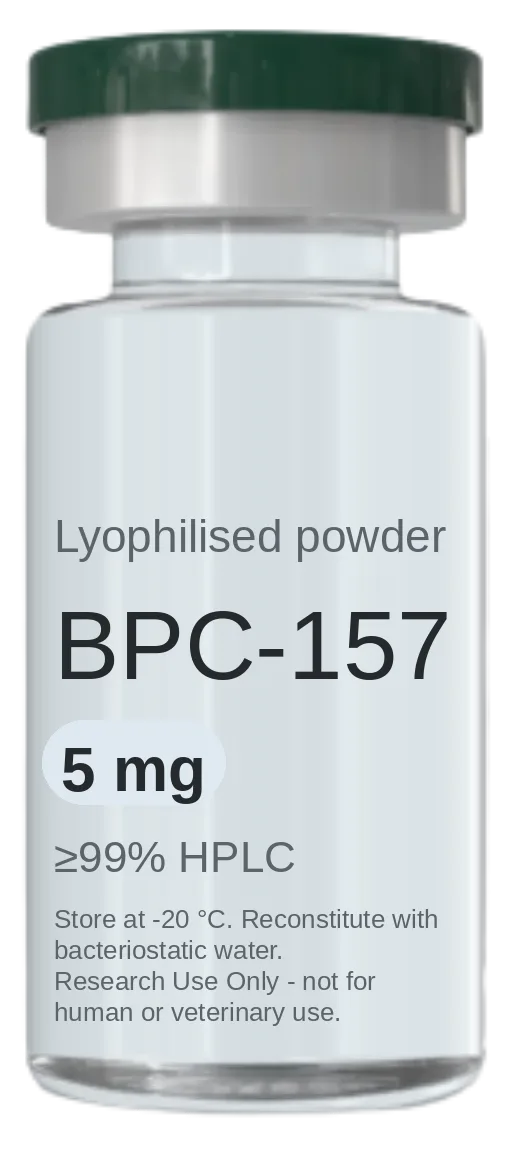
BPC-157 + TB-500
BPC-157 and TB-500 in a single vial — the pairing most studied together in tissue-repair research.
- Purity:
- ≥99% HPLC
- Sizes available:
- 5 mg + 5 mg
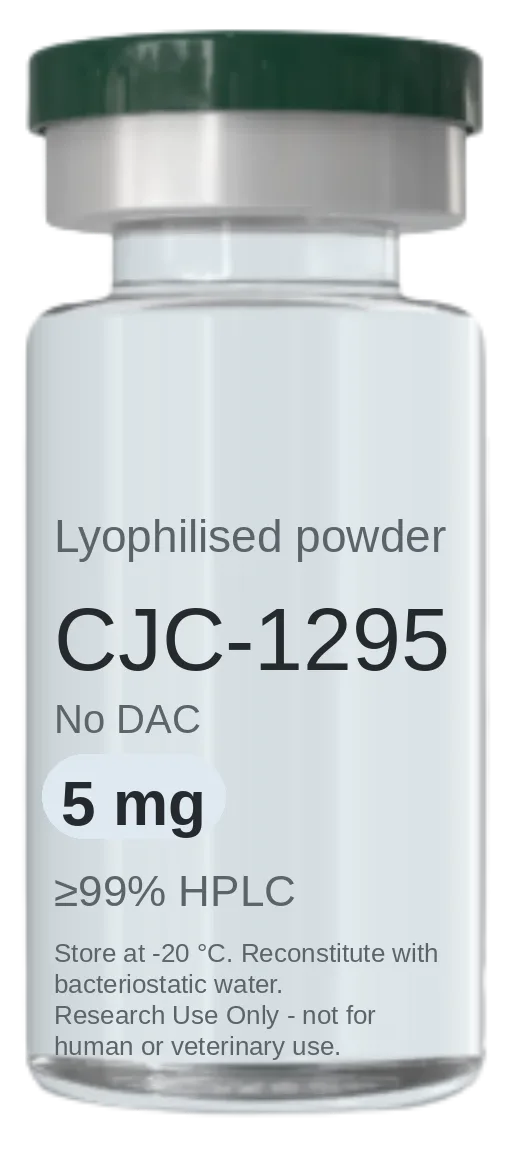
CJC-1295 (sin DAC)
Modified GRF(1-29) tetrasubstituted analogue without drug affinity complex.
- Purity:
- ≥99% HPLC
- Sizes available:
- 5 mg – 20 mg
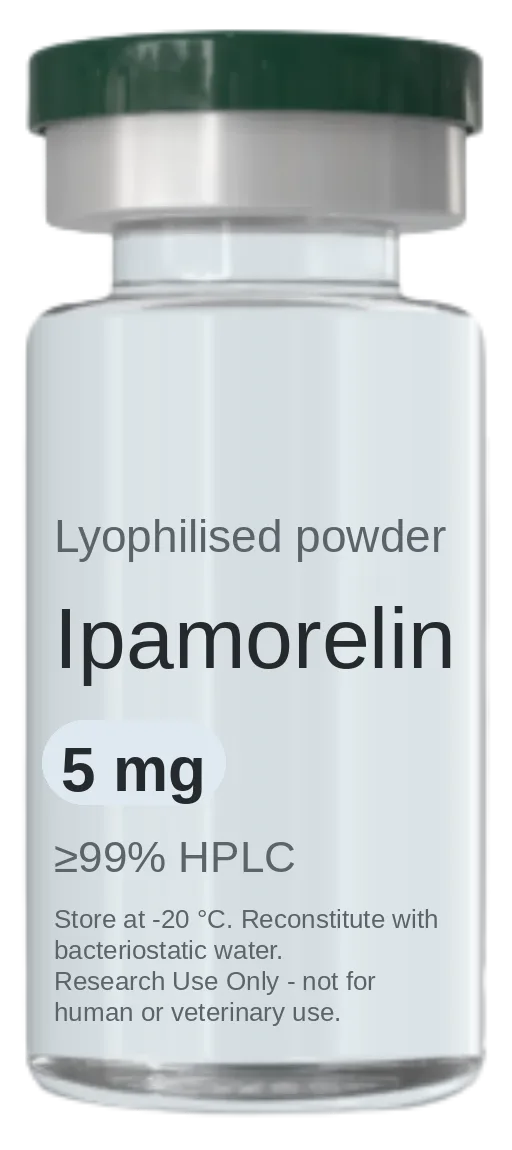
Ipamorelin
Selective ghrelin receptor (GHS-R1a) agonist pentapeptide.
- Purity:
- ≥99% HPLC
- Sizes available:
- 5 mg – 20 mg
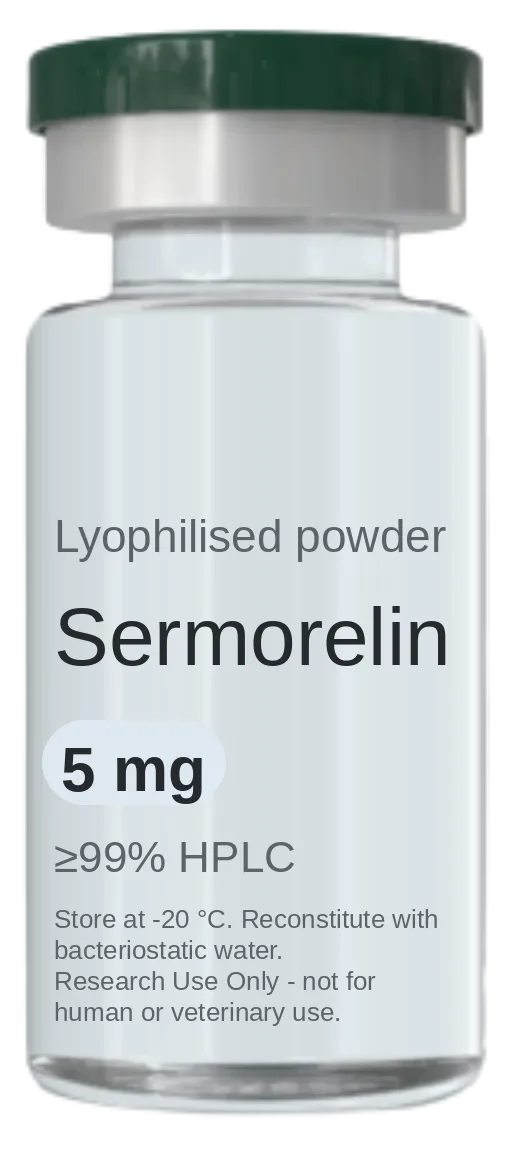
Sermorelin
Growth hormone-releasing hormone analogue used in endocrine signalling research.
- Purity:
- ≥99% HPLC
- Sizes available:
- 5 mg – 20 mg
The consultation
One intake that settles goals, history and contraindications alongside compound, quantity, documentation and route — reviewed by a physician before anything ships.
More notes
-
Retatrutide vs. Tirzepatide: Differences
Retatrutide adds a third receptor that tirzepatide doesn't activate — here's how the two differ in structure, mechanism, and published research.
-
NAD+ vs Selank: What's the Difference?
NAD+ is a cellular coenzyme; Selank is a synthetic peptide derived from tuftsin. Structure, mechanism, and what each one is studied for.
-
Peptide Customs Clearance Cost in Argentina
What determines customs clearance cost for a research peptide shipment to Argentina, and what documentation PeptoClinic prepares for it.