
Note
Lot COA vs. generic certificate of analysis
A lot-specific COA names the batch analyzed, the test date, and the signing laboratory. A generic one names none of the three.
A lot-specific certificate of analysis (lot COA) is issued for a defined production batch: it names the task or lot number, the date the analysis was performed, the signing laboratory, and the exact results for that sample. A generic certificate states that a compound reaches a certain purity without indicating when it was tested, which lot was measured, or who signed it. The difference between the two is not presentational — it is a matter of verifiability.
What a lot COA must contain
A properly issued lot COA contains at least seven elements:
- Task or lot number. The identifier that links the document to the laboratory's internal record. Without it, the certificate cannot be cross-referenced with any filing.
- Full compound name. With its sequence or CAS number, not only the commercial name.
- Declared quantity and form. For example: "10 mg, lyophilized powder".
- Date of analysis. Not the print date or shipping date — the date the laboratory actually measured the sample.
- Analytical method used. Reverse-phase HPLC is the standard for peptides; a certificate that omits the method does not say how the measurement was taken.
- Numerical results. Purity as a percentage, content in milligrams. Not ranges or "conforms", but a concrete number.
- Laboratory and analyst identification. Name of the laboratory, country of operation, name or code of the analyst who signed.
When those seven elements are present, the document is traceable: you can contact the laboratory, provide the task number, and confirm the analysis exists in their database.
What a generic certificate lacks
A generic certificate typically shows the compound name, the supplier's logo, and a purity percentage. It sometimes states the method. What it never includes is the lot number that was analyzed or the date the test was performed.
That makes two things impossible. First, you cannot verify with the laboratory that the analysis existed, because there is no task number to present. Second, you cannot determine whether the certificate corresponds to the batch you received or to an earlier production run of the same compound.
A supplier working with multiple manufacturers can present the same generic document for batches of different quality. The problem is not necessarily deliberate fraud: it may be a genuine document from an earlier run that no longer applies to current stock. Without a task number, there is no way to distinguish between the two cases.
Why the task number is the fact that matters
The task number is the link between the paper and the laboratory's record. Janoshik Analytical assigns a task number to each analysis. PeptoClinic publishes those numbers alongside the corresponding reports on its quality page.
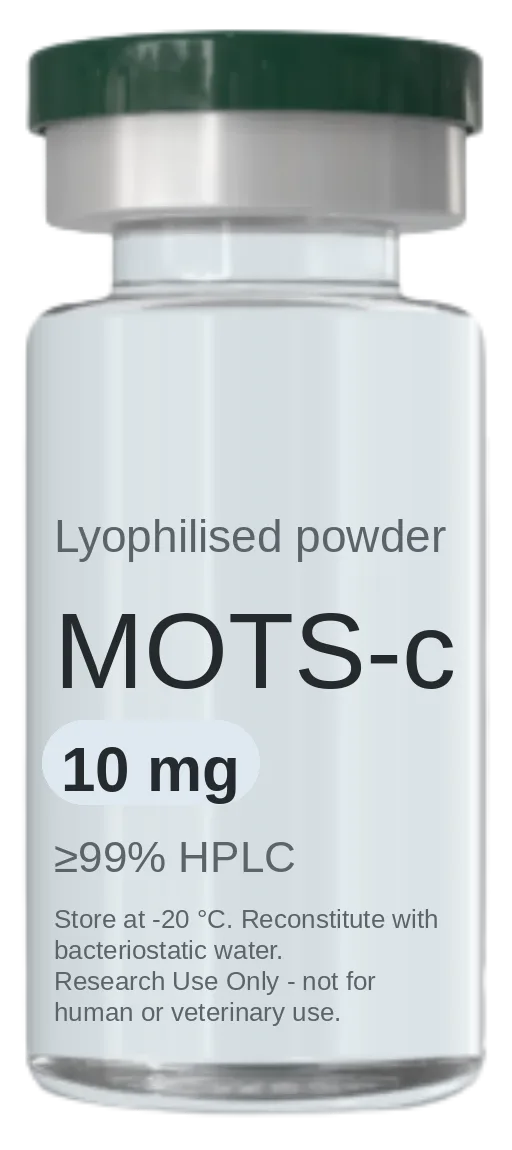
Report 136921 corresponds to an analysis of retatrutide performed on April 13, 2026: 99.893% purity by HPLC, on a vial labeled 10 mg that contained 11.96 mg measured content. Report 136923 corresponds to MOTS-c from the same date: 99.669% purity. Those are lot-level data. The number exists, the date exists, the laboratory signed.
For research, that level of traceability is not an administrative detail. If an experiment produces unexpected results, the first question concerns the quality of the reagents: purity, content, date of analysis. Without a task number to present to the laboratory, that question has no answer.
How to verify a COA you already have
If the certificate includes a task number and names the laboratory, the direct path is to contact the laboratory and cite that number. Janoshik Analytical responds to verification inquiries by email.
If the certificate does not include a task number, verification through that channel is not possible. You can compare the document's logo with the laboratory's website, but that does not confirm the analysis existed or applies to the batch you received.
Three signs that a COA warrants closer scrutiny:
- The date predates the purchase by several years. Lots do not last indefinitely, and a 2019 analysis on a product purchased today covers a production that is not yours.
- The purity percentage is an exact round number such as 99.00% or 100.00%. Real analyses produce irregular decimals.
- The document does not state the analytical method. "Purity: 99.5%" without specifying how it was measured is not complete technical information.
The analytical method in the COA
HPLC stands for high-performance liquid chromatography. It is the standard method for determining the purity of synthetic peptides: it separates the components of a sample by affinity to the stationary phase and quantifies each fraction. The HPLC purity percentage is the share of the total signal corresponding to the compound of interest.
Not every method yields the same number. An HPLC area-percentage analysis and a mass spectrometry analysis provide different and complementary information. The first quantifies relative purity; the second confirms molecular identity. A complete COA includes both.
The literature available through PubMed documents the assay conditions that produce reproducible results for synthetic peptides. A certificate that cites "HPLC analysis" without specifying column conditions, mobile phase, or detection wavelength is less informative than one that states them.
What lot-documented suppliers publish
PeptoClinic supplies research peptides with lot-specific analysis reports from Janoshik Analytical. The four published reports cover retatrutide, MOTS-c, GHK-Cu and the BPC-157 + TB-500 combination. Each includes a task number, compound name, date, method, purity, and measured content.
The lowest purity across those four lots is 99.669%, corresponding to MOTS-c, task 136923. That is the figure cited as the published floor, not the best result. A standard built on the highest result breaks the first time a batch with lower purity is released.
The full reports are available on the PeptoClinic quality page.
Research use only
The peptides PeptoClinic supplies are material for in vitro and laboratory research. They are not medicines, not supplements, and not approved or intended for use in humans or animals. No regulatory body — ANMAT, the FDA or any equivalent authority — has evaluated these compounds in the context of this operation.
A certificate of analysis documents the chemical composition of a reagent lot for the researcher using it in their laboratory work. It does not certify safety of use, efficacy, or suitability for any clinical protocol.
Frequently asked questions
What is the difference between a COA and a purity certificate?
In practice the terms are used interchangeably, but technically they differ in scope. A purity certificate reports only the purity percentage. A complete COA includes purity, content in milligrams, compound identity, method, date, and lot number. The second allows a researcher to document the exact conditions of the material used in an experiment, which the first does not.
Is the supplier's lot number the same as the laboratory's task number?
Not necessarily. The task number identifies the analysis within the external laboratory's database. The supplier's lot number identifies the production run in their own internal system. To verify with the laboratory, the number you need is the laboratory's task number, not the supplier's code.
What analytical method is standard for research peptides?
Reverse-phase HPLC is the most widely accepted method for determining purity in synthetic peptides. A quality COA names it explicitly alongside the assay conditions. Mass spectrometry complements the analysis by confirming the compound's molecular identity, and a complete report includes both.
Does a COA guarantee the absence of contaminants?
Not directly, unless the certificate includes specific contaminant analyses. An HPLC purity analysis states what fraction of the total signal corresponds to the principal compound; it does not separately quantify every possible impurity. Some laboratories add endotoxin or residual solvent analyses, but those must appear explicitly in the document to be counted as part of the certificate.
What should I do if a supplier cannot provide a lot-specific COA?
The direct answer: find another supplier. In research, lot documentation is not optional. Without a verifiable task number, there is no way to confirm that what you received matches what the label states, and the analysis cannot be cross-referenced with any laboratory record.
Does the COA that ships with an order need to match the lot I received?
Yes. The lot number on the COA must match the lot number printed on the vial. If they do not match, the certificate may correspond to a different production run. Before accepting the order, cross-reference both numbers directly.
How often should analysis be updated for the same compound?
There is no universal timeframe, but standard research practice is to request updated analyses for each new lot. An analysis of a previous lot does not apply to the lot received today, even if the compound is the same and it came from the same manufacturer.
What does it mean when a vial contains more than its labeled amount?
It means the manufacturer delivered more material than the label declares. The report for task 136921 records 11.96 mg in a vial labeled 10 mg, a difference of nearly 20% above the declared amount. For research, the relevant figure is the content measured by the laboratory, not the label value, because concentrations are calculated on the effective quantity of material present.
Compounds mentioned
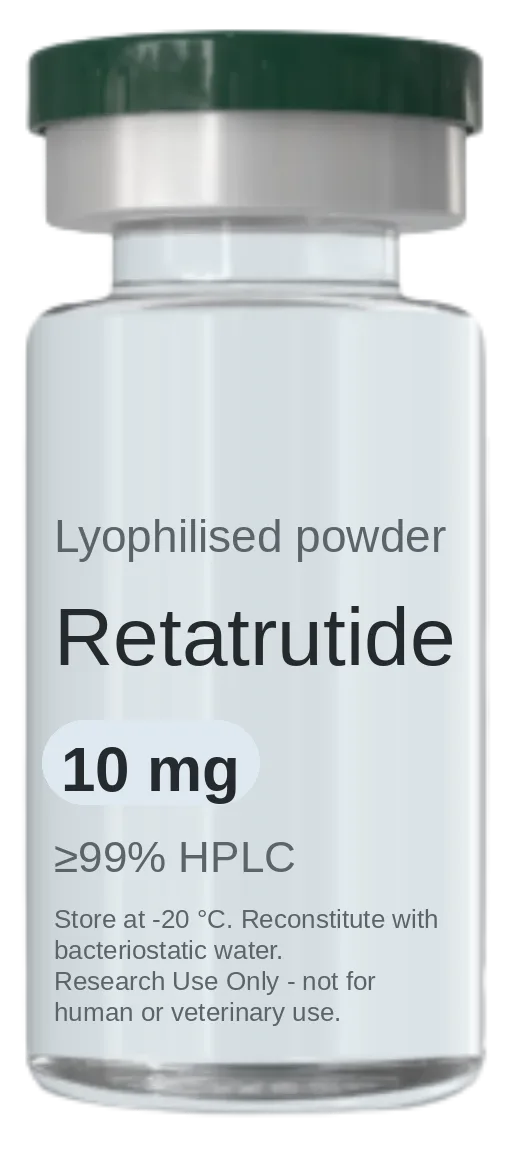
Retatrutide
Triple-agonist metabolic research peptide targeting GLP-1, GIP and glucagon receptors.
- Purity:
- ≥99% HPLC
- Sizes available:
- 10 mg
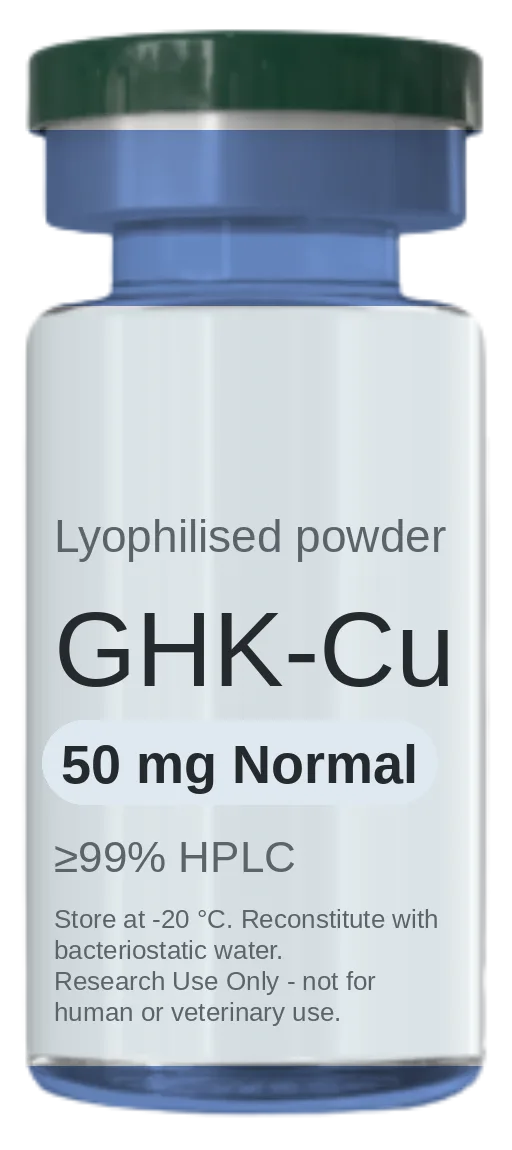
GHK-Cu (Copper Peptide)
Copper-binding tripeptide studied in extracellular matrix and dermal research models.
- Purity:
- ≥99% HPLC
- Sizes available:
- 50 mg Normal – 50 mg Plus
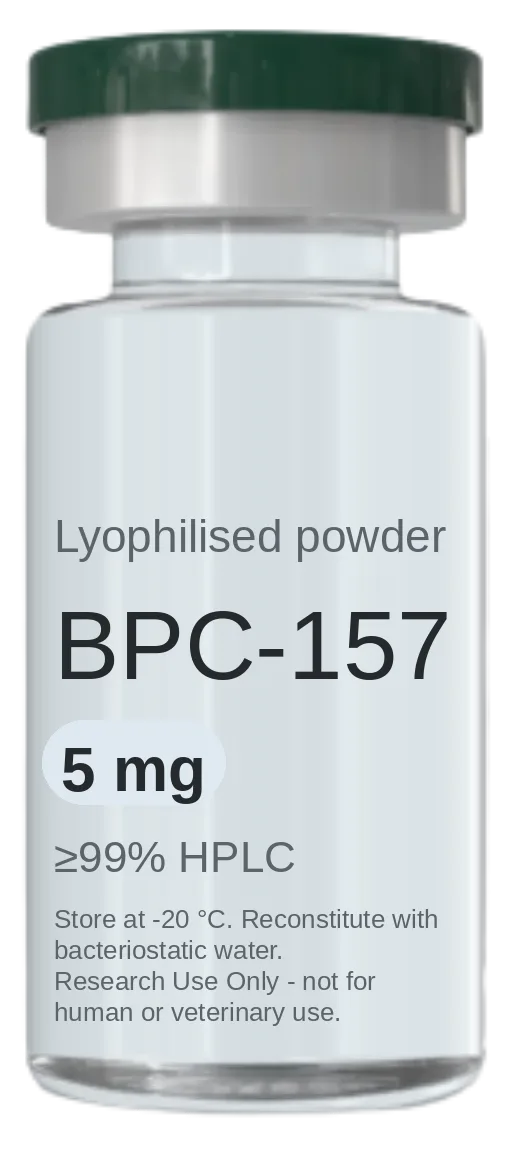
BPC-157 + TB-500
BPC-157 and TB-500 in a single vial — the pairing most studied together in tissue-repair research.
- Purity:
- ≥99% HPLC
- Sizes available:
- 5 mg + 5 mg
The consultation
One intake that settles goals, history and contraindications alongside compound, quantity, documentation and route — reviewed by a physician before anything ships.
More notes
-
Tesamorelin vs Sermorelin: The Difference
Tesamorelin and sermorelin are both GHRH analogs, but not the same molecule. Here's the structural difference and what the studies on each measure.
-
Peptide Supplier vs. Reseller: What Differs
The real difference is whether someone can name the lab that tested a batch and show the report — or only promise it's pure.
-
MOTS-c or NAD+: What's the Difference
MOTS-c and NAD+ are studied through different mitochondrial pathways; here's what each line of research actually measures.