
Note
Change Recipient After Argentine Customs
Once a research peptide shipment enters Argentine customs, can the recipient be changed? What the process actually allows.
No. Once a shipment has entered Argentine customs with a declared recipient, that detail is locked to the file: customs and the postal or courier operator handling delivery work against the person named on the declaration, identified by their national ID. There is no operational procedure for reassigning a package to someone else while it sits under customs control. The window for correcting that detail is before the shipment leaves origin, not after it arrives.
This isn't specific to research peptides. It's how any import with a named recipient works, full stop. But the question comes up often enough among people coordinating a shipment to Argentina that it's worth spelling out what it means in practice, and what to do if the detail was entered wrong.
Why the recipient is fixed once declared
When an international shipment enters the customs pipeline, the declaration ties it to a specific person identified by their national ID (DNI, or CUIT/CUIL depending on the regime). That link isn't loose administrative data — it's the basis on which the customs system and the logistics operator control who is entitled to collect that shipment. Changing it after declaration would amount to re-declaring the shipment under a different identity, and that isn't something a courier or postal operator does on request for a file already in motion.
This applies equally to a shipment of lab material, an electronics purchase, or any package moving through the postal or courier import regime. The system doesn't distinguish by content on this point — it distinguishes by who requested the shipment and who is authorized to collect it.
What happens in practice if the recipient doesn't match
If the person showing up to collect the package isn't the one named on the declaration, the usual outcome is that the courier withholds the delivery until the correct ID is presented. This isn't something resolved by calling and asking to "put it under someone else's name" — recipient identity is precisely the control that exists so a declared shipment doesn't end up with a third party who has no link to the file.
If nobody can collect it under the correct identity, the typical path forks one of two ways: the shipment stays held until the issue is resolved, or it's returned to origin once the customs warehouse deadlines expire. Neither path runs through "changing the name" in the system.
The right moment to fix the recipient is before dispatch
The part that actually can be controlled sits on the other side of the process: before the shipment leaves. When a quote is requested, the recipient's details — full name and ID — are part of the information used to build the customs file that travels with the shipment. If that detail is correct from the start, the process at destination has no friction point to resolve.
So if there's any doubt about who will actually be in a position to collect the package — travel plans, a change of address, the person coordinating the purchase not being the same person who'll be physically present to receive it — that gets sorted out in the conversation before dispatch, not afterward. A quote request that specifies the recipient correctly from the outset is the only point where that detail can still be adjusted without friction.
This is part of how any shipment to Argentina is prepared: the customs documentation is built from details confirmed before the package ships, not corrected in transit.
What documentation travels with the shipment
Every request is quoted individually, and what accompanies the package includes the compound's technical datasheet and, for batches with a published lab report, the corresponding certificate of analysis. That documentation identifies the material for what it is: a laboratory reference compound for research, not a consumer product. Anyone who wants to understand how to read a purity report before a shipment arrives can check the quality and documentation page, which explains what a certificate of analysis says and doesn't say.
The material ships as lyophilized powder in a sealed vial, with no cold chain: it carries no coolant or thermal packaging, because in that state it's stable at room temperature for weeks. Cold only starts to matter after reconstitution, and that's already a later stage than delivery.
Strictly for laboratory research use
Everything PeptoClinic supplies is provided strictly for Research Use Only (RUO): in vitro and laboratory research. It is not a medicine, not a supplement, not a food, and nothing declared in the shipment is approved or evaluated by ANMAT, the FDA, or any equivalent authority for human or veterinary consumption, diagnosis, or treatment. The customs file that accompanies each order reflects exactly that: laboratory reference material.
Compounds like retatrutide or BPC-157 — both with a published lab report — are quoted and dispatched under the same standard: the match between declared recipient and documentation is part of the process, not an afterthought.
What to do if it's already in customs and the detail is wrong
If the shipment is already under customs control and the declared recipient is incorrect, the path isn't to request a correction inside the existing file — that doesn't exist as an available procedure. It's to contact the courier or postal operator handling that specific delivery directly and find out what their particular operation allows: usually that's holding the shipment until the correct ID is presented, or returning it to origin. Each logistics operator has its own deadlines and internal procedures, so the exact answer depends on who is handling that particular shipment, not on a single rule. What's consistent is that the correction doesn't run forward from the supplier's side: the file built at origin was fixed with the details confirmed at the time of the quote.
To avoid reaching that point, the simplest approach is to treat the recipient's details with the same care as any other shipping detail when requesting a quote: confirm it once, correctly, before the order is dispatched.
Frequently asked questions
Can the recipient be changed after the shipment enters Argentine customs?
No. There's no procedure for reassigning a shipment to another person while it's under customs control. Recipient identity is fixed from the declaration onward, and any correction has to happen before that point.
What if the name or ID was entered wrong when requesting the quote?
It's best to flag it as soon as possible, always before dispatch: while the order hasn't shipped yet, the detail can still be corrected in the file prepared for customs. Once dispatched, the correction no longer depends on the supplier but on whichever logistics operator currently holds the shipment.
Who can collect a shipment at Argentine customs?
The person named as recipient on the declaration, verifying their identity with the corresponding ID. That's the same standard that applies to any international shipment with a named recipient — nothing specific to this type of material.
What happens if the recipient can't collect the package?
The shipment stays held until the situation is resolved with the courier or postal operator in charge, and if the customs warehouse deadlines expire without resolution, the usual outcome is return to origin.
Can the recipient be changed before the shipment is dispatched?
Yes. While the order hasn't left origin yet, the recipient is a detail that can be confirmed or corrected as part of the quote information. That's the only point where the change is simple.
Does the material require any special authorization to enter Argentina?
The shipment is declared as what it is: laboratory reference material for research, with documentation corresponding to the compound. It is not declared or processed as a medicine, supplement, or consumer product.
What documentation accompanies the shipment for customs?
The compound's technical datasheet and, when the batch has a published lab report, the corresponding certificate of analysis. That documentation identifies the contents as research material.
What happens if a package is abandoned at customs?
Packages not collected within the customs warehouse deadlines follow the standard procedure for that situation, which in most cases ends in return to origin. That's why it's worth confirming the recipient carefully before dispatch rather than relying on resolving the detail once the shipment is already in transit.
Compounds mentioned
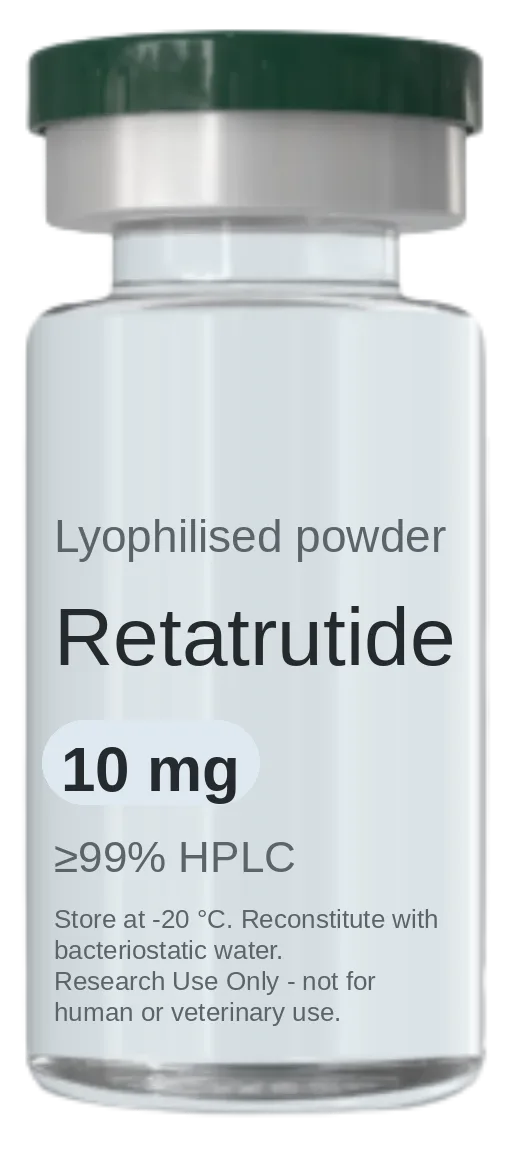
Retatrutide
Triple-agonist metabolic research peptide targeting GLP-1, GIP and glucagon receptors.
- Purity:
- ≥99% HPLC
- Sizes available:
- 10 mg
BPC-157 + TB-500
BPC-157 and TB-500 in a single vial — the pairing most studied together in tissue-repair research.
- Purity:
- ≥99% HPLC
- Sizes available:
- 5 mg + 5 mg
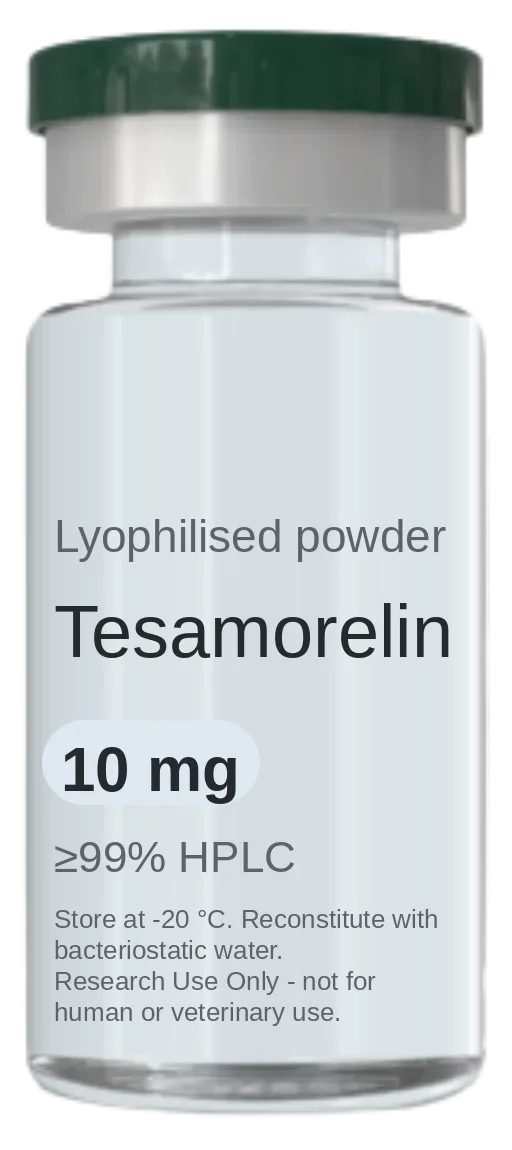
Tesamorelin
Stabilised GHRH(1-44) analogue studied in adipose tissue distribution research.
- Purity:
- ≥99% HPLC
- Sizes available:
- 10 mg – 20 mg
The consultation
One intake that settles goals, history and contraindications alongside compound, quantity, documentation and route — reviewed by a physician before anything ships.
More notes
-
No Tax Address on File: Argentine Customs
What Argentine customs does with a research peptide shipment when the recipient has no registered tax address.
-
How Long Does a Peptide Quote Take?
A research peptide quote from PeptoClinic usually arrives within one business day. Here's what happens during that review.
-
Retatrutide vs CJC-1295: Key Differences
Retatrutide and CJC-1295 no DAC are different research peptide classes, with different mechanisms and different purity reports behind them.