
Note
No Tax Address on File: Argentine Customs
What Argentine customs does with a research peptide shipment when the recipient has no registered tax address.
If the recipient has no registered tax address with AFIP, that alone rarely stops a shipment: a "domicilio fiscal" is something AFIP requires from someone with an active CUIT (a registered taxpayer, whether under monotributo or as a responsable inscripto), not from an individual receiving a package under their own name and national ID. What actually holds a shipment is a declared address that cannot be verified against a real address. Those are two different problems, and confusing them is what causes the delay.
Tax address and residential address are not the same thing
A domicilio fiscal is the address a person or a company declares to AFIP when they register for a CUIT. It applies to someone who invoices, who is enrolled in monotributo, or who is a responsable inscripto. Someone importing research material in a personal capacity, with no invoicing involved, does not have — and does not need — a tax address. For customs purposes, a verifiable residential address is enough: the one on the national ID, or one that can be confirmed with a utility bill in that person's name.
The real problem shows up when a shipment is declared under CUIT details — for example, the recipient entered a company name or an inactive CUIT number — and that CUIT has no verifiable tax address in AFIP's registry. At that point the inconsistency is administrative, not a question of who the recipient is, and the courier cannot proceed until it is resolved.
What the courier does when the address doesn't match
When the carrier's system or the customs warehouse cannot confirm the declared address, the package sits in a bonded warehouse — it is not pulled aside at a physical border checkpoint. The typical sequence looks like this:
- The courier contacts the recipient by the phone number or email on the waybill, asking them to confirm or correct the address.
- If the recipient is importing as an individual, sending a photo of their national ID plus a utility bill (electricity, gas, internet) confirming the residential address is usually enough.
- If the shipment was declared under a company name, the courier needs the current tax address confirmed in AFIP's registry, or the waybill corrected to the individual's name instead.
- Once the data checks out, the shipment goes back into the normal clearance and delivery flow.
None of this means automatic seizure. Seizure or return-to-origin is the outcome only if the recipient does not respond to the courier's request within whatever window that specific carrier sets for correcting the record — each courier sets its own — and the package then sits in the bonded warehouse in unclaimed status.
Why declaring under an individual's name is the simpler path
For most people buying research material, the simplest route is to have the waybill made out to the individual actually receiving the package — their national ID, their real address — rather than to a lab or a company, unless that company's CUIT and tax address are genuinely current with AFIP. A deregistered, inconsistent, or never-declared tax address is exactly the scenario that triggers a hold; a correct national ID with a correct residential address almost never does.
PeptoClinic prepares the dispatch file for Argentina as laboratory reference material, but the recipient's own details — name, ID, address — are declared by whoever is receiving the shipment. Confirming those details before the quote leaves the sender's side is what keeps a package from bouncing back to the warehouse.
What happens if the shipment is already in transit and the data is wrong
If the package has already left and there's a problem with the address, the first sign is usually a courier notification — email or SMS — asking the recipient to complete or correct the address through the carrier's own tracking portal. It's worth checking that notification as soon as it arrives: the response window tends to be short, and once it passes the package moves into a customs holding status, which is the step before return-to-sender or abandonment to the treasury.
If tracking shows no notification at all but the status has been stuck at "in customs" or "pending data" for longer than expected, the direct move is to contact the courier with the waybill number and ask specifically whether the recipient's address still needs to be validated.
Research material, not for human or veterinary use
Everything quoted through PeptoClinic is material strictly for laboratory research (RUO) — in vitro and research use — not a medicine, a supplement, or a food product. None of it is approved or evaluated by ANMAT, the FDA, or any equivalent authority, and none of it is intended for human or veterinary consumption, diagnosis, or treatment. The dispatch file that accompanies a shipment to Argentina describes the contents in those same terms.
Compounds such as retatrutide, BPC-157, or MOTS-c ship with an independent laboratory report — Janoshik Analytical analysed the current batches in April 2026 — confirming the purity of the material as a research reference, not as something intended for administration to people.
How to avoid the delay before the package ships
The most efficient point to resolve the address question is at the quote stage, before a shipment has a waybill assigned:
- Confirm whether the recipient will receive the package as an individual (national ID plus residential address) or under a company name (CUIT plus a tax address current with AFIP).
- If it's going under a company, check the status of that tax address in AFIP's registry beforehand — don't assume it's current.
- Use an address where someone can sign for delivery and, if the courier asks, be ready to provide proof of that address.
- Make sure the name on the waybill matches exactly the document the recipient would show if the courier requests it.
Details on how the material actually travels — no cold chain, as a lyophilised powder stable at room temperature — along with the rest of the logistics into Argentina, are on the shipping page.
Frequently asked questions
Does the shipment get seized automatically if there's no tax address on file?
No. Seizure or return-to-sender is the outcome only if the recipient fails to respond to the courier's request to correct the address within that carrier's own deadline; while that window is open, the package is held in a warehouse, not seized.
Does an individual need a tax address to receive a shipment?
No, unless they have an active CUIT and the shipment is declared under their name as a registered taxpayer. For most recipients, the residential address tied to their national ID is enough.
What document proves a residential address?
Usually a utility bill (electricity, gas, internet, phone service) in the recipient's name, or the address listed on their national ID, depending on what the courier asks for in that specific case.
What happens if the shipment is under a company name with a deregistered CUIT?
The courier cannot verify the tax address against AFIP's registry and holds the package until the waybill is corrected — typically switched to an individual's name — or the CUIT is brought back into good standing.
How long can a package stay held over this?
It depends on each courier's internal deadline for receiving the recipient's correction, which is why it's worth responding to the notification as soon as it arrives rather than waiting for the system to resolve it on its own.
Does PeptoClinic fill in the recipient's address on the waybill?
No: the recipient's identity and address details are declared by whoever is receiving the shipment at the time of the quote. PeptoClinic prepares the material's dispatch file as laboratory reference documentation for entry into Argentina.
Does this issue apply to other destinations in the region too?
The mechanism — a courier holding a package until the declared address is verified — is common across most of the destinations PeptoClinic serves, though the specifics of each country's customs process vary; for Argentina, the procedure described here is the one that applies.
Does the material that arrives come with a purity report?
Yes, compounds with a published report — such as retatrutide and MOTS-c — carry an independent laboratory analysis verifiable on the [quality](/en/quality/) page, always framed as research material.
Compounds mentioned
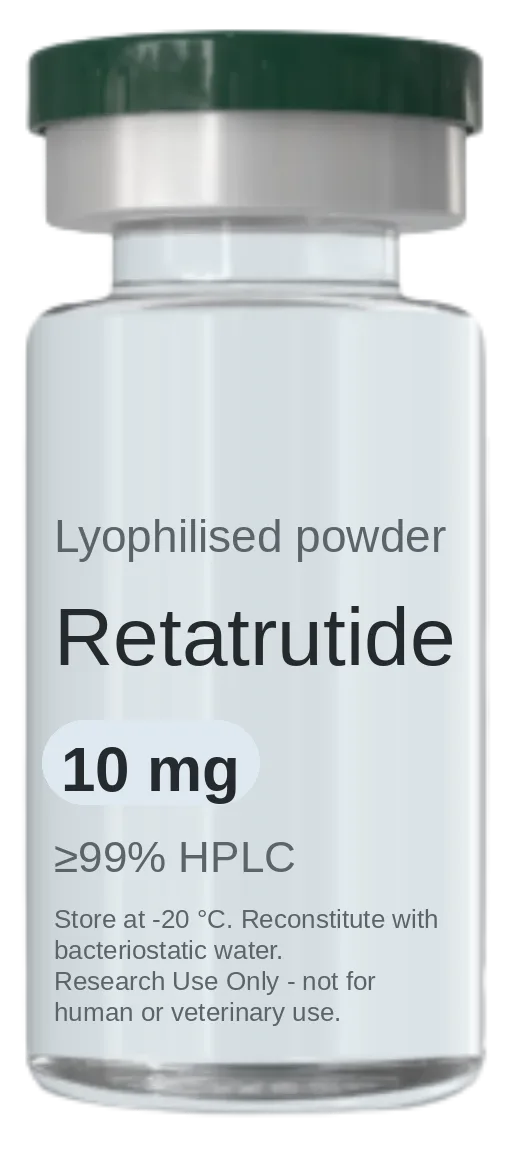
Retatrutide
Triple-agonist metabolic research peptide targeting GLP-1, GIP and glucagon receptors.
- Purity:
- ≥99% HPLC
- Sizes available:
- 10 mg
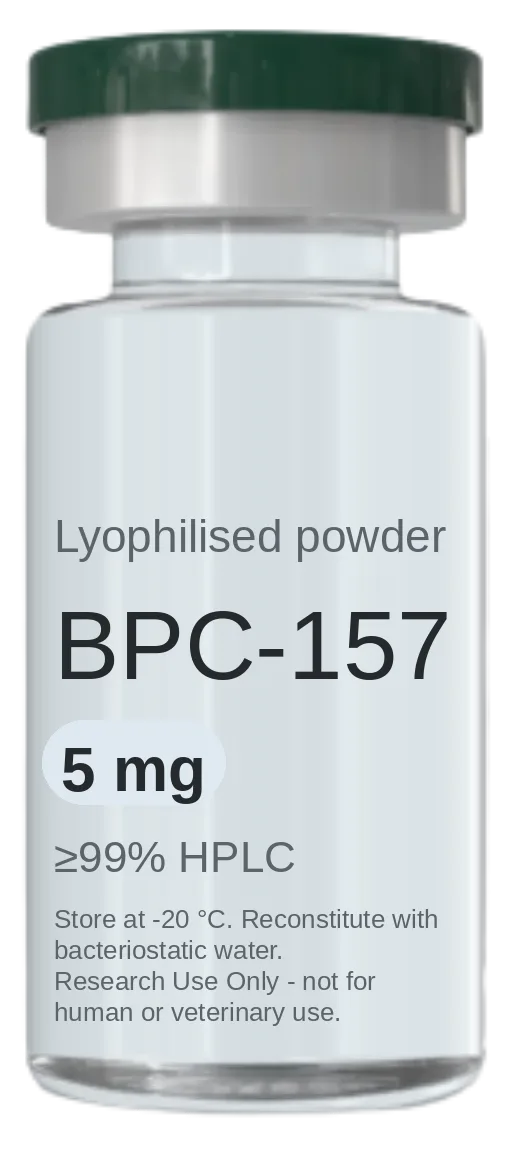
BPC-157 + TB-500
BPC-157 and TB-500 in a single vial — the pairing most studied together in tissue-repair research.
- Purity:
- ≥99% HPLC
- Sizes available:
- 5 mg + 5 mg

The consultation
One intake that settles goals, history and contraindications alongside compound, quantity, documentation and route — reviewed by a physician before anything ships.
More notes
-
Retatrutide vs CJC-1295: Key Differences
Retatrutide and CJC-1295 no DAC are different research peptide classes, with different mechanisms and different purity reports behind them.
-
Retatrutide vs BPC-157: Key Differences
Retatrutide and BPC-157 are research peptides with different mechanisms, families, and study objectives. Here's why they're not interchangeable.
-
Paying Argentina's Customs Duty on Peptides
How the import duty on a research peptide shipment is paid when it arrives in Argentina, and who actually collects it.