
Note
Retatrutide vs CJC-1295: Key Differences
Retatrutide and CJC-1295 no DAC are different research peptide classes, with different mechanisms and different purity reports behind them.
Retatrutide and CJC-1295 no DAC belong to two entirely different pharmacological classes studied for two different biological axes: retatrutide is a triple agonist investigated in the literature on GLP-1, GIP and glucagon receptors, while CJC-1295 no DAC is a growth hormone-releasing hormone (GHRH) analog studied on the somatotropic axis. They don't compete for the same mechanism and they aren't studied toward the same research question. The confusion usually comes from both names showing up in the same type of research peptide catalogue, not from the compounds doing anything similar.
PeptoClinic supplies research peptides to Argentina under a Research Use Only (RUO) framework: everything we quote is intended for laboratory, in vitro research, and none of it is approved or intended for human or veterinary use. What follows describes what the published literature investigates about each compound, in the third person — it is not a usage guide.
What is retatrutide, and what does the literature study?
Retatrutide is a synthetic peptide designed to act on three receptors at once: GLP-1, GIP and the glucagon receptor. That triple affinity is what sets it apart from single-receptor agonists, and it's the reason it shows up frequently in comparative metabolic studies against dual- or single-action molecules. Research indexed in PubMed analyzes it mainly in models related to energy and lipid metabolism.
The retatrutide lot PeptoClinic has on file was analyzed by Janoshik Analytical on April 13, 2026 (task 136921): the report found 99.893% purity against a 10 mg label, with 11.96 mg of actual content. That figure comes from a report, not from a number we published without backing. You can review the compound's documentation on the retatrutide page for Argentina.
What is CJC-1295 no DAC?
CJC-1295 no DAC is a synthetic analog of GHRH, the signal that regulates growth hormone release along the hypothalamic-pituitary axis. The "no DAC" part of the name marks the key structural difference: the original CJC-1295 carries a Drug Affinity Complex (DAC), a chemical modification that binds it to serum albumin and extends how long it circulates. The no DAC version lacks that modification, which is why the literature describes it with a much shorter circulating half-life than the DAC variant.
That distinction isn't a minor detail — these are two different molecules with two different kinetic profiles, even though they share the base name "CJC-1295." PeptoClinic's catalogue specifically includes the no DAC variant; you can see its documentation on the CJC-1295 no DAC page for Argentina.
The underlying difference: which axis each one targets
The simplest way to see it is by the hormonal axis each peptide addresses:
- Retatrutide acts on incretin and glucagon receptors (GLP-1, GIP, glucagon) — the same axis studied by the broader family of metabolic agonists.
- CJC-1295 no DAC acts on the GHRH → pituitary → growth hormone axis — the same axis studied by peptides like ipamorelin or sermorelin.
They aren't alternatives to each other because they don't answer the same research question. A laboratory protocol designed to study growth hormone secretion doesn't substitute retatrutide for CJC-1295, and the reverse holds just as well: each is a tool for a different question.
Are they studied together in any experimental design?
Yes, they appear combined in designs that try to separate metabolic effects from effects on the somatotropic axis, or that compare outcomes across both axes within the same model. CJC-1295 no DAC also commonly appears alongside ipamorelin in the growth hormone secretagogue literature, because the two act on complementary receptors of the same axis (GHRH and the ghrelin/GHS receptor, respectively). That pairing is a pattern in the published literature, not a usage recommendation.
Differences in the documentation available
PeptoClinic publishes the lab reports it has, and doesn't fill gaps with unsupported figures. For retatrutide, there is a Janoshik Analytical report with a specific purity figure (99.893%, task 136921). The purity standard we declare across the full catalogue is ≥99% HPLC, and every lot we quote ships with supporting documentation, though not every compound in the catalogue currently has an individually published report in that same format.
Before comparing two suppliers on "purity," what matters is whether the number comes from a certificate of analysis (CoA) issued by an identifiable, verifiable laboratory, or whether it's a figure placed on a product page with nothing behind it. We explain how to read one on the quality control page.
Why do they show up together in search results?
Because both are research peptides quoted under the same type of catalogue, within the same broad area of interest — metabolic research and growth hormone axis research — and because whoever searches for one is often evaluating the other while putting together an experimental protocol. But "which one is better" isn't a question with an answer: it depends on which biological axis the researcher is trying to study. Retatrutide doesn't replace CJC-1295 no DAC in a study on growth hormone secretion, in the same way CJC-1295 no DAC doesn't serve a design centered on incretin receptors.
Research material, not for human consumption
Everything described in this article reflects findings from the published scientific literature on these molecules, cited in the third person. The material PeptoClinic quotes is strictly for laboratory research (RUO): it is not a medicine, not a supplement, not approved for human or veterinary consumption, and none of its properties have been evaluated by the FDA, ANMAT or an equivalent authority. We don't provide dosing, administration or protocol guidance — that type of request falls outside the scope of a technical supply consultancy for research materials.
Anyone who wants to see the full catalogue of peptides available for quoting can review it on the catalogue page, and anyone who wants to understand how material reaches its destination can read the shipping page.
Frequently asked questions
Can retatrutide and CJC-1295 no DAC be quoted together?
Yes, PeptoClinic quotes both compounds independently within the same research order; each one ships with its own lot documentation.
Which of the two has higher purity?
That's not a direct comparison the current public data supports: the available Janoshik Analytical report for retatrutide shows 99.893% purity; the declared standard across the whole catalogue, including CJC-1295 no DAC, is ≥99% HPLC, but that isn't the same as having an individually published certificate for every compound.
Why does the catalogue list "CJC-1295 no DAC" rather than "CJC-1295" on its own?
Because they are two different molecules: CJC-1295 with DAC carries a modification that binds it to serum albumin and extends its circulation time, while the no DAC variant lacks that modification. PeptoClinic distributes specifically the no DAC variant.
What does it mean for retatrutide to be a "triple" agonist?
It means the molecule was designed to bind three distinct receptors — GLP-1, GIP and the glucagon receptor — rather than just one, which is the design that sets more recent-generation agonists apart in metabolic research.
Is CJC-1295 no DAC studied alongside other compounds in the catalogue?
In the literature it frequently appears combined with GHRH-axis secretagogues, such as ipamorelin, because they act on complementary receptors of the same hormonal axis.
Are these peptides approved for human use in Argentina?
No. All material PeptoClinic supplies is exclusively for laboratory research (RUO), without FDA, ANMAT or any regulatory approval for human or veterinary consumption.
How do I know if the lot I'm being quoted has documentation behind it?
Ask for the certificate of analysis for that specific lot, with the name of the laboratory that issued it and, where available, a working verification link. The [quality control page](/en/quality/) explains what to check in that document before trusting a purity figure.
Does PeptoClinic ship these peptides to countries besides Argentina?
Yes, Argentina is one of the destinations served alongside other countries in the region and the United States; you can see how each shipment is prepared on the [shipping page](/en/shipping/).
Compounds mentioned
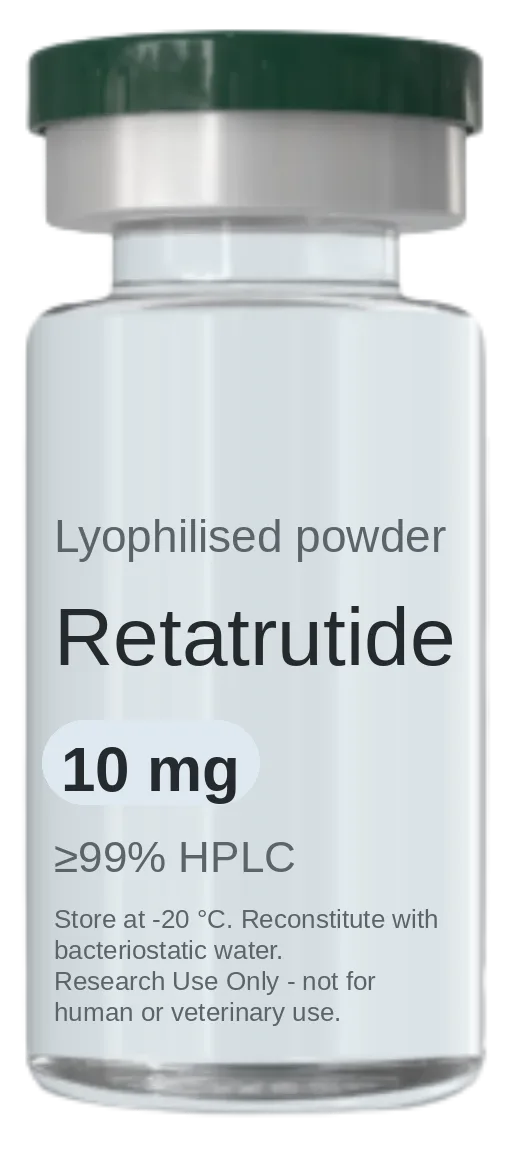
Retatrutide
Triple-agonist metabolic research peptide targeting GLP-1, GIP and glucagon receptors.
- Purity:
- ≥99% HPLC
- Sizes available:
- 10 mg
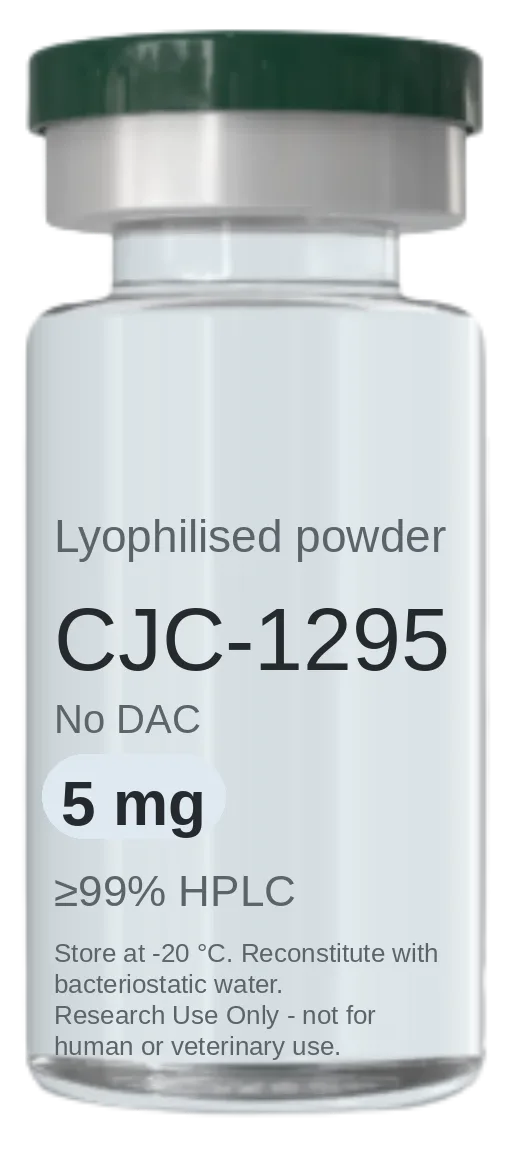
CJC-1295 (sin DAC)
Modified GRF(1-29) tetrasubstituted analogue without drug affinity complex.
- Purity:
- ≥99% HPLC
- Sizes available:
- 5 mg – 20 mg
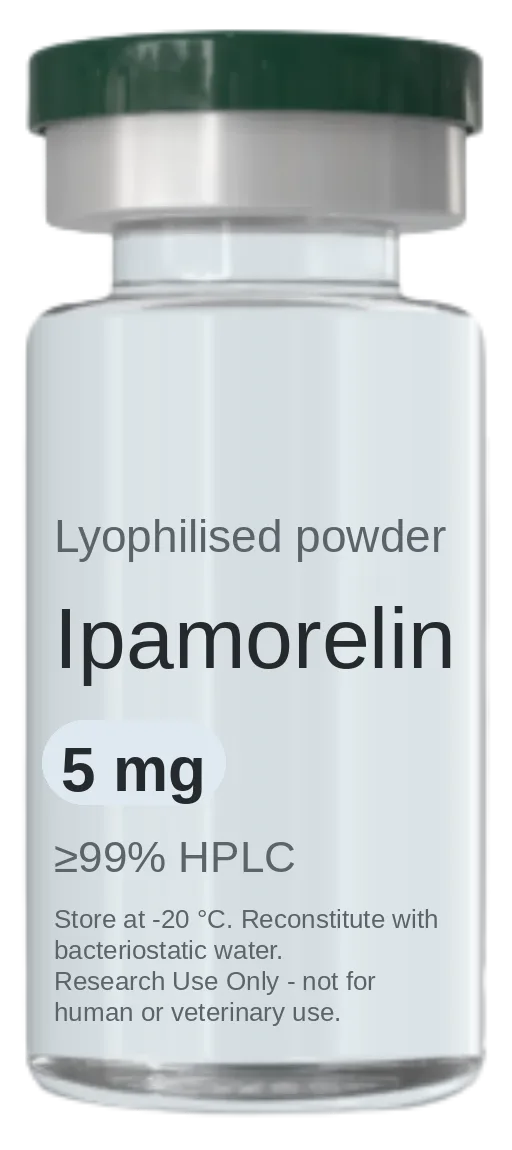
Ipamorelin
Selective ghrelin receptor (GHS-R1a) agonist pentapeptide.
- Purity:
- ≥99% HPLC
- Sizes available:
- 5 mg – 20 mg
The consultation
One intake that settles goals, history and contraindications alongside compound, quantity, documentation and route — reviewed by a physician before anything ships.
More notes
-
Retatrutide vs BPC-157: Key Differences
Retatrutide and BPC-157 are research peptides with different mechanisms, families, and study objectives. Here's why they're not interchangeable.
-
Paying Argentina's Customs Duty on Peptides
How the import duty on a research peptide shipment is paid when it arrives in Argentina, and who actually collects it.
-
No Batch Number on the Invoice: Customs
If a peptide shipment's invoice skips the batch number, Argentine customs can hold it and request supporting documents.