
Note
CJC-1295 vs Ipamorelin: The Difference
CJC-1295 binds the GHRHR; ipamorelin binds GHS-R1a. Two distinct peptide families, independent signaling pathways, documented synergy.
CJC-1295 is a synthetic analog of growth hormone-releasing hormone (GHRH) that binds the GHRH receptor (GHRHR) on somatotroph cells in the anterior pituitary. Ipamorelin is a growth hormone secretagogue (GHS) that mimics ghrelin and binds the GHS-R1a receptor. They are two distinct peptide families with independent intracellular signaling pathways, both acting on the same somatotroph cell. That mechanistic separation is exactly why the literature frequently studies them together: two independent stimuli converging on the same target amplify the GH signal beyond what either peptide produces alone.
Two Receptors, One Target Cell
CJC-1295 signals through the GHRHR. Binding activates adenylyl cyclase, raises intracellular cAMP, and promotes GH synthesis and release — the same pathway triggered by endogenous GHRH. What distinguishes CJC-1295 from native GHRH is structural: the peptide incorporates modifications that increase its resistance to degradation by dipeptidyl peptidase IV (DPP-IV), extending its duration of action.
Ipamorelin signals through the GHS-R1a. That receptor couples primarily to Gq/phospholipase C, raising diacylglycerol and inositol trisphosphate, which in turn elevates intracellular calcium. This mechanism is independent of cAMP. When both pathways are activated simultaneously, the resulting GH pulse exceeds what either peptide produces on its own. The synergy between GHRH-receptor stimulation and GHS-receptor stimulation has been documented in the scientific literature since the early characterization work on secretagogues in the early 1990s, and it is the experimental rationale behind research designs that combine the two compounds.
Ipamorelin's Selectivity Within the GHS Family
One trait that distinguishes ipamorelin within the secretagogue family is its selectivity profile. Earlier GHS compounds — GHRP-6 and GHRP-2 in particular — produced measurable increases in cortisol, prolactin, and ACTH alongside GH release. That off-target activity complicated experiments designed to isolate the effect on the somatotropic axis without introducing confounding variables.
Ipamorelin was developed by Novo Nordisk to resolve that limitation. Raun et al. published one of the first characterization studies of the compound in European Journal of Endocrinology in 1998, documenting that ipamorelin released GH at potency equivalent to GHRP-6 in rat models but without significantly elevating cortisol or prolactin. That selectivity profile established ipamorelin as a cleaner research tool for studying the GH axis without the cortisol signal that contaminated experiments using GHRP-6.
CJC-1295, binding the GHRHR rather than the GHS-R1a, does not produce that off-target activity. Its effect is confined to the somatotroph.
CJC-1295 With and Without DAC
Within CJC-1295 itself, a distinction appears frequently in the literature and in research catalogues: the presence or absence of a Drug Affinity Complex (DAC).
CJC-1295 with DAC incorporates a modification at a lysine residue that allows the peptide to covalently bind serum albumin. That binding extends the plasma half-life from roughly 30 minutes to several days. Teichman et al. documented in 2006, in the Journal of Clinical Endocrinology and Metabolism, that a single administration of CJC-1295 with DAC in healthy adults produced measurable elevations in GH and IGF-1 for more than a week.
CJC-1295 without DAC — the variant listed in PeptoClinic's research catalogue — produces a shorter GH pulse, closer in duration to physiological pulsatile secretion. That pattern is useful in experimental protocols modeling the normal dynamics of the GH axis rather than maintaining a continuously elevated stimulus. The choice between the two variants depends on the research design: studies replicating physiological pulses tend to use the DAC-free version; studies evaluating the effects of prolonged GHRH-receptor stimulation use the DAC version.
Comparison With Other Peptides on the Same Axis
CJC-1295 and ipamorelin are studied within a broader set of peptides that modulate the GH axis. Understanding the distinctions between them helps in selecting the right compound for a given experimental design.
[Sermorelin](/en/product/sermorelin/) shares the same receptor pathway as CJC-1295: it is also a GHRH analog, specifically the first 29 amino acids of human GHRH. Its plasma half-life is shorter than CJC-1295 without DAC, producing briefer GH pulses. The difference between sermorelin and CJC-1295 is not mechanistic — both bind the GHRHR — but structural. Stability and duration of action distinguish them.
Tesamorelin is another GHRH analog with an N-terminal modification that improves stability. Unlike sermorelin and CJC-1295, tesamorelin holds FDA approval for a specific indication — HIV-associated lipodystrophy — which places it in a different regulatory category from research peptides that carry no approved medical use.
Ipamorelin's position in this taxonomy is clear: it is the only one of the four that belongs to the GHS family. The other three are GHRH analogs acting on the GHRHR. That class difference is what makes combining ipamorelin with any of them experimentally meaningful.
Why They Are Studied Together
The experimental logic of combining CJC-1295 with ipamorelin mirrors the physiological logic of the GH axis: the hypothalamus releases GHRH and ghrelin in a coordinated pattern, and both signals summate at the pituitary. These peptides replicate that dual stimulus under controlled conditions.
A laboratory studying somatotropic axis regulation that uses only a GHRH analog obtains information about the GHRHR pathway. Using only a GHS yields information about the GHS-R1a pathway. Using both simultaneously allows evaluation of the interaction between the two pathways, which more closely approximates what occurs in the intact organism.
PeptoClinic supplies CJC-1295 without DAC and ipamorelin as independent research materials. Each lot ships with analysis documentation. Details on available certificates are in the quality section.
Research Material Only
CJC-1295 and ipamorelin are supplied by PeptoClinic strictly as Research Use Only (RUO) material, for in vitro use and laboratory research contexts. Neither compound is approved for human or veterinary consumption by the FDA, ANMAT, or any equivalent regulatory authority. PeptoClinic is not a pharmacy, a clinic, or a provider of guidance on use in persons. Requests of that kind are declined.
Researchers who need a quote for either compound can write to [email protected] with their programme details. PeptoClinic returns a written quote normally within one business day.
Frequently asked questions
What is the core difference between CJC-1295 and ipamorelin?
CJC-1295 is a GHRH analog that binds the GHRHR on pituitary somatotrophs. Ipamorelin is a GHS that binds the GHS-R1a receptor — the same receptor that endogenous ghrelin activates. They belong to two distinct peptide families with different intracellular signaling mechanisms, although both act on the somatotropic axis.
Why does the research literature study them in combination?
Because their signaling pathways are independent and synergistic. Simultaneous activation of the GHRHR and GHS-R1a produces a larger GH pulse than either peptide generates alone, which reflects the physiological synergy between endogenous GHRH and ghrelin at the hypothalamic-pituitary axis.
How does ipamorelin differ from GHRP-6?
Selectivity. Ipamorelin releases GH without significantly elevating cortisol, prolactin, or ACTH, unlike GHRP-6. Raun et al. (1998) documented that distinction in European Journal of Endocrinology. That selectivity makes ipamorelin preferable in experiments designed to isolate the effect on the GH axis without the cortisol signal that complicates results with GHRP-6.
What is the DAC, and how does it modify CJC-1295?
The Drug Affinity Complex is a modification that allows CJC-1295 to bind serum albumin and extend its plasma half-life from minutes to several days. CJC-1295 without DAC produces short GH pulses closer to the physiological pulsatile pattern; the DAC version produces sustained elevations lasting days. PeptoClinic stocks the DAC-free variant.
How does CJC-1295 differ from sermorelin?
Both are GHRH analogs acting on the GHRHR. The difference is structural and pharmacokinetic: sermorelin replicates the first 29 amino acids of human GHRH and has a shorter half-life; CJC-1295 incorporates modifications that extend its duration of action and increase its resistance to enzymatic degradation.
Is this material available to researchers outside the United States?
PeptoClinic supplies research material to Argentina, Uruguay, Chile, Brazil, Mexico, and other destinations as laboratory reference material. The process is writing to [email protected] with programme details; PeptoClinic prepares the customs documentation for import as laboratory reference material.
What documentation ships with a lot?
Orders include certificates of analysis. Two compounds in PeptoClinic's catalogue carry published Janoshik Analytical reports with verified purities above 99.6%. The documentation available by compound is detailed in the [quality section](/en/quality/).
Does PeptoClinic quote CJC-1295 and ipamorelin separately?
Yes. Each compound is quoted independently. There are no published prices on the site: the process is describing the research programme by email to [email protected] and receiving a written quote, normally within one business day.
Compounds mentioned
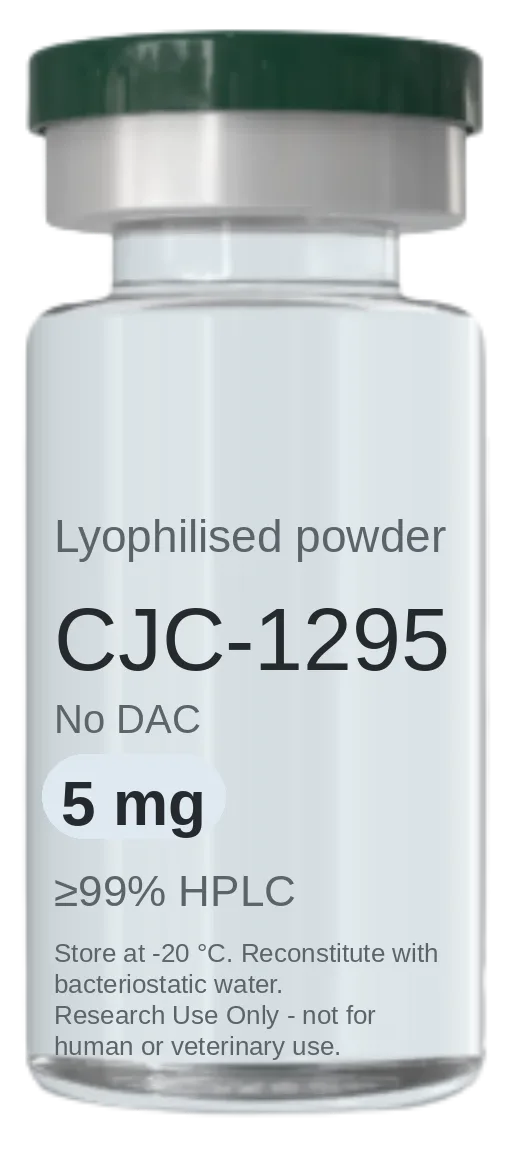
CJC-1295 (sin DAC)
Modified GRF(1-29) tetrasubstituted analogue without drug affinity complex.
- Purity:
- ≥99% HPLC
- Sizes available:
- 5 mg – 20 mg
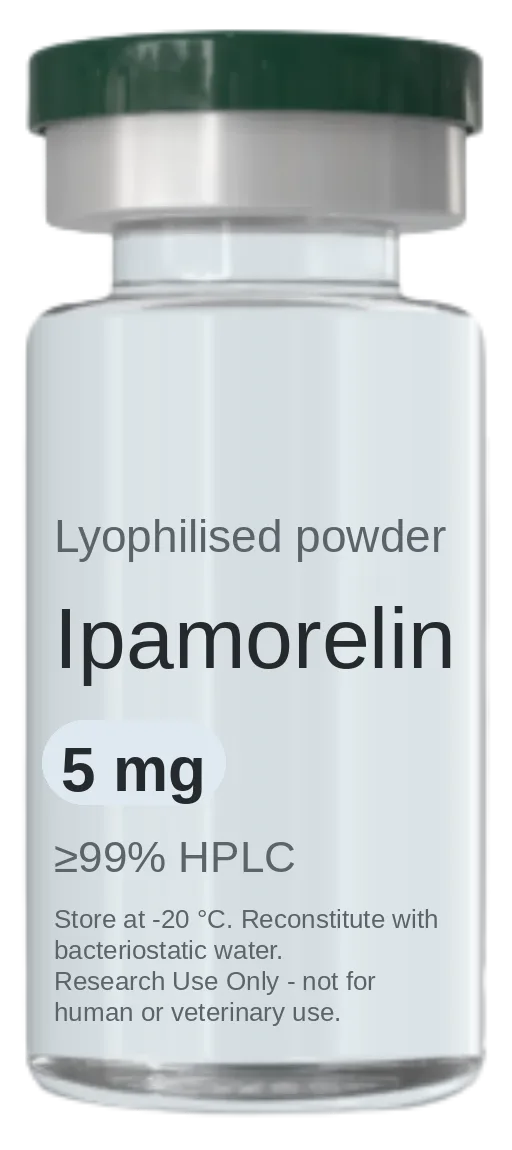
Ipamorelin
Selective ghrelin receptor (GHS-R1a) agonist pentapeptide.
- Purity:
- ≥99% HPLC
- Sizes available:
- 5 mg – 20 mg
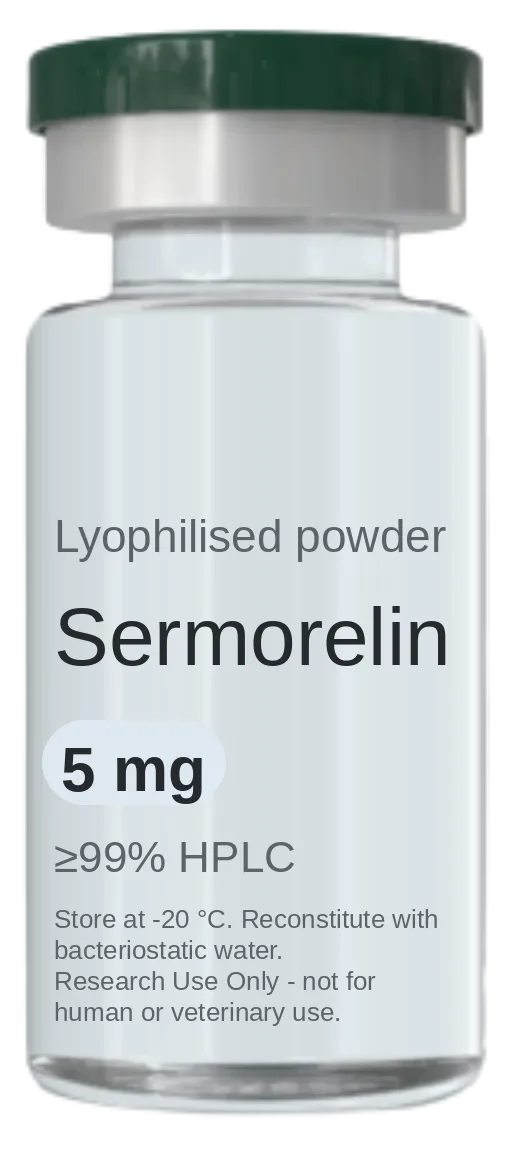
Sermorelin
Growth hormone-releasing hormone analogue used in endocrine signalling research.
- Purity:
- ≥99% HPLC
- Sizes available:
- 5 mg – 20 mg
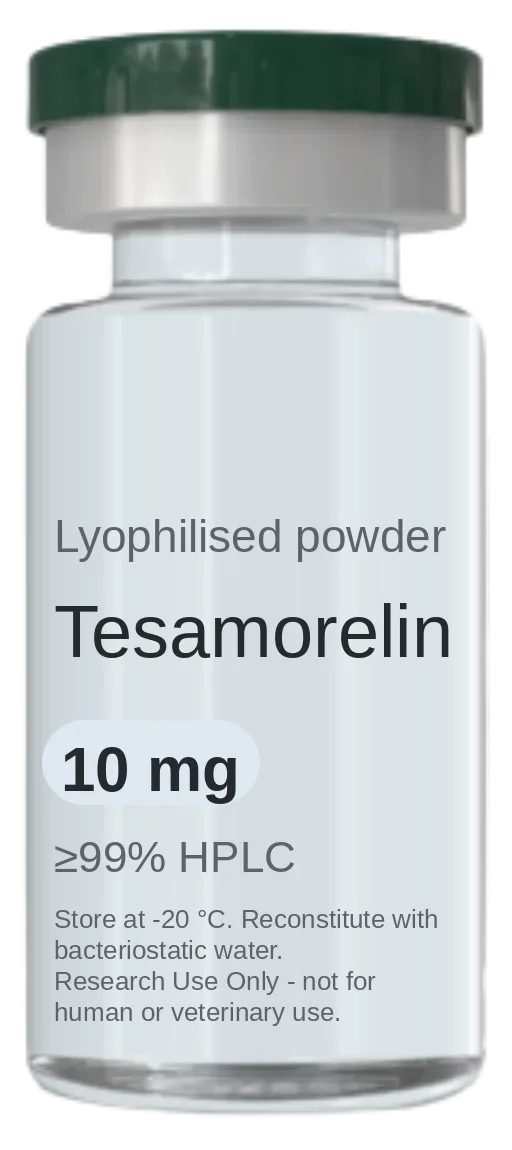
Tesamorelin
Stabilised GHRH(1-44) analogue studied in adipose tissue distribution research.
- Purity:
- ≥99% HPLC
- Sizes available:
- 10 mg – 20 mg
The consultation
One intake that settles goals, history and contraindications alongside compound, quantity, documentation and route — reviewed by a physician before anything ships.
More notes
-
Temporary Import Regime & Peptides
Temporary import covers goods that leave the country again; a research peptide shipment stays and gets used up.
-
Retatrutide vs GHK-Cu: What's the Difference
Retatrutide and GHK-Cu are different molecules studied for different reasons. Here's what each investigates and what documentation backs a batch.
-
Epitalon vs. Hexarelin: What's the Difference
Epitalon and Hexarelin belong to different peptide families with different mechanisms — what the research literature covers for each, and what's in stock.